

















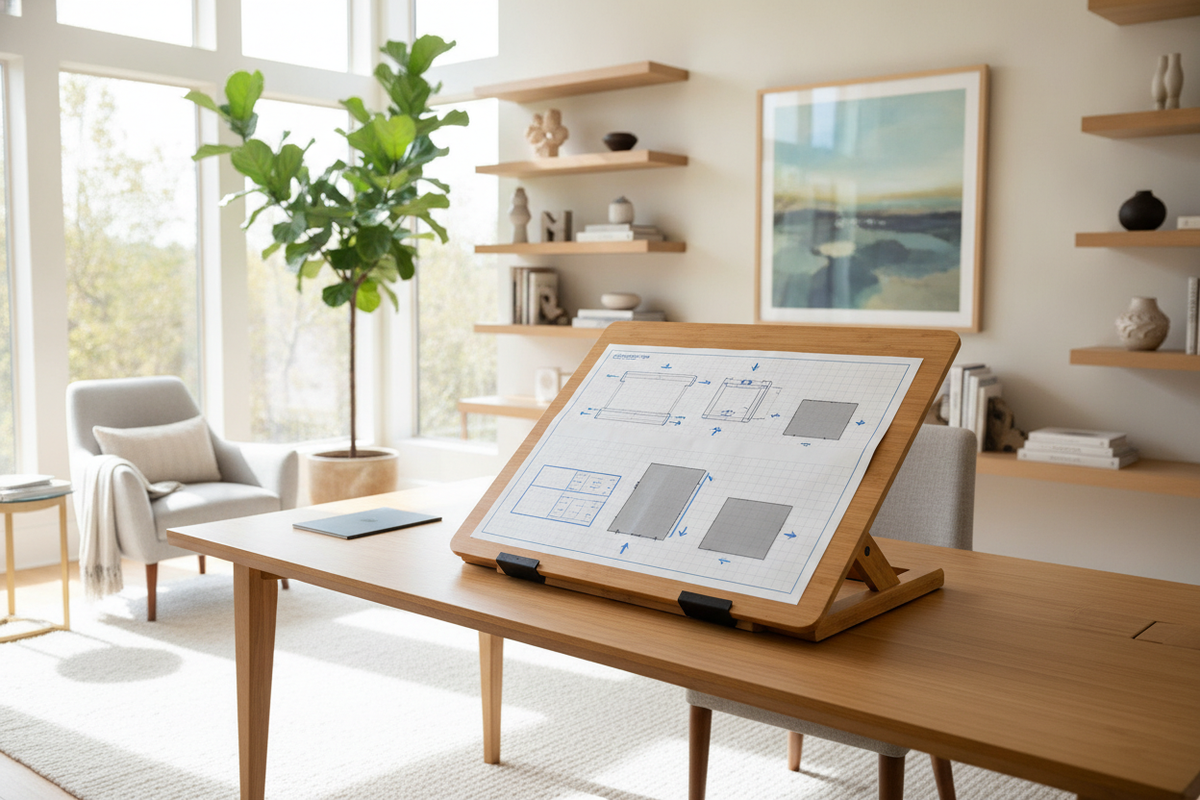
Introduction: The Ergonomic Shift with Natural Bamboo Converters
Transforming a static office desk into a versatile sit-stand environment does not require discarding a favorite timber credenza or executive table. The cooper standing desk converter represents a distinct category of desktop elevation systems that prioritizes renewable materials and fluid height adjustments. Designed around a tiered platform architecture, the fully cooper standing desk converter style provides an elevated platform for screens alongside a dedicated lower deck for input peripherals, allowing professionals to alternate posture throughout the workday without altering the architectural integrity of their primary furniture.
Integrating a cooper standing desk solution onto an existing surface balances functional ergonomics with organic warmth. Because these converters sit directly on top of fixed desks, they create an adaptable bridge between conventional furniture craftsmanship and modern postural wellness.
Surface Architecture and Natural Bamboo Material Dynamics
A defining hallmark in any thorough cooper standing desk converter review is the structural implementation of natural bamboo. Bamboo presents unique material advantages over standard synthetic composites and laminated particleboard. As a rapidly renewable grass processed into cross-laminated sheets, finished bamboo delivers remarkable tensile strength and natural grain variation that pairs seamlessly with diverse interior palettes.
When evaluating the fully cooper surface aesthetic, several structural factors come into play:
- Grain Layering and Deflection Resistance: Multi-ply bamboo manufacturing distributes weight across opposing grain layers, preventing center sag under the weight of external display arms or heavy all-in-one computing units.
- Beveled Edge Comfort: Smoothly contoured edges reduce forearm contact stress during extended typing sessions, maintaining a tactile feel superior to hard PVC edge banding.
- Surface Sealing and Moisture Protection: High-grade UV-cured coatings protect the bamboo grain from accidental spills and ambient humidity fluctuations, preserving the natural luster over years of daily handling.
Dimensional Fit Categories: Matching Converter Footprints to Existing Desks
Before introducing a fully standing desk converter into a home office, calculating the spatial geometry of the host desk is essential. A converter requires adequate surface depth and perimeter clearance to operate smoothly throughout its full vertical travel range.
When assessing your desktop, verify that the base frame rests entirely within the structural boundaries of the host desk. Overhanging base feet can introduce instability during height transitions. Additionally, consider how keyboard tier depth interacts with desk depth when seated. A deep keyboard tray requires sufficient backward clearance so your seating posture maintains comfortable focal distance from the elevated display screen.
Elevation Mechanics: Counterbalance Springs and Kinetic Clearances
The mechanical core of a quality fully desk converter relies on a counterbalance lift mechanism, typically powered by calibrated gas struts or tension springs. This mechanical system offsets the dead weight of monitors, laptops, and peripheral hardware, enabling smooth, single-lever height adjustments without strenuous physical lifting.
For detailed comparative styling tips and kinetic adjustment methods across various converter styles, consult our comprehensive standing desk converter guide. The vertical trajectory of modern scissor-lift frames minimizes forward migration, ensuring that the center of gravity remains centered over the base frame rather than drifting toward the user when elevated.
Converter Add-On vs. Full Electric Standing Desk: Decision Framework
While the cooper standing desk converter offers an immediate, non-invasive upgrade for existing furniture, users frequently weigh this configuration against complete height-adjustable workstations. Each system addresses distinct spatial and functional requirements:
- Desktop Converters: Ideal for preserved vintage desks, built-in cabinetry, rented spaces, and rapid installation without complex frame assembly.
- Motorized Desks: Better suited for multi-screen creative suites requiring unified, uninterrupted surface area across the entire workstation.
If your workflow demands an expansive, uniform surface without separate desktop tiers, investing in a complete motorized standing desk product provides motorized push-button elevation across a broad work plane.
Auxiliary Storage and Cable Tension Management in Dynamic Setups
A dynamic workspace requires deliberate planning for peripheral wires and supplementary storage. Because the upper tier of a fully cooper standing desk converter moves through an active vertical envelope, cables connected to displays, webcams, and keyboards must have sufficient slack to prevent accidental disconnections during upward travel.
To maintain a clean architectural aesthetic, route cables along the scissor frame using flexible sleeves or adhesive channel clips. Pairing your converter with mobile under-desk file pedestals or low credenzas keeps daily paperwork and desktop accessories organized without cluttering the primary work surface. For comprehensive strategies on coordinating storage finishes with active desks, explore our dedicated standing desk guide.
Evaluating Expansive Workstation Alternatives
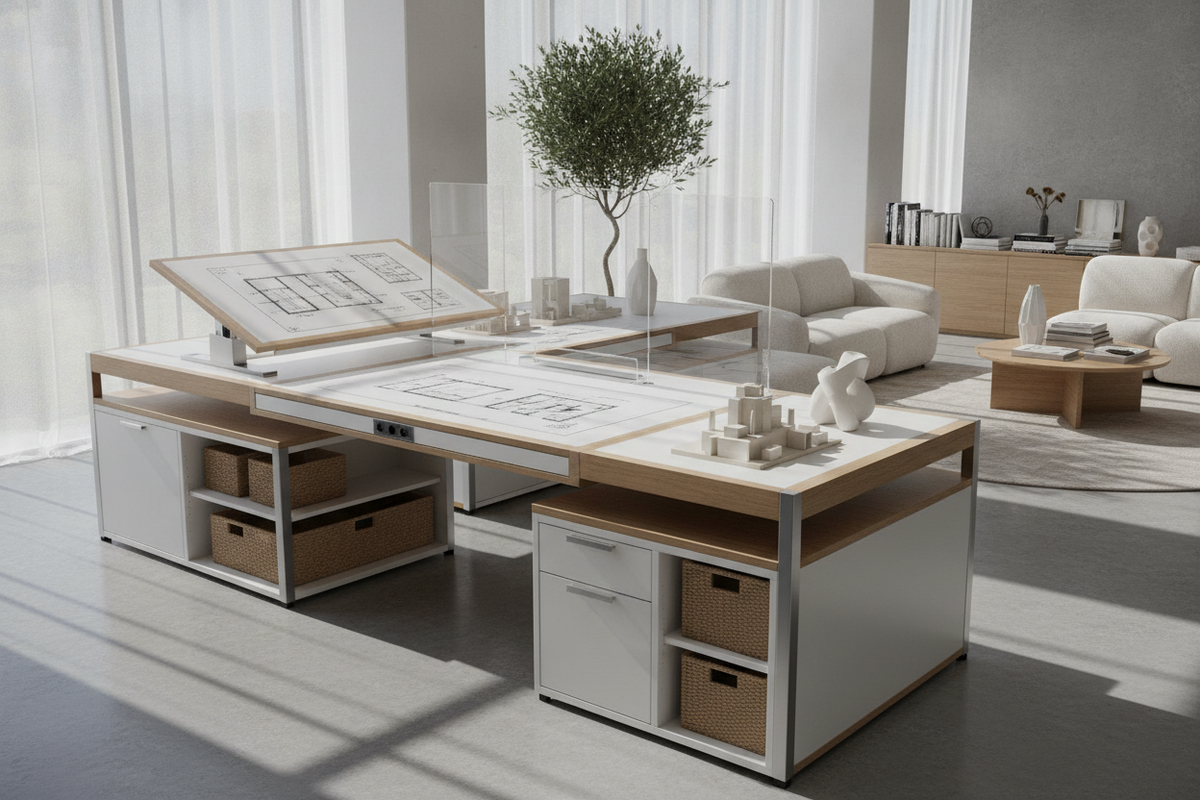
Power users who utilize oversized dual-monitor arrays, heavy studio audio monitors, or tabletop drafting equipment may eventually exceed the functional surface envelope of a desktop converter. In such cases, stepping up to a high-capacity continuous workstation ensures that all peripheral hardware rises in unison without tier separation.
For expansive creative configurations that require substantial surface area and high payload stability, a dedicated heavy-duty standing desk product offers an expansive continuous platform engineered for multi-monitor setups and integrated desktop storage.
Assembly Ergonomics, Maintenance, and Long-Term Care
Maintaining the performance and aesthetic appeal of your bamboo converter involves straightforward routine care:
- Tension Calibration: Check the counterbalance tension periodically to ensure the lift action remains smooth as equipment is added or removed.
- Bamboo Conditioning: Clean the natural bamboo platform with a lightly damp microfiber cloth, avoiding harsh chemical solvents that can strip the protective topcoat.
- Fastener Inspection: Periodically inspect structural screws and hinge connection points along the scissor mechanism to ensure ongoing stability during daily transitions.
By harmonizing natural bamboo surfaces, responsive elevation mechanics, and thoughtful storage integration, a Cooper-style converter delivers an ergonomic and visually cohesive upgrade to any home office.

Leave a comment
This site is protected by hCaptcha and the hCaptcha Privacy Policy and Terms of Service apply.