

















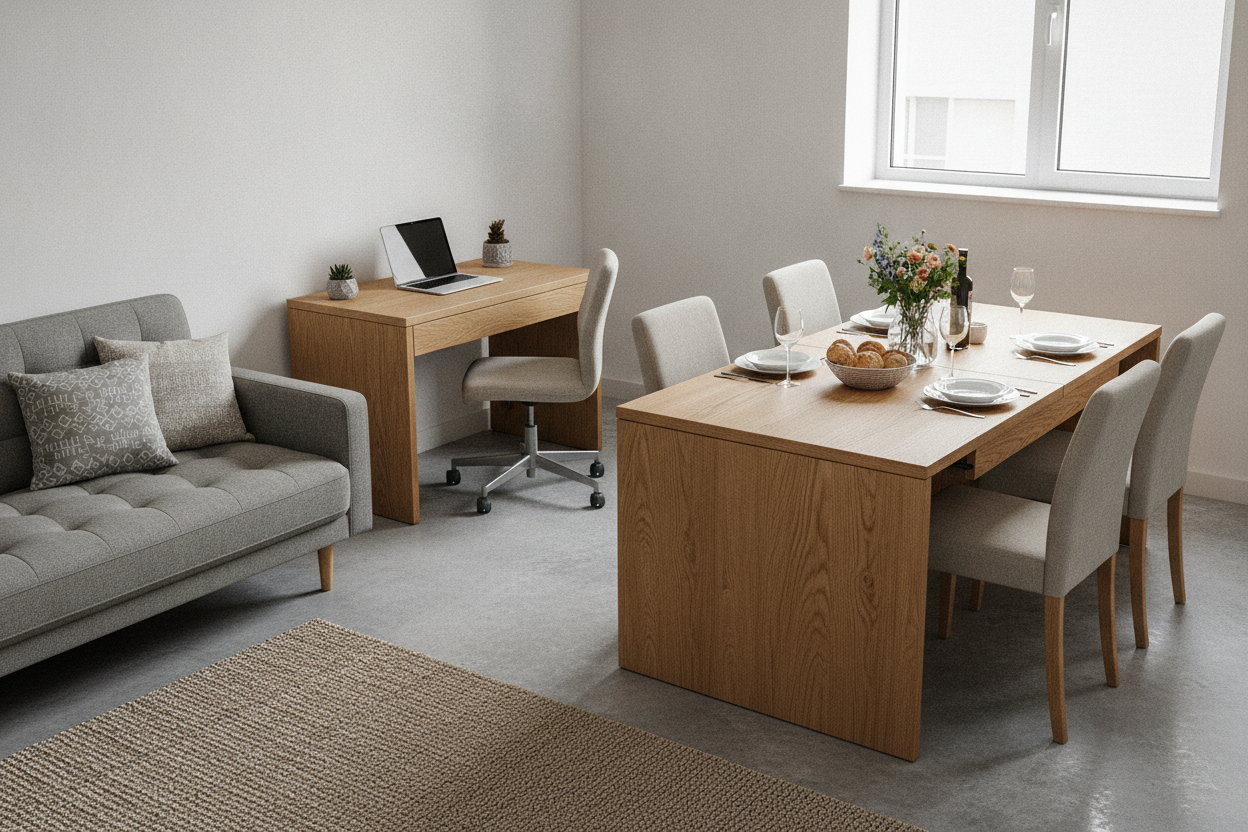
I have spent too many nights eating lukewarm Thai takeout over a mechanical keyboard. It is a depressing rite of passage for anyone living in a studio apartment. When you are working with 400 square feet, every piece of furniture has to earn its keep, which is why the idea of a desk convert to dining table setup is so seductive. You imagine yourself finishing a report, gracefully sliding a panel, and suddenly hosting a four-course dinner for friends.
Quick Takeaways
- Knee clearance is the most common deal-breaker; measure your apron height before buying.
- Cable management must be '60-second fast' or you will never actually convert the space.
- Solid wood or high-grade veneer is mandatory to survive heat and spills.
- Sometimes two small, dedicated pieces outperform one expensive, clunky hybrid.
The Viral Fantasy vs. The Messy Reality
Everyone wants a piece where a desk converts to table because it feels like a magic trick. You see the polished Instagram reels where a slim console effortlessly unfolds into a banquet hall. In my experience? The reality involves a lot more swearing and dust bunnies. Most of these mechanisms are heavy, and if you don't keep the hinges lubricated, they start to groan like a haunted house door after six months.
The biggest hurdle isn't even the hardware; it's the psychological shift. I've spent hours trying to make a desk dining room table work, and the hardest part is the lingering 'office' energy. If you can still see your Post-it notes while you're eating pasta, you haven't converted the room—you're just eating at work. You need a clean break, which means the surface has to be completely clear of your 9-to-5 clutter.
3 Non-Negotiable Rules When a Desk Convert to Dining Table
If you are going to force one piece of furniture to do two jobs, you have to be ruthless about the specs. I have seen too many people buy a 'transforming' table only to realize their guests have to sit with their chins on the tabletop or their knees hitting a support beam.
Watch the Knee Clearance (The Dining Chair Test)
Standard office desks are often built with thick aprons or built-in drawers that sit low to provide storage. That is fine for a task chair, but for a dining chair, it's a disaster. You need at least 25 inches of vertical clearance from the floor to the underside of the table. If your convertible desk to table has a 5-inch thick frame, your guests will be bruised and grumpy by the time dessert arrives. Always measure the 'apron'—the piece of wood that connects the legs—before you commit.
Heat and Spill-Resistant Finishes Are Mandatory
I once bought a cheap MDF desk that looked great in photos, but the moment a hot coffee mug touched it, the 'wood grain' paper finish bubbled up like a blister. If you are eating on your workstation, you are going to spill wine. You are going to set down a hot plate of lasagna. You need a surface that can take a hit. Look for solid wood (oak or walnut) or high-pressure laminate. Avoid 'paper foil' finishes like the plague; they won't last a season of dinner parties.
The 60-Second Cable Teardown
A dinner party should not feel like a trip to the IT department. If your desk converts to table, you need a cable management strategy that doesn't involve untangling a bird's nest of wires. I use a mesh tray screwed to the underside of the desk and Velcro ties for everything. My rule: I should be able to unplug my laptop and hide the power brick in under a minute. If your setup requires a screwdriver to hide the wires, you will eventually stop hosting people entirely.
Are Store-Bought Convertible Tables Actually Worth It?
I have tested those $1,500 console tables that expand to seat ten people. They are engineering marvels, sure, but they are often incredibly heavy and the 'leaves' require a separate closet just to store them. Honestly? I refuse to spend $1k on a table that feels like a gimmick. Many of these specialized pieces prioritize the 'transformation' over the actual comfort of the desk or the table.
Often, you are better off buying a high-quality, 30-inch deep dining table and using it as a desk full-time. It provides more surface area for your monitors and looks like a real piece of furniture when you clear the laptop away. The 'transformer' furniture market is full of particle board disguised as innovation. Stick to simple silhouettes with high-quality materials.
When You Should Just Give Up and Buy Two Pieces
Sometimes, the hybrid life is a lie we tell ourselves to feel better about living in a shoebox. If you have even five feet of extra wall space, you might be happier with two specialized pieces. I've found that using a slim vanity desk makeup table as a dedicated secondary laptop station can take the pressure off your main living area. It keeps the 'work' contained so your dining area can actually stay a dining area.
FAQ
Can I use a monitor arm on a convertible table?
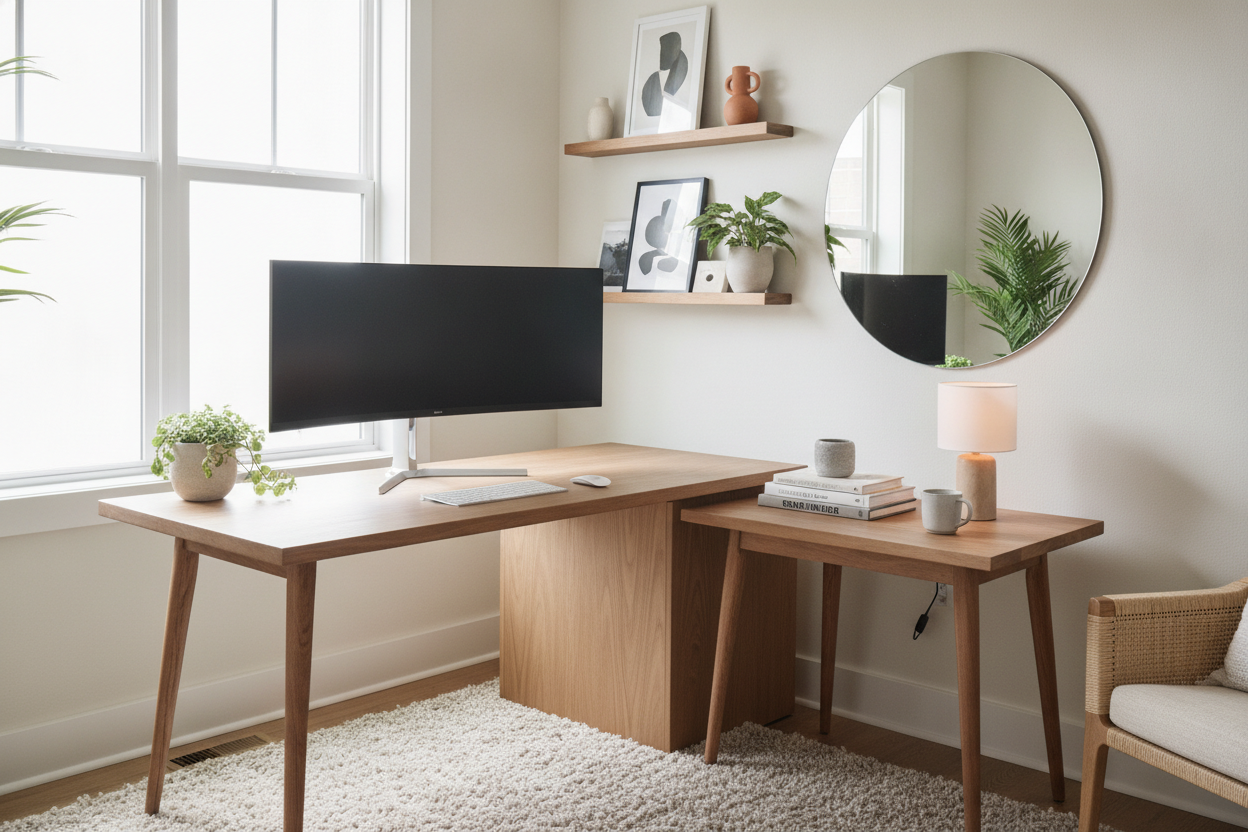
Yes, but make sure the table edge has enough of a lip for the C-clamp. A monitor arm is actually the best way to make this work, as you can swing the screen out of view when dinner starts.
How wide should the desk be to seat four people?
You need at least 48 inches of width to fit two people side-by-side, but 60 inches is the sweet spot if you don't want to be rubbing elbows while you cut your steak.
Does a standing desk work as a dining table?
It can, but only if it's a high-end model. Cheap standing desks wobble significantly at bar height, which is a recipe for spilled wine and a very awkward dinner conversation.

Leave a comment
This site is protected by hCaptcha and the hCaptcha Privacy Policy and Terms of Service apply.