

















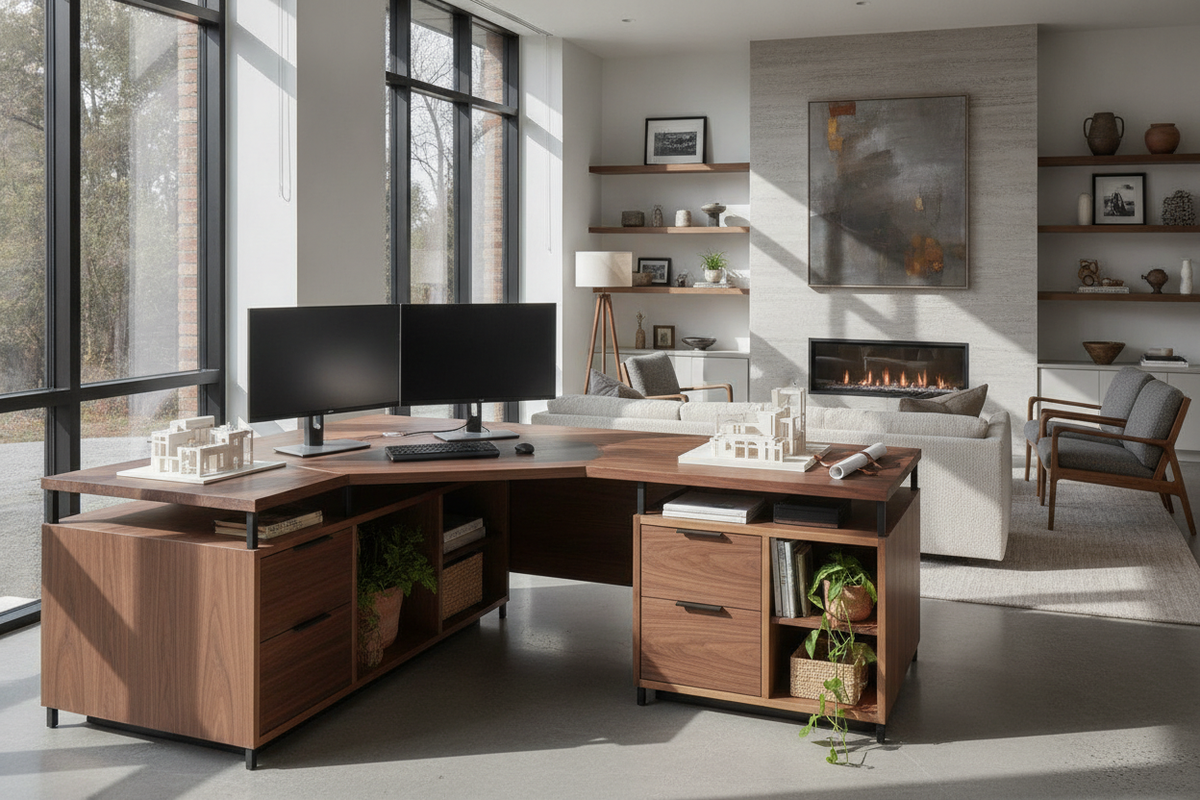
A brown l-shaped desk anchors a workspace with natural warmth, substantial surface area, and architectural presence. Whether you are outfitting a dedicated home study, transforming a multi-use guest room, or arranging an executive suite, the corner workstation remains one of the most practical furniture silhouettes available. By wrapping around your seating position, an L-shaped profile turns previously underutilized corner space into an ergonomic command center where computing, writing, and storage coexist within arm's reach.
Aesthetic Profiles and Wood Finish Tones in Brown L-Shaped Desks
Brown is not a single uniform finish; it spans a broad spectrum of wood grains, undertones, and textures that establish the mood of your entire room. Choosing the right tone ensures your desk harmonizes with existing flooring, wall palettes, and cabinetry.
- Rustic Brown and Reclaimed Finishes: A rustic brown l-shaped desk blends weathered timber grains with matte black metal framing. This aesthetic works well in industrial lofts, modern farmhouses, and relaxed work environments where a textured, tactile surface adds character.
- Warm Walnut and Medium Oak: Mid-tone brown finishes offer versatile warmth, making them easy to coordinate with neutral walls, beige drapery, and mid-century accents.
- Deep Espresso and Dark Brown: A dark brown l shaped desk delivers a tailored, traditional executive feel. These deeper tones pair elegantly with brushed brass hardware, rich leather seating, and bold wall colors.
When placing a darker corner workstation against interior walls, evaluate ambient light balance. Darker finishes absorb light, so pairing deep wood grains with focused task lamps or lighter storage accessories—similar to principles outlined in our overview of light management strategies in darker rooms—maintains an open, inviting atmosphere throughout long workdays.
Dimension Categories and Room Fit for Brown Corner Desks
Proper layout planning prevents a generous workstation from overwhelming your room traffic. Before selecting a brown corner desk, consider your room dimensions, doorway clearance, and the path of natural light.
Corner desks generally fall into two structural geometries: symmetrical and asymmetrical. Symmetrical desks feature equal lengths on both wings, creating a balanced visual footprint ideal for placement squarely in room corners. Asymmetrical models, often called main-and-return desks, feature an extended primary surface paired with a shorter side return. This asymmetrical footprint allows you to set up multiple displays on the primary wing while keeping the return unobstructed for writing, sorting mail, or holding reference binders.
For compact spaces, evaluating standard corner desk proportions helps determine if you have sufficient perimeter clearance for your task chair to swivel and roll backward freely without colliding with adjacent walls or bookcases.
Storage Architectures: Drawers, Shelves, and Tower Bays
The efficiency of an L-shaped setup depends largely on how its base handles storage. Depending on your paper volume and hardware needs, you can choose between open framework designs and full-cabinet configurations.
Choosing a dedicated L-shaped corner desk with drawers in brown wood grain provides integrated file storage, accessory compartments, and privacy for daily essentials. Multi-drawer pedestals keep office supplies hidden, maintaining a clean surface that promotes focus. For a broader comparison of drawer layouts and structural utility, consult our contemporary desk with drawers buying guide.
- Filing Drawer Pedestals: Essential for organizing legal or letter-sized documents within easy seated reach.
- Open Return Shelving: Ideal for storing reference manuals, decorative baskets, or desktop peripheral equipment.
- Lower CPU Tower Bays: Keep computer towers elevated off carpeted floors to reduce dust intake while freeing up main desktop space.
Workflow Zoning and Multi-Task Surface Layouts
The primary ergonomic advantage of a brown l shape desk is the ability to zone distinct activities across continuous tabletop space. Rather than crowding your computer keyboard, drafting pads, and paperwork onto one narrow surface, an L-configuration lets you establish dedicated activity zones.
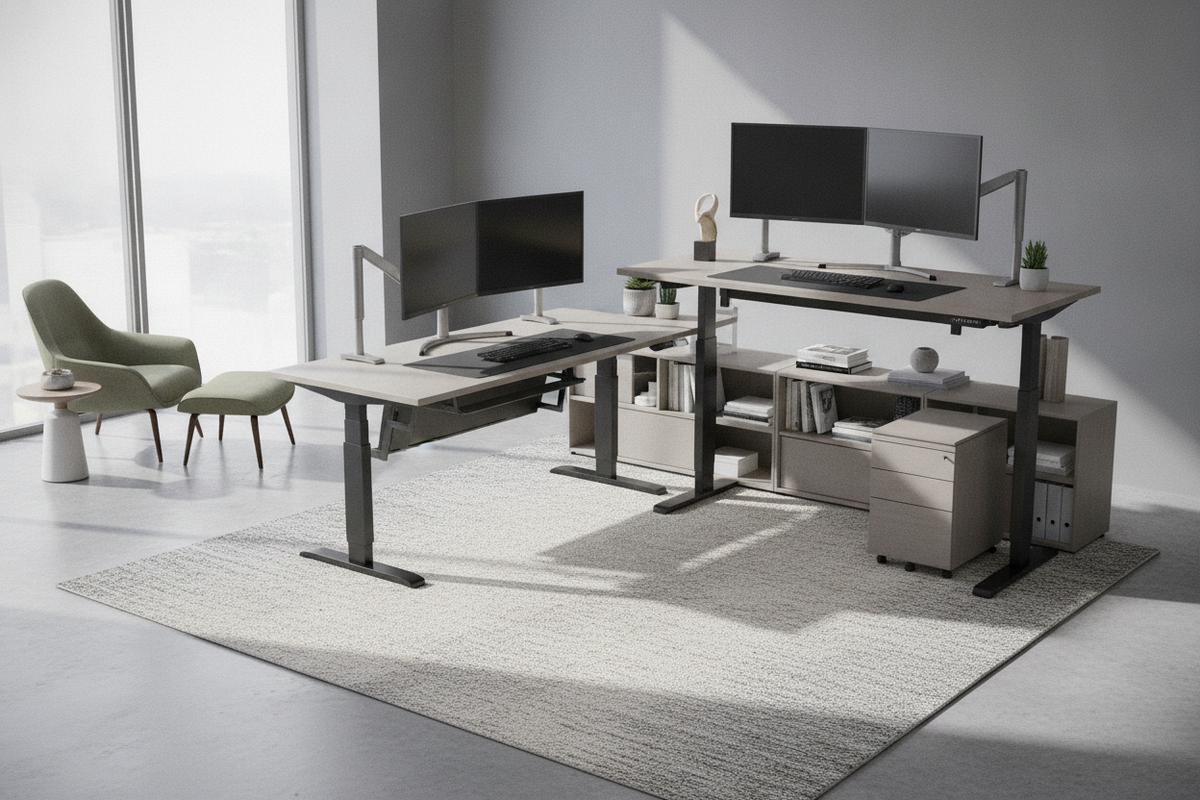
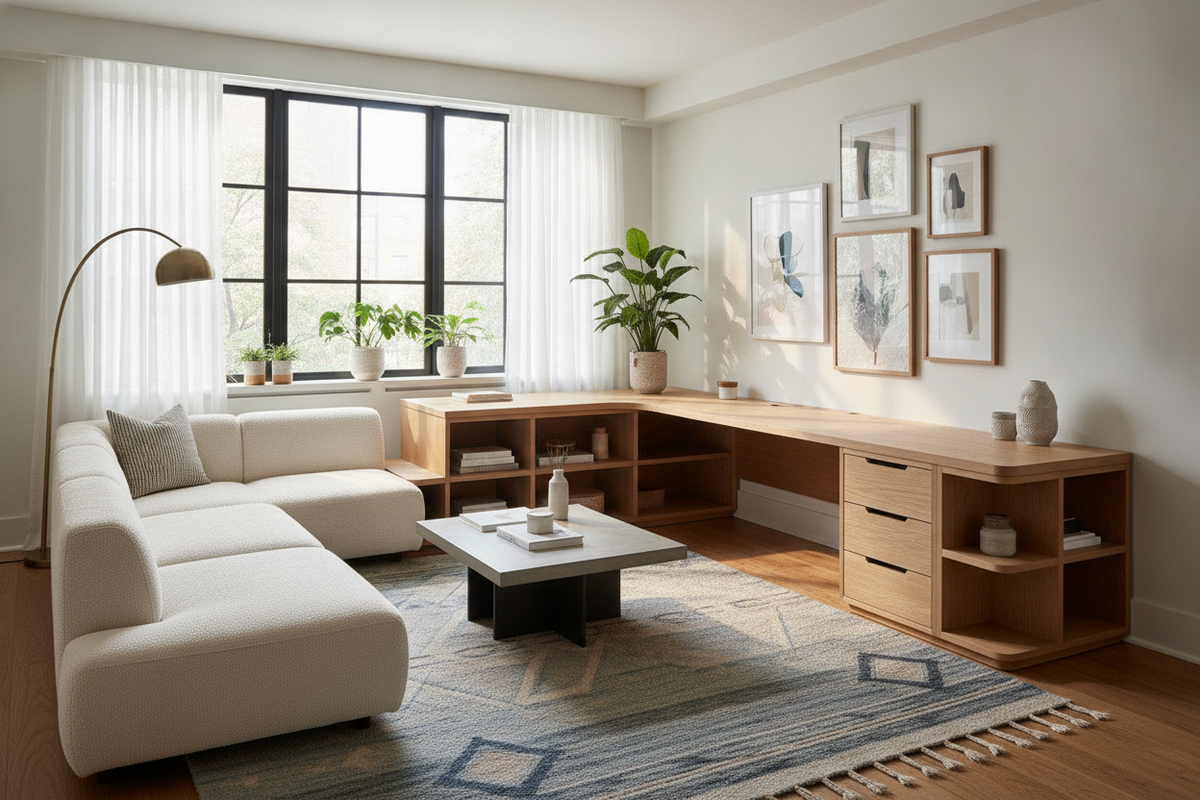
Designate the longer wing as your primary digital station. Position dual monitors or laptop risers straight ahead to avoid sustained neck strain. Utilize the adjacent return wing as an analog workflow hub for note-taking, sketching, tablet interaction, or reading physical documents. Modern modular units like an L-shaped corner desk with storage integrate shelving right at the intersection or outer flank, ensuring that active project materials remain orderly.
Keep your desk surface clean by routing cords along the inner corner. Installing an under-desk cable basket beneath the corner apex keeps power strips, monitor bricks, and charging cables tucked safely off the floor while preserving legroom.
Material Durability, Frame Stability, and Assembly Considerations
Selecting durable materials ensures your l-shaped brown desk withstands daily computing, writing, and storage demands for years to come.
Many modern brown corner desks utilize high-density engineered wood boards surfaced with realistic, scratch-resistant wood-grain laminates or melamine veneers. These engineered surfaces resist water ring stains from coffee mugs and are easy to wipe clean with a soft microfiber cloth. When paired with heavy-gauge steel legs or reinforced pedestal panels, the desk maintains dependable structural stability even when loaded with multiple screens, printers, and full filing drawers.
During assembly, build the frame close to its intended corner location to minimize heavy lifting later. Take time to adjust the threaded leveling glides on the underside of the legs; ensuring the frame is perfectly level prevents drawer misalignment and eliminates desktop wobble on uneven flooring.

Leave a comment
This site is protected by hCaptcha and the hCaptcha Privacy Policy and Terms of Service apply.