




I spent three hours last night scrolling through marketplace listings, and I realized I’m still slightly traumatized by my parents' 1994 living room. You know the one: that massive, honey-toned entertainment center that looked like it was carved from a single, giant, orange-tinted block of wood. It took up half the wall and weighed more than a compact car.
For a decade, I swore off oak tv stands entirely. I went through a phase of cheap black metal units and white IKEA lacquers just to distance myself from that '90s aesthetic. But lately, something has shifted. I’m seeing designers use oak in ways that actually make me want to clear a spot for a new media unit.
- Matte is Mandatory: High-gloss finishes are what made the '90s look cheap; modern matte sealants let the natural grain breathe.
- Leg Room: Swapping a solid base for tapered or metal legs makes a heavy wood unit feel like it’s floating.
- The 10-Inch Rule: Your stand should be at least 10 inches wider than your TV to avoid the 'top-heavy' look.
- Contrast Matters: If you have oak floors, go two shades lighter or darker with your furniture to avoid a 'wood-on-wood' blur.
The Ghost of Living Rooms Past (Why We Feared Oak)
If you grew up in the suburbs during the Clinton administration, you remember 'Honey Oak.' It was everywhere—kitchen cabinets, banisters, and especially those chunky tv stands in oak. The problem wasn't the wood itself; it was the thick, amber-toned polyurethane finish that aged into a weirdly aggressive shade of orange over time.
These units were built like bunkers. They had glass-fronted doors for your VCR and dedicated slots for 500 CDs. They were functional, sure, but they had all the grace of a bulldozer. Millennials spent the next twenty years running toward mid-century walnut or minimalist white just to escape that heavy, glossy ghost of living rooms past. We didn't hate oak; we hated the orange lacquer.
What Contemporary Oak TV Stands Get Right
The comeback is real, but it’s all about the silhouette. When shopping for modern TV stands, you'll notice that the heavy, boxy frames have been replaced by slim profiles and thoughtful textures. A contemporary oak tv stand today usually features clean lines and, most importantly, a low-sheen finish that highlights the wood’s actual color rather than masking it in plastic.
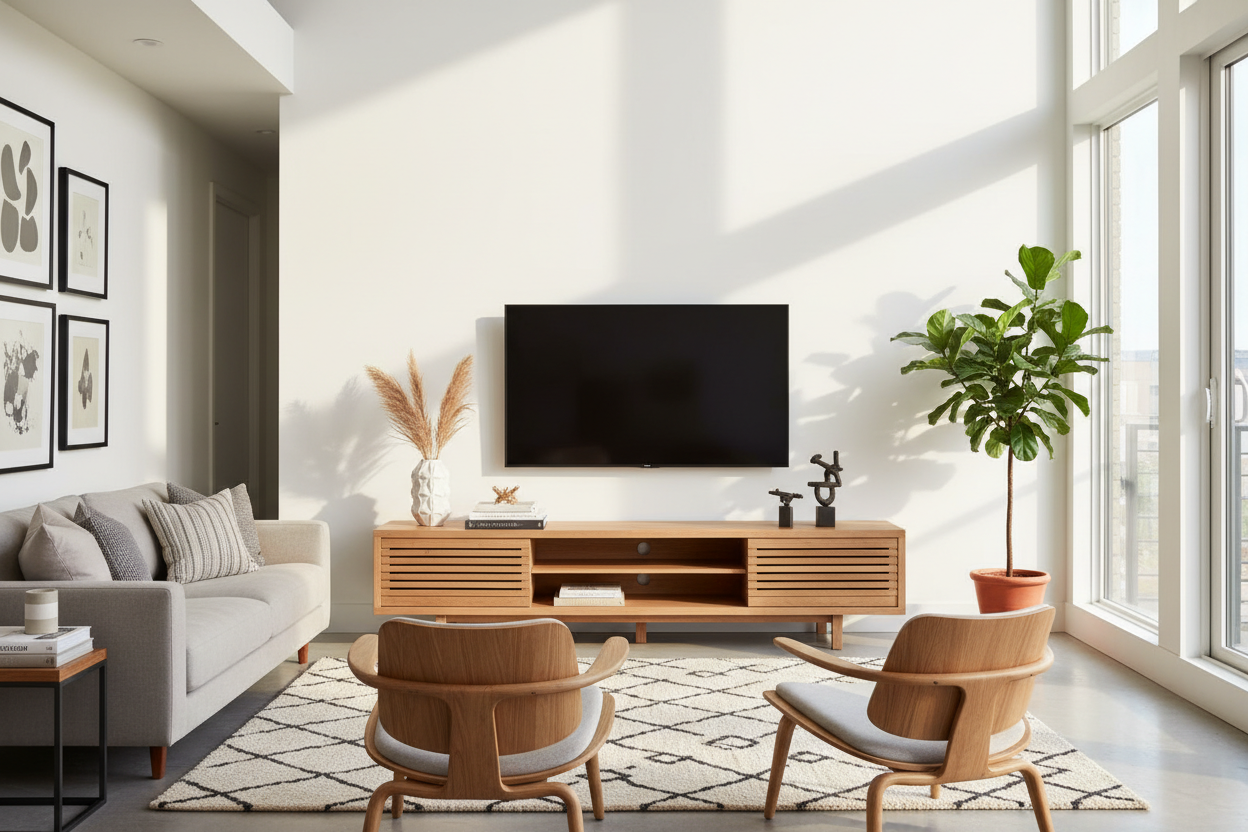
I’ve seen some incredible modern oak tv stands that use fluted or slatted doors. This does two things: it hides your messy cable box while still letting your remote’s IR signal pass through. Plus, it adds a vertical texture that makes the wood feel expensive and custom. Look for oak media consoles with slim, black metal hardware or even push-to-open doors for a handle-less, ultra-clean look. It’s a complete 180 from the brass-handled monsters of my childhood.
The Magic of Light Oak TV Stands
If you’re going for a Scandinavian or Japandi vibe, light oak tv stands are the ultimate hack. They provide warmth without the visual weight. I recently helped a friend who was swapping a white oak unit for something with more character, and we settled on a raw, white-oak finish. It made the whole room feel airier.
Bleached or white-washed wood tv stand oak pieces reflect light rather than absorbing it. This is a lifesaver in small apartments where a dark walnut piece would feel like a black hole in the corner. An oak tv cabinet in a light finish acts as a neutral base, allowing you to go bolder with your rug or sofa colors without everything clashing.
How to Stop Your Oak TV Cabinet From Clashing With Your Floors
This is the most common question I get: 'Can I put an oak tv table stand on my oak floors?' The answer is yes, but you have to be intentional. If the wood tones are too close, the furniture just looks like it’s melting into the floor. It’s a design uncanny valley that feels slightly 'off.'
Follow the 'two shade rule.' If your floors are a medium-toned oak, choose a small tv stand oak in a much lighter, sandier finish. Or, go the other way with a dark-stained oak tv console furniture piece. If you’re stuck with identical tones, throw a high-contrast rug under the unit. A cream-colored wool rug or a dark jute piece creates a visual break that saves the room from looking like a lumber yard.
The Golden Rule for a 65 Inch Oak TV Stand
There is nothing that ruins a room faster than a 65-inch screen hanging over the edges of a 50-inch stand. It looks unstable and cheap. If you have a 65-inch tv stand oak, the console itself should be at least 60 to 70 inches wide. Remember, TV sizes are measured diagonally, so a '65-inch' screen is actually about 57 inches wide.
For large setups, I often recommend a modern 3-piece entertainment center. It frames the screen and provides enough visual 'anchor' so the TV doesn't look like a giant black mirror floating in space. A solid oak tv cabinet for sale with a wide footprint provides enough oak tv stand storage for your consoles, soundbars, and that one random drawer of cables you refuse to throw away.
Oak vs. Walnut: Which Actually Ages Better?
I love walnut, but it has a secret: it fades. If your living room gets a lot of direct sunlight, that expensive walnut console will eventually bleach out. Oak, on the other hand, is incredibly hardy. An oak tv entertainment stand is a long-term investment because it handles UV exposure and daily wear-and-tear better than almost any other hardwood.
When you're looking for the best wood for TV stand builds, oak wins on durability every time. It’s a dense, open-grain wood that hides scratches well. If you have kids or pets who treat the tv entertainment unit oak like a jungle gym, oak is your best friend. It’s the kind of piece you buy once and keep for twenty years—and this time, you won't want to hide it in the basement in 2044.
Frequently Asked Questions
What is the best size for a 55 inch oak tv stand?
For a 55-inch TV, look for a stand that is at least 50-55 inches wide. This ensures the screen doesn't overhang the edges. A 60-inch console is usually the 'sweet spot' for a 55-inch TV, giving you a few inches of space on either side for a small plant or a speaker.
How do I clean an oak tv unit without ruining the finish?
Skip the aerosol sprays. Use a slightly damp (not dripping) microfiber cloth to wipe away dust. If you have a matte-finish oak tv entertainment center, avoid anything with wax or silicone, as it will create a greasy buildup that ruins the modern flat look.
Is a 'solid oak' stand better than 'oak finish'?
Solid oak is a legacy piece—it’s heavy, durable, and can be refinished. However, a high-quality wood veneer on an oak 65 inch tv stand is often more stable in homes with big temperature swings, as it won't warp or crack like solid wood can. Just make sure it’s a real wood veneer, not a 'photo paper' laminate.


Leave a comment
This site is protected by hCaptcha and the hCaptcha Privacy Policy and Terms of Service apply.