

















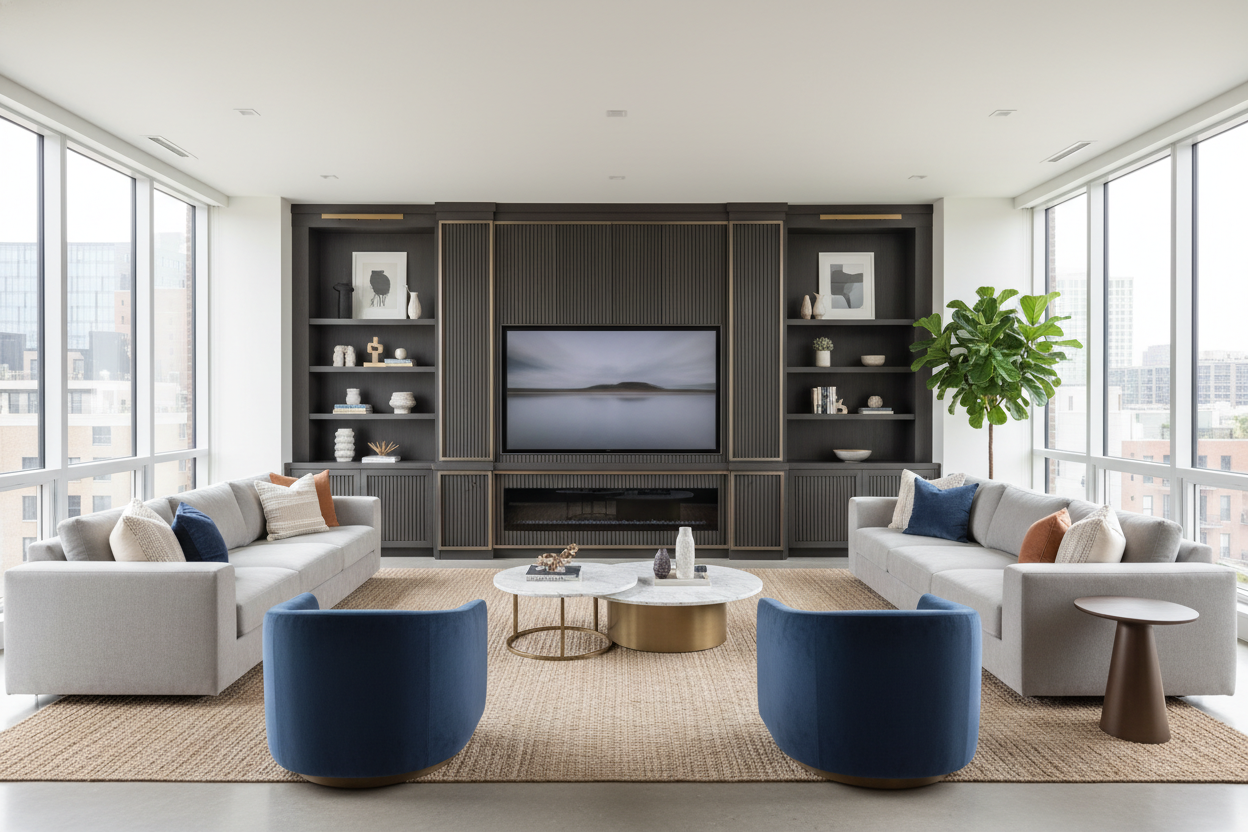
I spent three months staring at a 15-foot wall in my living room. I had a standard 60-inch console there, and it looked like a postage stamp stuck to a billboard. Every time I sat on my sofa, I felt like the room was unfinished—like I was living in a temporary rental despite having a mortgage. I kept thinking I needed more art or maybe a couple of floor plants to fill the gaps, but the math just wasn't mathing.
The solution was a 8ft tv stand. When I first measured it out with blue painter's tape on the floor, I panicked. Ninety-six inches is a lot of furniture. It felt like I was inviting a boat into my house. But once it arrived and I shoved it against that vast expanse of drywall, something clicked. The room didn't feel smaller; it finally felt intentional.
- Visual Balance: It aligns with the scale of a standard 3-seater sofa.
- Storage: You get massive cabinet space without needing a tall, bulky hutch.
- Built-in Look: It mimics custom cabinetry for a fraction of the price.
- TV Support: It comfortably holds an 85-inch screen with room to spare for decor.
The Awkward Blank Wall Problem I Couldn't Ignore
We’ve all seen it: the 'floating' media console. It’s that 50 or 60-inch unit that sits lonely in the middle of a long wall, flanked by a tangled mess of lamp cords and maybe a dusty subwoofer. It looks like dollhouse furniture. When I realized my living room felt cold despite the rug and the throw pillows, I looked at the proportions. A standard living room wall is 12 to 16 feet long. Putting a 5-foot stand there leaves 5 feet of 'dead air' on either side.
I was terrified that an 8 foot tv stand would make my room look like a Best Buy showroom. I worried it would be too heavy, too long, and too much to assemble. But the hesitation was actually just visual anxiety. Most of us are conditioned to buy 'standard' sizes, but standard is usually the bare minimum. Sizing up to a 96-inch unit is the easiest way to make a builder-grade room look custom.
Why 96 Inches is Actually the Magic Number
Design is all about lines. Your sofa is likely between 84 and 96 inches long. If your TV console is shorter than your sofa, the room feels top-heavy and unbalanced. When I started shopping for wider tv stands, I realized that an 8ft unit creates a perfect 1:1 ratio with the seating area across from it. It anchors the space in a way that smaller pieces can't.
If you have an 8 ft tv setup—or even just a 75-inch screen—you need that extra runway. A screen should never overhang the edges of the furniture. Even if the TV is wall-mounted, having a 8ft entertainment center underneath it creates a grounded, architectural look. It stops the TV from looking like a black hole floating on the wall.
Will a Massive Console Dominate My Room?
The short answer is no, provided you choose the right depth. People often confuse 'width' with 'bulk.' A 8 foot entertainment center that is 20 inches deep will feel massive and intrusive. However, a unit that is 96 inches wide but only 14 or 15 inches deep feels like part of the wall itself. It’s a horizontal line that draws the eye across the room, making the space feel wider, not more crowded.
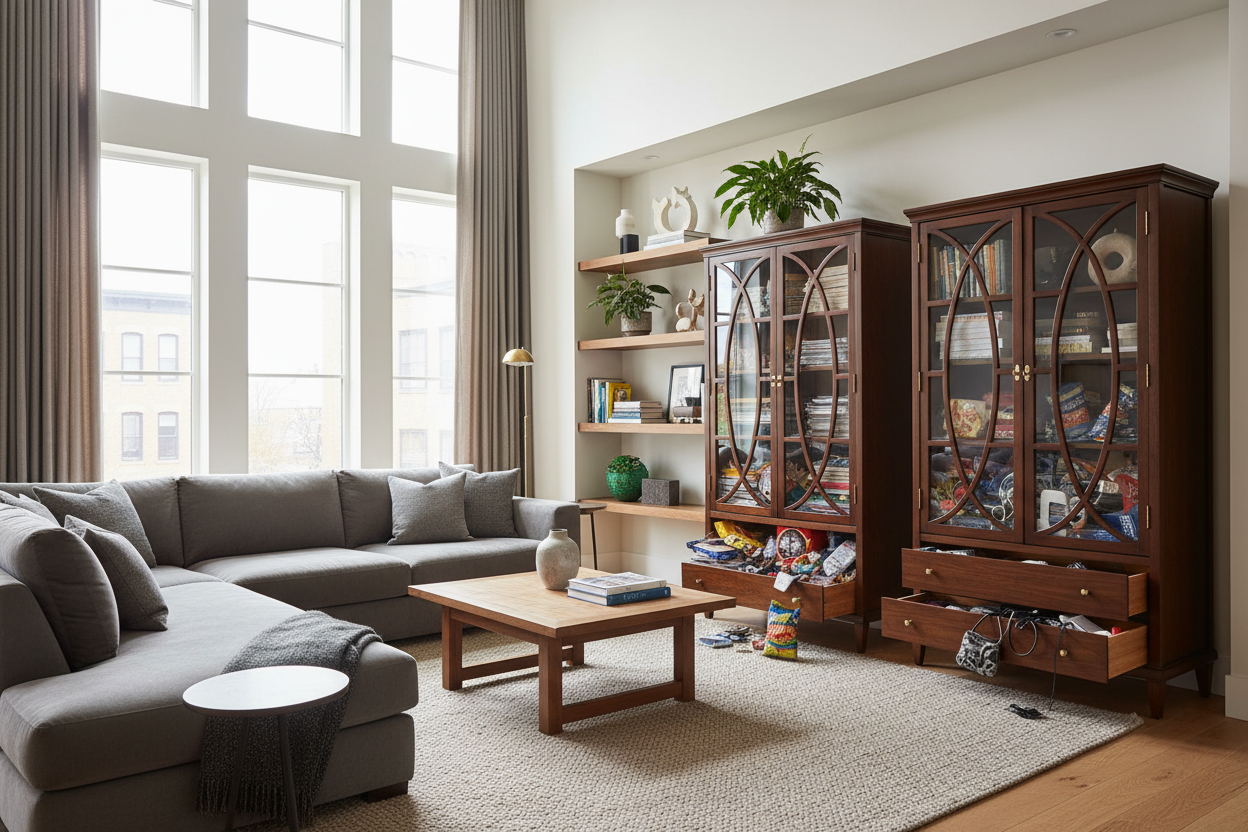
I spent a week debating if an entertainment center worth the space would eat my floor plan. My living room isn't a ballroom; it's a standard 14x18 box. But because the console is low to the ground, it doesn't block any sightlines. It actually cleared up clutter because I could hide the router, the gaming consoles, and my entire board game collection inside it, rather than having them scattered in various bins.
The Trick is Keeping the Profile Low
If you’re going for a 8 foot long tv stand, keep the height in check. A 30-inch tall unit at that width starts to look like a dresser or a sideboard. For a modern, high-end feel, look for something between 18 and 22 inches high. This keeps the center of gravity low and leaves plenty of vertical space for your TV and wall art. It’s the difference between a clunky 'media cabinet' and a sleek 'gallery plinth.'
Faking the Custom Built-In Look for Less
Custom built-ins cost $5,000 minimum. I know because I got the quotes. An 8 foot tv console gives you about 80% of that aesthetic for 20% of the price. When you have a piece of furniture that spans nearly the entire length of a focal wall, it starts to look like it was designed for the house. It becomes more than just a tv stand—it acts as a structural element.
To really sell the look, I didn't just center the TV and call it a day. I used the extra 2 feet on either end of my 8 foot tv console to layer in some personality. I put a stack of oversized art books on one end and a large ceramic lamp on the other. Because the stand is so long, you can style it like a mantel. It’s the ultimate hack for people who want a 'designed' home but don't want to hire a contractor.
Delivery Logistics: Read This Before You Click Buy
Here is the reality check: an 8ft tv console usually comes in one or two very heavy, very long boxes. I learned this the hard way when the delivery driver left a 100-pound box on my driveway and my front door has a tight 90-degree turn in the entryway. You need to measure your hallways, your door frames, and especially any elevators. If you live in a third-floor walk-up, you better have some very strong friends and a lot of pizza ready.
Also, check the materials. At 8 feet, a cheap MDF board will sag in the middle over time under the weight of a heavy TV. Look for units with hidden center support legs or those made from solid wood or high-grade plywood. I opted for a model with six points of contact with the floor, and three years later, the top is still perfectly level. Don't skimp on the structural integrity when you're going this big.
FAQ
How many people does it take to assemble an 8ft stand?
Technically one, but practically two. Maneuvering a 96-inch top panel into place without snapping the cam locks is a two-person job. Don't be a hero; ask for help.
Will an 8ft stand fit in a small apartment?
Surprisingly, yes. If you have one long wall, a single long piece of furniture often looks cleaner and less cluttered than three smaller pieces (like a stand plus two bookshelves) shoved together.
What if my wall is exactly 8 feet long?
Avoid it. You want at least 6-12 inches of clearance on either side of the stand so it doesn't look like it's wedged into a closet. If your wall is exactly 96 inches, look for a 72 or 80-inch model instead.

Leave a comment
This site is protected by hCaptcha and the hCaptcha Privacy Policy and Terms of Service apply.