















I spent three years staring at a chunky mid-century console that looked great on Instagram but acted as a magnet for dog hair and discarded socks. Every time I tried to clean, I had to shove this 80-pound beast aside, scratching my hardwood floors in the process. It made my 12x15 living room feel like a storage unit rather than a place to relax. I finally realized that my floor space was too valuable to be occupied by a box of air and tangled HDMI cables.
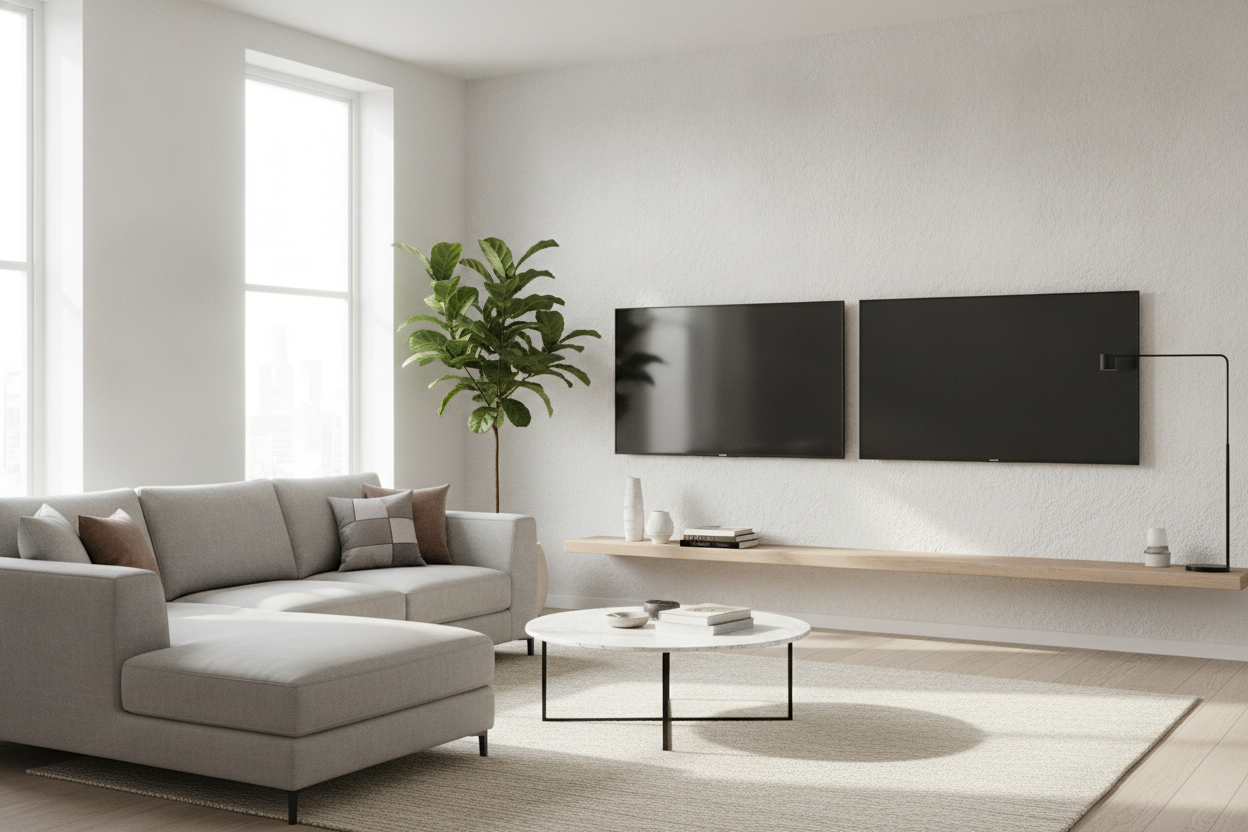
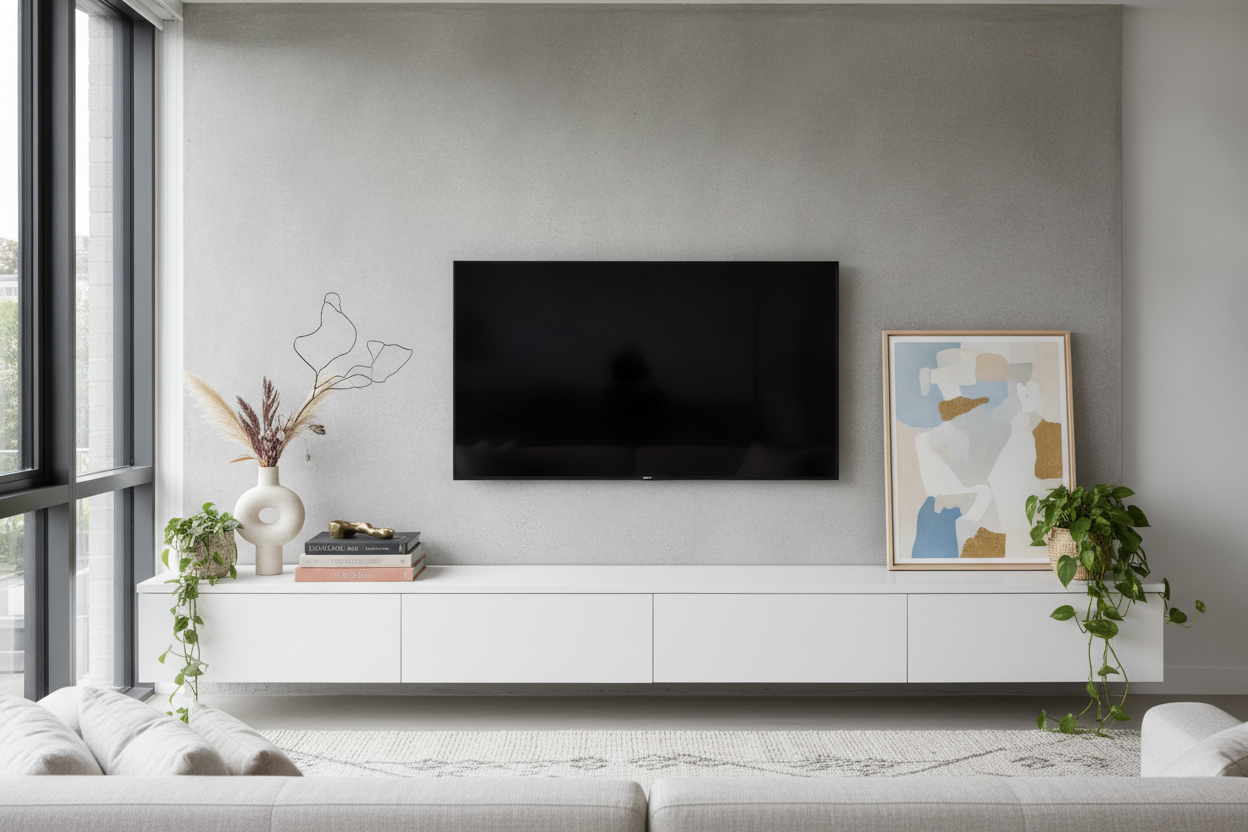
Switching to a wall mount tv stand 65 inch setup wasn't just about aesthetics; it was about reclaiming the three square feet of floor that my robot vacuum had been ignoring for years. Once that heavy cabinet was gone, the room breathed. If you are tired of the 'clutter creep' that happens around your media center, it is time to look up.
Quick Takeaways
- Floating units create a visual illusion of more square footage by exposing the floor.
- Cleaning becomes effortless when your vacuum can glide directly under the furniture.
- Cable management is significantly cleaner when wires are tucked behind a wall-mounted panel.
- Safety is a priority: always mount into studs, never just drywall.
The Day I Declared War on My Floor Console
There is a specific kind of frustration that comes from trying to vacuum under a traditional media unit. You get the nozzle halfway under, hit a cluster of dust-caked wires, and give up. For a long time, I thought this was just the price of having a big screen. I assumed that traditional Tv Stands were the only way to support the weight of my gear without the whole wall coming down. But those heavy units that sit directly on the rug make a small living room feel boxed in and heavy.
I noticed that the more floor I could see, the bigger my apartment felt. It is a simple trick of the eye. When your furniture 'floats,' the floor continues all the way to the baseboards, making the room's footprint seem uninterrupted. I decided to ditch the bulky cabinet and go for something that didn't touch the ground at all. The difference was immediate. My living room didn't just look cleaner; it felt like I had added an extra foot of space to the entire wall.
The 'Floating' Illusion: Why a Tv Stand Wall 65 Inch Setup Works
Designers often talk about 'visual weight.' A massive wooden cabinet has a lot of it. It anchors the room, but in a way that feels heavy and static. When you opt for a 90 Wall Mounted And Freely Arranged Tv Stand With Led, you are breaking that weight up. The built-in lighting on a modern unit like that doesn't just look cool—it actually helps separate the furniture from the wall, making it feel lighter than it really is.
A tv stand wall 65 inch configuration works because it aligns with the scale of the room. By mounting the console a few inches off the ground, you create a horizontal line that draws the eye across the room rather than down to the floor. It creates a 'gallery' look where the TV and the stand become a single cohesive unit of art rather than just a pile of electronics. Plus, seeing the baseboards continue under the stand is a psychological hack that tells your brain the room is wider than it is.
Will It Actually Hold My Stuff? (The Weight Limit Reality)
I will be honest: the first time I let go of my floating console after mounting it, I winced, waiting for the sound of cracking plaster. Hanging a 65-inch screen and a heavy console on the wall is terrifying if you don't know what is behind the paint. Here is the reality: drywall anchors are for picture frames and light mirrors. They are not for your expensive electronics. You must find the studs.
I used a high-end stud finder and marked every single vertical beam before I even opened the box. Most floating consoles are rated for about 50 to 100 pounds, which is plenty for a modern 65-inch TV and a soundbar, but you have to distribute that weight. If you miss a stud and rely on toggle bolts alone, you are playing a dangerous game. I also learned the hard way to check the 'depth' of the unit. If it sticks out more than 12 inches, the leverage on the wall increases significantly. Stick to slim profiles to keep the center of gravity close to the wall.
Scaling Down: The Wall Mount Tv Stand 55 Inch Pivot
Sometimes we realize the 65-inch monster is just too much for the space. If you decide to downsize, a wall mount tv stand 55 inch setup is actually much easier to manage. The weight drop is significant, and the proportions are often more forgiving in smaller bedrooms or studio apartments. The key is to ensure the console is always wider than the TV. If you have a 55-inch screen, your floating stand should be at least 60 inches wide to avoid looking like a 'top-heavy' mushroom.
What If You're Renting and Can't Drill Huge Holes?
I know the struggle of wanting this look while living with a landlord who treats every nail hole like a crime scene. If you aren't allowed to lag-bolt a heavy console into the studs, don't force it. You'll end up losing your security deposit and potentially damaging the unit. In those cases, I usually recommend a hybrid approach.
You can find ultra-slim floor stands that mimic the floating look without the structural commitment. I actually wrote about this transition in my piece on Why I Swapped My Wall Bracket for a Floor Stand TV Mount 75 Inch. It covers how to get that minimalist, high-mounted aesthetic when your walls are made of crumbly old plaster or you are just in a temporary rental. You still get the height and the clean lines, but your floor carries the burden instead of your drywall.
FAQ
How high should I mount my floating TV stand?
The sweet spot is usually 8 to 12 inches off the floor. You want enough space for a vacuum to pass under, but you don't want it so high that the TV ends up at 'waiting room' height. Your eyes should be level with the middle of the screen when you are seated.
Can I hide the wires without cutting into the wall?
Yes. Look for units with built-in cable management channels, or use paintable D-line cable raceways. They stick to the wall and can be painted the exact same color as your room, making them virtually invisible from a distance.
Do I need two people to install this?
Absolutely. One person needs to hold the unit level while the other drives the screws into the studs. Attempting to solo-mount a 70-inch wide floating console is a fast track to a broken toe and a hole in your wall.

Leave a comment
This site is protected by hCaptcha and the hCaptcha Privacy Policy and Terms of Service apply.