

















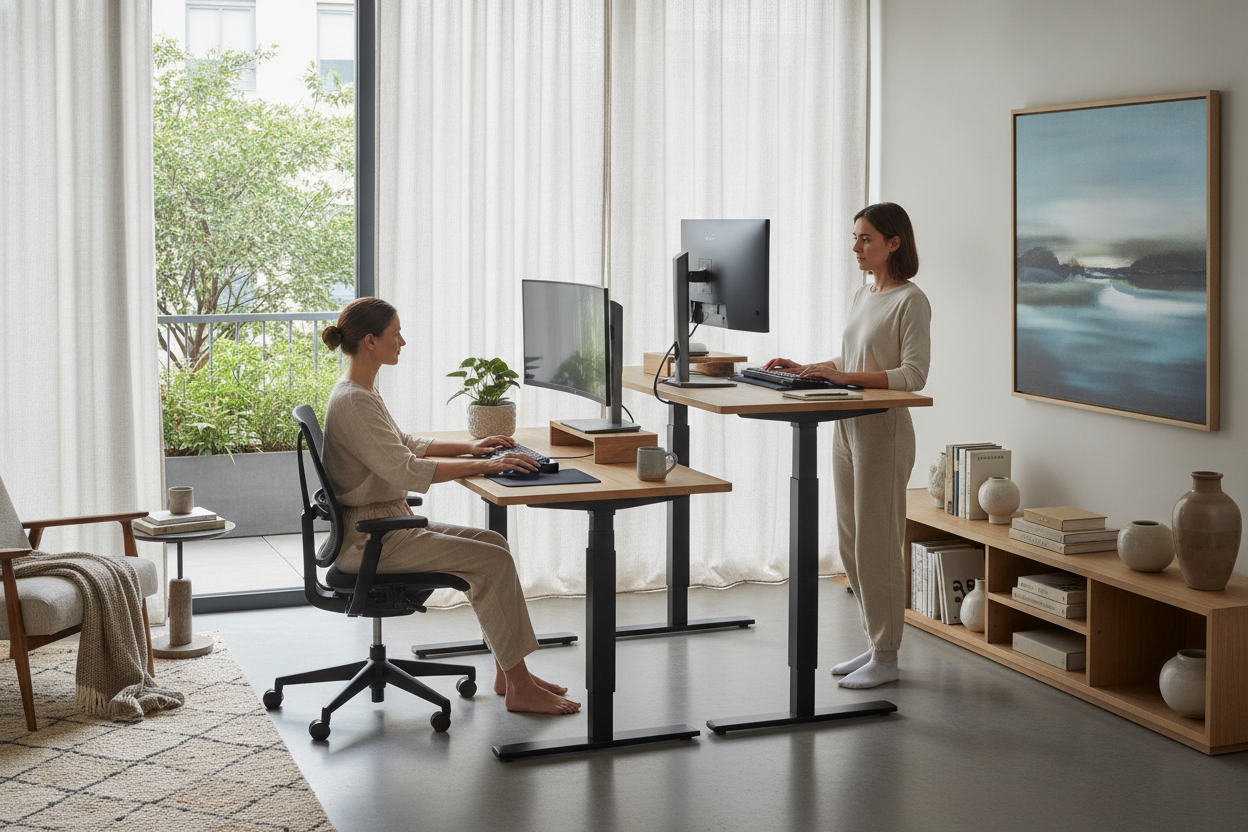
I remember the day my 'back-saving' desk finally arrived. I had spent years hunched like a gargoyle over a standard static computer desk, convinced that the only thing standing between me and perfect spinal health was a motor and some T-style legs. I unboxed the frame, bolted on the desktop, and felt like a productivity god for exactly forty minutes. Then, the reality of my own bad habits set in.
The truth is, an ergonomic height adjustable desk is a tool, not a cure. I spent $600 thinking I was buying a new spine, but by Tuesday afternoon, I caught my reflection in the window—I was still slumped over, neck craned, looking like I was searching for a dropped contact lens. I had just moved my poor posture from a sitting position to a standing one.
- A standing desk won't fix a weak core or bad habits overnight.
- Leaning on your elbows while standing is just 'sitting with extra steps.'
- Monitor height is often more critical than the desk height itself.
- The goal is frequent movement, not just standing still for hours.
The Day I Realized Furniture Can't Fix Bad Habits
Upgrading from a standard static computer desk to a motorized one felt like a rite of passage. I expected the desk to do the heavy lifting for my vertebrae. But a week into my new 'healthy' lifestyle, my lower back was throbbing worse than before. I realized that instead of standing tall, I was just finding new, creative ways to be uncomfortable.
Furniture can provide the opportunity for better ergonomics, but it doesn't force you into them. If you have spent a decade slouching, your muscles are programmed for it. When I stood up, my body naturally tried to find the path of least resistance, which usually meant hanging off my joints rather than using my muscles to stay upright.
The Three Posture Traps You're Still Falling Into
It is easy to blame the desk when you still feel like a pretzel at 5 PM. Usually, the issue is one of these three common misuse patterns that effectively negate every ergonomic benefit you paid for.
The 'Tired Bartender' Lean
This was my biggest mistake. I would raise the desk to standing height and immediately dump all my upper body weight onto my forearms and wrists. My shoulders would creep up toward my ears, and my spine would settle into a weird 'S' curve. You aren't actually standing at that point; you're just propped up like a weary traveler at a dive bar. It puts massive pressure on your ulnar nerves and does absolutely nothing to engage your core.
Forgetting the Monitor Height Rule
Moving the desk surface up and down is only half the battle. If you are using a laptop or a monitor on its stock stand, you are likely still looking down at a 45-degree angle. Dialing in the correct desk height means nothing if your neck is still bent. Your eyes should be level with the top third of your screen. Without a monitor arm or a laptop riser, a standing desk is just a tall way to get a neck ache.
The Locked-Knee Stand
Static standing is just as brutal as static sitting. I used to stand for two hours straight with my knees locked tight, thinking I was being 'healthy.' By mid-afternoon, my heels ached and my lower back felt like it was in a vise. Standing perfectly still for long periods causes blood to pool in your legs and puts unnecessary stress on your joints. You need a slight bend in the knees and the ability to shift your weight.
How to Actually Program Your Memory Presets for Success
If your desk doesn't have an electric lift system with memory presets, you probably won't use it correctly. I’ve owned manual crank desks in the past, and they eventually become expensive fixed-height desks because nobody wants to spend two minutes cranking a handle between meetings. The friction is too high.
Once you find your true ergonomic sweet spots—where your elbows are at a relaxed 90-degree angle and your wrists are neutral—save them immediately. I have one preset for my 'active' sitting height (with my feet flat) and one for my standing height (with my anti-fatigue mat included). Having these buttons removes the guesswork and makes the transition effortless, which is the only way you'll actually build the habit.
The Secret is Movement, Not Just Standing
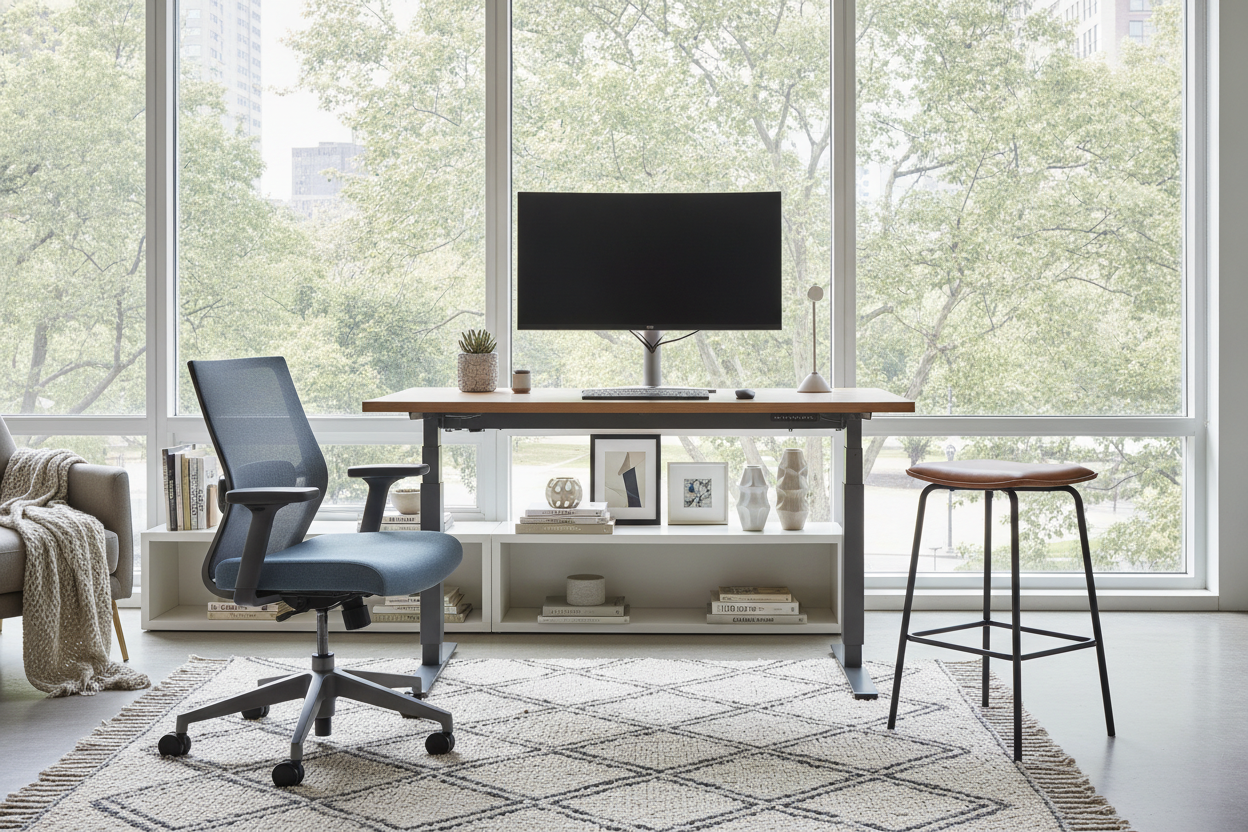
The real value of an ergonomic height adjustable desk isn't that it lets you stand; it's that it lets you move. I treat my desk as a tool for constant, micro-movements. I shift from sitting to standing to 'perching' on a tall stool every 45 minutes. This keeps the blood flowing and prevents any single muscle group from getting fatigued and giving up.
Once you've mastered the actual mechanics of not slouching, making a standing desk look stylish in your home is the next fun part. But don't let the aesthetics distract you from the hard truth: you still have to do the work of holding yourself up. The desk is just there to help.
FAQ
How often should I switch between sitting and standing?
Aim for a 1:1 or 2:1 ratio. For every hour you sit, stand for 30 to 60 minutes. Don't try to stand all day; it's just as hard on your body as sitting too much.
Do I need an anti-fatigue mat?
If you have hardwood or tile floors, yes. Standing on a hard surface for hours will kill your arches and heels. A good 3/4-inch foam mat makes a massive difference.
Is an electric desk better than a manual one?
Absolutely. The convenience of memory presets means you will actually use the height adjustment. Manual desks often stay at one height because they are a chore to move.

Leave a comment
This site is protected by hCaptcha and the hCaptcha Privacy Policy and Terms of Service apply.