










I spent three years staring at a 50-inch Samsung balanced precariously on a six-drawer IKEA Malm dresser. Every time I opened a drawer to grab a pair of socks, the screen wobbled just enough to give me a mini heart attack. It looked like a temporary dorm room setup, despite me being well into my thirties. If you are doing the same thing, let's be honest: a dedicated bedroom tv stand is actually worth the floor space.
- Height Matters: Dressers are usually 32 to 36 inches tall, which is way too high for comfortable viewing from a bed.
- Cord Chaos: Dressers don't have cable management holes, leading to a 'spaghetti' mess of wires hanging down your wall.
- Visual Weight: A heavy TV on a heavy dresser makes the room feel cramped and top-heavy.
- Better Storage: Dedicated units offer specialized spots for remotes, streaming sticks, and consoles.
The Dresser Dilemma: Why It's Ruining Your Room
The main problem with using a dresser for your tech is that it forces your bedroom storage to pull double duty, and it usually fails at both. Dressers are deep—often 18 to 22 inches—which eats up valuable walking paths just to support a TV that is only 3 inches thick. It creates this massive, blocky footprint that makes even a large primary suite feel like a cluttered closet.
Visually, it is a mess. Your bedroom should be a sanctuary, but a massive black box sitting on top of your folded t-shirts creates a cluttered focal point that is hard to ignore. It draws the eye to the messiest part of the room instead of the bed or a nice window view. Plus, the weight of a modern TV can eventually bow the top of cheaper particle-board dressers, ruining the piece entirely. I have seen solid oak tops warp over time because they weren't engineered to hold a concentrated 40-pound load in the center while the drawers below are packed with heavy denim.
Why a Real Bedroom TV Stand Changes Everything
Ergonomics in the bedroom are completely different than in the living room. When you are sitting on a sofa, your eyes are roughly 36 to 40 inches off the floor. When you are propped up against pillows in bed, your line of sight is angled differently. A dedicated tv stand for bedroom with storage is typically lower, around 24 to 28 inches, which aligns the screen with your natural gaze and prevents that annoying 'front row at the movies' neck strain.
I have tested stands that were only 20 inches high, and while they look sleek, they are usually too low for most standard bed frames. You want something that puts the center of the screen at eye level when you are propped up. If the TV is too high—like on a tall dresser—you are constantly tilting your chin down to your chest, which is a recipe for a tension headache by the second episode of your binge-watch. A real media piece also handles heat better; electronics need airflow, and stuffing them into a dresser drawer is a fast way to fry your gaming console.
Where to Find Cute TV Stands for Bedroom Setups
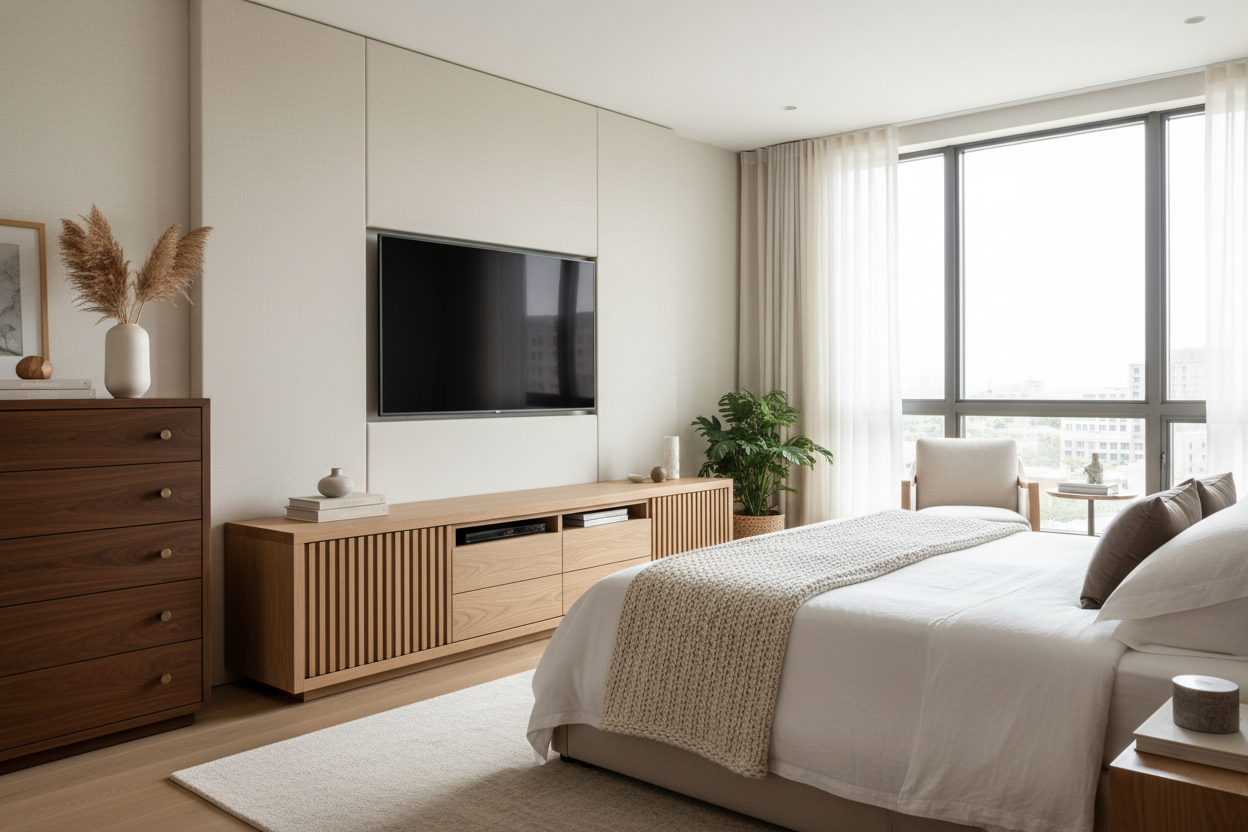
You do not want a 'media console' that looks like it belongs in a basement man-cave. For the bedroom, I always look for lighter finishes—think bleached oak, walnut, or even a stylish black TV stand that provides a crisp, modern contrast against lighter bedding. Avoid anything with too much smoked glass or visible metal racks; those look too industrial for a sleeping space.
Lately, I am obsessed with fluted wood details and woven cane fronts. They add texture and warmth, making the piece feel like actual furniture rather than just a tech stand. Look for cute tv stands for bedroom use that have tapered legs. Lifting the piece off the floor makes a small room feel much more spacious than a solid block of wood that goes all the way to the carpet. If you find something with a kiln-dried hardwood frame, grab it—it will handle the weight of a larger screen without sagging like the cheap 1.5 lb density MDF stuff.
The Storage Equation: Hiding the Chaos
The biggest fear people have is losing drawer space. I get it. But you can find a tv stand with storage for bedroom use that actually organizes your life better than a deep dresser. Deep drawers are great for jeans, but they are terrible for tech accessories, chargers, or extra linens. I actually swapped my TV stand for a wide storage cabinet a few years ago and realized I did not miss the dresser at all because the new piece had better-organized compartments.
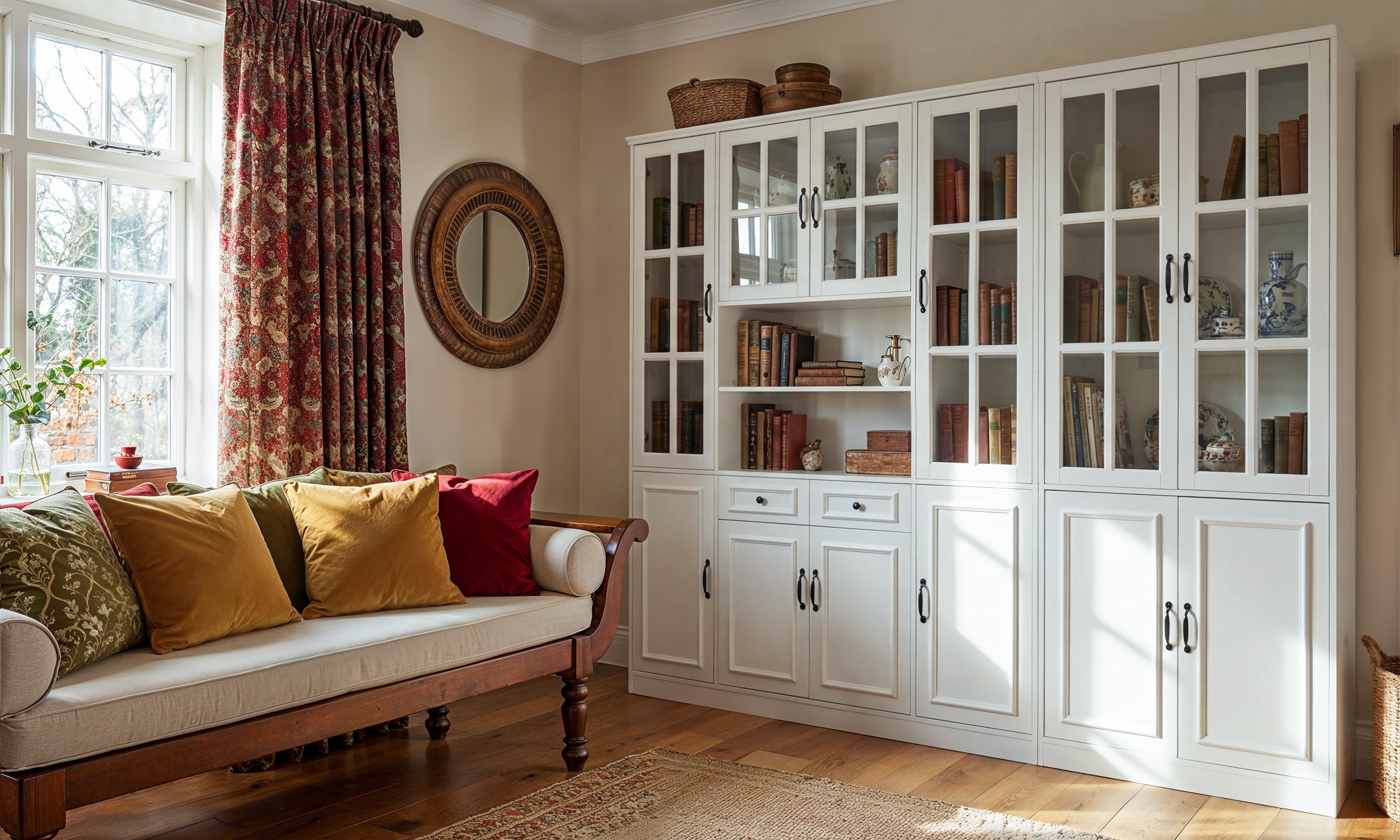
If you need to keep things feeling light, try a storage credenza with sliding glass doors. The sliding mechanism is a lifesaver in tight bedrooms where you do not have clearance to swing a cabinet door open fully without hitting the foot of the bed. Look for units with at least one adjustable shelf; it is the only way to fit a bulky soundbar or an older gaming console without it looking awkward. Also, make sure the back panel is finished or at least has pre-drilled cable ports so you aren't forced to take a hole saw to your new furniture.
How to Style Your New Setup So It Doesn't Look Like a Dorm
The goal is to mask the 'black hole' effect of the TV. I like to lean a piece of slightly oversized artwork behind the TV (offset to one side) to break up the harsh rectangular lines. Add a small task lamp with a warm bulb—not a smart light that changes colors, just a nice 2700K warm glow—to soften the edges of the screen at night. This reduces eye strain and makes the bedroom tv stand with storage feel integrated into the room's decor.
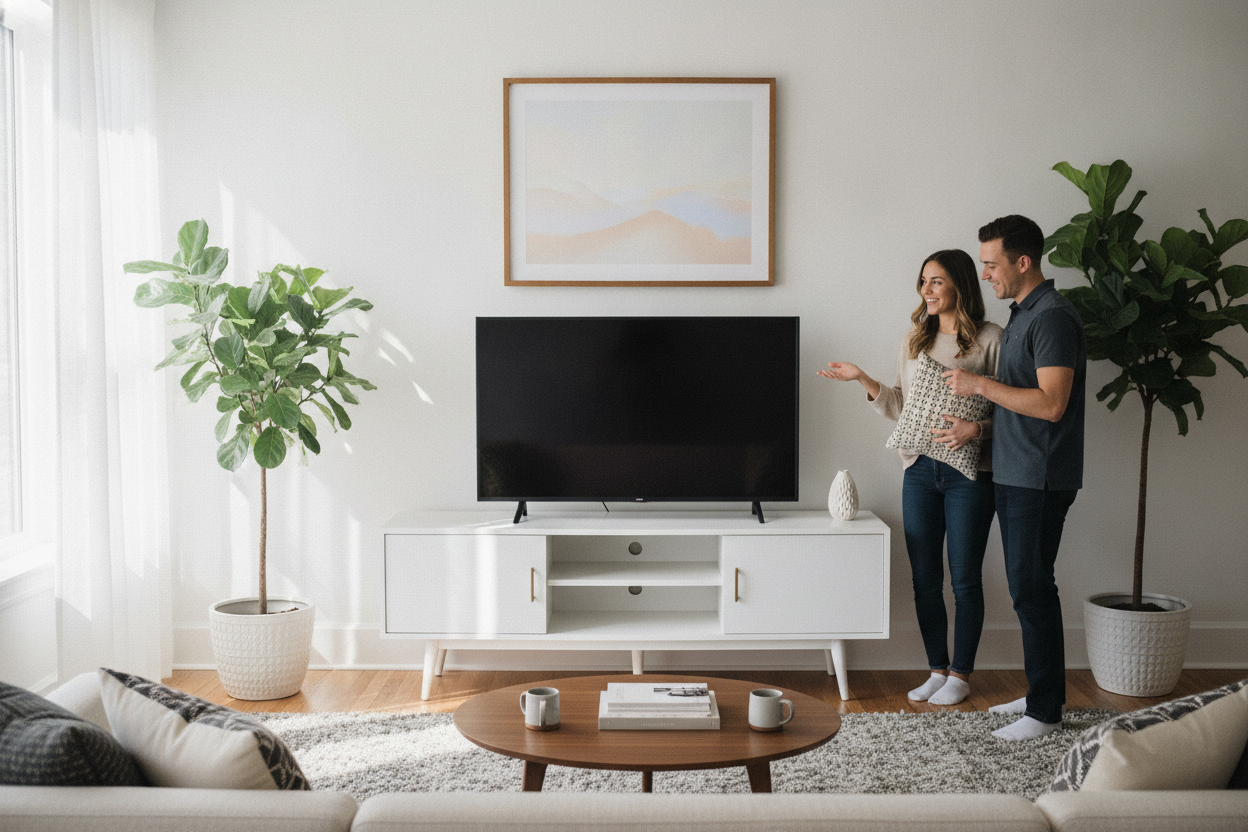
Do not over-style the surface. A single tray for remotes and maybe one stack of books is plenty. If you crowd the stand with too many knick-knacks, it starts to feel like that cluttered dresser you just replaced. Keep it simple, keep it low-profile, and let the furniture do the work. A few well-placed items like a ceramic vase or a small plant can help the tech blend into the background when the screen is off.
Personal Experience: My $400 Mistake
I once bought a beautiful mid-century console that was only 14 inches deep. It looked amazing in the catalog. In reality? My TV legs were 13.5 inches deep. The slightest bump to the wall would have sent the whole thing flying. I had to return it and pay a $75 shipping fee. Lesson learned: always measure the footprint of your TV stand, not just the screen size. Now, I never buy a stand that does not offer at least 3 inches of clearance in front of and behind the TV base. Safety first, aesthetics second.
FAQ
How high should a bedroom TV stand be?
Ideally between 24 and 30 inches. This depends on your bed height. If you have a high-profile mattress on a box spring, go closer to 30. If you are on a low platform bed, 24 inches is the sweet spot for your neck.
Can I use a sideboard as a TV stand?
Yes, but check for cable holes. Most sideboards are solid wood in the back, meaning you will have to drill your own holes for wires, which can be a pain if you aren't handy with a power drill.
What if my bedroom is too small for a stand?
If floor space is zero, wall-mount the TV. But do not just leave the wires hanging; use a slim floating shelf underneath to hold your streaming box and remotes so the setup looks finished and intentional.

Leave a comment
This site is protected by hCaptcha and the hCaptcha Privacy Policy and Terms of Service apply.