

















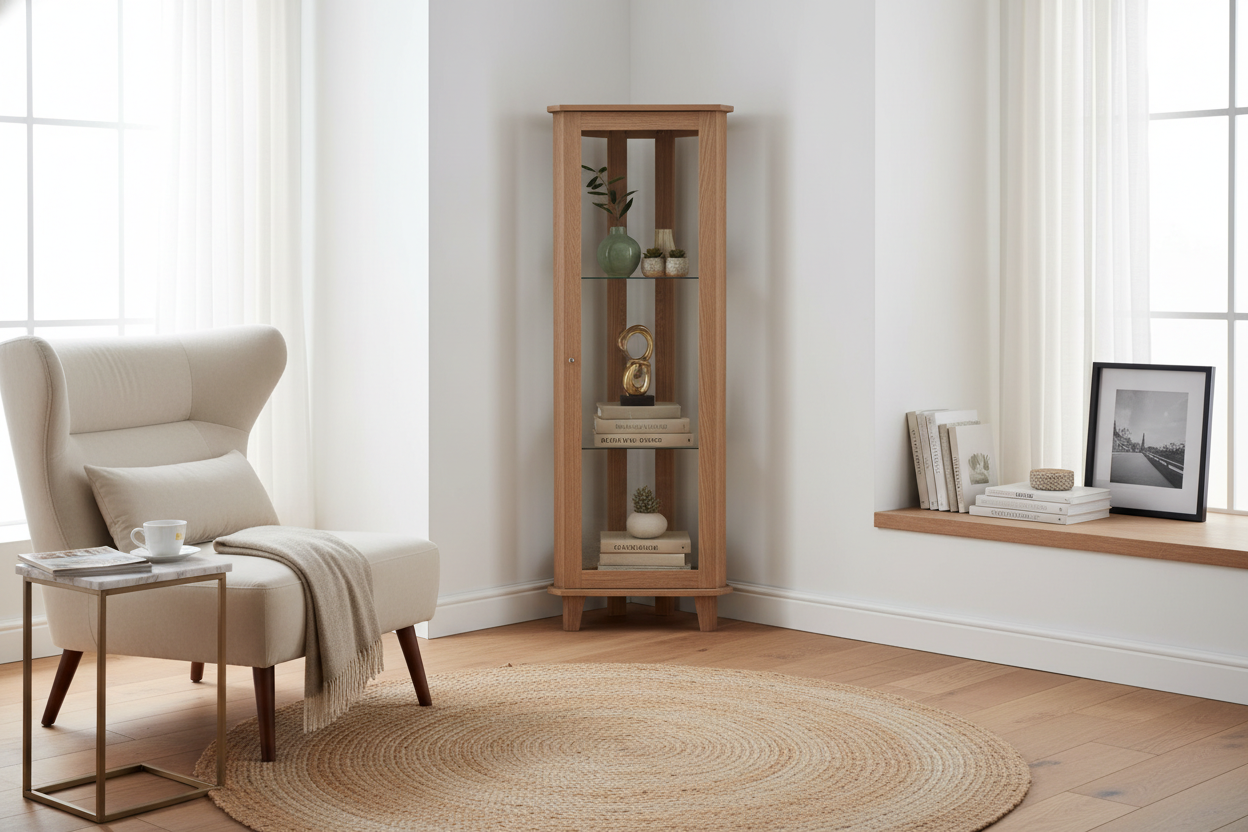
I spent three months staring at a corner in my studio apartment that was effectively a graveyard for a dead spider plant and a stack of magazines I knew I’d never read. Every time I tried to shove a standard bookshelf into that 20-inch gap, it jutted out into the walkway, practically begging me to stub my toe during a 2 AM water run. It wasn't until I stopped trying to force a rectangular piece into a triangular problem that I realized a small corner display case was the only thing that would actually work.
Quick Takeaways
- Verticality is your best friend when you have zero floor space to spare.
- Glass doors are essential to prevent the furniture from feeling like a heavy, dark block.
- Corner units utilize 'dead space' that standard rectangular furniture simply can't touch.
- Always anchor tall pieces to the wall—safety isn't optional in high-traffic walkways.
The Curse of the 'Dead Corner' (And How I Finally Fixed It)
We all have that one spot. It’s too small for a chair, too awkward for a floor lamp, and too visible to just leave empty. In my case, it was a weird nook between the radiator and the window frame. I initially considered a short glass display cabinet because I liked the idea of keeping the sightlines low, but the footprint was just too wide. It felt like a bulky intruder in a room that already felt cramped.
Switching to a corner-specific design was the 'aha' moment. By using a wedge-shaped piece, I reclaimed nearly two square feet of floor space that was previously doing absolutely nothing. Suddenly, my collection of vintage cameras had a home that didn't involve being stacked precariously on top of the microwave. The beauty of the corner unit is how it retreats into the architecture of the room rather than fighting against it.
Why I Chose Height Over Width
In a small apartment, you have to think like a city planner: if you can't build out, you build up. A tall corner display cabinet is the ultimate density play. My current unit stands about 72 inches tall but only occupies an 18-inch by 18-inch footprint. That is a massive amount of storage for a piece of furniture that takes up less room than a standard pizza box.
When you go vertical, you're utilizing air that was previously empty. I opted for a tall corner display cabinet with five shelves, which allowed me to organize my decor by 'vibe.' The top shelves get the light, airy pieces, while the bottom handles the heavier items. If I had tried to fit this much stuff on a standard horizontal shelf, I would have lost half my living room floor. It’s about being smart with the cubic footage, not just the square footage.
Glass Doors Are Your Best Friend Here
One mistake I see people make is buying solid wood corner units. Unless you’re going for a very specific 'old library' look, a solid piece of dark furniture tucked into a corner can look like a black hole. It sucks the light right out of the room. I specifically looked for a corner display cabinet tall enough to reach the level of the window light, but with full glass doors to keep things transparent.
I briefly looked at a black cabinet with glass doors that was stunning, but I worried the dark frame would be too heavy for my white walls. I eventually landed on a thinner frame that lets the light pass through the sides. It makes the corner feel deeper rather than filled. If you have a small room, you want furniture that 'breathes,' and glass is the best way to achieve that without sacrificing storage.
What I Keep on the Top Shelves (And What I Hide Below)
Styling a narrow, tall piece requires a bit of strategy. I put my most delicate ceramics and a trailing pothos on the top two shelves. These are at eye level and get the most natural light, making the whole unit feel like a curated gallery rather than a storage locker. I leave plenty of negative space here so it doesn't look cluttered.
For the bottom, I use a space saving display solution that features a solid or frosted door at the base. This is where I hide the things that aren't 'display-worthy'—my internet router, some spare charging cables, and a few heavy art books that act as an anchor. Keeping the weight at the bottom also makes the unit feel more stable, which is a nice psychological bonus when you live in an old building with slightly slanted floors.
The Final Verdict: A Tiny Investment with Huge Impact
Is a wedge-shaped piece of furniture a bit of a niche purchase? Sure. But for anyone living in a city where every inch of floor space costs a premium, it’s one of the smartest buys you can make. It’s the difference between a room that feels 'finished' and one that feels like a collection of leftover spaces. If you're on the fence, consider if a corner cabinet display case worth it for your specific layout—usually, the answer is a resounding yes.
Personal Experience: The Assembly Headache
I’ll be honest: assembling a tall, narrow cabinet is a test of patience. My first one arrived with 400 pieces of hardware and instructions that looked like they were written in riddles. It took me three hours and two glasses of wine to get it standing. My advice? Check the reviews for 'ease of assembly' and make sure you have a second pair of hands to help you stand it up. Once it's anchored to the wall, though, the frustration of the assembly disappears, and you're left with a piece that looks way more expensive than it actually was.
FAQ
Do I really need to anchor a corner cabinet to the wall?
Yes. Because they have a smaller footprint and are often quite tall, they are more prone to tipping than a standard wide bookshelf. Most units come with a simple wall strap—use it. Your glassware (and your pets) will thank you.
Will a corner cabinet make my room look smaller?
Actually, it usually does the opposite. By filling a 'dead' corner with a glass-fronted piece, you're drawing the eye to the furthest points of the room, which can actually make the space feel more expansive and intentional.
Can I put heavy items on glass shelves?
Check the weight rating. Most tempered glass shelves in these units are rated for 15-25 pounds. That's plenty for decor and small books, but I wouldn't stack a 30-volume encyclopedia set on one.

Leave a comment
This site is protected by hCaptcha and the hCaptcha Privacy Policy and Terms of Service apply.