

















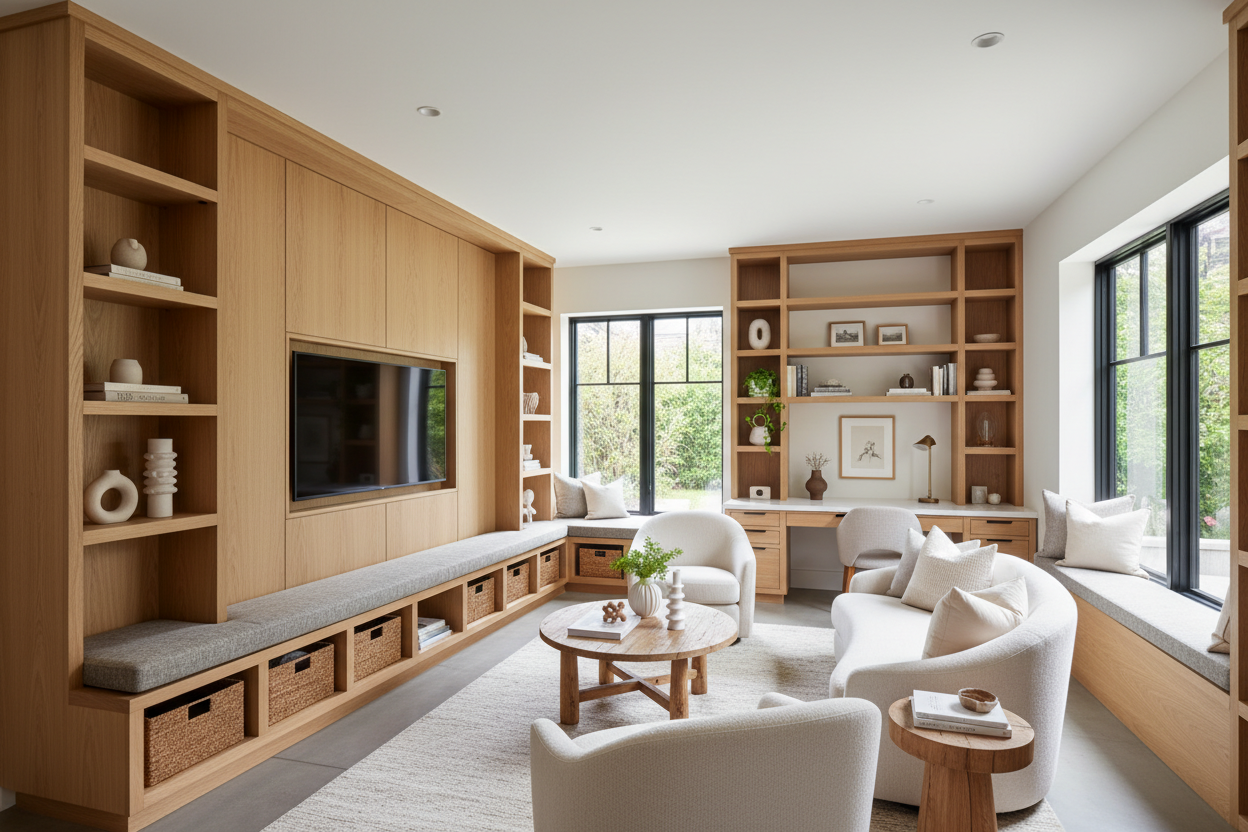
I spent three weeks measuring for a media console that wouldn't look like a tiny island in my 15-foot living room. Everything was either too short, too deep, or made of that flimsy 1/2-inch MDF that bows the second you put a plant on it. I had 47 browser tabs open at 1 AM, staring at mid-century modern legs and wondering why nothing felt right.
That’s when I realized my problem wasn't the furniture—it was the fact that I was trying to solve an architectural problem with a store-bought box. built in furniture isn't just for million-dollar estates; it's often the only way to fix a room that feels 'off' or cluttered no matter how much you tidy up.
- Built-ins eliminate the 'shadow gaps' between furniture and walls that attract dust and visual noise.
- Wall-to-wall units actually make small rooms feel larger by drawing the eye across the entire width of the space.
- Custom cabinetry is the best way to hide tech clutter like routers, mesh nodes, and tangled power strips.
- Well-designed architectural storage adds more resale value than any high-end freestanding sofa ever could.
Why Freestanding Storage Always Looked Cluttered in My House
My old living room was a graveyard of 'almost right' pieces. I had a standard 72-inch media console centered on a 12-foot wall. It left these awkward two-foot gaps on either side that served no purpose other than to collect dust bunnies and house a stray floor lamp that never felt intentional. The heights never matched, either. My bookshelf was six inches shorter than the door frame, creating a staggered skyline that made the ceiling feel lower than it actually was.
The problem with freestanding pieces is the visual weight. When you see the legs of a cabinet and the floor underneath it, your brain registers it as an object in the room. When you have furniture built in, it becomes the wall itself. You stop seeing the furniture and start seeing the architecture. In my case, swapping three mismatched cabinets for one continuous run of 3/4-inch plywood cabinetry instantly made the room feel ten times calmer. I stopped focusing on the individual items and started noticing the space.
The 'Aha' Moment That Led Me to Built In Furniture
The breaking point came when I tried to fit a standard sideboard into an alcove next to my fireplace. The alcove was 49 inches wide. Every sideboard on the market is either 48 inches (leaving a gross half-inch gap on each side) or 52 inches (too big). I spent hours with a tape measure, convincing myself I could just trim the baseboards or find a 'bespoke' option that didn't cost five figures. Eventually, I gave up on finding furniture and got a custom built-in.
This was the moment I realized that 'filling' a space is better than 'fitting' an object into it. Most people fear that floor-to-ceiling cabinets will 'eat' the room. It’s actually the opposite. When a unit goes all the way to the ceiling, the vertical lines draw your eye upward, making the room feel taller. We’re so used to seeing small, 30-inch-high consoles that we forget how much wasted air we have above our heads. By using built-in furniture, you reclaim that vertical real estate and hide the clutter that usually sits on top of shorter cabinets.
Hiding the Ugly Stuff: Pets, Wires, and Daily Messes
Let's talk about the stuff we all hate looking at: the black web of HDMI cables behind the TV and the plastic cat litter box in the corner. Standard furniture is terrible at hiding these. You end up drilling holes in the back of a $1,200 dresser just to get a plug through. With furniture built ins, you design the wire management into the structure. I had my carpenter build a 'false back' in one section of the shelving to hide a massive mesh router and all the power bricks. It’s completely invisible but easily accessible.
This logic applies to our four-legged roommates, too. If you're tired of a bulky wire cage taking up half the floor, you can integrate a large dog crate furniture with 4 drawers directly into a mudroom or living room unit. It looks like high-end cabinetry but serves a dual purpose. I’ve even seen people tuck cat furniture and litter enclosures into the base of a hallway built-in with a small arched entry. It keeps the mess contained and the floor clear of plastic eyesores.
Does Permanent Seating Make Sense? (Spoiler: Yes)
We usually think of built-ins as cabinets, but permanent seating is where you really win the space-saving game. A breakfast nook banquette can save you about 24 to 30 inches of 'walk-around' space compared to a floating dining table and chairs. Because the bench is pushed directly against the wall (or built into it), you can fit a full dining setup into a corner that would otherwise be a dead zone.
I’m a huge advocate for the classic window seat. It’s not just a cozy reading spot; it’s a stealth storage chest. If you build a deep bench under a window with a flip-top lid, you’ve basically created a closet for bulky blankets and seasonal decor. These types of furniture built ins turn awkward alcoves into the most used spots in the house. Just make sure you invest in high-quality 2.5 lb/ft³ foam for the cushions—the cheap stuff from the craft store will go flat in six months.
Will Future Buyers Hate My Built-In Furniture?
This is the number one question I get. People are terrified of 'over-personalizing' their homes. But here’s the reality: buyers love storage. A well-executed built-in furniture piece looks like an architectural upgrade, not a DIY project. It suggests the house is high-end and thoughtfully designed. The key is to keep the style classic. Avoid hyper-trendy colors or bizarre hardware. Stick to shaker doors or clean flat-panels in neutral tones like creamy white, soft charcoal, or a natural wood grain.
If you’re worried about the commitment, think of it as an investment in your own sanity. You’re trading a few thousand dollars and a permanent wall fixture for a home that stays organized and feels twice as big. Even if a future buyer doesn't love your specific taste, the sheer utility of furniture built in to the home's footprint is a massive selling point. I’ve never seen a house listing brag about 'plenty of space for your IKEA Billy bookcases,' but they definitely brag about 'custom library shelving.'
Is built-in furniture more expensive than high-end freestanding pieces?
Usually, yes. You're paying for materials plus professional labor and installation. However, a high-end solid wood sideboard from a designer brand can easily cost $3,000. For that same price, you can often get a custom wall-to-wall unit that offers four times the storage and a better fit.
Can I do built-ins in a rental?
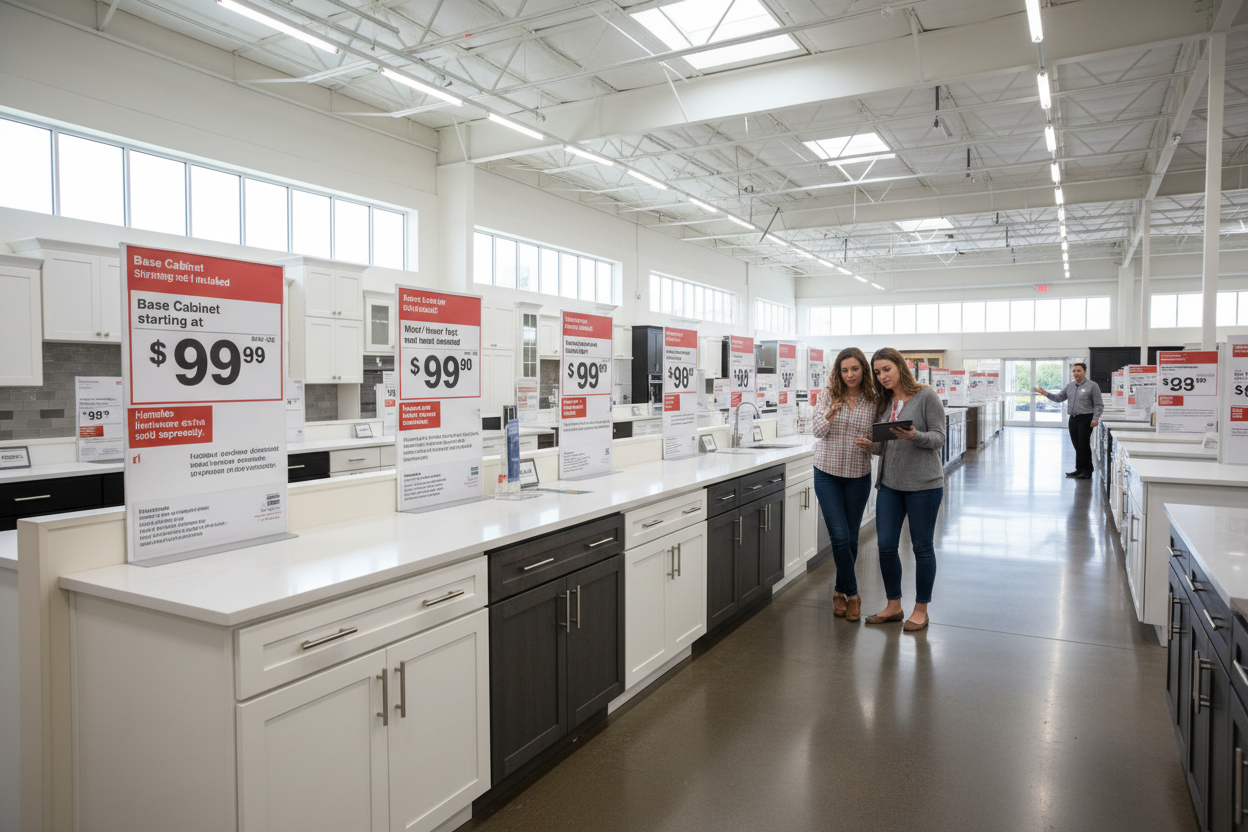
Not usually. Since they are anchored to the studs and often involve removing baseboards, most landlords will say no. If you're renting, look for modular systems that can be secured with minimal wall damage but look built-in, like the IKEA Sektion kitchen cabinets used as a sideboard.
What material is best for built-ins?
I always recommend paint-grade maple or birch plywood for the boxes and solid wood for the face frames and doors. Avoid particle board if you're planning on storing heavy books; it will sag over time. If you want a wood look, go for a high-quality veneer over a plywood core.

Leave a comment
This site is protected by hCaptcha and the hCaptcha Privacy Policy and Terms of Service apply.