

















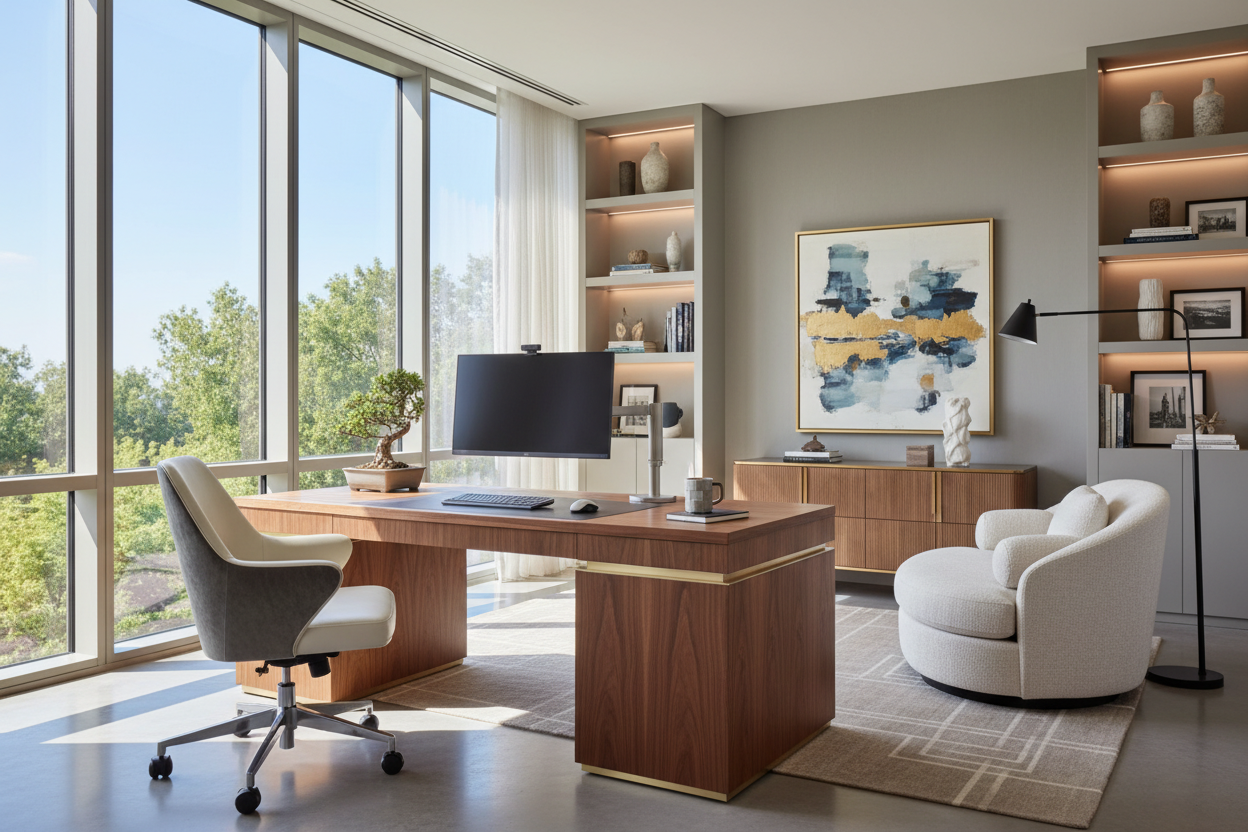
We have reached a point where the makeshift dining table setup is no longer sustainable. You have likely scrolled through many an article on work from home looking for productivity hacks, yet most overlook the critical intersection of ergonomics and interior architecture. True remote work success isn't just about software; it is about curating a physical environment that reduces cognitive load and elevates your professional presence.
Key Features to Look For in Home Office Design
- Ergonomic Integrity: Prioritize chairs with lumbar support and seat-depth adjustment over purely aesthetic accent chairs.
- Material Tactility: Choose desk surfaces like solid walnut or matte laminate that resist fingerprints and feel warm to the touch.
- Lighting Layers: Ensure a mix of ambient overhead light and directional task lighting to reduce eye strain.
- Acoustic Control: Incorporate soft furnishings (rugs, drapery) to dampen echo during conference calls.
Defining the Spatial Layout
How has remote work changed the workforce? It has shifted the demand from open-plan flexibility to dedicated, acoustically secure zones. When planning your layout, avoid facing a wall directly if possible. The "command position"—facing the door with a solid wall behind you—remains the gold standard in design psychology. It minimizes subconscious startling and provides a professional backdrop for video calls.
Selecting High-Performance Furniture
Many remote work articles suggest budget-friendly desks, but as a furniture specialist, I advise viewing your desk as an heirloom piece. Cheap veneers often peel within a year of heavy use. Look for kiln-dried hardwoods or high-pressure laminates with sealed edges.
The Chair: Aesthetic vs. Function
While a velvet tub chair looks stunning in a portfolio, it is disastrous for an eight-hour shift. Look for a silhouette that bridges the gap between residential and contract grade. Brands are now producing high-performance task chairs wrapped in linen or leather, hiding the mechanical levers to maintain a sophisticated visual balance.
Lighting and Color Coordination
Unlike generic work at home articles that simply suggest "natural light," we must consider the glare factor. Position your screen perpendicular to windows, not facing or backing them. For color, lean into "focus shades." Deep teals, sage greens, and warm terracottas ground the space, whereas sterile whites can increase anxiety levels over time.
Lessons from My Own Projects
I want to share a specific mistake from a project I consulted on last year to save you the trouble. A client insisted on a gorgeous, rough-hewn reclaimed wood dining table to serve as their primary desk. It looked incredible in the photos.
However, within two weeks, the reality set in. The uneven texture made writing on paper impossible without a blotter, the mouse skipped constantly, and the raw wood edge snagged their merino wool sweaters. We eventually had to replace it with a smooth-edged white oak writing desk. It’s a reminder that in articles about working from home design, texture must never outrank utility. If you run your hand across a surface and it feels abrasive, it will feel ten times worse after your forearms have rested on it for six hours.
Conclusion
Designing your workspace is an investment in your career longevity. By selecting materials that age gracefully and layouts that respect human physiology, you create a sanctuary that separates your professional grind from your personal relaxation. If you are looking for more remote work article resources or design inspiration, focus on sources that prioritize longevity over trends.
Frequently Asked Questions
How do I fit a workspace into a small apartment without it looking cluttered?
Utilize verticality. A wall-mounted secretary desk or shelving unit with a drop-down surface allows you to "close" the office at the end of the day, visually reclaiming your living space.
What is the best rug size for a home office?
Ensure the rug is large enough that the chair casters do not roll off the edge when you push back. Typically, a 5x8 foot rug is the minimum for a standard desk and chair setup to ensure smooth movement.
Is a standing desk worth the aesthetic compromise?
Yes, but you don't have to compromise. Look for standing desks with solid wood tops and motorized legs hidden within timber cladding or substantial metal bases that mimic architectural drafting tables.

Leave a comment
This site is protected by hCaptcha and the hCaptcha Privacy Policy and Terms of Service apply.