

















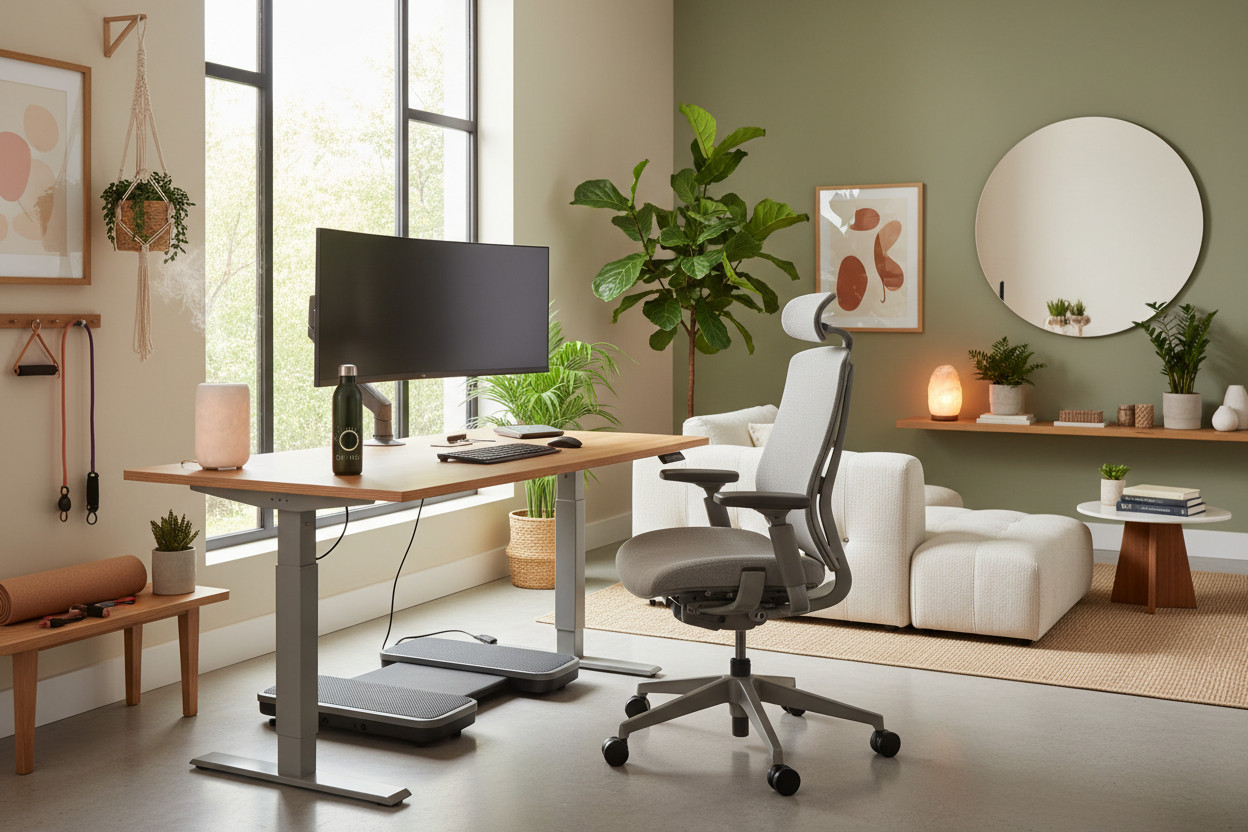
We often blame a lack of discipline for our midday fatigue or back pain, but as an interior designer, I see a different culprit: the environment itself. Your willpower can only do so much if your physical space isn't optimized to support you. Establishing healthy work from home habits isn't just about setting a timer for breaks; it is about curating an interior landscape that intuitively guides your body into correct posture and your mind into a state of flow.
Quick Decision Guide: Designing for Wellness
If you are looking to retrofit your home office to support better habits, prioritize these four design pillars:
- Ergonomic Alignment: Your chair and desk height must allow elbows to rest at 90 degrees to prevent shoulder strain.
- Lighting Layers: Combine ambient overhead light with specific task lighting to reduce eye strain and headaches.
- Visual Zoning: Use area rugs or shelving to physically demarcate "work" zones from "rest" zones.
- Material Tactility: Choose breathable fabrics (mesh, cotton) and warm surfaces (wood) over cold, reflective materials (glass, metal) to reduce sensory fatigue.
The Foundation: Ergonomics as a Habit Enforcer
Many homeowners treat office furniture as purely aesthetic, opting for a dining chair that matches the drapes. This is a critical error. Healthy habits for working from home start with the vessel you inhabit for eight hours a day. A chair isn't just a seat; it is a machine for productivity.
Selecting the Right Chair Mechanics
Look for a chair with a synchronized tilt mechanism. This feature allows the seat and backrest to move together, encouraging micro-movements throughout the day. Static sitting is the enemy of circulation. Furthermore, pay attention to the seat pan depth. If the seat presses against the back of your knees, it cuts off blood flow, leading to restless legs and breaking your concentration.
Zoning: The Psychology of Space
One of the hardest healthy habits working from home to maintain is the mental separation between "office mode" and "home mode." In interior design, we solve this through zoning.
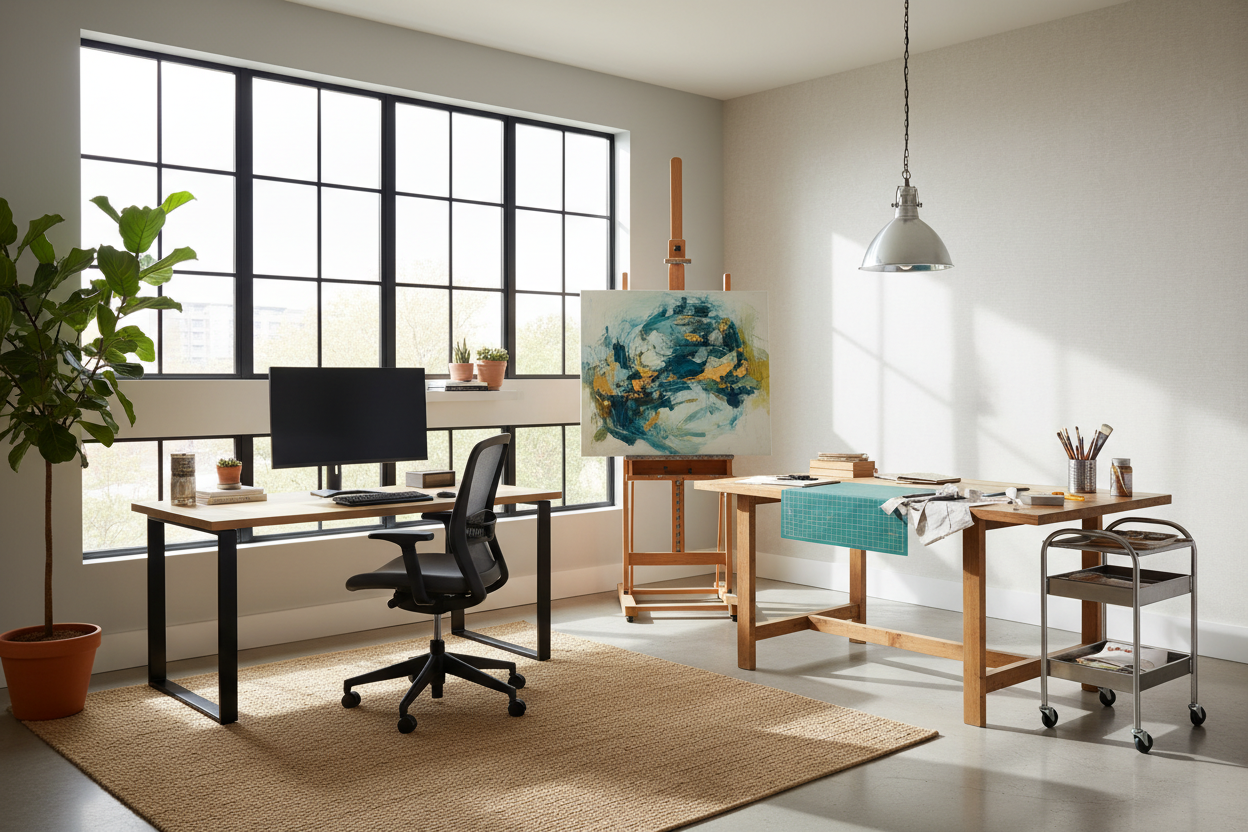
If you do not have a dedicated room, you must create a "floating zone." Position your desk so your back is to the living area, or use a high-backed console table behind your chair to create a physical barrier. When you step away from that rug or desk area, your brain should register that the work day is paused. This spatial boundary is more effective than any digital notification.
Lighting and Materiality
Your circadian rhythm dictates your energy levels. Poor lighting leads to lethargy. Position your desk perpendicular to a window to harvest natural light without the glare that washes out screens. Supplement this with a task lamp that has a Color Rendering Index (CRI) of 90 or above; this ensures colors look true and reduces the subconscious strain on your eyes.
Regarding materials, avoid glass desktops. While they look sleek, they are cold to the touch and cause acoustic reverberation (echo) when typing. A solid wood or linoleum-topped desk offers "tactile grounding," a warmer, softer surface that makes the act of sitting at your desk more inviting.
My Personal Take on Healthy Work From Home Habits
I learned the hard way that aesthetics cannot override function. Early in my career, I designed a stunning home office for myself featuring a vintage mid-century modern teak chair. It looked incredible in photos. However, the fixed back angle forced me to hunch slightly forward.
After three months, I developed a habit of working from the sofa just to escape the discomfort, which completely ruined my posture and productivity. I eventually swapped it for a high-end ergonomic mesh chair. The surprising detail? The mesh material didn't just help with airflow; the slight "bounce" it provided made me fidget less. I realized that the texture of the furniture was just as important as the shape. Now, when I specify furniture for clients, I always check the "rub count" and breathability of the fabric, knowing that sweat and discomfort are the silent killers of focus.
Conclusion
Transforming your workspace is the first step toward transforming your routine. By investing in supportive furniture and thoughtful layouts, you stop fighting your environment and start letting it work for you. Create a space that demands your best work, and the habits will follow naturally.
Frequently Asked Questions
How does desk depth affect eye strain?
A shallow desk forces you to sit too close to the monitor. Ideally, your desk should be at least 24 to 30 inches deep to allow your monitor to sit an arm's length away, which is crucial for preventing digital eye strain.
Can standing desks really improve work habits?
Yes, but only if used correctly. A standing desk encourages a "posture reset." However, standing for too long can cause joint compression. The goal is a sit-stand workflow, alternating every 60 to 90 minutes.
What is the best way to hide clutter to maintain mental clarity?
Visual noise creates mental noise. Invest in closed storage (cabinets with doors) rather than open shelving. If you must use open shelves, use uniform baskets to hide loose papers and cables, maintaining a calm visual horizon.


Leave a comment
This site is protected by hCaptcha and the hCaptcha Privacy Policy and Terms of Service apply.