

















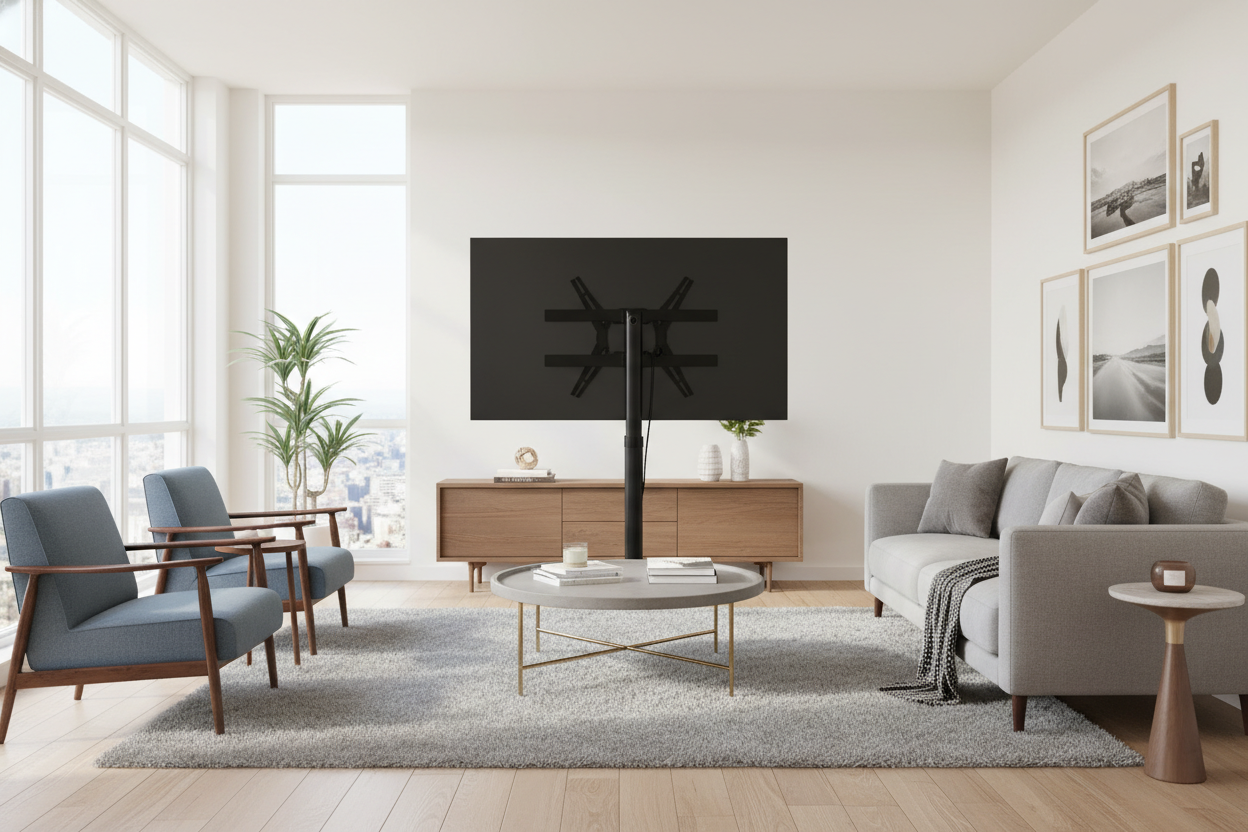
I recently unboxed a 65-inch TV and realized the manufacturers are basically trolling us. The feet were two flimsy pieces of plastic located at the absolute outer edges of the screen. My vintage walnut credenza, which has survived three moves and a flooded apartment, was exactly four inches too narrow. I wasn't about to dump a $1,200 piece of furniture for a cheap piece of tech. That is when I realized a universal tv stand mount is the only sane solution.
- Factory legs are wide, ugly, and usually made of cheap plastic.
- A central mount uses your TV's VESA holes to create a sturdy, single-point base.
- It saves you hundreds of dollars by making your current furniture compatible with a larger screen.
- Most universal stands offer swivel and height adjustments that factory legs lack.
The 'Wide Leg' Problem Nobody Warns You About
TV brands have decided that wide feet are the new standard. It is a cost-cutting measure that shifts the burden onto you. If you have a 65-inch screen, those feet are likely 55 inches apart. Unless you have a massive, sprawling console, your screen is going to hang off the edges like a bad haircut. It makes even a high-end display look precarious and cheap.
Beyond the fit, there is the aesthetic. Modern screens are thinner than a smartphone, yet they come with these splayed-out plastic stilts. Placing that setup on a bulky stand for smart tv just looks disproportionate. You want your tech to look integrated and intentional, not like it is barely balancing on a diving board.
Enter the Tabletop Rescue Mission
A universal flat screen tv stand is essentially a heavy-duty pedestal. It bolts into the four threaded holes on the back of your TV and sits on a weighted base, usually made of tempered glass or solid steel. It brings the footprint of your TV down from 55 inches wide to about 12 inches wide.
This is the ultimate budget hack. Instead of shopping for new TV stands that cost upwards of $600, you spend fifty bucks on a mount. I have used these in rental apartments where I could not drill into the walls, and they saved me from buying furniture I did not actually want just to accommodate a screen's footprint. They are significantly more robust than the flimsy plastic bits that come in the box.
But Is It Actually Going to Tip Over?
I get the hesitation. Balancing an expensive OLED on a single center column feels like a recipe for disaster. But the physics actually favor the pedestal. These universal stands for flat screen tv use heavy, low-center-of-gravity bases. My 75-inch beast is currently on a center mount, and it feels way more secure than it did on the factory legs.
One mistake I made early on was buying the cheapest possible mount for an older, heavy plasma TV. The mount held, but the screen leaned forward about five degrees because I did not check the weight capacity. Don't cheap out on the weight rating. If your TV weighs 50 pounds, get a mount rated for 80. That extra headroom ensures the steel won't flex over time.
The Secret Bonus: It Finally Fit My Soundbar
Factory legs usually leave about two inches of clearance between the bottom of the screen and your furniture. If you have a decent soundbar, it is going to block the bottom of the picture or the IR sensor for your remote. It is an incredibly annoying design flaw that most people do not notice until they are sitting on the couch trying to change the volume.
Because these universal mounts are height-adjustable, you can slide the screen up the center pole. I usually leave about five inches of air under my TV. This allows my soundbar to tuck neatly underneath, creating a clean, stacked look. It is a luxury that factory legs almost never offer, and it makes the whole living room feel more organized.
How to Measure Before You Add to Cart
Checking compatibility is a two-minute job. Look at the back of your TV for four screw holes. Measure the distance between them in millimeters—that is your VESA pattern (like 400x400mm). Most mounts are universal, meaning they have a rail system that fits everything from 100mm up to 600mm.
Finally, check your furniture depth. You want an adjustable tv stand for living room setup where the base of the mount has at least an inch of clearance from the front and back edges of the console. If your credenza is 15 inches deep and the mount base is 11 inches, you are golden.
Does this work for curved TVs?
Yes, usually. Most universal mounts include spacers in the box to account for the curve on the back of the screen so the brackets can sit flush against the VESA holes.
Can I do this alone?
Assembling the stand is a one-person job, but lifting a large TV onto the mount definitely requires two people. Do not risk your screen to prove a point.
Will it scratch my wood furniture?
Most bases come with rubber feet, but they can be a bit grippy. I always stick a few heavy-duty felt pads on the bottom so I can slide the TV slightly if I need to reach the cables in the back.

Leave a comment
This site is protected by hCaptcha and the hCaptcha Privacy Policy and Terms of Service apply.