




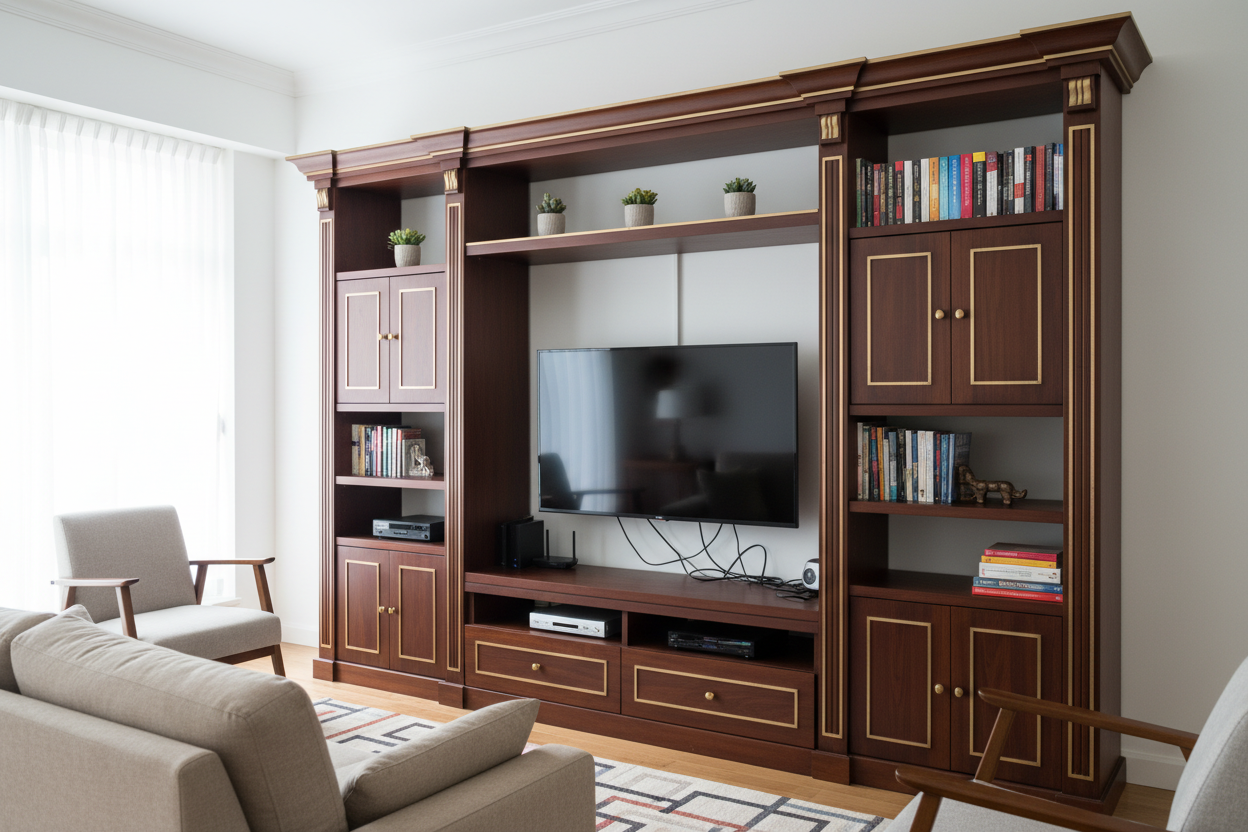
I have spent far too many nights staring at 47 browser tabs of media consoles, finally clicking 'buy' on a piece that looked like a million bucks in a studio-lit render, only to have it arrive and look like a lonely island in a sea of drywall. It is a gut punch when you spend over a thousand dollars on tv cabinets for living room setups only to realize your space still feels like a temporary rental. The truth is, the furniture rarely fails on its own—it fails because of how we treat the wall around it.
- Go Wide: Your console should be at least 20% wider than your screen to avoid the 'top-heavy' look.
- Layer Height: Use a shelf or art to bridge the gap between the TV and the ceiling.
- Hide the Spaghetti: Visible cables are the fastest way to make expensive furniture look like junk.
- Mix Textures: Pair wood consoles with glass or metal accents to break up visual weight.
The 'Floating Black Box' Effect Is Ruining Your Vibe
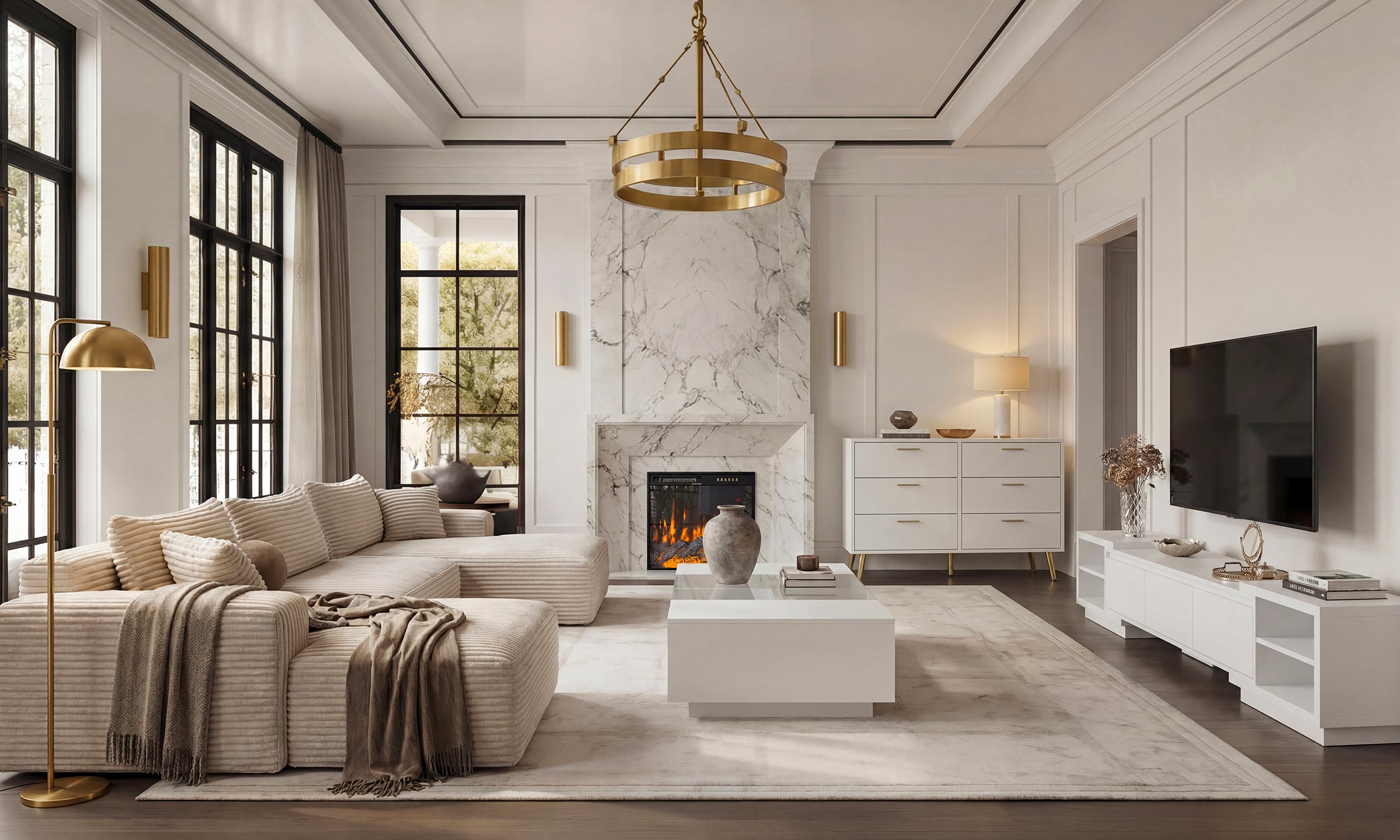
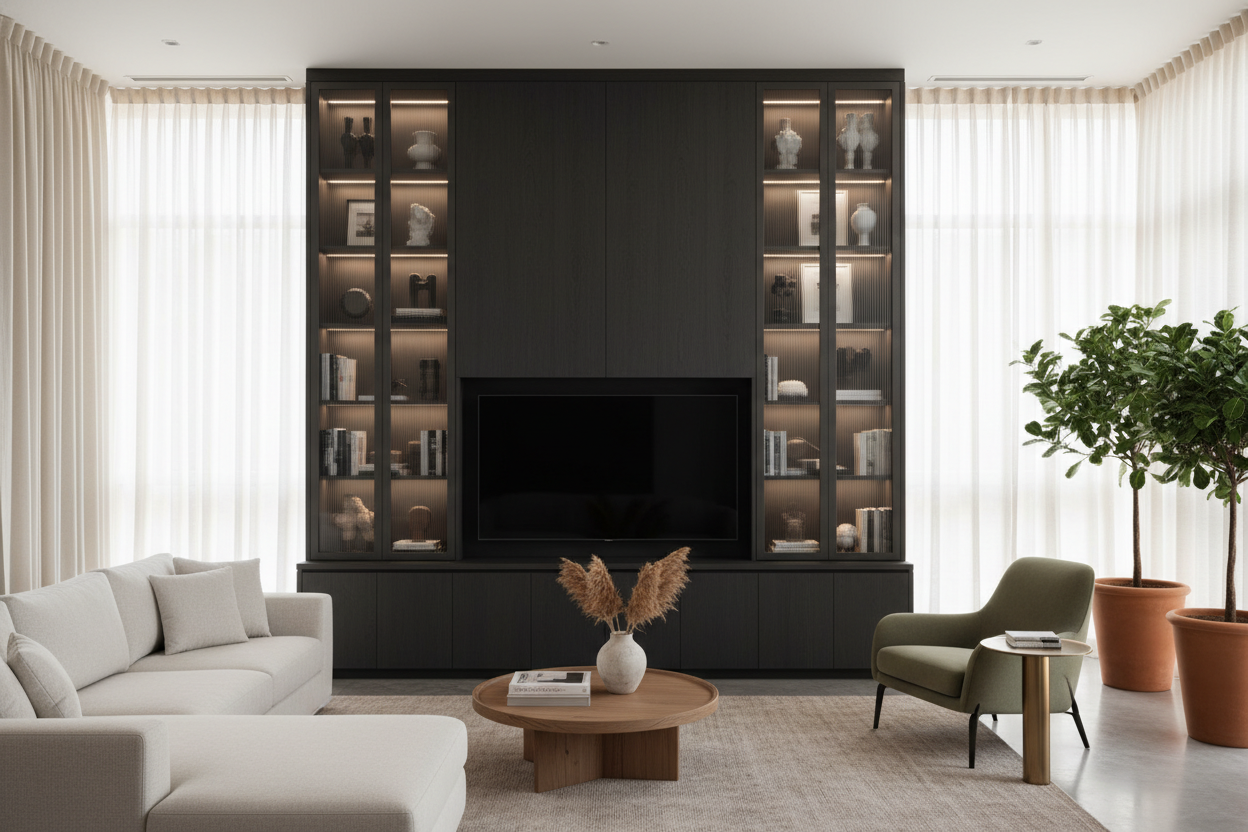
The biggest mistake I see is treating the TV like a standalone piece of art. It isn’t. When that 65-inch screen is off, it is just a giant, soul-sucking black rectangle. If you drop a sleek console against a massive blank wall and leave nothing around it, the contrast is too jarring. It creates a 'floating' effect that makes the room feel unfinished and cold.
To fix this, you need to anchor the unit. This doesn't mean cluttering the top of the cabinet with tiny dust-collectors. It means using the wall. If you have ten feet of wall space and a five-foot cabinet, that negative space is going to swallow your furniture whole. You need to create a composition where the TV is just one element of a larger visual story, not the only character on stage.
You Are Probably Failing the Proportion Check
Size matters, and most people buy consoles that are way too small. If your TV hangs over the edges of your stand, or even if it sits flush with the ends, it looks like it is teetering on a toothpick. It creates a sense of anxiety in the room. I always tell friends to follow the proportion rule for sizing tv cabinets: you want at least 6 to 10 inches of breathing room on either side of the screen.
A 75-inch TV on a 70-inch console is a design crime. It dwarfs the furniture and makes the whole setup look cheap, regardless of whether the cabinet is solid walnut or particle board. When the base is significantly wider than the screen, it grounds the room and makes the ceiling feel higher. It is a simple math problem that most people ignore in favor of saving a few bucks on a smaller unit.
Stop Bookending Your Console with Matching Vases
We need to talk about the 2004-era symmetry. Placing two identical vases or lamps on either side of your TV is the fastest way to make your living room look like a waiting room. It is predictable and boring. Instead, try asymmetrical styling. Put a tall floor lamp on one side and a stack of oversized books or a low plant on the other. This draws the eye in a natural 'S' curve rather than a rigid 'U' shape.
If the wall still feels like a vast desert of paint, look upward. Adding a secondary tv shelf for living room use above or slightly offset from the TV can change everything. I personally found that my living room felt sterile until I hung a walnut floating tv shelf about 18 inches above the screen. It broke up the vertical emptiness and gave me a place to put trailing plants that softened the hard edges of the electronics.
Let It Breathe: Mixing Open and Closed Elements
A massive, solid block of wood sitting on the floor can feel incredibly heavy, like a boulder dropped in your seating area. If your media unit is a monolithic 'closed' piece, it can suffocate a small room. I’m a huge fan of 'visual lightness.' This means choosing pieces with legs rather than a solid plinth base, or mixing in different materials nearby to offset the bulk.
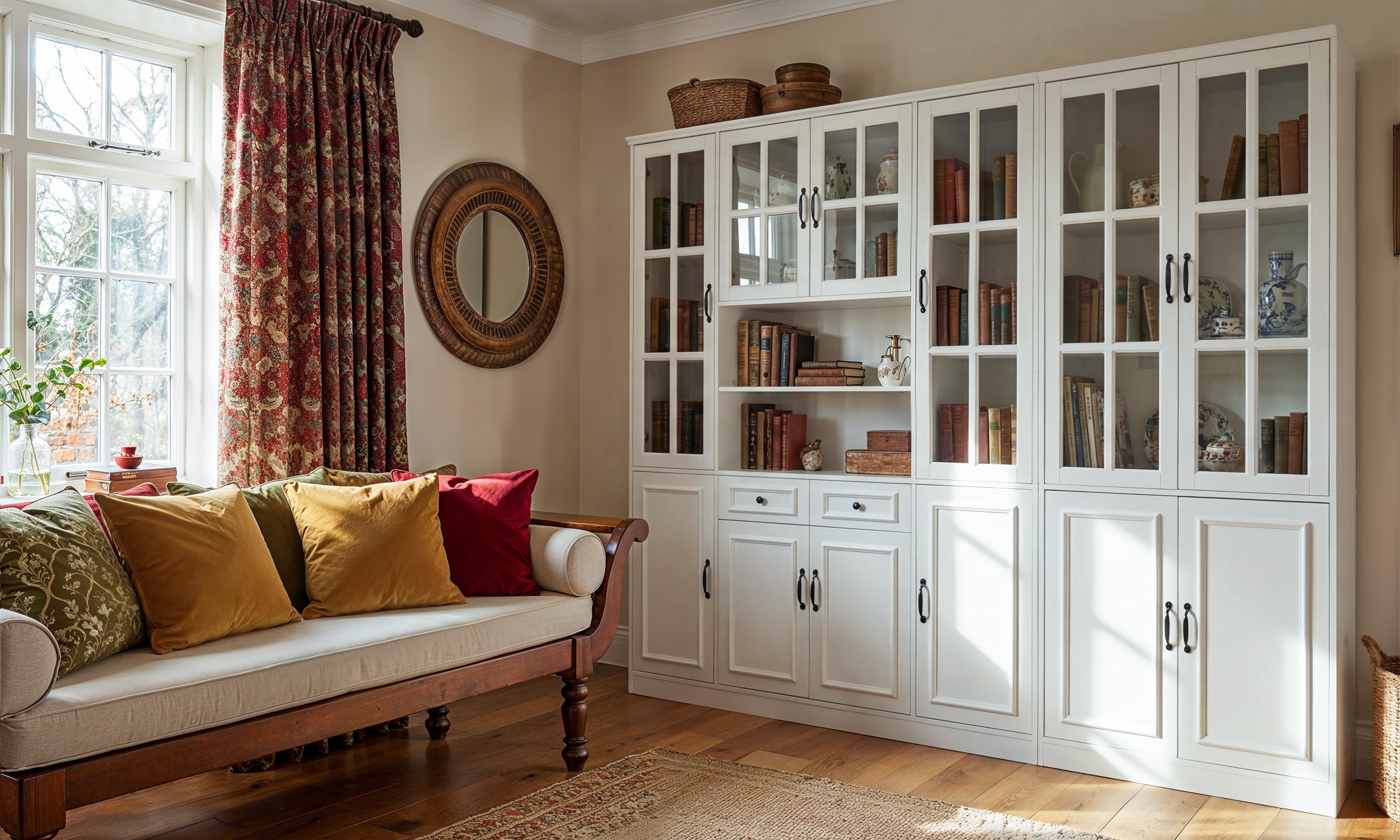
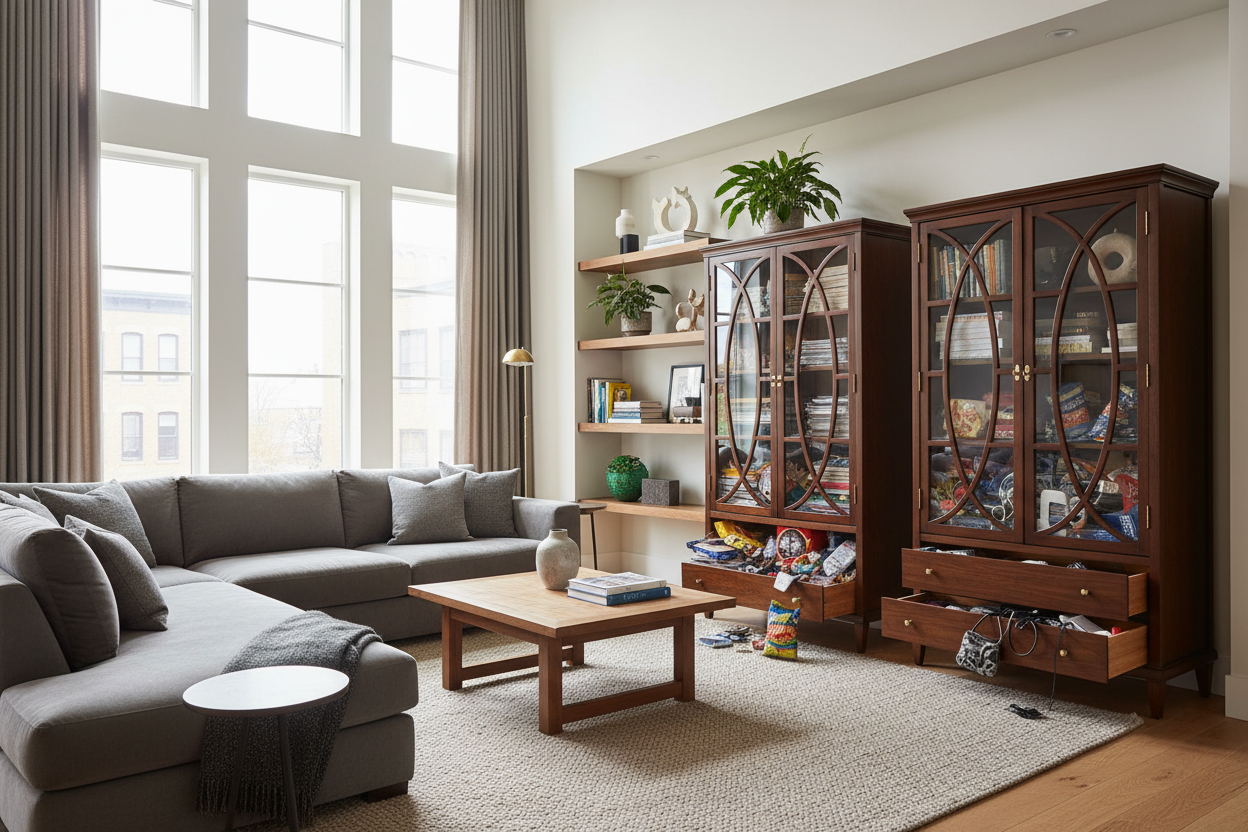
If you have a heavy wood console, try placing a display cabinet with glass doors on an adjacent wall. The transparency of the glass helps balance the 'solidness' of the TV area. It’s all about the push and pull of visual weight. You want some things to feel grounded and others to feel airy so the room doesn't feel like it's tilting to one side.
Flexibility is the Ultimate Living Room Luxury
Your needs are going to change. You might upgrade to an 85-inch screen next year, or you might move to a place where the 'TV wall' is three feet shorter. Investing in rigid, one-size-fits-all furniture is a recipe for future Facebook Marketplace listings. I’ve started leaning toward modularity because I’m tired of buying new furniture every time I get a new tech itch.
An adjustable tv stand for living room layouts is a lifesaver. These pieces can slide out to become wider or tuck in to fit tight corners. It gives you the ability to maintain those perfect proportions I mentioned earlier, even if you change your screen size. It is the kind of 'future-proofing' that keeps your home looking intentional rather than like a collection of mismatched leftovers.
The Time I Scaled Too Small
I once bought a gorgeous, mid-century modern credenza that was 58 inches wide. I loved the tapered legs and the acorn finish. Then, I bought a 65-inch TV. I thought, 'It'll be fine, it's only a few inches of overhang.' I was wrong. It looked ridiculous. The TV looked like a giant head on a tiny body. I ended up having to sell the credenza at a 40% loss just to buy a 75-inch version that actually fit the scale of the room. Learn from my wallet's pain: measure twice, buy once.
Frequently Asked Questions
How high should my TV be above the cabinet?
Aim for 4 to 8 inches. If it’s higher than that, it looks like it’s trying to escape the furniture. Your neck will also thank you for keeping it at eye level while seated.
Should the TV cabinet match my coffee table?
Please, no. Matching sets feel like a showroom floor. Coordinate the wood tones or the metal finishes, but don't buy the exact same 'collection' for every piece in the room.
How do I hide cables if I can't go behind the wall?
Use paintable cable raceways. They stick to the wall and hide the 'black vines' hanging down. Once painted the same color as your wall, they virtually disappear.

Leave a comment
This site is protected by hCaptcha and the hCaptcha Privacy Policy and Terms of Service apply.