

















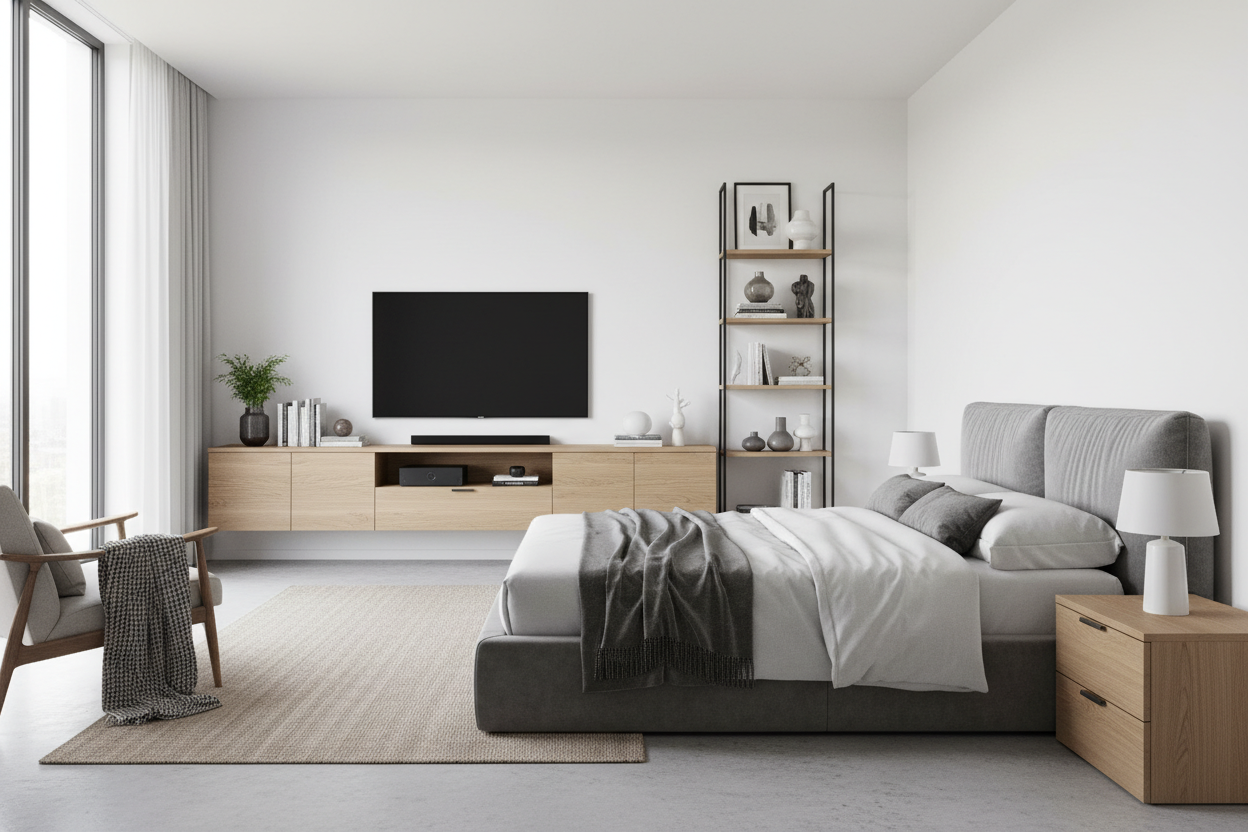
I remember the first time I set up a TV in my room. I just cleared off my six-drawer dresser, shoved my jewelry box to the side, and plopped a 40-inch screen right in the middle. It felt like a win for ten minutes, until I tried to actually watch it while lying down. I spent the next three hours propped up on four pillows, trying to find an angle that didn't make my neck feel like it was being folded in half.
The truth is, using a dresser as a bedroom media center is a compromise that usually fails both your clothes and your viewing experience. It is a classic move when you are tight on space, but it creates a clutter-prone zone that is ergonomically a nightmare. If you are tired of staring at a tangled mess of black cords every time you reach for a pair of socks, it is time to admit the dresser isn't cutting it.
Quick Takeaways
- Standard dressers are usually 30-34 inches tall, which is often too low to clear the footboard of a modern bed.
- Dressers lack the essential 'cord ports' found in media consoles, leading to visible cable chaos.
- A dedicated media center for bedroom use is shallower, saving you precious floor space in tight walkways.
- Swapping a wide dresser for vertical storage can actually make a small bedroom feel larger.
The Problem With the 'Dresser as a TV Stand' Default
We all do it because the furniture is already there. It is a flat surface, and it seems efficient. But dressers are designed for folded fabric, not electronics. Most dressers are 18 to 22 inches deep. That is a massive footprint for a modern flat-screen that is barely three inches thick. You end up wasting a huge chunk of floor space just to support a screen.
Then there is the cable situation. Unless you are handy with a hole saw, those power strips and HDMI cords have to drape over the back or side of the dresser. It looks messy and collects dust like nothing else. Plus, if your TV is heavy, the top of that dresser will eventually bow, making the top drawers stick. I have ruined a perfectly good vintage mahogany dresser this way, and I still regret it.
The Ergonomics of Watching TV in Bed
Watching TV from a sofa is easy because your eyes are naturally level with the screen. In bed, you are usually reclined or lying flat. If your TV is sitting on a standard-height dresser, you are constantly tucking your chin to your chest. That 'neck crank' is a fast track to tension headaches.
To get it right, you need height. You want the center of the screen to be at eye level while you are propped up on your preferred pillow stack. For many, a 48 inch tall entertainment center is the sweet spot. It clears the footboard and allows you to watch without straining. A dedicated media center for bedroom layouts is built specifically to handle these higher sightlines that living room furniture just can't match.
But Where Do My Clothes Go?
The biggest hurdle to ditching the dresser is the storage loss. If you take away the dresser, where do the t-shirts go? The answer is to stop thinking horizontally. Most bedrooms have unused vertical space that is just begging for a better solution.
By switching to a freestanding closet with storage shelves, you can move your wardrobe into a narrower, taller footprint. This frees up the main wall for a slim, dedicated media console. You actually end up with more storage because you are utilizing the height of the room rather than just the floor space. It makes the room feel less crowded and more like a curated suite than a storage unit.
How to Style Your Setup So It Doesn't Look Like a Dorm Room
The goal is a sleep sanctuary, not a sports bar. To keep the tech from taking over, you have to soften the edges. I always recommend using baskets on the lower shelves of your media unit to hide controllers and remotes. It keeps the 'tech' vibe to a minimum when the screen is off.
Lighting is your best friend here. Instead of a harsh overhead light, flank your screen with small lamps or use a warm LED strip behind the console for bias lighting. When you surround your tech with cozy bedroom furniture and soft textures, the TV becomes part of the room rather than the focal point. Don't be afraid to lean a piece of art next to the screen or add a plant to break up the hard lines of the electronics.
My Personal Take: The Mistake I Won't Make Again
A few years ago, I bought a gorgeous, low-slung mid-century sideboard to use as my bedroom media hub. It was 28 inches tall. It looked incredible in the store, but the moment I got it home, I realized I couldn't see the bottom third of the TV over my own feet. I ended up having to stack it on top of two ugly wooden crates just to see the subtitles. It was a lesson in 'function over fashion.' Now, I prioritize height and cable management every single time.
Frequently Asked Questions
What is the best height for a bedroom TV stand?
Usually between 42 and 50 inches. You want the screen high enough to clear your feet and the bed frame without making you feel like you are sitting in the front row of a movie theater.
Can I just wall-mount the TV instead?
Wall mounting is great for saving space, but you still need a slim console or shelf underneath to hide the wires and hold your streaming boxes or gaming consoles.
How do I hide wires if I can't go behind the wall?
Use D-line cable raceways that can be painted the same color as your wall. It is a five-minute fix that makes a massive difference in how clean the room looks.

Leave a comment
This site is protected by hCaptcha and the hCaptcha Privacy Policy and Terms of Service apply.