

















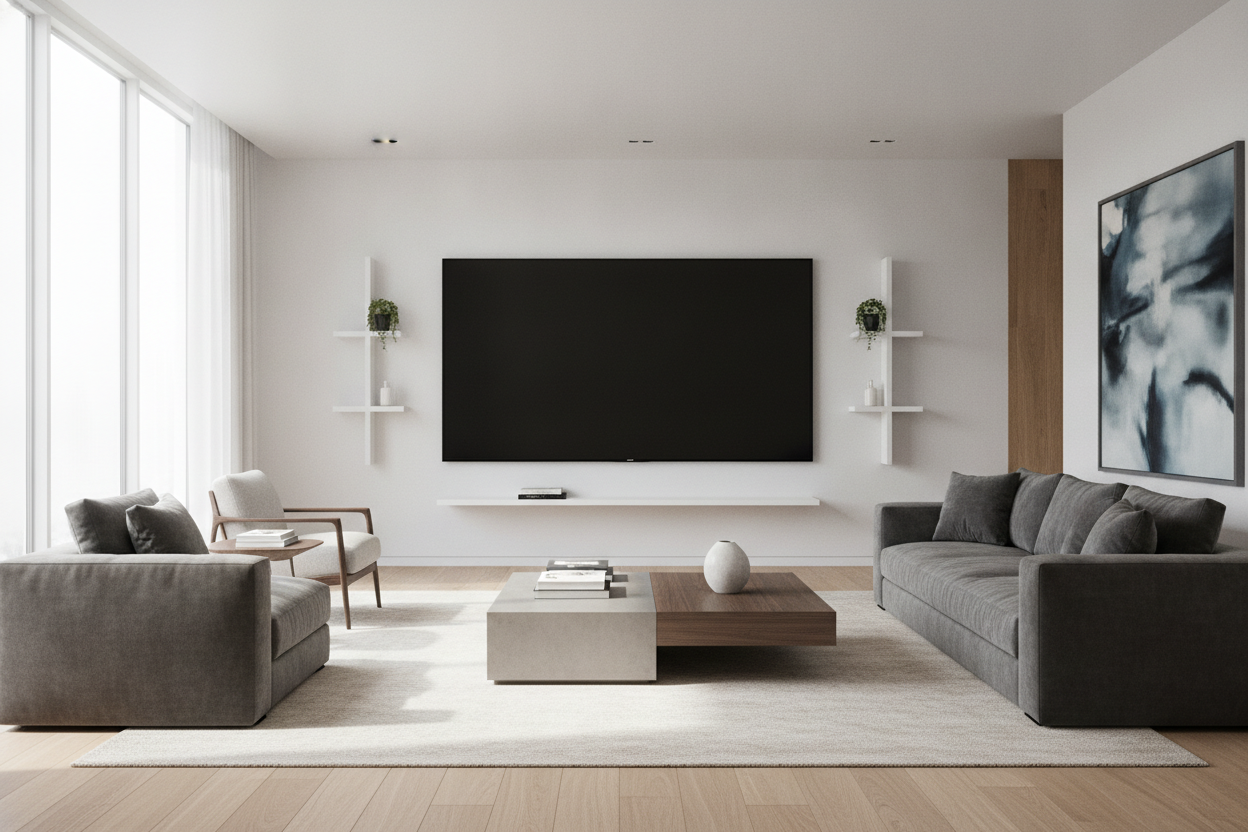
I remember the first time I unboxed an 85-inch screen. It wasn't just a TV; it was a lifestyle commitment. I spent three hours measuring the wall, only to make the most amateur mistake in the book: I tried to pair it with a 60-inch shelf I already owned. The result was tragic. My massive, expensive display looked like a bodybuilder standing on a toothpick. If you are looking for floating shelves for 85 inch tv setups, you have to respect the physics of visual weight.
- The shelf must be wider than the TV—no exceptions.
- Standard drywall anchors will fail you; find the studs.
- Cables are the enemy of minimalism; plan your routing early.
- A 100-inch minimum width is the sweet spot for an 85-inch screen.
The Giant Screen, Tiny Shelf Problem
An 85-inch TV is roughly 74 inches wide. If you put a 60-inch or even a 72-inch shelf under it, the screen will visually 'crush' the furniture. It creates a top-heavy look that makes your living room feel cramped and accidental. I have seen so many DIYers get this wrong, and it is exactly why some people eventually gave up on floating tech and went back to bulky floor units.
When the proportions are off, the eye focuses on the imbalance rather than the 4K glory of your screen. You want the shelf to act as a foundation, not an afterthought. If the shelf doesn't extend at least a few inches past the edges of the TV, it just looks like you ran out of budget at the finish line.
The 'Rule of Thirds' for Massive Screens
In the design world, we talk a lot about the 'Rule of Thirds,' but for home theaters, I prefer the 25 percent rule. Your shelving or console should be roughly 25 to 33 percent wider than the TV itself. For an 85-inch screen (74 inches wide), that means you should be hunting for something in the 95 to 110-inch range.
This extra width provides 'breathing room.' It allows you to place a small plant or a sculptural object on the ends without it looking cluttered. Without that buffer, your TV looks like it is suffocating the furniture. I once tried to cheat this by centering two smaller shelves side-by-side, but the seam in the middle was all I could see. Buy one long, continuous piece or a modular system designed to lock together.
Should You Try a Floating TV Panel for 85 Inch TV Setups Instead?
Sometimes a single plank of wood isn't enough to ground a screen that large. This is where a floating tv panel for 85 inch tv comes into play. These panels create a 'frame' behind the TV, often using wood slats or textured laminate to break up the vast expanse of a white wall. It turns the TV into an installation rather than just a black rectangle.
If you need actual storage for a PlayStation or a cable box, a simple ledge won't cut it. You should look into a full wall mounted media console. These provide the depth needed for components while keeping the floor clear, which is the whole point of the 'floating' aesthetic anyway.
Finding a True Floating TV Stand for 85 TV Layouts
When shopping for a floating tv stand for 85 tv layouts, don't just look at the width. Look at the depth. Most modern AV receivers need at least 14 to 16 inches of depth to breathe, but many floating shelves are only 10 inches deep. I learned this the hard way when my receiver hung off the edge like a cliffhanger in a bad movie.
For a screen this size, you need a heavy-duty unit. A high gloss tv stand with led light at the 110-inch mark is a perfect example of the scale required. The gloss reflects light, making the massive unit feel slightly lighter, while the LED strip helps bias lighting, which reduces eye strain during those late-night movie marathons.
The Drywall Reality Check (Please Hit a Stud)
We need to talk about gravity. A floating tv stand 85 inch tv setup is putting a massive amount of leverage on your wall. If you load up a 100-inch shelf with a soundbar, a gaming console, and maybe a few coffee table books, you are looking at 50+ pounds of shear force. Drywall anchors are a fantasy here.
I once helped a friend mount a 'bargain' floating shelf using toggle bolts. Three weeks later, we found it sagging at a four-degree angle, pulling the paint right off the studs. You must use lag bolts and you must hit at least three studs. If your studs aren't centered where you want the TV, you’ll need to mount a plywood backer board first. It is extra work, but it beats a shattered TV.
When to Just Put It on the Floor
Look, I love the floating look, but it isn't for everyone. If you are renting an apartment with 'landlord special' walls made of crumbling plaster, or if the thought of a stud finder makes you break out in a cold sweat, just stop. There is no shame in a floor-based unit. You can find a massive collection of tv stands that offer the same wide proportions without the risk of a structural disaster.
The goal is a clean, intentional look. If you can't do the floating shelf at the right scale with the right support, a high-quality floor console is always the better choice than a tiny, sagging shelf.
FAQ
How high should I mount my floating shelf?
The bottom of your TV should usually be about 25 to 30 inches off the floor, and your shelf should sit 4 to 6 inches below that. Avoid the 'TV too high' syndrome—your neck will thank you.
Can I hide wires inside a floating shelf?
Only if the shelf is a hollow-core 'box' style. Solid wood floating mantels won't hide anything. Look for consoles with built-in cable management ports and back panels.
What is the best material for a long floating shelf?
For a 100-inch span, go with high-grade MDF or engineered wood with a metal internal bracket. Solid hardwood is beautiful but incredibly heavy, which adds even more stress to your wall studs.


Leave a comment
This site is protected by hCaptcha and the hCaptcha Privacy Policy and Terms of Service apply.