

















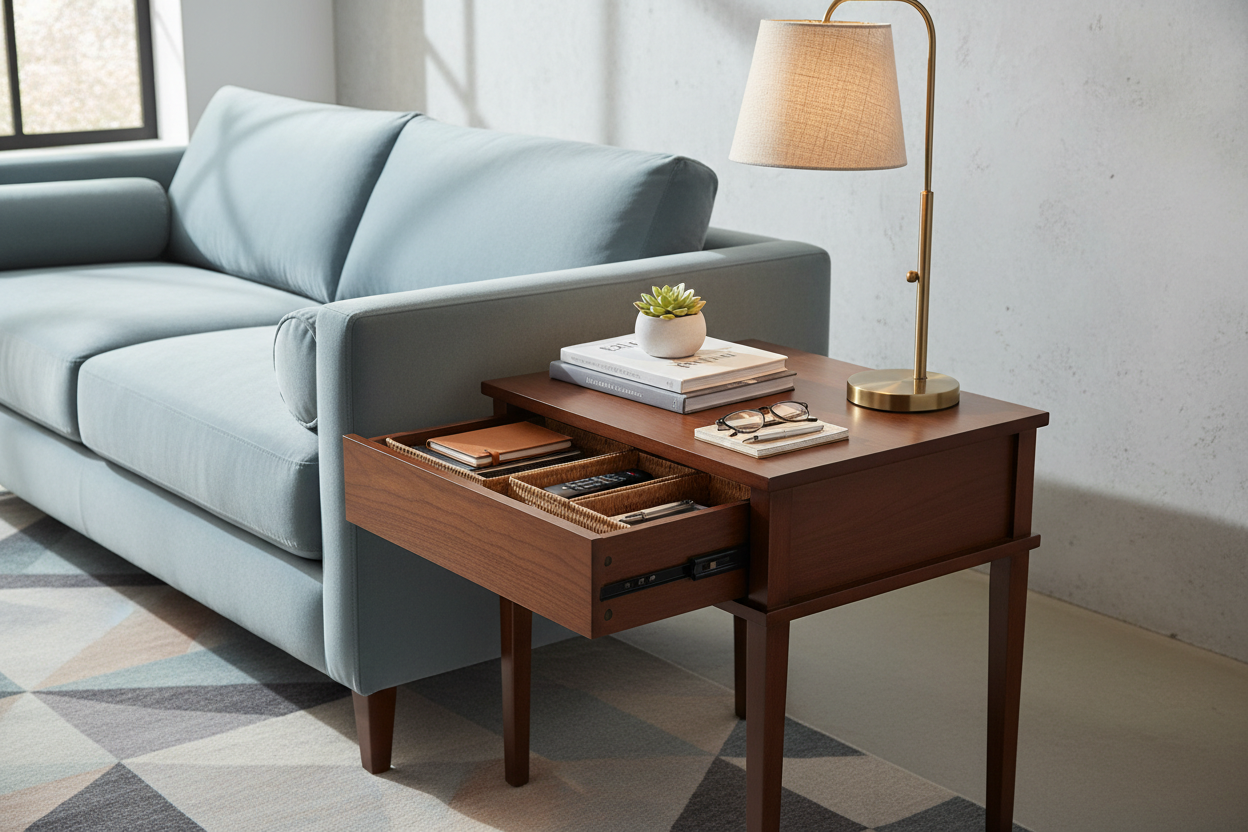
You might think a table is just a surface—a place to rest a coffee cup or display a lamp—but that perspective misses half the potential of good furniture design. The true value of an accent table with drawer functionality lies in its dual purpose: it offers the aesthetic anchor of a standard side table while silently solving the clutter issues that plague modern living spaces. Whether you are trying to wrangle remote controls in the family room or need a landing pad for keys in the entryway, this piece of furniture does the heavy lifting that open shelving simply cannot.
Choosing the right piece requires looking beyond just the finish or the height. You have to consider how the storage component changes the silhouette of the room and how you interact with the space daily. A well-placed table doesn't just fill a corner; it streamlines your life by giving a permanent home to the small, necessary items that usually end up scattered across countertops.
My Battle with the Entryway Chaos
A few years ago, my front hallway was a disaster zone. I had a sleek, open-legged console table that looked fantastic in photos but was functionally useless for my lifestyle. Every day, I would walk in and dump my keys, wallet, sunglasses, and mail right on top. Within two days, the beautiful wood surface was invisible beneath a mountain of daily debris. It looked messy, and I constantly lost things in the pile.
I eventually swapped that piece for a vintage-inspired drawer accent table. The difference was immediate. Now, the keys and wallet go inside the drawer the moment I walk in. The surface remains clean, reserved only for a ceramic bowl and a small plant. That one drawer didn't just clean up the look of the hall; it changed my habit loop. I stopped searching for my keys because they finally had a dedicated, hidden home. It taught me that open surfaces beg to be cluttered, while drawers impose order.
More Than Just a Living Room Sidekick
While most people visualize these tables next to a sofa, limiting them to the living room restricts their potential. A drawer accent table is often the perfect solution for a guest bedroom that is too small for a full dresser. In a tight guest room, you typically only need enough storage for a guest to tuck away a phone charger, a book, and perhaps a few personal items. A bulky chest of drawers would overwhelm the footprint, but a leggy accent table with a single deep drawer provides exactly the right amount of utility without making the room feel claustrophobic.
Home offices also benefit immensely from this furniture style. If you have a floating desk or a minimal workspace, you likely lack drawer space for pens, notepads, or printer paper. Placing a sturdy accent table with drawer storage next to your desk extends your work surface and hides the office supplies that make a room look messy. It bridges the gap between a sterile office setup and a warm, decorated home environment.
The Mechanics of the Drawer Matter
When you are shopping, pay close attention to the hardware. Not all drawers are created equal. Since this is a piece of furniture you will likely interact with daily, the glide mechanism is crucial. I have encountered plenty of budget-friendly options where the drawer is essentially a wood box sliding against a wood frame. These tend to stick, squeak, or generate sawdust over time. If you plan to use the storage daily—for example, as a nightstand—look for metal ball-bearing glides. They allow for full extension, meaning you can reach the items at the very back of the drawer without fishing around blindly.
However, if you are buying an antique or a rustic reproduction, you might be dealing with wood-on-wood runners. In this case, check for a center guide rail underneath the drawer box. This keeps the drawer from wobbling side-to-side when you pull it out. A quick rub of beeswax on the runners can keep these operating smoothly, but knowing what you are buying upfront prevents frustration later.
Styling Your Surface Without Blocking Access
One common mistake people make with a drawer accent table is styling the top so heavily that the drawer becomes difficult to use. If you place a heavy lamp or a precarious stack of books right on the front edge, you might find yourself hesitating to open the drawer for fear of knocking something over. The vibration of opening and closing the unit can shift items on top.
To avoid this, push your decorative elements toward the back of the table. A tall lamp should sit in the back corner, anchoring the visual weight. If you use a stack of books, place them slightly off-center. Leave the front four inches of the surface clear. This negative space invites you to use the table for its intended temporary purposes—like setting down a drink—and ensures you have clear clearance to access the handle. The goal is to integrate the storage into your life, not block it off with decor.
Choosing the Right Material for Your Lifestyle
The material of your table dictates both its longevity and its maintenance. Solid wood is generally the gold standard, especially for tables with moving parts like drawers. Solid wood can be refinished if it gets scratched, and it holds screws for the drawer hardware more securely than particle board.
If you are looking at mixed materials, a metal frame with a wood box is a durable choice for high-traffic areas. The metal legs resist scuffs from vacuums and shoes better than painted wood. For households with young children or pets, avoid high-gloss lacquered finishes on an accent table. Fingerprints and nose smudges will be a constant battle, specifically around the drawer pull area where hands naturally go. A textured wood grain or a matte finish hides the evidence of daily life much more effectively.
Scale and Proportion
Getting the size right is just as important as the storage capacity. A tiny, delicate table next to an overstuffed sectional sofa looks out of place, while a massive, heavy table can dwarf a sleek modern armchair. Measure the height of the arm of the furniture the table will sit next to. Ideally, the top of your accent table should be within two inches of the arm height. If it is too low, reaching for your drink becomes awkward. If it is too high, you might bump your elbow against the drawer corner.
Also, consider the visual weight. If your sofa has a skirt and goes all the way to the floor, choose a table with legs to add airiness to the room. If your sofa is on tall legs, you can get away with a boxier, more solid table style. Balancing these elements creates a room that feels professionally designed rather than thrown together.
Ultimately, investing in a table with hidden storage is a commitment to a cleaner, more organized home. It allows you to keep the things you need nearby without forcing you to look at them constantly. It is a small change that pays significant dividends in your daily peace of mind.
Frequently Asked Questions
Can I use an accent table with a drawer as a nightstand?
Absolutely, this is one of the best uses for them. Just ensure the table height aligns with your mattress (usually 24 to 28 inches high) and that the surface area is large enough to hold a bedside lamp and your phone.
How do I stop the drawer from sticking on an older wood table?
If the table uses wood-on-wood runners, humidity can cause swelling. Remove the drawer and rub a generous amount of paste wax, beeswax, or even a bar of soap along the runners and the bottom edges of the drawer box to restore smooth movement.
What is the difference between a console table and an accent table?
Console tables are typically taller and wider, designed for hallways or behind sofas, while accent tables are generally more compact and square or round. However, a small console can certainly function as a large accent table depending on the size of your room.

Leave a comment
This site is protected by hCaptcha and the hCaptcha Privacy Policy and Terms of Service apply.