

















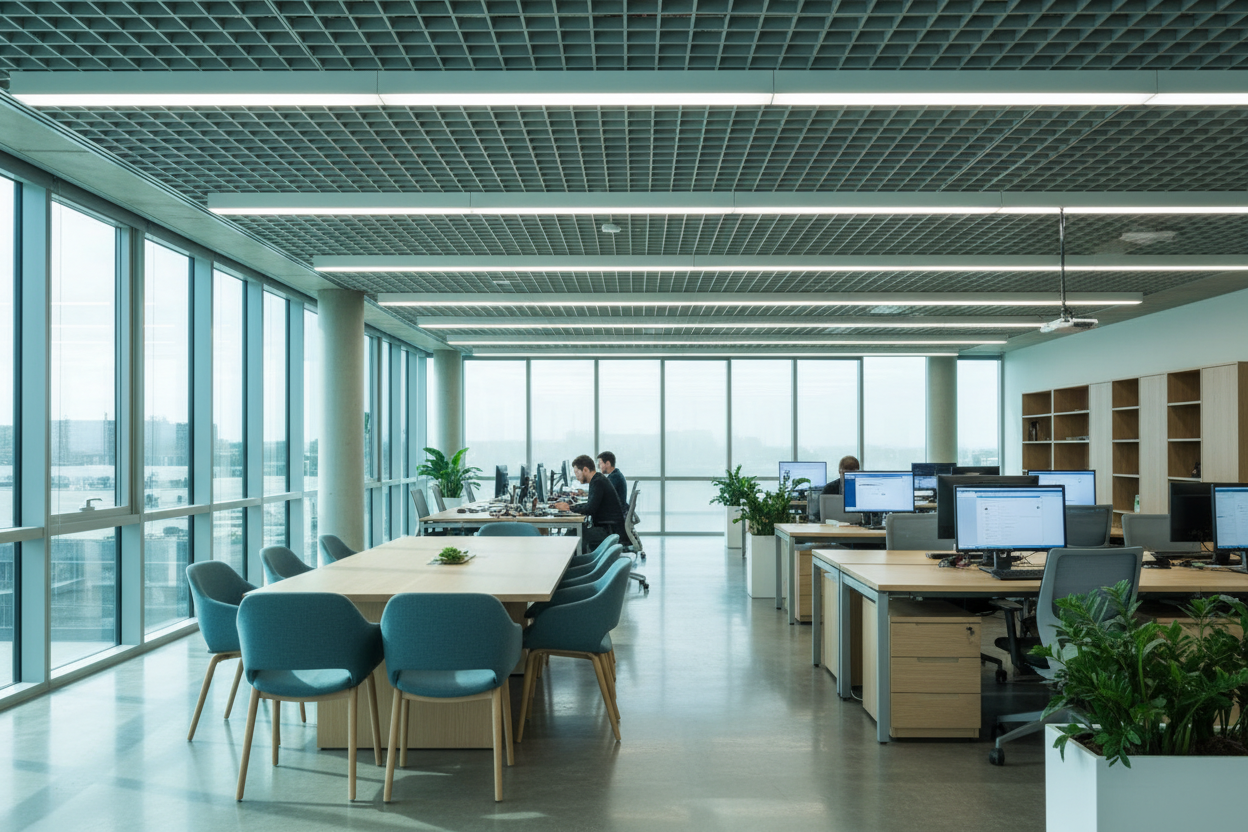
We have all walked into a workspace that feels more like a sterile clinic than a place of innovation. The culprit is almost always the same: outdated, poorly specified fluorescent lighting in offices. As a designer, I see this as the single biggest oversight in commercial interiors. Lighting dictates mood, energy levels, and how we perceive texture and color. If the overhead glow casts a green tint or flickers imperceptibly, no amount of ergonomic furniture can save the room's atmosphere.
Quick Decision Guide: Optimizing Office Light
If you are stuck with fluorescent fixtures or planning a retrofit, prioritize these technical specifications to ensure visual comfort and design integrity:
- Color Rendering Index (CRI): Always select lamps with a CRI of 85 or higher to ensure colors look natural, not washed out.
- Color Temperature (Kelvin): Aim for 3500K to 4100K. This provides a neutral white light that boosts alertness without the harsh blue of 6500K daylight bulbs.
- Ballast Type: Ensure fixtures use high-frequency electronic ballasts to eliminate the infamous "hum" and visible flicker.
- Diffusers: Replace yellowing prismatic lenses with frosted acrylic or parabolic louvers to soften the glare.
Mastering Color Temperature
The most common mistake I encounter is a mismatch in color temperature. In the lighting industry, we measure this in Kelvin. Many older offices utilize "Daylight" tubes (6500K), which emit a stark, blue-white light. While technically bright, this spectrum can feel aggressive and cold, often creating a sense of anxiety rather than productivity.
For a sophisticated, modern aesthetic, I recommend specifying lamps in the 3500K to 4100K range. This "Cool White" spectrum strikes the perfect balance; it is crisp enough for reading documents and focusing on screens, yet warm enough to feel welcoming. It ensures that the wood grains in your desks and the fabrics on your task chairs render true to life.
Combating Glare and Visual Fatigue
Standard lights at work are often housed in troffers with cheap acrylic prismatic lenses—those bumpy plastic covers that scatter light aggressively. This creates direct glare on computer monitors, leading to eye strain and headaches.
To elevate the space, consider swapping these for parabolic louvers. These egg-crate style grids direct light downward rather than outward, significantly reducing screen glare. Alternatively, if you want a softer, more high-end look, indirect basket troffers reflect light off the fixture's interior matte surface before it hits the room, creating a diffused, shadow-free wash of light.
The Retrofit Reality: T8 vs. LED Tubes
If you are renovating an existing space, you are likely dealing with T12 or T8 tubes. While T12s are obsolete, T8s are still common. However, the industry standard is shifting rapidly. You do not necessarily need to rip out the housing to fix the light quality. Direct-wire LED tubes (which bypass the fluorescent ballast) or hybrid tubes can fit into existing fluorescent sockets.
This switch isn't just about energy; it's about control. LED retrofits often offer better dimming capabilities and instant-on functionality, removing the warm-up period and color shifting associated with aging fluorescent gas.
My Personal Take on Fluorescent Lighting in Offices
I remember a project I took on for a boutique law firm located in the basement level of a historic building. They had low ceilings fitted with ancient T12 fixtures that had magnetic ballasts. The staff complained of migraines daily, and frankly, everyone looked a bit sickly due to the low CRI—skin tones took on a greenish hue that made the team look exhausted even at 9 AM.
We didn't have the budget to rewire the ceiling, so we compromised. I swapped the ballasts for electronic ones to kill the buzzing sound—a detail clients often forget until the silence is restored—and installed 3500K high-CRI T8 lamps with frosted lenses. The difference was visceral. The "green" cast vanished, the hum stopped, and the space suddenly felt like a high-end library rather than a bunker. It taught me that you don't always need to tear everything down; you just need to understand the physics of the bulb you are screwing in.
Conclusion
Lighting is the invisible architecture of your office. By paying attention to color temperature and diffusion, you can turn harsh overheads into a supportive design element. Don't settle for the factory standard; upgrade your lighting to support both your aesthetic vision and your well-being.
Frequently Asked Questions
Can fluorescent lighting actually cause headaches?
Yes, particularly older systems with magnetic ballasts. These cause the light to flicker at a rate that, while often imperceptible to the conscious eye, is picked up by the brain, leading to eye strain and headaches. Switching to electronic ballasts or LED tubes resolves this.
What is the best way to hide ugly fluorescent fixtures?
If you cannot remove them, replace the plastic cover with a high-quality frosted lens or a parabolic louver. You can also rely less on overheads by layering the lighting design with floor lamps and desk lamps to draw the eye away from the ceiling.
Are T5 or T8 bulbs better for office design?
T5 bulbs are generally better for modern design. They are thinner (5/8 of an inch diameter), more energy-efficient, and offer better light output per watt than the thicker T8s. They allow for sleeker, lower-profile fixture designs.



Leave a comment
This site is protected by hCaptcha and the hCaptcha Privacy Policy and Terms of Service apply.