

















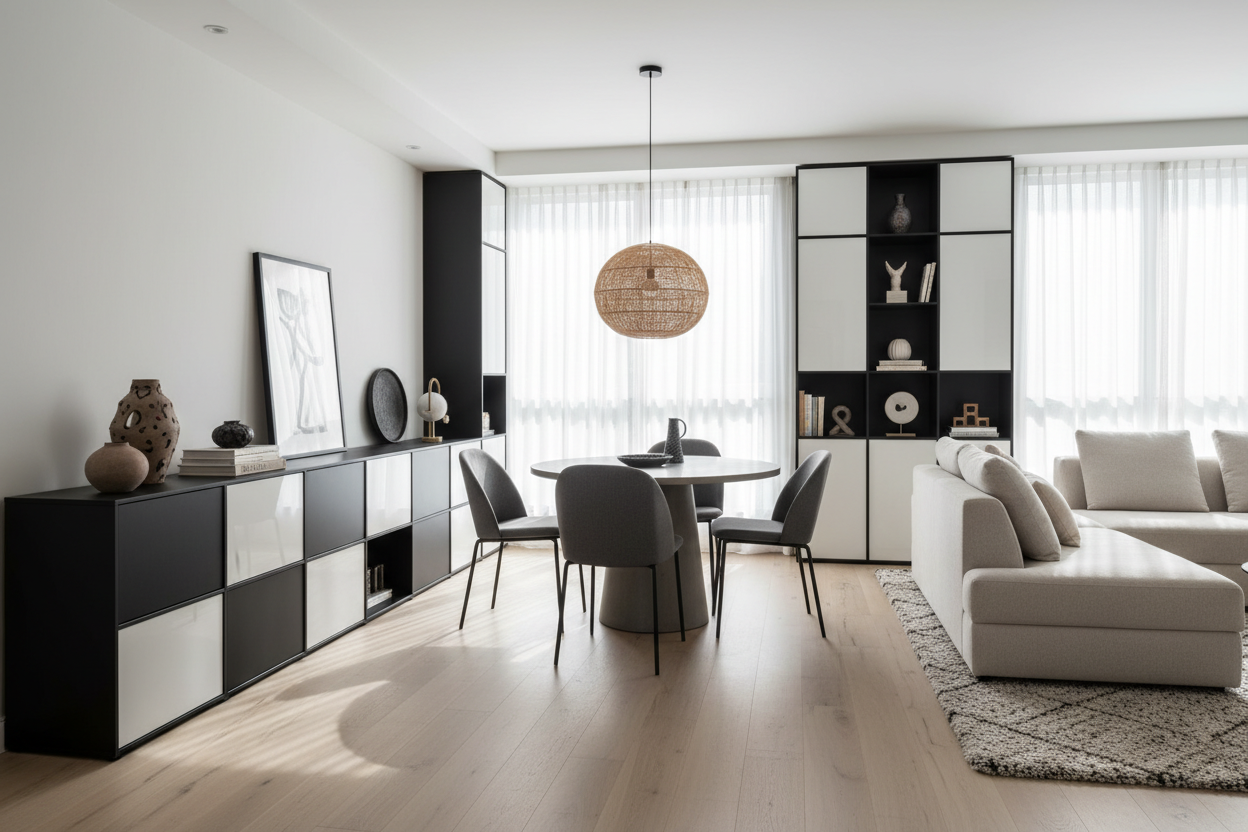
I spent three years staring at my mid-century modern credenza, trying to convince myself it was functional. It looked cool, sure, but it was basically a $900 dust collector. Every time I hosted a dinner party, I would end up shoving my 6-quart Crock-Pot and extra linens into the coat closet because the 'buffet' only offered a measly twelve inches of interior depth. I finally snapped and started hunting for furniture storage cabinets that actually worked for my life, not just my Instagram feed.
Quick Takeaways
- Vertical space is free real estate; stop wasting it on waist-high furniture that leaves the top half of your wall empty.
- Doors are mandatory if you do not want to spend your entire weekend dusting heirloom china or hiding ugly appliances.
- High-contrast colors, like a black-and-white scheme, keep tall pieces from feeling like bulky school lockers.
- Frosted glass is the ultimate 'lazy' solution for hiding clutter while maintaining a light, airy aesthetic.
The Sad Truth About Standard Dining Room Buffets
Standard buffets are the biggest scam in dining room design. We are told we need them for 'serving,' but unless you are hosting a literal 50-person buffet every Sunday, that surface mostly just collects mail and dead batteries. Most are about 30 to 34 inches tall. In a room with 9-foot ceilings, you are effectively leaving six feet of usable vertical space completely vacant.
I realized my low-slung credenza was a storage graveyard. I could fit exactly four serving platters and a stack of napkins before the doors wouldn't close. The rest of my entertaining gear—the air fryer, the massive salad bowls, the gallon-sized pitchers—lived in the basement. It made hosting a chore. I was tired of running stairs every time someone needed a clean wine glass.
Traditional buffets also tend to be shallow. They are designed for aesthetics first, which is fine if you live in a museum, but a disaster if you actually cook. I needed something that could handle the heavy lifting of a modern kitchen overflow without looking like a garage shelving unit.
Going Vertical: The Case for Furniture Storage Cabinets
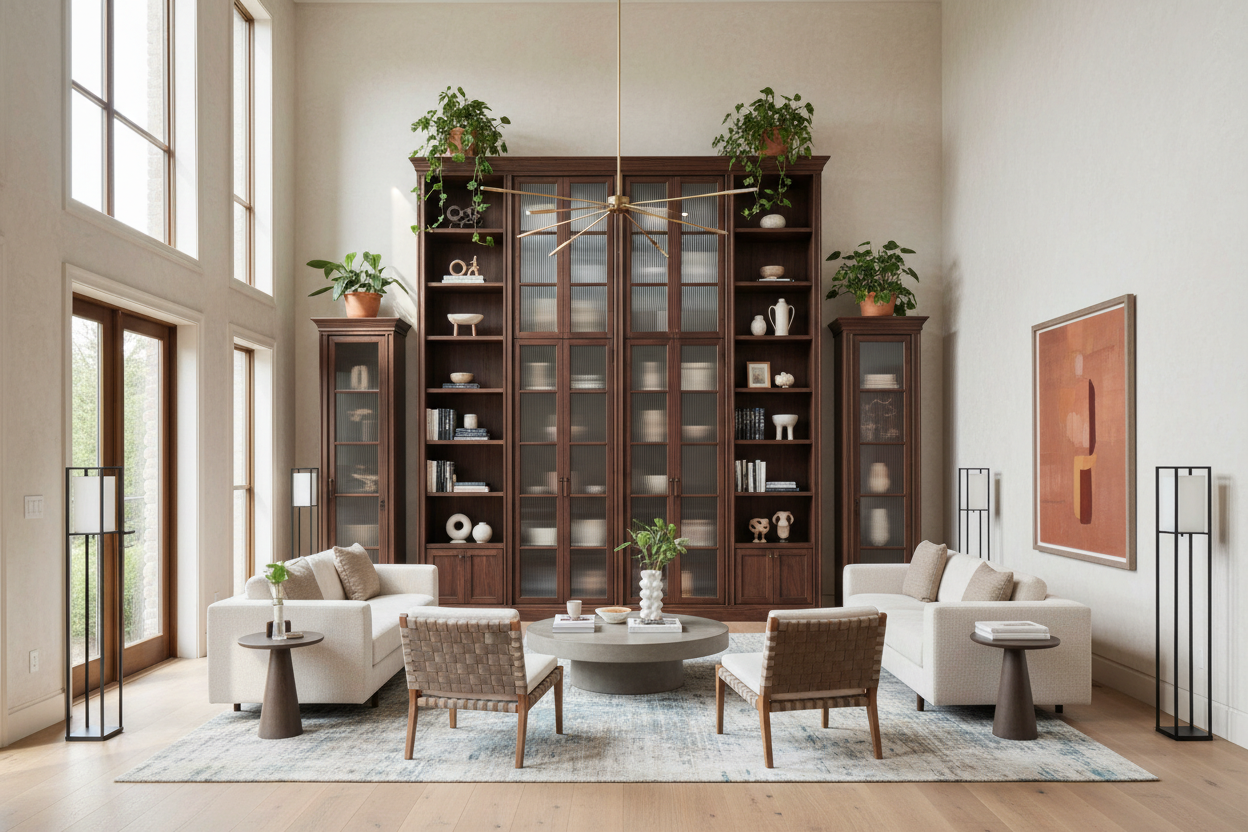
The lightbulb moment happened when I saw a pair of tall pantry-style units in a high-end design magazine. They weren't in a kitchen; they were flanking a dining window. By switching to vertical storage furniture, I realized I could quadruple my storage capacity without taking up a single extra inch of floor space. It is the same logic as city skyscrapers—when you can't build out, you build up.
I swapped my 72-inch wide credenza for two 36-inch wide, 72-inch tall cabinets. Suddenly, I had fourteen shelves instead of two. I could finally organize by category: one shelf for glassware, one for small appliances, and an entire section just for the linens that used to be crammed into a drawer. The footprint stayed exactly the same, but the room felt more intentional and finished.
When you go vertical, you also create a visual anchor. A low buffet often looks like it is floating in a sea of drywall. A tall cabinet fills the vertical plane, making the room feel more architectural. Just make sure you measure your ceiling height first—you want at least 12 to 18 inches of breathing room between the top of the cabinet and the ceiling to avoid that 'crammed-in' feeling.
Why You Absolutely Need a Furniture Storage Cabinet With Doors
Open shelving is a lie sold by people who don't own mismatched coffee mugs. In a dining room, you need a perfect storage cabinet with doors to maintain your sanity. I love the look of a styled bookshelf, but I do not want to 'style' my slow cooker or my stack of plastic Tupperware.
Closed doors allow you to be messy behind the scenes. My cabinets house a chaotic mix of silver platters, colorful tablecloths, and a very ugly but very functional electric griddle. When the doors are shut, the room looks pristine. When they are open, I have everything I need within arm's reach of the dining table.
Plus, doors protect your stuff. If you have ever had to wash a set of wine glasses twice—once because they were dirty and once because they sat on an open shelf for a month and got greasy—you know exactly why I am pro-door. It keeps the dust out and the visual noise down. If you have kids or pets, it also keeps the 'forbidden' breakables safely out of reach.
Making It Intentional: My Black-and-White Storage Cabinet
The biggest fear with tall furniture is that it will look like a boring office cabinet. To avoid this, I went with a high-contrast black-and-white storage cabinet. The outer frame is a deep, matte black, while the door panels are a crisp, clean white. This contrast breaks up the mass of the piece so it doesn't feel like a giant monolith in the corner.
This is a great way to bring in a unique storage cabinet that doesn't feel like part of a 'set.' I’m a firm believer that your dining table and your storage shouldn't match perfectly. If you have a wood table, don't buy a wood cabinet in the same stain. It looks dated. The black-and-white combo acts as a neutral but bold statement that complements almost any wood tone.
I opted for a unit with a 15-inch depth. Anything deeper than 18 inches starts to feel like it's encroaching on the walkway. At 15 inches, I can still fit my largest dinner plates and even my stand mixer, but the cabinet doesn't feel like a hulking beast looming over the dinner table.
The Frosted Glass Compromise
If you are worried that solid doors will make the room feel too 'heavy,' look for a display cabinet with frosted doors. This is the ultimate design hack. You get the lightness and reflection of glass, but the frosting obscures the contents. It is the 'blurred background' of the furniture world.
I used frosted glass on the top third of my cabinets. It allows me to keep some pretty glassware visible—you just see the soft silhouettes and colors—without revealing that the glasses aren't perfectly aligned. It breaks up the solid wood or MDF panels and gives the eye a place to rest. It feels expensive and custom, even if the piece came in a flat-pack box.
My one warning: avoid clear glass unless you are a minimalist who only owns white dishes. Otherwise, you are just signing up for a second job as a professional shelf-dresser. Frosted glass gives you the 'glow' of a display cabinet with the forgiveness of a solid door.
Personal Experience: The 'Solid Wood' Mistake
A few years ago, I bought what I thought was a 'solid wood' cabinet for a steal. Within six months, the 'veneer'—which was actually just contact paper—started peeling at the corners because I had placed a damp vase on it. It looked cheap almost instantly. Now, I always check for kiln-dried hardwood frames or at least high-quality MDF with a real wood veneer. My current black-and-white setup has survived two moves and a spilled glass of Cabernet without a single bubble or peel. Spend the extra $100 for real materials; your future self will thank you.
FAQ
Won't a tall cabinet make my small dining room look even smaller?
Actually, it’s the opposite. Drawing the eye upward creates the illusion of height. A bunch of low, leggy furniture can make a room feel cluttered and 'bitsy.' One or two tall, solid pieces ground the space and make the ceilings feel higher.
How do I prevent a tall cabinet from tipping over?
Anchor it. No excuses. Most furniture storage cabinets come with an anti-tip kit. If yours didn't, buy one at the hardware store for five dollars. It takes ten minutes to install and prevents a disaster, especially if you have kids who think cabinet handles are climbing holds.
Are these cabinets hard to assemble?
If you're buying flat-pack, expect to spend about two to three hours. My pro tip: throw away the tiny L-wrench they give you and use a real screwdriver with a comfortable grip. Also, do not tighten everything 100% until the very end; it helps keep the doors aligned.

Leave a comment
This site is protected by hCaptcha and the hCaptcha Privacy Policy and Terms of Service apply.