

















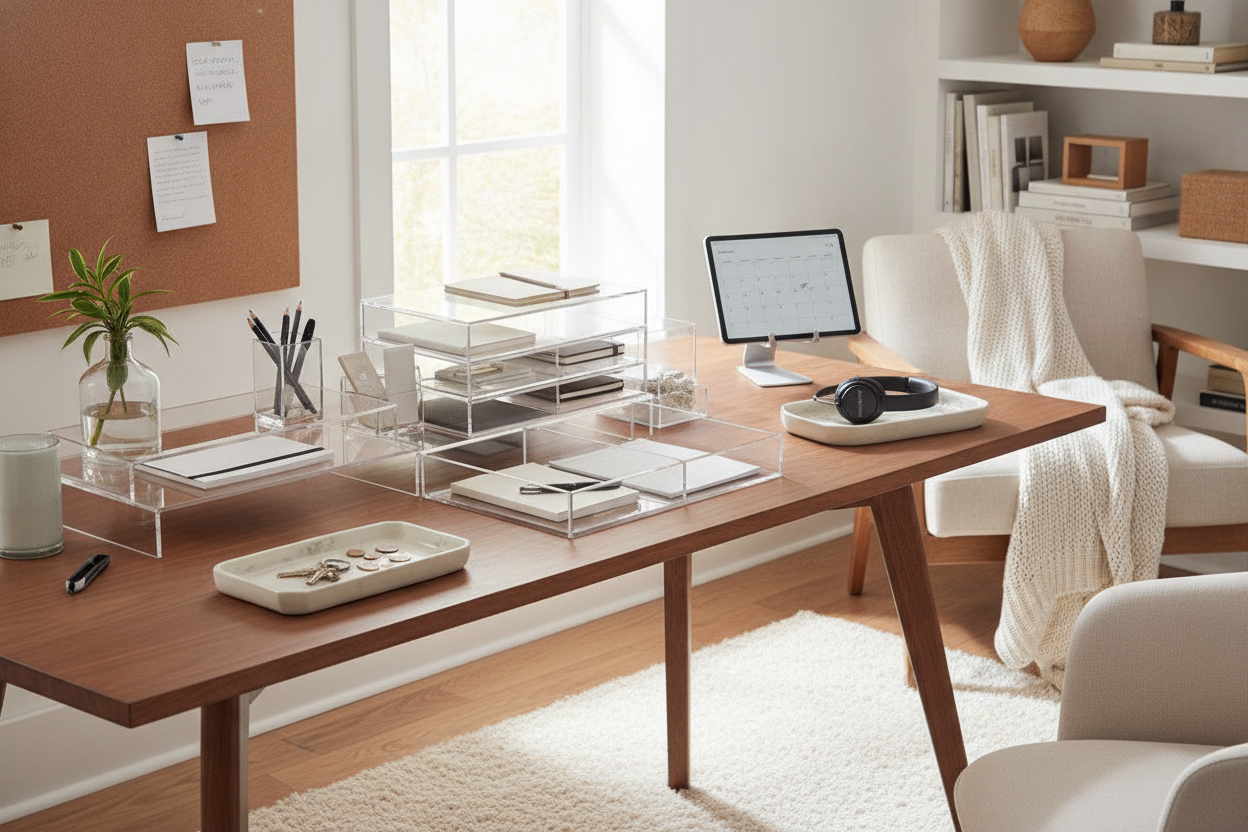
I used to spend my Sunday nights obsessively tidying my workspace. I would tuck every stray paperclip and charging cable into opaque plastic bins, feeling like a productivity guru. By Tuesday afternoon, I would be tearing those same bins apart because I could not remember where I put my favorite fine-liner or that one specific USB-C adapter. My obsession with hiding desk accessories and organizers was actually the very thing killing my focus.
We have been told that a clear desk equals a clear mind, but for many of us, it just leads to a cluttered brain. Staring at a sterile, empty surface doesn't help me work; it just makes me feel like I’m sitting in a hotel business center. I realized I needed a setup that acknowledged how I actually work—messy, fast, and visual—rather than how I wanted to look on a conference call.
- Open storage beats closed drawers for items you use every single hour.
- Vertical organizers save precious surface area for your mouse and coffee mug.
- A single high-quality tray is better than five cheap plastic dividers.
- If you haven't touched an accessory in a week, it does not belong on your primary desk surface.
The 'Out of Sight, Out of Mind' Trap
For those of us who think visually, 'away' usually means 'gone forever.' If I cannot see my notebook, I simply will not use it. Most modern office setups prioritize a minimalist aesthetic that looks great in photos but feels like working in a vacuum. When you shove your daily tools into a dark drawer, you create a friction point. You have to stop what you are doing, remember which drawer it is in, and dig for it. That three-second distraction is often enough to break a deep-work flow and send you spiraling into a 20-minute phone scroll.
Instead, I have moved toward a philosophy of visual organization for desks. This does not mean letting chaos reign; it means keeping the things you actually use within your line of sight. If I am working on a project, my reference materials and specific pens stay out. They are not clutter if they are active tools. The goal is a desk that looks like a workshop, not a museum exhibit. I want to reach for my scissors or my hard drive without having to engage my conscious brain to find them.
Why You Actually Just Need a 'Drop Zone'
Most of us over-complicate things with tiny, specific compartments. You do not need a dedicated slot for three different sizes of binder clips if you only use one. What you actually need is a 'drop zone'—a high-quality table organiser that acts as a catch-all for the stuff currently in rotation. Think of it like a valet tray for your work life. It keeps the chaos corralled in one spot so it does not creep across the entire surface of your desk like a slow-moving ink blot.
I have found that the material of this tray matters more than you’d think. If you use a flimsy, clear plastic bin, it feels like a junk drawer. But if you opt for warm wood accessories, the storage feels intentional and permanent. A solid walnut or oak tray has enough weight to stay put when you toss your keys or a heavy stapler into it. It grounds the workspace and makes the inevitable daily mess look like a curated collection rather than a mistake.
Vertical Space is Your Best Friend
The biggest mistake I see in home offices is trying to fit every single one of your desk organization supplies on the flat surface of the desk. Unless you are working on a massive 72-inch executive table, you are going to run out of room for your elbows. This is where verticality saves your sanity. Moving things like headphones, cables, and even small plants onto a pegboard keeps them accessible but off the active zone where your mouse moves. It is about clearing the 'landing strip' for your hands while keeping the tools within arm's reach.
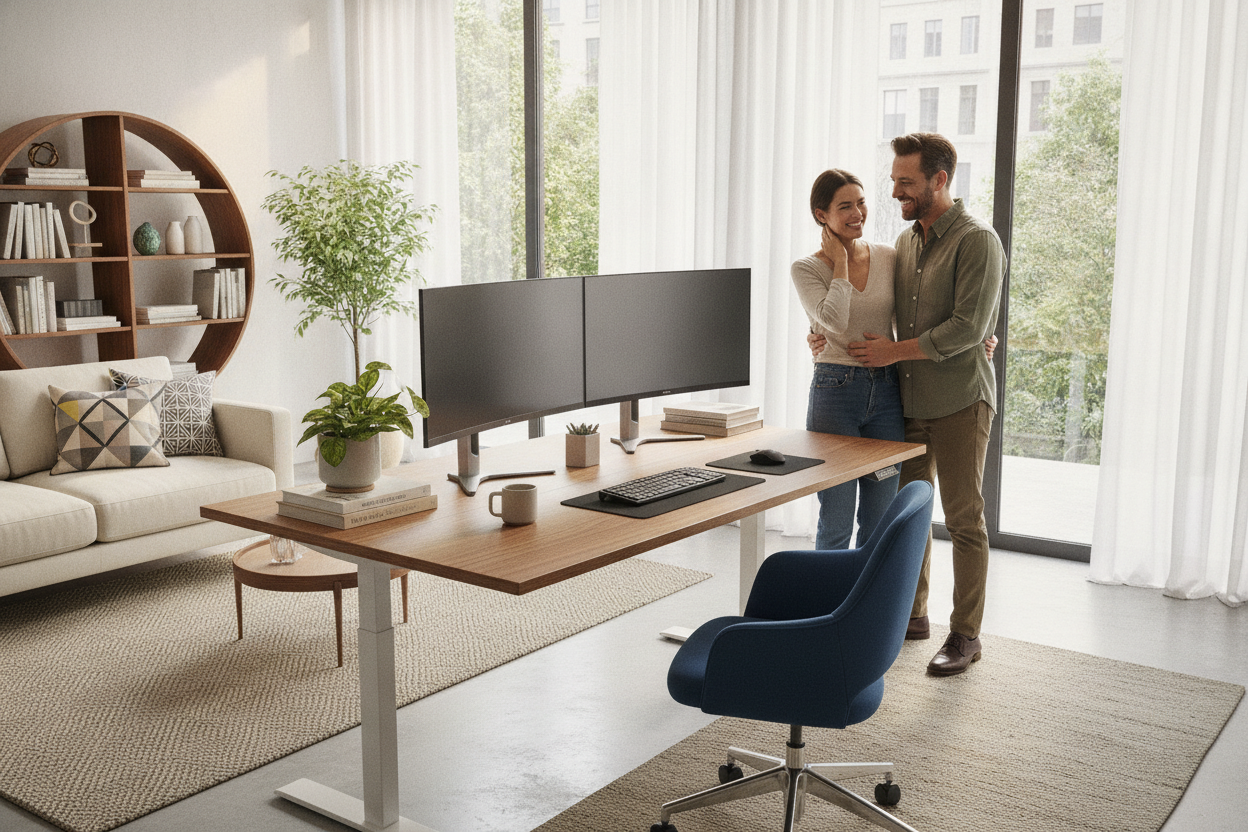
If you are not keen on drilling holes into your walls, look for integrated solutions. I recently tested a height adjustable desk with dual storage modules that included a built-in pegboard. It is a massive help because the storage moves with you when you transition to standing. You are not reaching down to a fixed drawer or a wall-mounted shelf while you are standing up, which is a subtle ergonomics win that saves your back over an eight-hour shift. It keeps your desk organizers accessories right at eye level where they belong.
How to Audit Your Current Setup
Before you buy another set of desk organization accessories, you need to do a hard reset. I try to do this once a quarter. Empty everything. Every drawer, every cup, every tray. Put it all in a cardboard box on the floor. Only allow an item back onto your desk once you have actually reached for it during a real work session. You will be shocked at how many 'essential' tools are actually just taking up psychological space while gathering dust.
It is easy to fall into the trap of thinking a new gadget will solve a bad habit. Ask yourself: do you really need more accessories, or do you just need less stuff? I realized I was keeping three different staplers and a box of 5,000 staples on my desk when I had not printed a physical document in over a year. Purge the 'just in case' items and keep the 'right now' items. If you haven't used that fancy brass paperweight in six months, move it to a bookshelf.
The Bare Minimum Approach
If I were starting from scratch today, I would keep it incredibly simple. You need a solid desk organizer and accessories that serve a dual purpose: a large felt desk mat to define your workspace, a single heavy tray for your drop zone, and maybe one vertical file for active paperwork. That is it. Most of the office desk organizers accessories sold in big-box stores are just more plastic that will eventually end up in a landfill. Focus on quality over quantity.
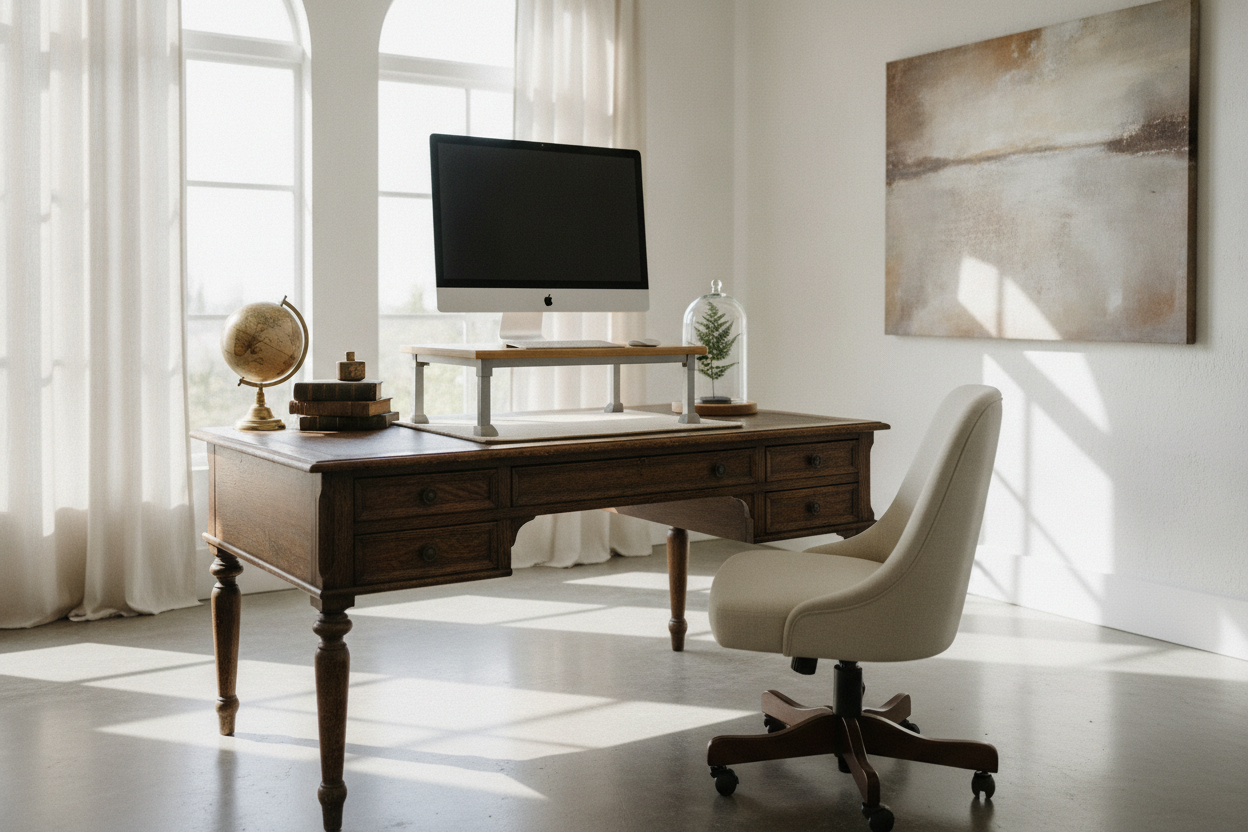
At the end of the day, no amount of clever bins can fix a fundamentally flawed workspace. If your table is too small or wobbles every time you type, start by fixing the base. Investing in a solid writing computer desk provides the foundation you need. Once you have the right surface area and stability, the organizers are just the finishing touches that help you stay in the zone. Stop hiding your tools and start using them.
How do I stop my desk from getting messy again?
Implement a 'closing shift' routine. Spend five minutes at the end of every day putting your tools back into their designated open trays or pegboard slots. It prevents that Friday-afternoon-explosion feel and lets you start Monday with a fresh slate.
Are expensive desk organizers worth it?
Only if they are made of durable materials like solid wood, powder-coated steel, or heavy-duty felt. Cheap acrylic or thin plastic cracks and discolors within a year, meaning you will just be replacing them and spending more in the long run.
What is the best way to organize messy cables?
Stop trying to hide them perfectly behind the desk where you can't reach them. Use reusable velcro ties to bundle them and an under-desk cable tray to keep the 'spaghetti' off the floor. If they are accessible, they are much easier to swap out when you get a new phone or laptop.

Leave a comment
This site is protected by hCaptcha and the hCaptcha Privacy Policy and Terms of Service apply.