

















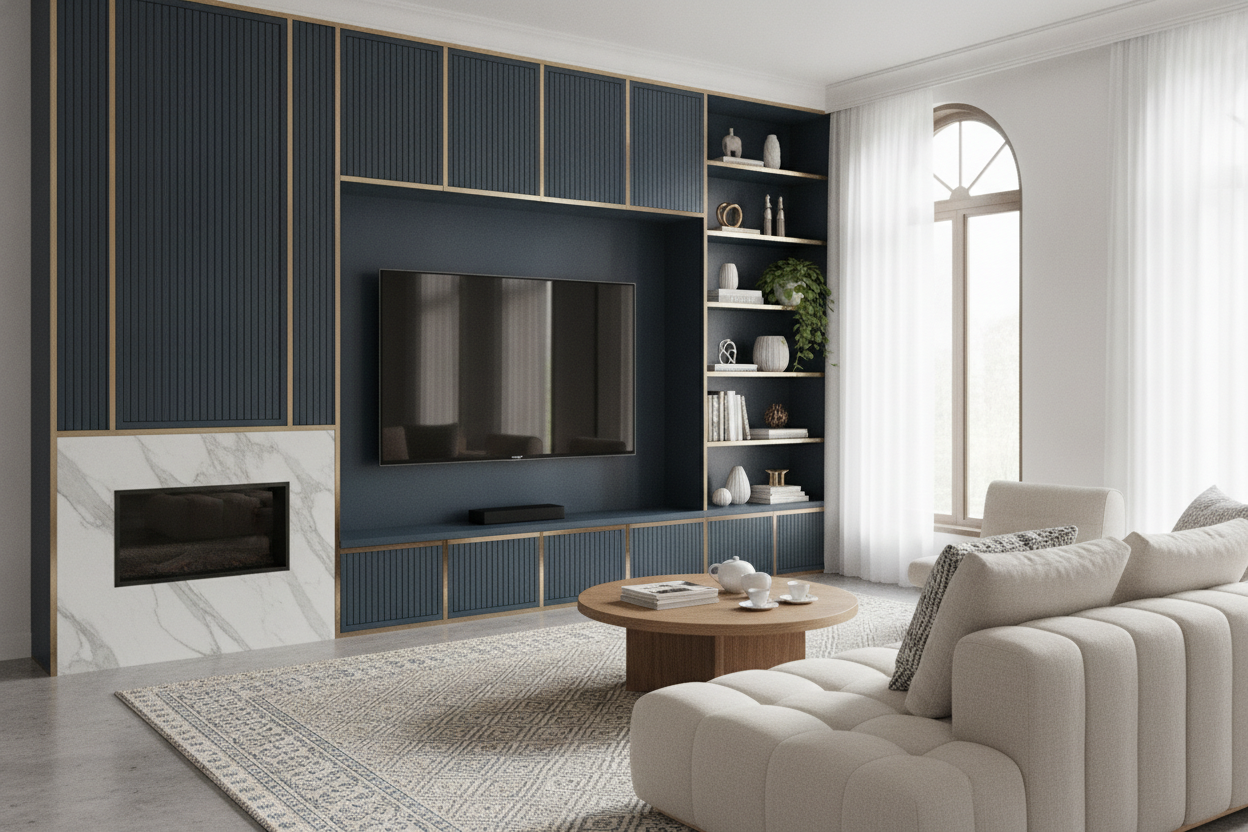
I remember staring at my screen at 2 AM, 47 tabs deep into a search for a media console, feeling personally insulted by the price of tv stand units that looked like basic rectangles. I just wanted something that didn't look like it was made of compressed sawdust and wouldn't buckle under the weight of my 65-inch TV. I've been there—buying the $90 'deal' only to watch it develop a sad, permanent frown in the middle after six months.
- Particle board is a temporary fix, not a long-term investment.
- Center support legs are non-negotiable for screens over 55 inches.
- Real wood veneer handles moisture and wear significantly better than paper laminate.
- Quality hardware (hinges and glides) prevents the 'drawer-stuck-halfway' nightmare.
The Sticker Shock: How Much Is Television Stand Quality Supposed to Cost?
Let's be real: paying $500 for a 'box' feels wrong until you've lived with a $100 one. When I first started furnishing my places, I couldn't wrap my head around why a simple low-slung cabinet cost as much as a decent sofa. I spent weeks scrolling through a collection of sturdy TV stands, trying to find the catch. The catch, I realized, is that the cheap stuff is designed to be disposable.
You aren't just paying for the look; you're paying for the engineering that keeps your $1,200 OLED from crashing to the floor. How much is television stand quality actually worth? If it saves you from buying a replacement in two years, it's worth the upfront hit. Most of that cost goes into material density and the logistics of shipping something that doesn't weigh as much as a feather.
The 'Sag Factor' (Why Cheap Consoles Are Doomed)
Physics is a cruel mistress. Most budget stands are made of low-density particle board. It looks fine for a month, but then the 'sag' starts. It's that subtle dip in the center that makes your whole living room look like it's melting. I once bought a 'mid-century' knockoff that didn't have a center support leg. By the time I moved out, the doors wouldn't even close because the frame had warped so badly.
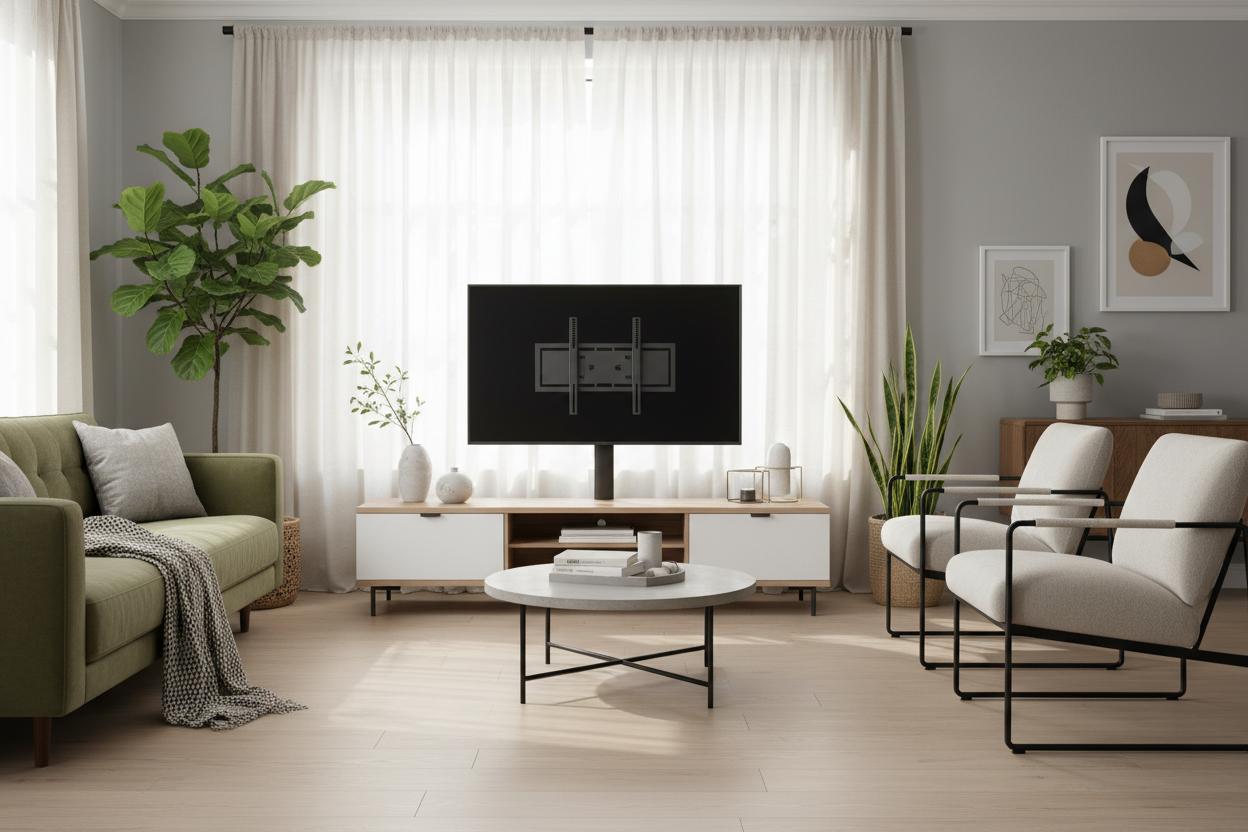
If you have a large TV, you need a wide adjustable TV stand that features dedicated center support. Without those extra legs touching the floor in the middle, gravity will eventually win. It doesn't matter how pretty the finish is—if the spine of the unit is weak, the aesthetic is ruined. I've learned to check the 'max weight capacity' and then subtract 20% just to be safe.
What Actually Dictates the T V Stand Price Tag?
The t v stand price isn't just a random number pulled out of thin air. It's a combination of material weight, joinery, and the quality of the finish. Cheap units use cam-locks that loosen over time. High-end units use dowels, screws, and reinforced brackets. You're paying for a piece that stays rigid even when you move it across the room.
Solid Wood vs. Fancy Paper
This is where most people get tripped up. 'Wood finish' usually means a sticker. Literally, a piece of contact paper with a wood grain pattern printed on it. It peels at the corners if you breathe on it too hard. Genuine wood veneer is a thin layer of real timber over a stable core—it feels warm, looks deep, and can actually handle a spilled drink without bubbling up like a blister.
Hardware That Doesn't Snap
I used to think soft-close hinges were a luxury I didn't need. Then I bought a modern TV stand with cabinets and realized how much I hated the 'clack' of cheap metal on wood. Sturdy drawer glides that don't derail when you put more than three remotes in them are worth every penny. Good hardware is heavy, usually made of steel or brass, and it's a huge chunk of the manufacturing cost.
Exactly How Much for TV Stand Upgrades? A Realistic Budget
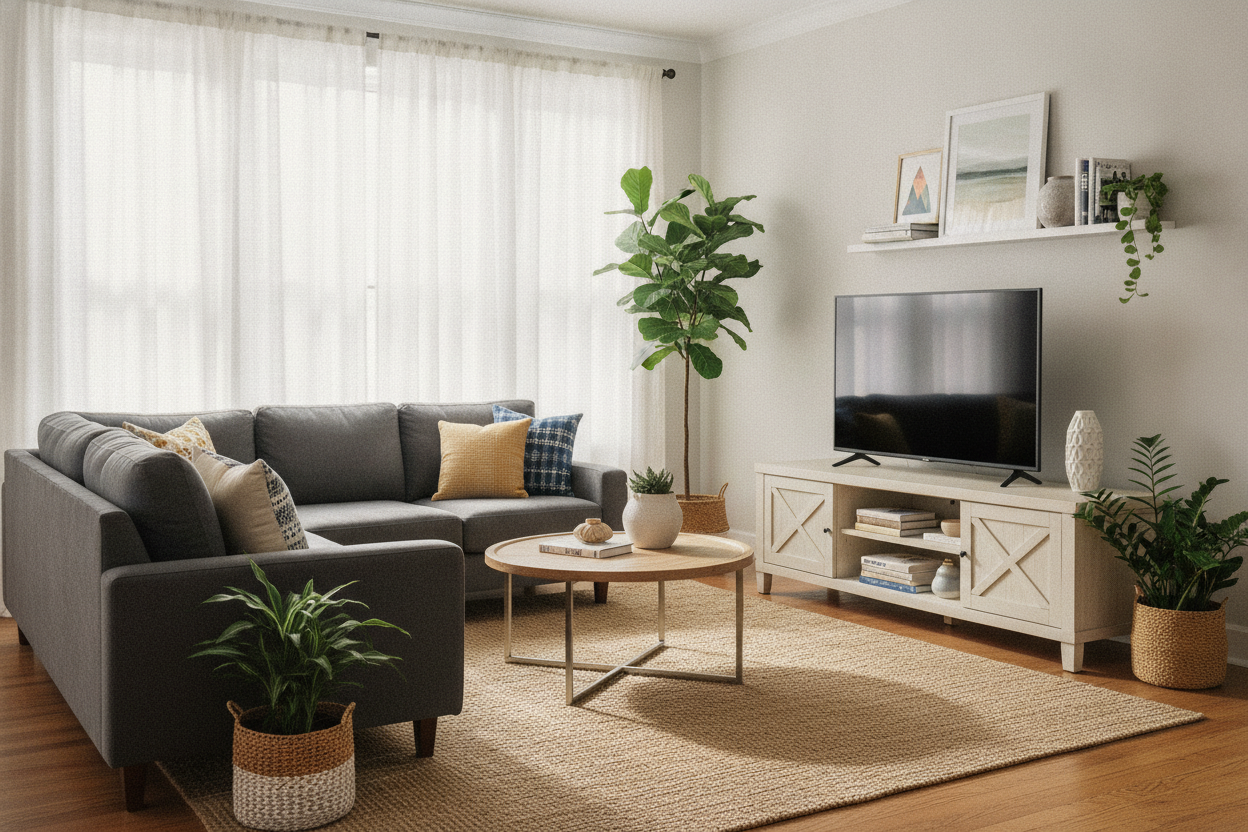
If you're asking how much for tv stand longevity, here is the breakdown. Under $200, you are in the 'temporary' zone—perfect for a dorm, but expect it to wobble. The $400 to $700 range is the sweet spot. This is where you find solid legs, real veneers, and thoughtful cable management. You can make these pieces look like they cost triple by styling a sideboard TV stand with some high-end ceramics or a nice lamp.
Once you cross the $1,000 mark, you're paying for designer names, solid hardwood construction (like walnut or oak), and artisan details. It's an heirloom at that point. For most of us, that middle tier is where the value lives. It’s the difference between a piece that survives a move and one that ends up on the curb with a 'FREE' sign.
When It Actually Makes Sense to Buy the Cheap One
I'm not a snob; there is a time and place for the $80 flat-pack special. If you're in a short-term rental, a college apartment, or staging a house to sell, don't overspend. I once used a basic metal rack for a year because I knew I was moving cross-country and didn't want to lug 150 pounds of oak with me. Just don't expect it to be a 'forever' piece. If you know it's a placeholder, the lower t v stand price is a win, not a compromise.
FAQ
Does the TV stand need to be wider than the TV?
Yes, for both safety and aesthetics. Ideally, you want at least 3-6 inches of clearance on each side so it doesn't look top-heavy or like a tipping hazard.
What is the best height for a TV stand?
Your eyes should be level with the bottom third of the screen when seated. For most sofas, that means a stand height of 20 to 24 inches.
Is MDF better than particle board?
MDF is denser and stronger than standard particle board. It holds screws better and won't flake apart as easily, making it a better mid-range choice.

Leave a comment
This site is protected by hCaptcha and the hCaptcha Privacy Policy and Terms of Service apply.