

















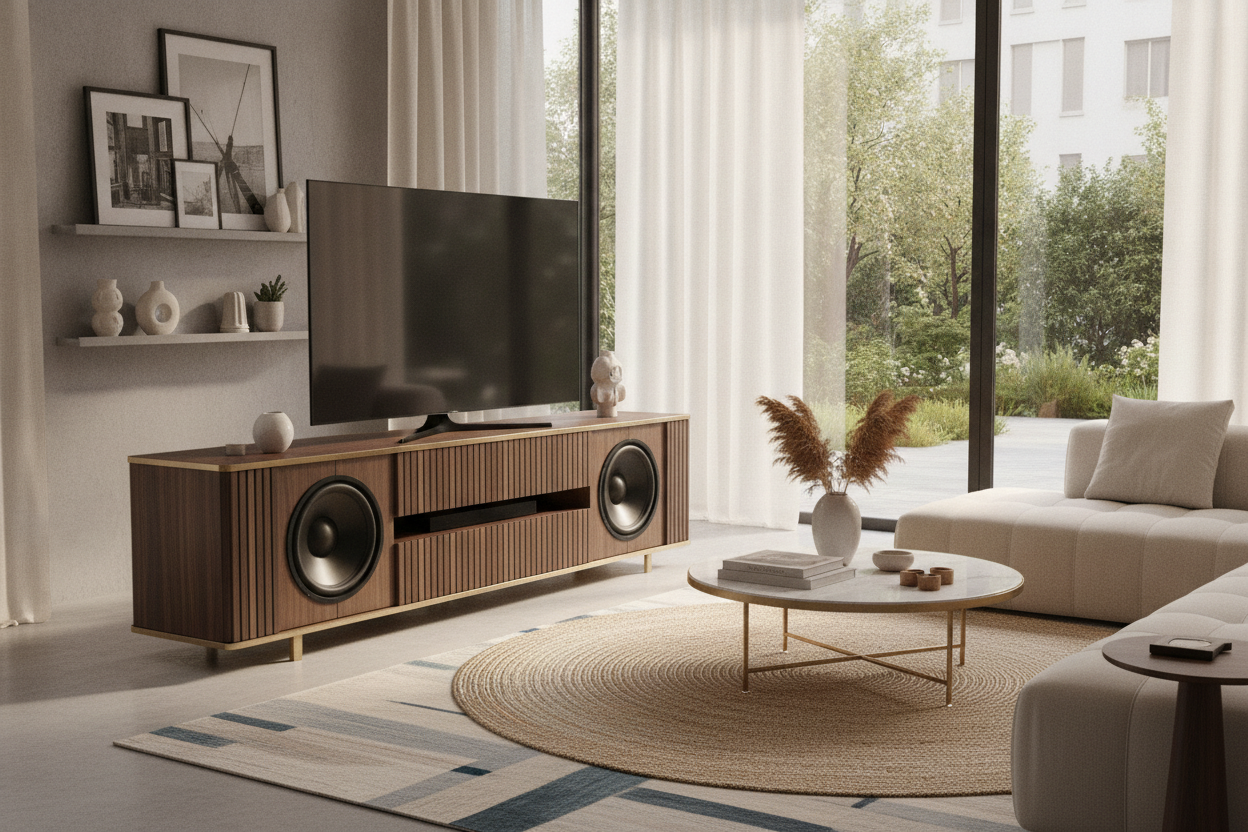
I spent three weeks researching the perfect 4K projector and a 5.1 surround system, only to realize my living room looked like a dorm room for a middle-aged tech blogger. The wires were everywhere—snaking behind the legs of my mid-century console like a nest of black vipers. I had a $400 center channel speaker perched precariously on a shelf that was clearly designed for a stack of coffee table books, not an 18-pound piece of audio equipment. I realized that upgrading our current TV stands wasn't just about getting more storage; it was about finding a dedicated speaker tv stand that could actually handle the weight and the acoustics.
- Acoustically transparent doors (mesh or slats) are essential for hiding speakers without muffled sound.
- Check the depth; many consoles are 15-16 inches, but high-end receivers often need 18+ inches with cables.
- Ventilation is the difference between a long-lasting amp and a melted plastic brick.
- Integrated systems are great for small spaces, but separate components offer better long-term sound quality.
The 'Electronics Showroom' Aesthetic Had to Go
There is a specific kind of internal sigh I give when I walk into a beautiful room and see a massive, glossy black soundbar blocking the bottom three inches of a TV screen. Or worse, the 'cable waterfall'—that cascading mess of HDMI and power cords spilling out from a console. My old setup was exactly that. I had great sound, but the visual noise was killing the vibe of my home. Standard media units just aren't built for modern audio gear. They lack the depth for receivers and the breathability for amplifiers that run hot enough to fry an egg.
I wanted movie-theater-quality sound, but I didn't want my living room to look like a Best Buy clearance aisle. The goal was total invisibility. I needed a way to tuck away the center channel, the receiver, and the subwoofer while keeping the remote signals and sound waves moving freely. That is where the specialized speaker tv stand comes into play.
What Actually Makes It a Speaker TV Stand?
A true speaker-centric unit is more than just a piece of furniture with a hole in the back. You are looking for specific engineering. First, look for acoustic mesh or fabric-lined doors. These allow sound to pass through with zero coloration or muffling. If you use a solid wood door, you're basically putting a pillow over your speakers. Second, look for rear ventilation. Most high-end receivers generate significant heat; without airflow, they will overheat and fail within two years.
Some people opt for an entertainment center with built-in speakers. These are all-in-one units where the drivers are actually part of the furniture frame. It’s a clean look, but the trade-off is that you can't easily upgrade the audio tech in five years. I prefer a 'BYO' (Bring Your Own) speaker approach, using a cabinet designed to house high-quality bookshelf or center-channel speakers behind a hidden facade.
Integrated Audio vs. Open Shelving
If you're a minimalist who just wants better TV audio without the hassle, a tv stand with built in speakers is a solid move. It eliminates the need for separate wires and configuration. However, if you already own a killer soundbar or a dedicated center channel, you need furniture that accommodates that specific footprint. I’ve found that a TV stand with adjustable center shelf is the gold standard here. It allows you to drop the shelf height to fit those oversized 7-inch tall center speakers that usually won't fit in standard cubbies.
How to Hide the Tech Without Muffling the Sound
The biggest mistake I see is people stuffing a subwoofer inside a closed wooden cabinet. The vibrations will turn your furniture into a rattling percussion instrument. If you are using an entertainment center with speakers, ensure the subwoofer is either decoupled from the floor with rubber feet or placed in a bottomless compartment. For your main speakers, they need to be pushed as far forward to the front of the cabinet as possible to avoid 'cabinet gain'—that boomy, muddy sound caused by sound waves bouncing around inside the furniture.
If you prefer a more traditional look, a rustic entertainment center with shelves can work surprisingly well if the shelves are open-slat. The gaps between the wood allow the sound to breathe. I once tried to hide a speaker behind a solid barn-door style unit, and it sounded like the actors were talking through a thick wool blanket. Never again. Stick to mesh, slats, or open-air designs for anything producing sound.
3 Rules for Styling a Speaker Entertainment Center
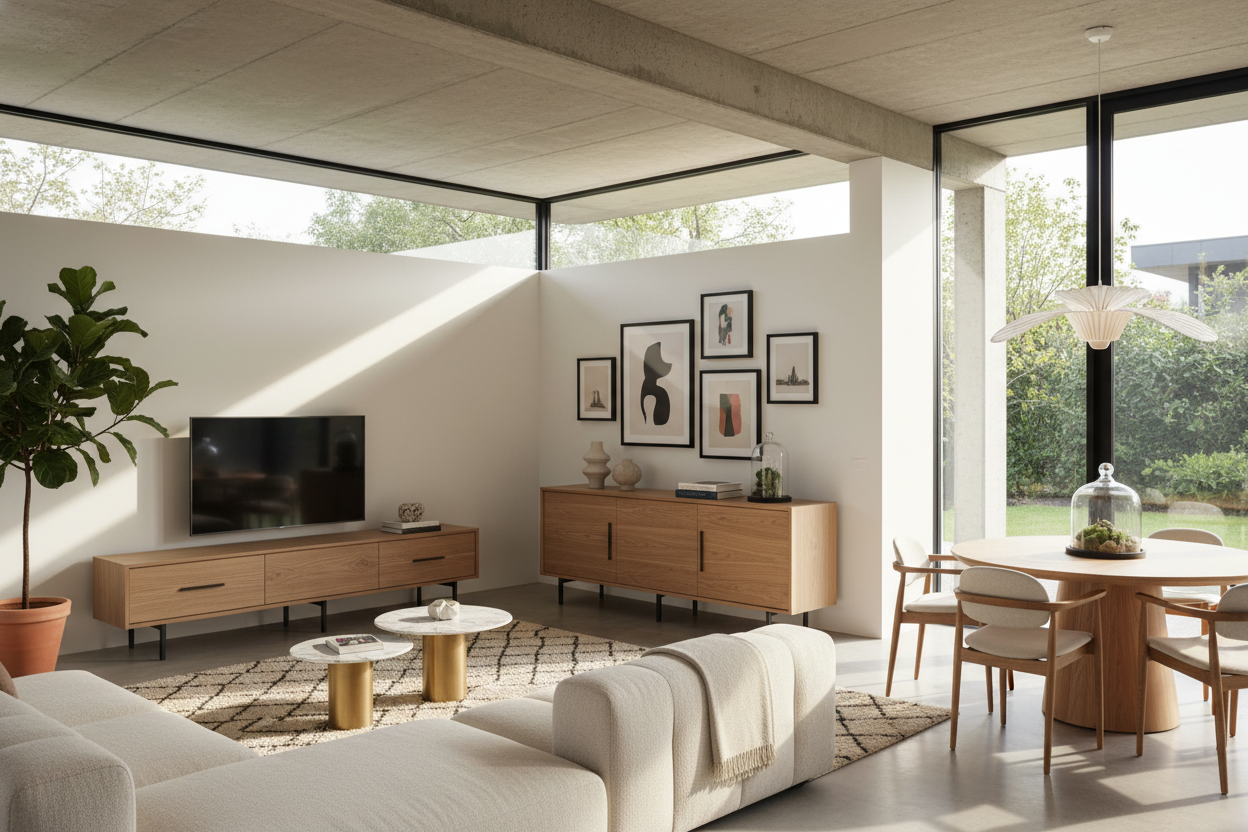
Once you’ve hidden the black boxes, the unit can look a bit... monolithic. To break up the 'tech' feel of a speaker entertainment center, I follow three rules. First, add something organic. A trailing Pothos plant or a piece of driftwood on top of the unit softens the hard edges of the electronics. Second, use matte textures. A stylish black TV stand entertainment center is great for making black gear disappear, but it needs ceramic vases or textured books to keep it from looking like a giant shadow in the room.
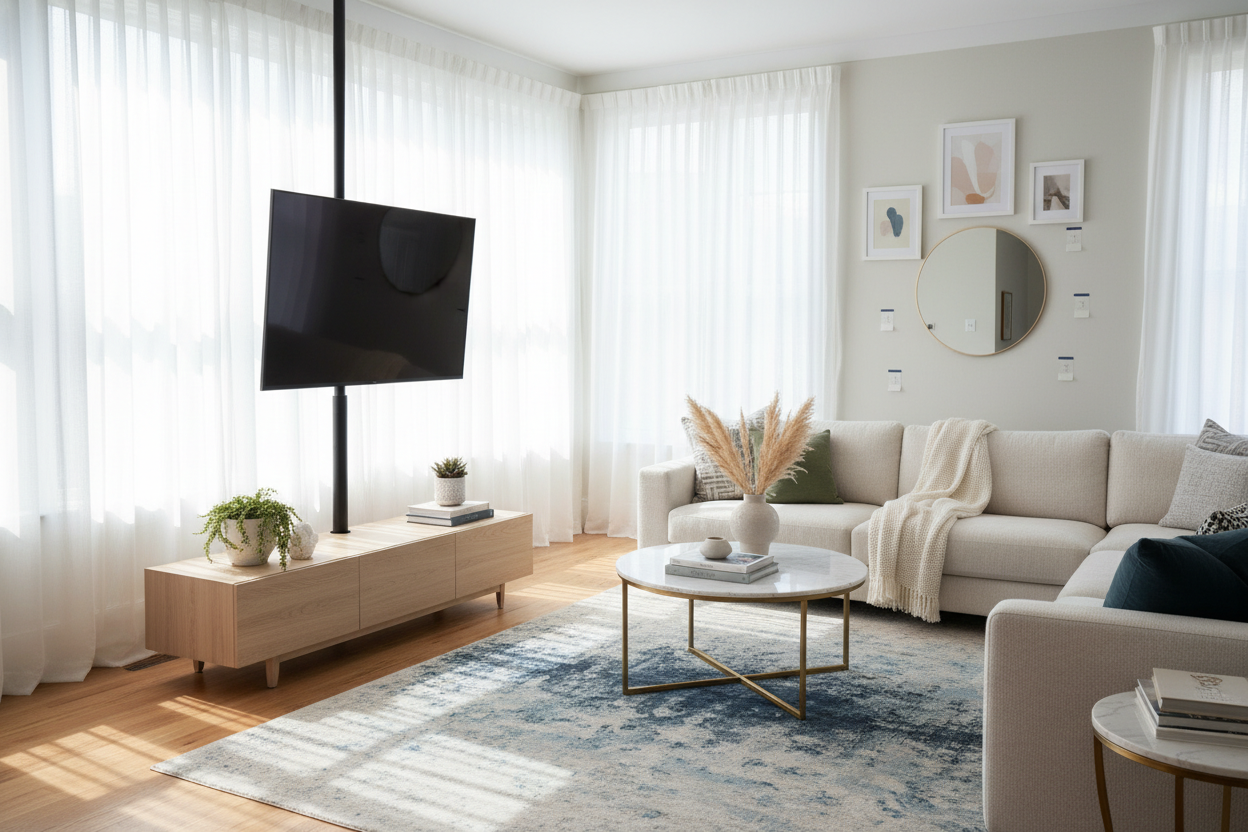
Third, watch your heights. Don't clutter the top of the stand so much that you block the TV or the IR sensor for your remote. I keep my decor to the outer thirds of the stand, leaving the center clear for the screen. This draws the eye to the art and plants, not the fact that there's a 100-watt amplifier humming away behind the mesh.
FAQ
Will my remote work through the cabinet doors?
Only if the doors are made of mesh, glass, or thin slats. Most modern remotes use RF (Radio Frequency) which goes through wood, but older IR (Infrared) remotes need a direct line of sight. If your doors are solid, you'll need an IR repeater kit.
Does a subwoofer need its own shelf?
No, subwoofers actually work best on the floor. If your TV stand has a bottom shelf, try to find a unit with a 'subwoofer garage'—a section with no bottom—so the sub can sit directly on your rug or hardwood.
How much clearance does my receiver need?
At least 2-3 inches on the top and sides. If you cram a receiver into a tight space, the heat buildup will eventually fry the internal components. If the back of your stand is solid, consider using a hole saw to add extra ventilation ports.

Leave a comment
This site is protected by hCaptcha and the hCaptcha Privacy Policy and Terms of Service apply.