

















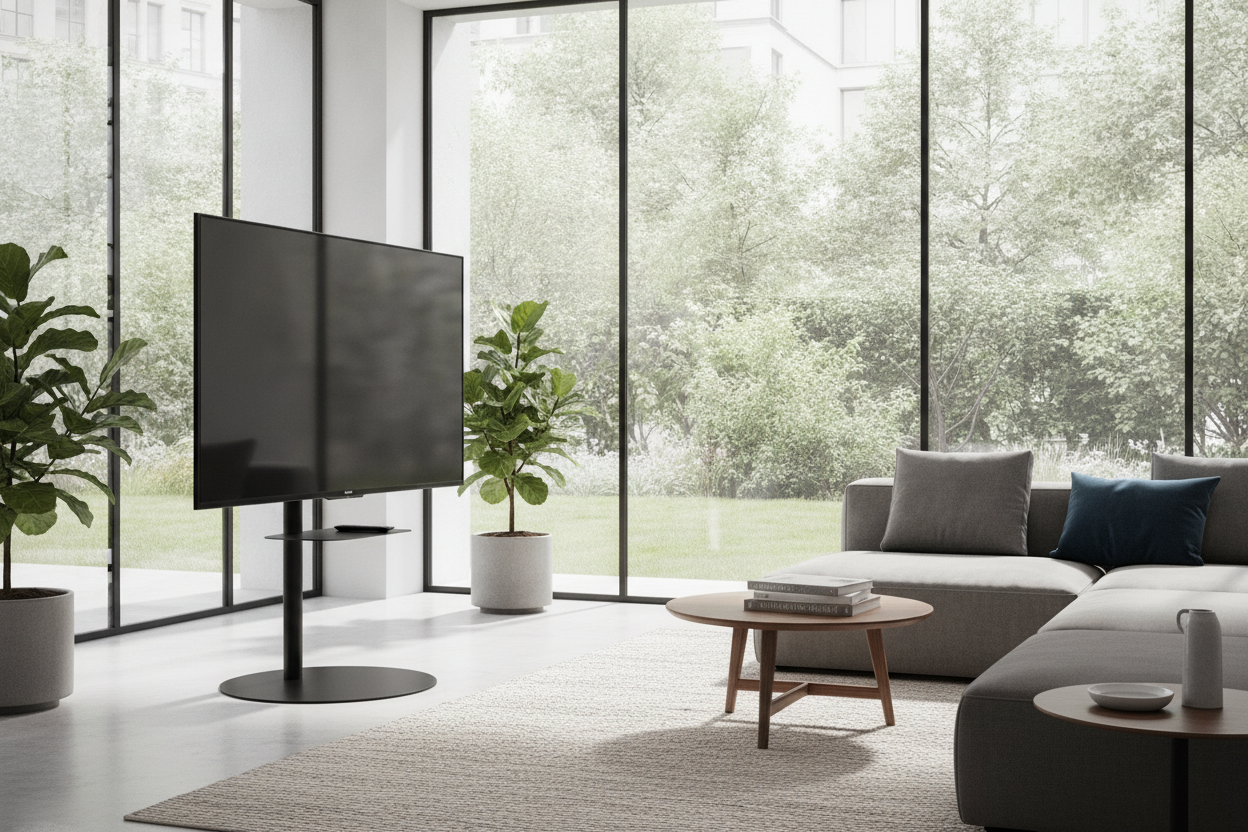
I remember unboxing my first 55-inch 4K screen and feeling that immediate 'oh no' sinking sensation. The TV was gorgeous, but the factory legs were these spindly plastic 'chicken feet' positioned at the extreme outer edges of the frame. My favorite mid-century dresser was three inches too narrow to hold it. I was staring at a $600 screen that literally couldn't sit on my furniture without a pedestal stand for tv to save the day.
- Factory legs are usually cheap and require massive, wide furniture.
- A central pedestal uses the VESA holes already on the back of your TV.
- It allows you to put a large screen on a compact, stylish console or vintage chest.
- Most aftermarket stands offer swivel and height adjustments that factory legs lack.
The Curse of the Wide-Set Factory TV Legs
Modern TV manufacturers have a weird obsession with wide-set legs. They’re cheap to produce and easy to pack, but they’re a nightmare for anyone living in a real apartment. If you want a 65-inch screen, you're suddenly forced to buy a media console that's 70 inches wide just to keep the thing from falling off the edges. It’s an absurd design choice that dictates your entire room layout.
Seeking out a center stand smart tv setup used to be standard, but now it's a feature you have to build yourself. These wide legs make the TV look like a piece of tech equipment rather than a part of your home decor. Swapping them out for a center stand tv configuration is the only way to regain control over your floor plan.
Enter the Aftermarket Fix: The Pedestal TV Base
An aftermarket pedestal tv base is essentially a heavy-duty mounting bracket that attaches to a central pillar. It uses the VESA mounting holes—those four screw holes on the back of your set—to convert any flat screen into a tv with middle base. It’s the same hardware used for wall mounting, but it terminates in a sturdy plate that sits on your furniture.
Most of these kits are 'universal,' meaning they include a bag of 50 different screws to fit every brand from Samsung to Sony. If you are worried about whether your specific model will work with a universal tv stand base, you can always check the FAQ support center for guidance on VESA patterns and weight limits. Usually, if it’s a flat screen made in the last decade, it’ll fit.
Yes, They Actually Hold Massive Screens
I’ll be honest: I was terrified of wobble. I thought a pedestal tv stand for 55 inch tv would be top-heavy and prone to tipping. I was wrong. Most high-quality stands use a heavy, tempered glass flat screen tv base or a solid steel plate that weighs five times more than the original plastic legs. The center of gravity is low and planted.
In fact, a pedestal tv mount is often more stable because it has a larger surface area in contact with your furniture than two tiny feet. I’ve used these for everything from a 43-inch bedroom set to a massive 75-inch living room beast, and the lack of 'screen shake' is genuinely impressive.
Furniture Freedom: What You Can Actually Use Now
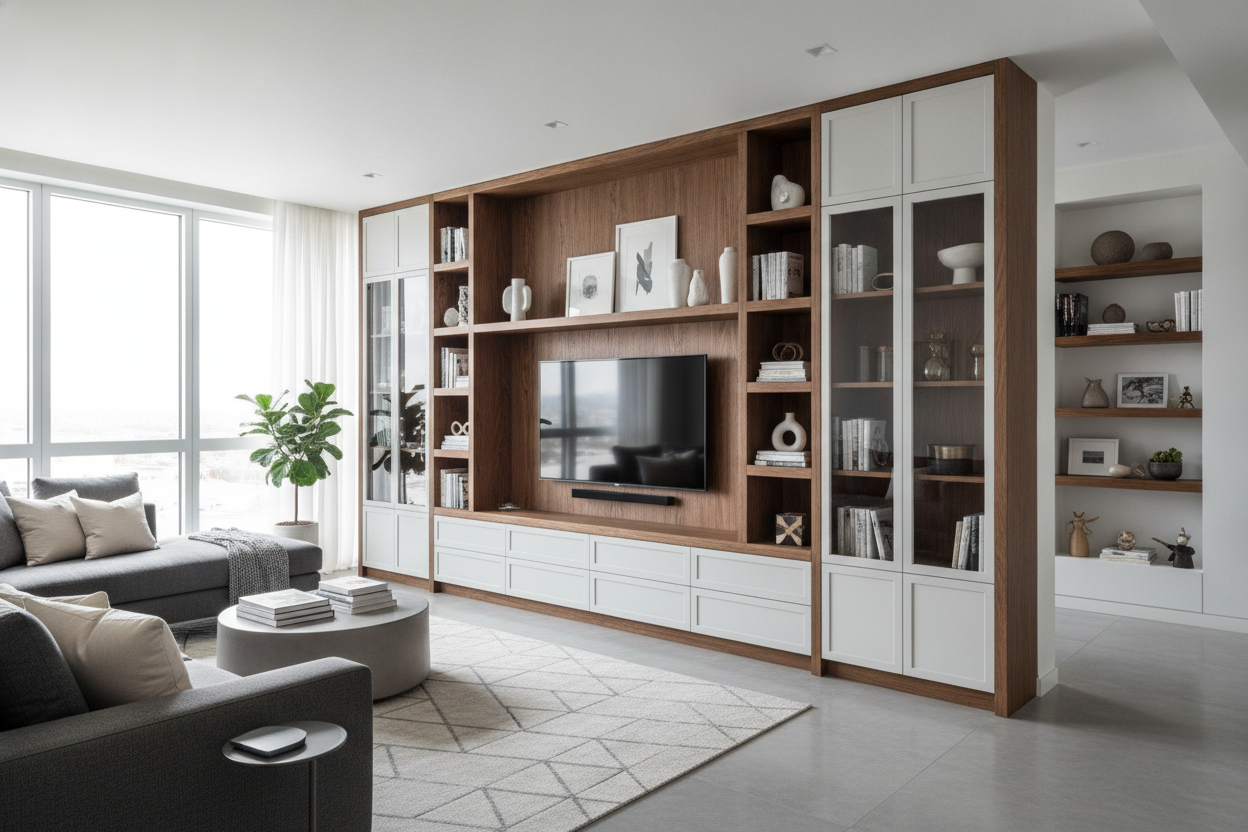
This is the real payoff. Once you move to a tv with stand in middle, you aren't stuck buying a 'tech-heavy' particle board unit from a big-box store. You can finally use a modern TV stand with cabinets that is narrower than the screen itself for a sleek, floating look. It creates a much more balanced silhouette in a small room.
I’ve seen people use this trick to place a smart tv with pedestal base on top of a vintage trunk, a narrow entryway credenza, or even a rustic entertainment center with shelves that would never have accommodated the factory legs. It opens up your decor options to actual furniture—pieces with soul and character—rather than just 'TV benches.'
How to Install a Center Stand (Without Losing Your Mind)
Installing a tv pedestal base is a ten-minute job, but don't do it alone. Lay your TV face-down on a soft blanket on your bed or a rug. Whatever you do, don't put the screen directly on a hard floor. Bolt the vertical brackets to the VESA holes, assemble the base, and then hook the TV onto the stand. It’s significantly easier than an IKEA nightstand.
The best part? You can adjust the height. I like to set my pedestal tv stand high enough so my soundbar sits perfectly underneath the screen without blocking the bottom of the picture. Most factory legs don't give you that clearance, leaving you with a messy, cluttered look.
Frequently Asked Questions
Will a universal pedestal fit my curved TV?
Yes, most kits include spacers specifically for curved backs. As long as the VESA holes are there, you can mount it to a center base tv stand without issues.
Is the glass base safe?
The glass used in a flat screen tv pedestal is tempered, similar to a car windshield. It’s incredibly strong and designed to hold significantly more weight than a standard LED TV requires.
Can I still swivel the TV?
That’s one of the best perks. Most pedestal smart tv mounts allow for a 30-to-45-degree swivel, which is a lifesaver if you want to turn the screen toward the kitchen while you're cooking.

Leave a comment
This site is protected by hCaptcha and the hCaptcha Privacy Policy and Terms of Service apply.