

















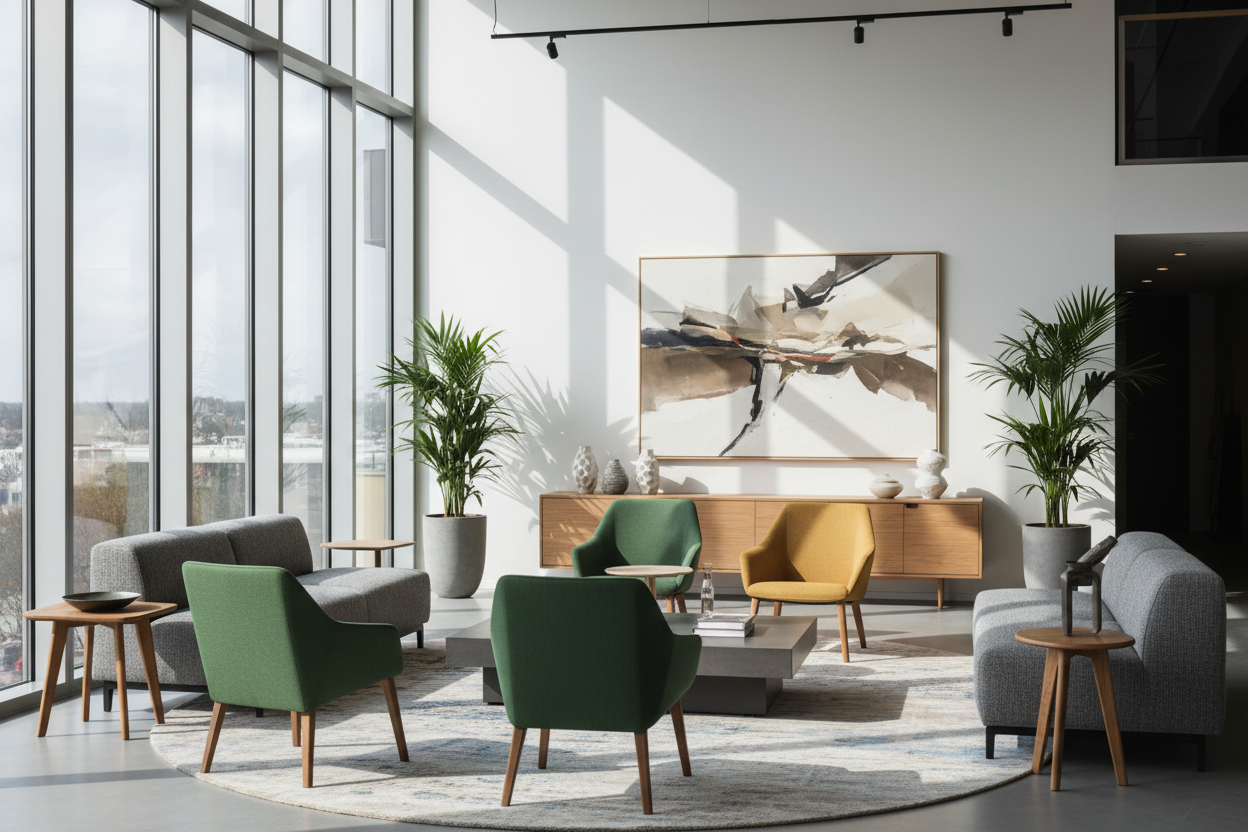
We have all experienced the frustration of falling in love with a sofa or chair, only to watch the fabric pill or the cushions sag within two years. It is a common design dilemma: balancing an elevated aesthetic with the reality of daily life. The solution often lies outside the standard residential catalog. By integrating commercial furniture modern designs into your living space, you bridge the gap between high-end architectural beauty and industrial-grade resilience.
Key Features to Look For
- Double Rub Count: Look for fabrics rated over 50,000 Wyzenbeek double rubs for superior longevity.
- Frame Construction: Prioritize kiln-dried hardwood or welded metal frames over stapled particleboard.
- Foam Density: High-resiliency foam (2.5 lbs/ft³ or higher) prevents the dreaded "sinking" effect over time.
- Finish Quality: Ensure metals have powder-coated finishes to resist chipping and corrosion.
The Rise of Contemporary Contract Furniture
In the industry, we refer to this category as "contract" grade. Historically, this meant sterile, purely functional office gear. However, the lines have blurred. Contemporary contract furniture now mirrors the soft curves and tactile warmth of residential pieces but is engineered to withstand the rigorous demands of hotel lobbies and high-traffic workspaces.
Understanding Material Performance
When specifying for a client, I always emphasize that the core difference lies beneath the upholstery. Residential furniture is often built for a 5-to-7-year lifespan. Modern contract furniture is built for 10 to 20 years. This longevity comes from commercial-grade textiles, such as Crypton or solution-dyed acrylics, which repel stains at a molecular level rather than relying on a topical spray.
Visual Balance and Scale
One challenge when bringing commercial pieces into a home is scale. Commercial furniture is often slightly larger or more rigid in its silhouette to accommodate a wide range of body types.
Softening the Silhouette
To avoid your living room feeling like a corporate waiting area, you must balance the rigidity of contract furniture with organic elements. If you select a sleek, architectural lounge chair with a chrome base, pair it with a high-pile wool rug or a raw-edge wood side table. The contrast between the precision of the furniture and the imperfection of natural decor creates a sophisticated, curated look.
Ergonomics and Comfort
Commercial pieces are designed for posture and alertness, not necessarily for napping. The seat depth might be shallower, and the back support firmer. When planning your layout, reserve these pieces for conversation areas or dining spaces where upright ergonomics are preferred, rather than the primary media room lounging spot.
Lessons from My Own Projects
I recently specified a set of commercial-grade velvet armchairs for a client with three young children and a golden retriever. They loved the look but were terrified of the maintenance. I insisted on a contract-grade velvet usually reserved for boutique hotel lobbies.
Here is the unpolished truth I learned from that installation: The break-in period is real. For the first three months, the client actually complained that the seats felt "too stiff" compared to their old, sagging recliner. Commercial foam is incredibly dense. However, six months later, I visited for a follow-up. Not only did the chairs look brand new despite the dog sleeping on them, but the foam had softened just enough to be comfortable without losing its architectural shape. If you buy commercial, you have to be patient with the firmness—it is the price you pay for furniture that keeps its shape for a decade.
Conclusion
Choosing commercial-grade pieces is an investment in both style and sustainability. By opting for robust materials and timeless silhouettes, you stop the cycle of fast furniture and curate a home that looks impeccable for years to come.
Frequently Asked Questions
What is the main difference between residential and contract furniture?
The primary difference is durability testing. Contract furniture must pass strict BIFMA (Business and Institutional Furniture Manufacturers Association) standards for safety, weight capacity, and durability, whereas residential furniture has fewer regulatory requirements.
Can I use modern contract furniture in a small apartment?
Absolutely. Many modern commercial lines are designed for urban offices and boutique hotels, meaning they offer compact footprints without sacrificing durability. Look for "guest chair" dimensions rather than "lounge" dimensions for tighter spaces.
Is commercial furniture always more expensive?
Initially, the price point is often higher due to the quality of materials (steel, solid wood, performance fabrics). However, the cost-per-use is significantly lower because you will likely not need to replace the item for 15+ years.

Leave a comment
This site is protected by hCaptcha and the hCaptcha Privacy Policy and Terms of Service apply.