

















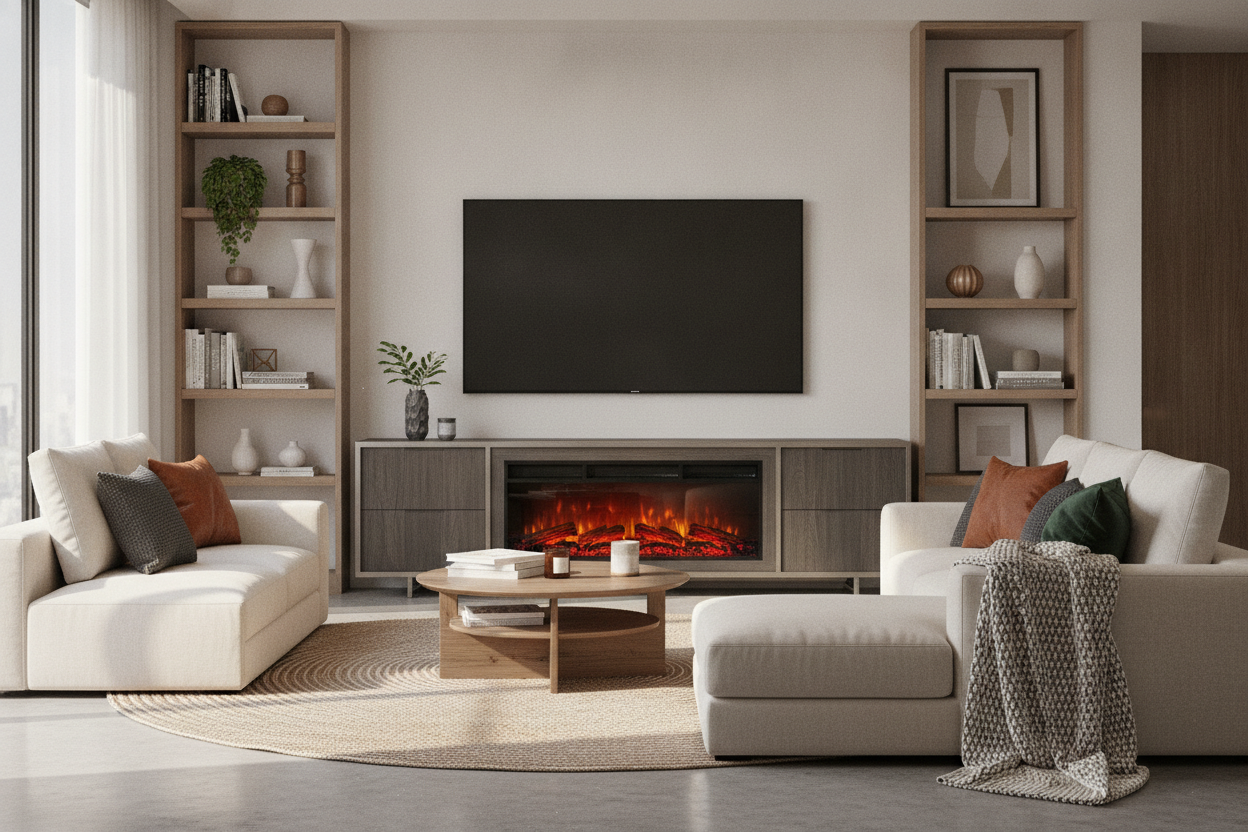
Last winter, I spent three months wearing a literal sleeping bag while watching Netflix. My living room has these gorgeous, high ceilings that basically act as a vacuum for any heat my furnace manages to pump out. I thought I was being smart by getting a cheap ceramic heater, but all it did was make my skin feel like parchment paper while my toes stayed frozen. That’s when I realized I needed an infrared fireplace tv stand.
Standard heaters are fine for a closet, but if you actually want to live in your home during February, you need to understand why infrared is the superior choice. It is the difference between blowing hot air into a void and actually feeling warm. After testing several units, I’ve realized that most people are buying the wrong technology for their space.
- Infrared heat warms objects and people directly, not just the air.
- It maintains natural humidity so your skin and eyes don't dry out.
- Units are rated for up to 1,000 square feet, double the capacity of standard heaters.
- The heating element stays cool to the touch, making it safer for pets.
Standard Electric vs. Infrared: What's the Actual Difference?
Most basic heaters use fan-forced air. They blow air over a red-hot coil and push it into the room. It sounds fine, but the second that hot air hits your living room, it rises. If you have vaulted ceilings, you’re essentially paying to heat the top six inches of your room while your ankles remain in the Arctic. I learned this the hard way when I first bought a basic electric fireplace heater with tv stand and still found myself shivering.
An infrared heater tv stand works differently. It uses infrared light—the same kind of heat you feel from the sun on a cold day—to warm objects. It doesn't rely on air circulation to make you feel comfortable. Because it doesn't burn off the moisture in the air, your room stays at a human-friendly humidity level. You won't wake up with a scratchy throat or that 'static electricity' frizz every time you touch a doorknob.
Will an Infrared Heater TV Stand Actually Warm a Big Room?
If you have an open-concept floor plan, a standard 400-square-foot heater is a joke. It’s like trying to heat a warehouse with a hair dryer. A tv stand with infrared heater is usually rated for 1,000 square feet. This is the sweet spot for modern homes where the kitchen, dining, and living areas all bleed into one another. In my 22x18 living room, the infrared tv stand fireplace managed to raise the ambient temperature by six degrees in under twenty minutes.
The efficiency here is real. Because a tv stand with infrared fireplace doesn't have to work as hard to keep the air hot, it doesn't cycle on and off constantly. It provides a steady, consistent warmth that feels more like a traditional wood-burning hearth than a space heater. If you’re trying to supplement your home's central heating, this is the only way to do it without watching your electric bill pull a disappearing act.
The Aesthetic Factor: Do They Look Like Glowing Space Heaters?
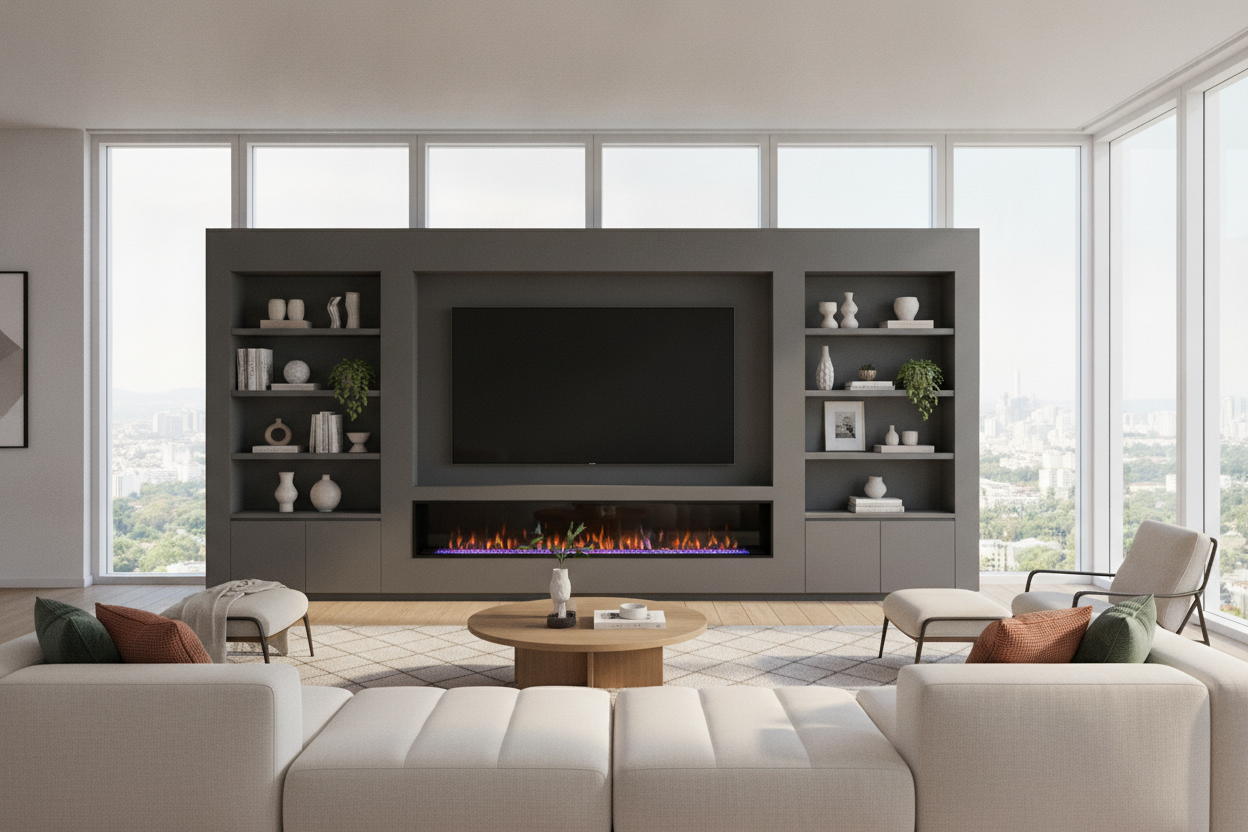
There is a lingering fear that 'better technology' means 'uglier furniture.' I’ve seen some infrared fireplace entertainment center models that look like they belong in a garage, but the market has evolved. You can find mid-century modern designs, rustic farmhouse oak, or sleek minimalist consoles that look like high-end furniture first and heaters second.
The best infrared fireplace tv stand options use multi-layered LED effects to create a 3D flame that actually looks like it has depth. For instance, the 109 W 2 Drawer Tv Stand Media Console is a massive, architectural piece that anchors a room. It successfully hides the high-powered heating element behind a design that looks like it cost three times what you actually paid. You get the wood grain textures and soft-close drawers without the 'dorm room' vibe of a plastic heater.
What I Wish I Knew Before Plugging It In
Here is the part where I tell you what the manual won't. First: cord management is a nightmare if you don't plan ahead. An entertainment center with infrared fireplace has a lot of internal wiring. Use the built-in cutouts for your gaming consoles and cable boxes, or you'll have a literal bird's nest of wires sitting right next to a heat source. Not a good look.
Second, and most importantly: do not plug your tv stand infrared electric fireplace into a power strip. These units pull about 1,500 watts. Most cheap power strips are rated for much less, and you’ll either trip your breaker or, worse, melt the strip. Plug it directly into a wall outlet. Also, be mindful of placement. I once put mine directly under my wall-mounted thermostat. The heat from the fireplace told the thermostat it was 80 degrees, so the rest of my house stayed freezing because the furnace never kicked on. Move your thermostat or move the stand.
My Final Verdict on the Infrared Upgrade
Is an infrared electric fireplace tv stand more expensive than a standard one? Usually, yes. You're looking at an extra $100 to $200. But if you live in a climate where winter lasts more than a week, it pays for itself. I’ve saved significantly on my monthly heating bill by keeping the furnace at 64 and letting the infrared unit handle the room I'm actually in. It’s localized, efficient, and doesn't make my skin itch.
If you’re tired of being the person who wears a parka indoors, stop looking at the cheap coil heaters. Go browse different tv stands and make sure the specs say 'infrared.' It is the single best upgrade I’ve made to my living room in five years.
Is it safe for my TV to sit directly on the stand?
Yes. These units are designed to vent the heat out of the front or the bottom, not through the top. The surface where your TV sits stays cool to the touch.
Does the fan make a lot of noise?
It’s a low hum, similar to a modern dishwasher. It’s definitely quieter than a standard space heater, and you’ll forget it’s even on once the movie starts.
Can I run the flames without the heat?
Almost every high-quality unit allows you to turn on the LED flames independently of the heater. It’s great for creating a mood in the summer without turning your house into a sauna.


Leave a comment
This site is protected by hCaptcha and the hCaptcha Privacy Policy and Terms of Service apply.