

















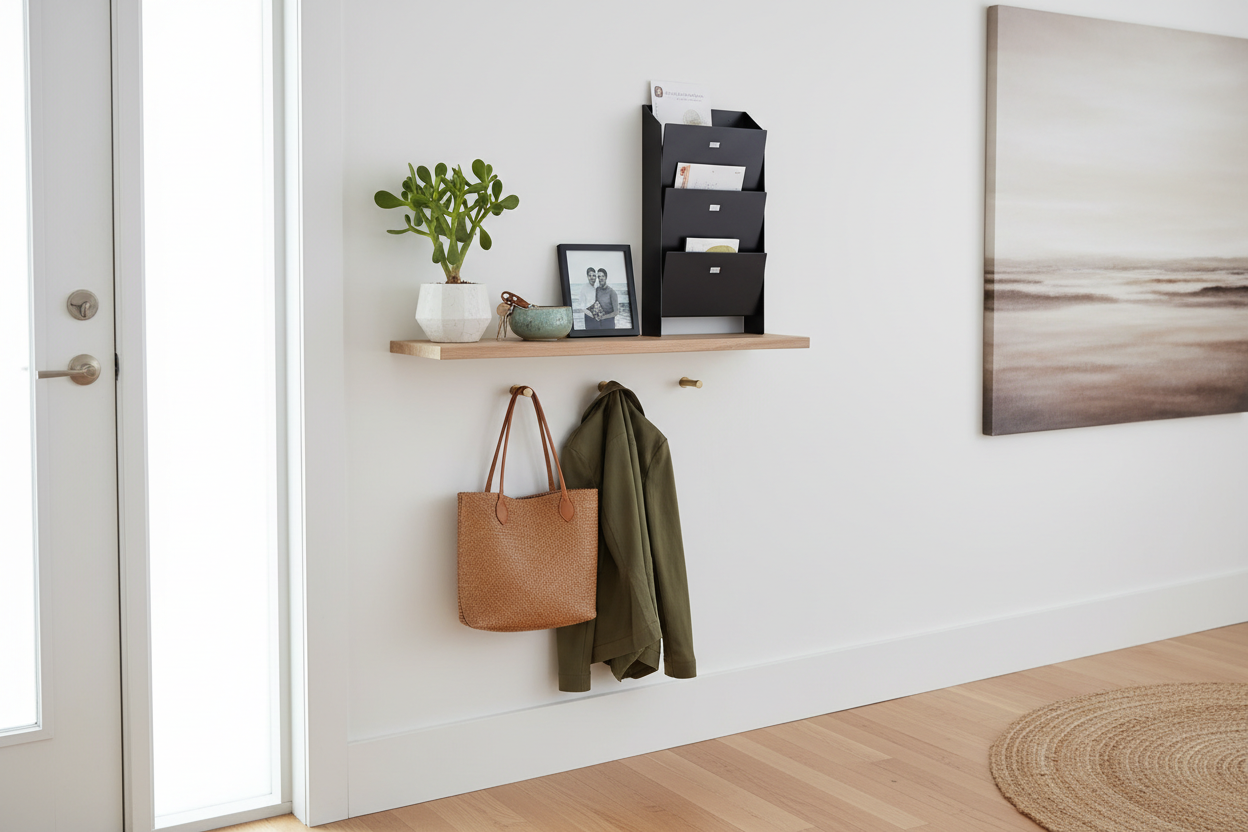
Walking into your home should feel like a sigh of relief, not the start of a scavenger hunt. If you find yourself constantly tossing keys on the sofa, losing mail on the kitchen counter, or tripping over bags the moment you step inside, the solution isn't necessarily a full mudroom renovation. Often, the most effective fix is a dedicated shelf by front door areas. This simple addition acts as a designated landing strip, catching the debris of daily life before it migrates into the rest of your living space. It defines the transition from "out there" to "in here," providing an immediate psychological cue that you are home and organized.
The Chaos of the Entryway (And My Wake-Up Call)
I learned the hard way that an entryway without a landing zone is a recipe for morning panic. In my previous apartment, the front door opened directly into the living room. There was no foyer, no closet, and definitely no obvious place to put things down. For months, I played a game where my keys would end up on the dining table, the bookshelf, or sometimes weirdly inside a coat pocket in the bedroom. One Tuesday, I spent twenty minutes tearing the apartment apart looking for my car keys while I was already late for a meeting. That afternoon, I went to the hardware store, bought a piece of reclaimed wood and two brackets, and installed a simple ledge right next to the door frame. That single change completely altered my morning routine. I stopped losing things because everything finally had a home the second I walked in.
Choosing the Right Type of Storage
Not all entryways are created equal, and the type of front door shelves you choose depends largely on the square footage available and the volume of stuff you carry. If you are working with a tight hallway or a city apartment where the door swings open against a wall, floating shelves are your best friend. They keep the floor clear, maintaining an illusion of space while providing that crucial surface area. Look for shallow depths—around 6 to 8 inches—so you don’t bump your shoulder every time you walk past.
For those with a bit more room, a tiered unit or a console table with shelving underneath offers double the utility. The top surface handles the small items like sunglasses and wallets, while the lower levels can accommodate baskets for shoes or larger bags. The goal is to match the scale of the furniture to the scale of the room. A bulky unit in a narrow corridor feels oppressive, while a tiny, singular shelf in a grand foyer looks like an afterthought.
The "Drop Zone" Essentials
Installing the hardware is only half the battle. How you organize the surface determines whether it remains a helpful tool or becomes a clutter magnet. A naked shelf by front door areas usually ends up messy within a week. You need to zone the shelf itself using containers. This is often referred to as "micro-organizing."
Start with a catch-all dish or tray. This is non-negotiable. It gives your loose change and keys a specific boundary so they don't wander off the edge. Ceramic bowls, leather trays, or even a vintage saucer work well here. Next, consider vertical space. If your shelf is mounted on the wall, adding hooks underneath for scarves or dog leashes increases functionality without taking up more surface area. If you receive a lot of physical mail, a vertical letter sorter prevents envelopes from piling up flat and getting ignored.
Styling Your Entryway for Impact
Functionality drives the decision, but aesthetics make you love it. Your front door shelf is likely the first thing guests see, so it sets the tone for your entire home. You want a balance between the practical items mentioned above and a few touches of personality. A mirror mounted above the shelf is a classic design trick for a reason; it allows for a last-minute appearance check before leaving and reflects light to make a cramped entryway feel larger.
Greenery is another easy win. A small succulent or a trailing pothos plant adds life to the space without demanding much attention. If your entryway is dark, a small table lamp or a battery-operated sconce above the shelf can create a welcoming glow. The trick is to leave about 30% of the surface area empty. Negative space prevents the area from looking chaotic and ensures you actually have room to set down a coffee cup or a package when you walk in.
Material Matters: Wood, Metal, or Glass?
The material you select should withstand high traffic. Entryways are high-impact zones. Keys get tossed, wet umbrellas might lean nearby, and bags get dragged across surfaces. Solid wood is forgiving and develops a nice patina over time, making it a top choice for front door shelves. It can be sanded down if it gets scratched and generally adds warmth to the space.
Metal offers a sleek, industrial look and is incredibly durable, though it can be noisy when you drop keys on it (a felt-lined tray solves this). Glass shelves are beautiful and airy, perfect for modern spaces, but they require constant cleaning to remove fingerprints and dust. They are also less forgiving if you tend to toss your items down with force. If you choose glass, ensure it is tempered for safety.
Installation Height and Ergonomics
One detail people often overlook is the mounting height. If you place a shelf by front door areas too low, it becomes a hip-bruiser and invites clutter from children or pets. If it’s too high, you can't see what's in the catch-all bowl, and it becomes a "graveyard" for items you forget about. The sweet spot for a floating entry shelf is usually around elbow height or slightly higher—typically between 42 and 60 inches from the floor, depending on your height.
Test this before drilling holes. Walk up to the wall and mimic the motion of dropping your keys. Mark that spot. It should feel natural, requiring no reaching up or bending down. If you are placing a mirror above it, ensure the shelf height allows the mirror to be at eye level without a huge gap in between.
Small Space Hacks for Narrow Hallways
Sometimes you simply don't have the depth for a standard shelf. In extremely narrow hallways, look for picture ledges. These are typically only 3 to 4 inches deep. While they won't hold a large bag, they are perfect for propping up mail, holding a slim key rack, and displaying a piece of art. Another option is a corner shelf. Corners in entryways are often dead space, but a triangular shelf installed there stays completely out of the traffic flow while providing the storage you need.
Ultimately, the best entryway system is the one you actually use. Whether it's a reclaimed wood slab or a sleek metal ledge, defining that drop zone stops the migration of clutter and makes coming home the peaceful experience it is supposed to be.
Frequently Asked Questions
How deep should a front door shelf be?
For a standard entryway, a depth of 8 to 12 inches is ideal as it accommodates mail and keys without obstructing the walkway. If you have a very narrow hallway, aim for a slim profile of 4 to 6 inches to prevent bumping into it.
What is the best height to hang a floating shelf near the door?
A good rule of thumb is to hang it at chest or elbow level, roughly 42 to 60 inches off the ground. This height makes it easy to drop keys and check mail without bending over, while keeping it out of the way of small children or pets.
How do I style a shelf if I have too much clutter?
Use opaque baskets or boxes to hide the unsightly items while keeping them accessible. dedicating a specific "messy basket" allows you to drop loose items quickly, keeping the visual surface of the shelf clean and styled with just a lamp or plant.

Leave a comment
This site is protected by hCaptcha and the hCaptcha Privacy Policy and Terms of Service apply.