

















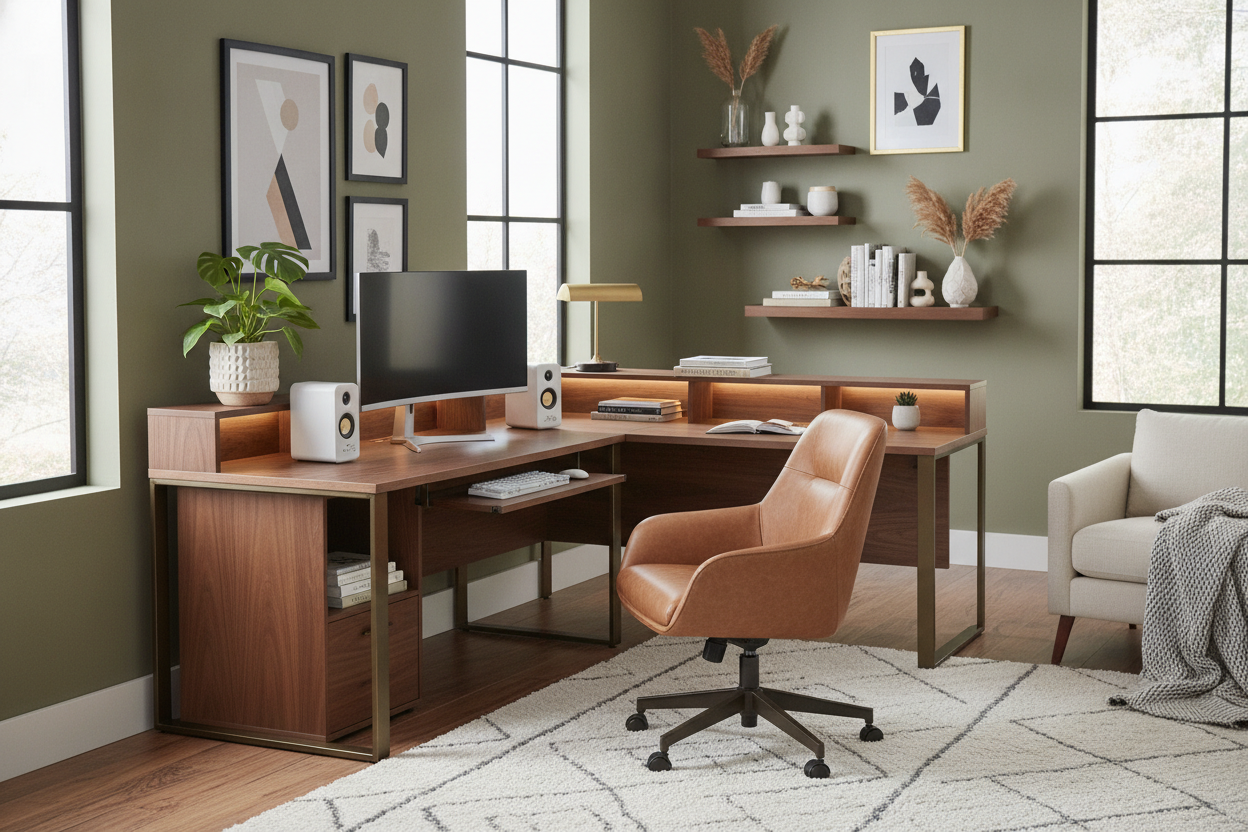
We’ve all seen them: those hulking, MDF-heavy monstrosities in 'harvest cherry' that lived in your dad’s basement. It’s hard to shake the image of a brown corner computer desk being anything other than a relic of 1995 corporate sadness. I spent years avoiding brown furniture entirely because I didn't want my house to look like a tax auditor’s cubicle.
But then I realized the problem wasn't the color—it was the finish. Modern wood tones are about texture and depth, not that shiny, plastic-looking laminate. When you get the right shade, a corner setup feels like a cozy, grounded library instead of a fluorescent-lit office.
- Choose matte or textured finishes over high-gloss laminate.
- Light brown tones work best for small, airy rooms.
- Avoid oversized hutches that block natural light.
- Float the desk away from the wall to open up the room.
The 90s Corporate Furniture Trauma is Real (But Unnecessary)
The fear of the brown desk is rooted in the era of 'fake' wood. You know the ones—the desks where the 'grain' was just a low-resolution photo printed on a sticker. They were heavy, they chipped if you looked at them wrong, and they felt incredibly sterile. It’s no wonder we all fled to all-white IKEA minimalism for a decade.
But white-on-white offices can feel cold and clinical. We're seeing a huge shift back toward warmer, moodier palettes. A brown wood desk brings an organic element into a room full of tech. It softens the hard lines of your monitors and keyboard. The goal isn't to recreate a 90s law firm; it's to create a space that feels lived-in and sophisticated.
Light Oak vs. Dark Walnut: Choosing Your Aesthetic
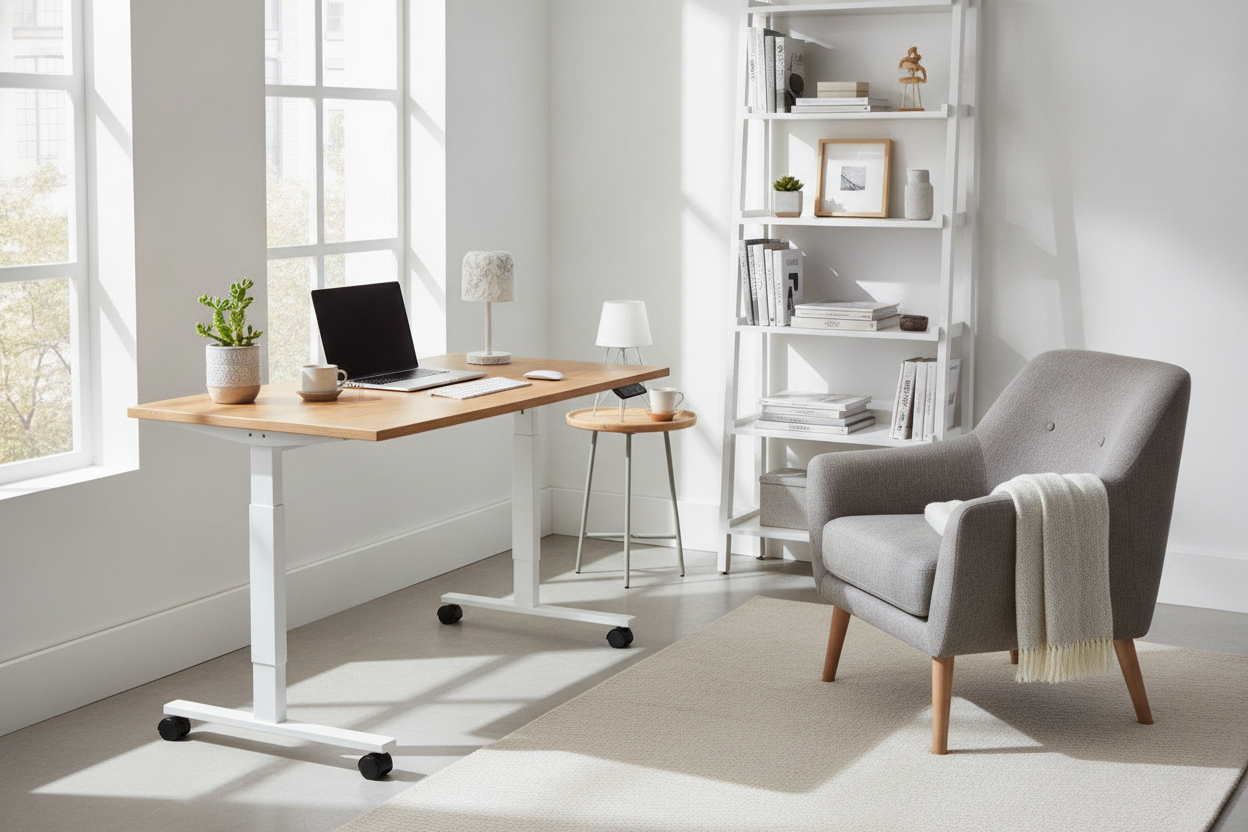
The specific shade of brown you pick dictates everything. If you're working in a converted bedroom with one small window, a light brown l shaped desk is your best friend. Light oak or birch tones lean into that Scandinavian vibe—bright, clean, and modern. It keeps the room feeling spacious even if the desk itself takes up a large footprint.
On the flip side, dark walnut or espresso tones are perfect for that 'dark academia' look. They feel intentional and heavy. When you look at an L shaped corner desk with drawers brown wood grain, you want to actually see the variations in the wood. That texture is what separates a high-end piece from a cheap big-box store find. If the grain looks flat, skip it.
How to Add Vertical Storage Without Building a Fortress
We all need storage, but the traditional brown l shaped desk with hutch can quickly turn into a visual wall that swallows the room. If you aren't careful, you end up sitting in a wooden cave. The trick is to look for hutches with open shelving or glass fronts. This lets light pass through and gives you a place to display books and plants rather than just hiding stacks of paper.
If your ceiling is low, I usually suggest skipping the overhead hutch entirely. Instead, look for something like a 55 inch l shaped corner desk with storage that focuses on under-desk shelving. Keeping the 'weight' of the furniture below eye level makes the whole office feel twice as big. You can always add floating shelves on the wall later for a more custom, built-in look.
Stop Shoving It Into the Darkest Corner of the Room
Just because it’s a 'corner' desk doesn't mean it has to be jammed into a literal corner. The biggest mistake I see is people facing the wall, with their back to the door and the rest of the room. It’s claustrophobic. Try floating one side of the 'L' out into the room. This creates a 'command position' where you can see the door and the window.
This layout instantly makes the desk feel like a piece of architecture rather than a space-saver. It also creates a natural divide if your office is part of a living room or bedroom. If you're struggling with the footprint, I've got a whole guide on mastering the l shaped desk office layout for better flow that breaks down exactly how to pull this off without blocking your walkways.
Three Unbreakable Rules for Styling Wood Workspaces
First: Contrast is mandatory. If you have a brown desk, don't buy a brown chair. Go for a matte black frame or a cream upholstery. You need something to break up the wood tones. I love pairing a dark wood surface with brushed brass desk lamps; it feels expensive and classic without being stuffy.
Second: Add life. Wood is an organic material, so it looks best next to other organic things. A trailing Pothos or a snake plant on the edge of the desk softens the sharp angles of the 'L' shape. Third: Think about the desktop itself. Treat it like a writing computer desk from a century ago—keep it curated. Use a leather desk mat to protect the finish and add another layer of texture.
My Biggest Desk Regret
I once bought a massive, 70-inch brown corner desk because I thought 'more space is better.' It was a cheap laminate model with a built-in hutch. It took four hours to assemble, and within a week, I realized I couldn't even reach the back corner to plug in my charger. It was a dust magnet and felt like a giant brown box in the room. I ended up selling it on Marketplace for 40 bucks and replaced it with a smaller, high-quality wood grain desk with open legs. Lesson learned: scale and material matter way more than surface area.
FAQ
Are corner desks out of style?
Not at all. They are actually making a comeback because they maximize the 'dead space' in modern apartments. The key is choosing a slim profile with open legs rather than a solid, boxy base.
How do I hide cords on a brown wood desk?
Brown desks are actually easier to hide cords on than white ones. Use black cable clips and a matching brown or black power strip. You can also use wood-toned cord covers that blend right into the legs.
What color walls go with a brown desk?
For a modern look, go with 'greige' or a soft sage green. If you want something bold, a navy blue wall behind a light brown desk looks incredible. Avoid yellow-toned creams, as they can make the wood look dated.

Leave a comment
This site is protected by hCaptcha and the hCaptcha Privacy Policy and Terms of Service apply.