
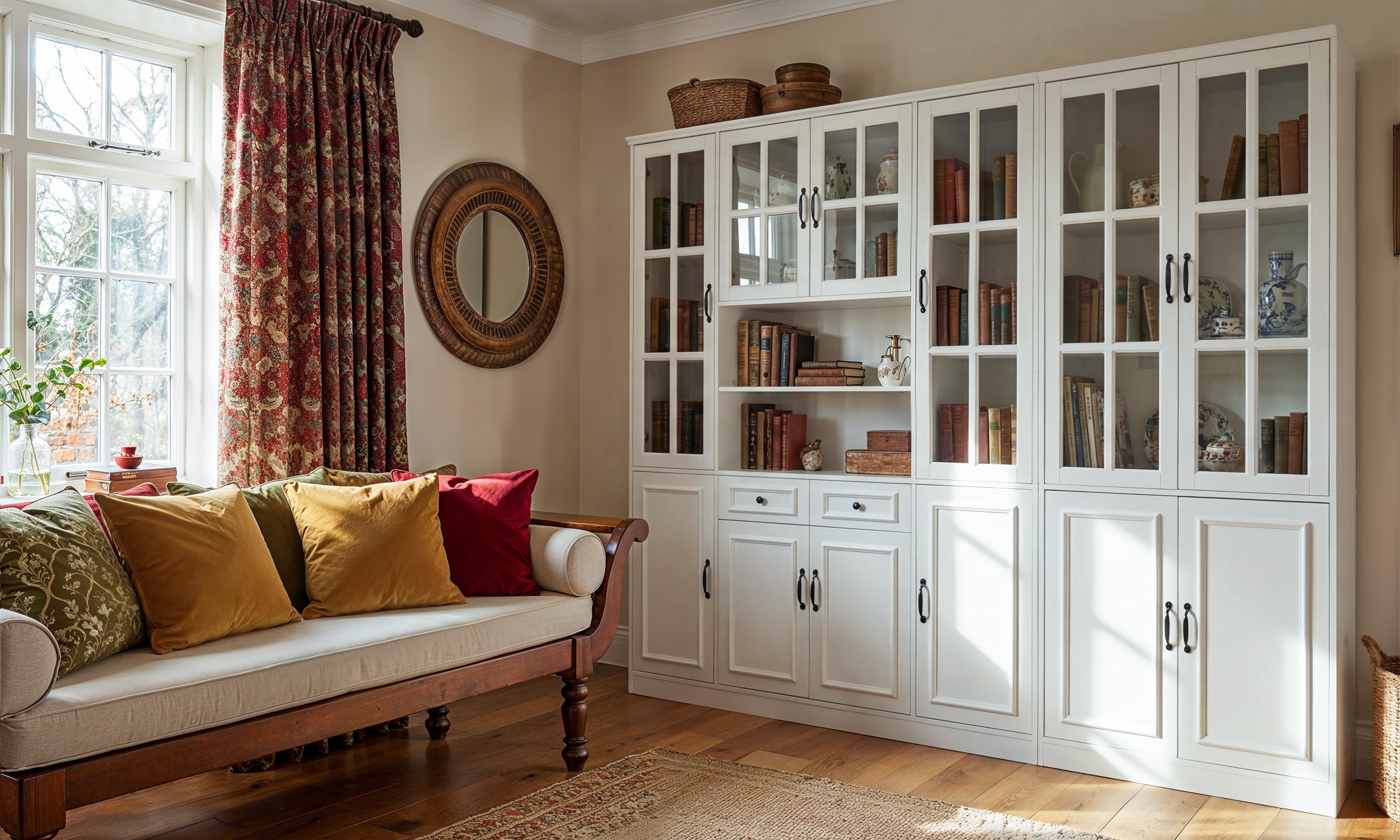




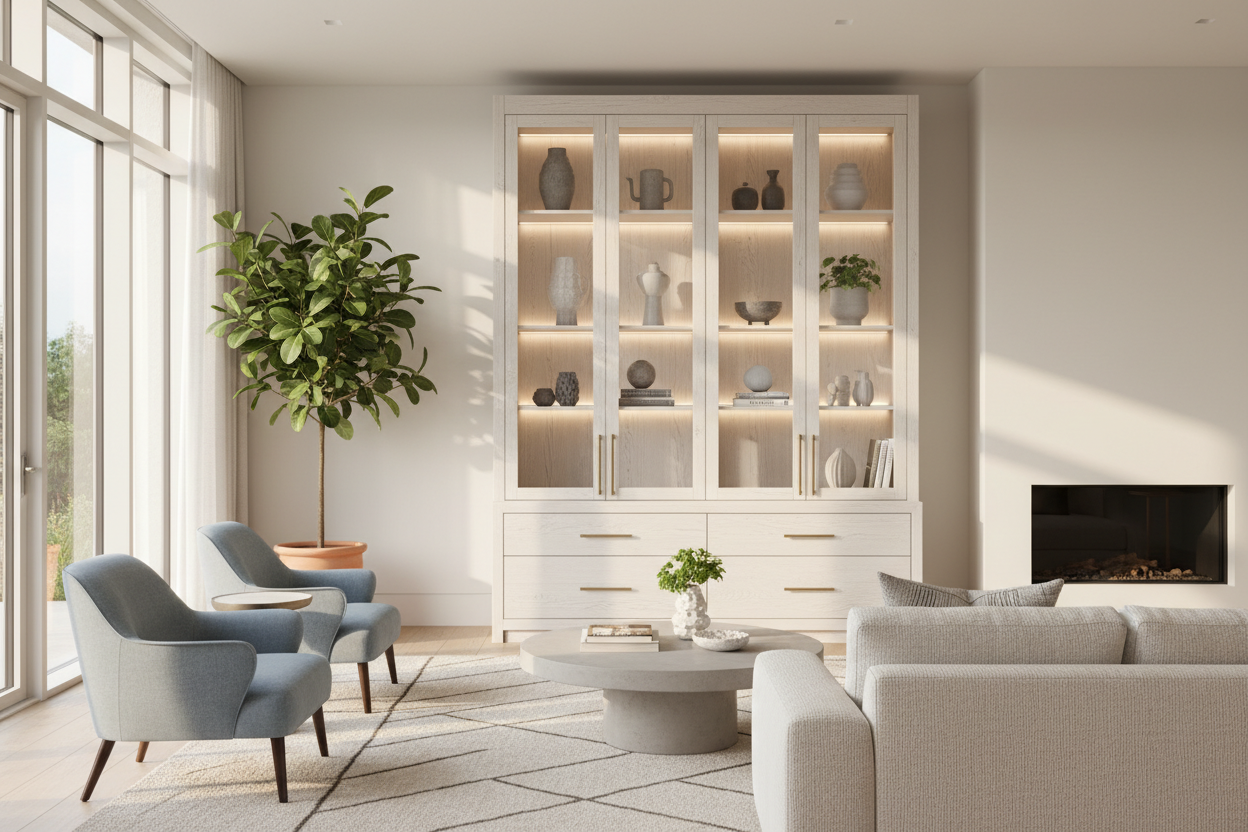
Have you ever stared at a blank wall in your dining room or living space and felt it needed something, but a solid credenza felt too heavy? You want storage, but you also want a place to show off your favorite ceramics, vintage books, or travel finds. Enter the white oak display cabinet. It strikes a beautiful balance between closed storage and open display, bringing natural warmth to a room without swallowing all the available light.
While these pieces look incredibly chic in styled catalog photos, living with one requires a bit of strategy. The wrong cabinet can quickly become a visual black hole of clutter. In this guide, we will break down what to look for in construction, how to place it in your floor plan, and the styling rules that keep it looking intentional.
Quick Decision Guide
- Check the door hinges: Soft-close, adjustable European hinges are non-negotiable for heavy glass-front doors.
- Solid vs. Veneer: Do not fear high-quality wood veneer. On large cabinet sides, veneer over an MDF core prevents warping during seasonal humidity shifts.
- Lighting matters: Look for cabinets with integrated LED strip lighting rather than single puck lights, which cast harsh shadows.
- The 60/40 Rule: Plan to fill only 60 percent of the shelf space, leaving 40 percent as negative space to let the objects breathe.
Material & Build Quality
Solid Oak vs. Engineered Cores
There is a persistent myth that only solid wood furniture is worth buying. For a dining chair? Yes. For a massive display cabinet? Not necessarily. White oak is a beautiful, durable hardwood, but it is also highly reactive to moisture. In typical North American homes, where winter heating dries out the air and summer brings humidity, large solid wood panels expand and contract. This can lead to sticking doors or cracked side panels.
A premium cabinet will often use solid white oak for the frame, legs, and door stiles, but utilize a high-grade oak veneer over a stable core for the large flat panels. This hybrid approach ensures the piece remains structurally sound and visually beautiful for decades.
Space Planning & Layout
Managing Visual Weight
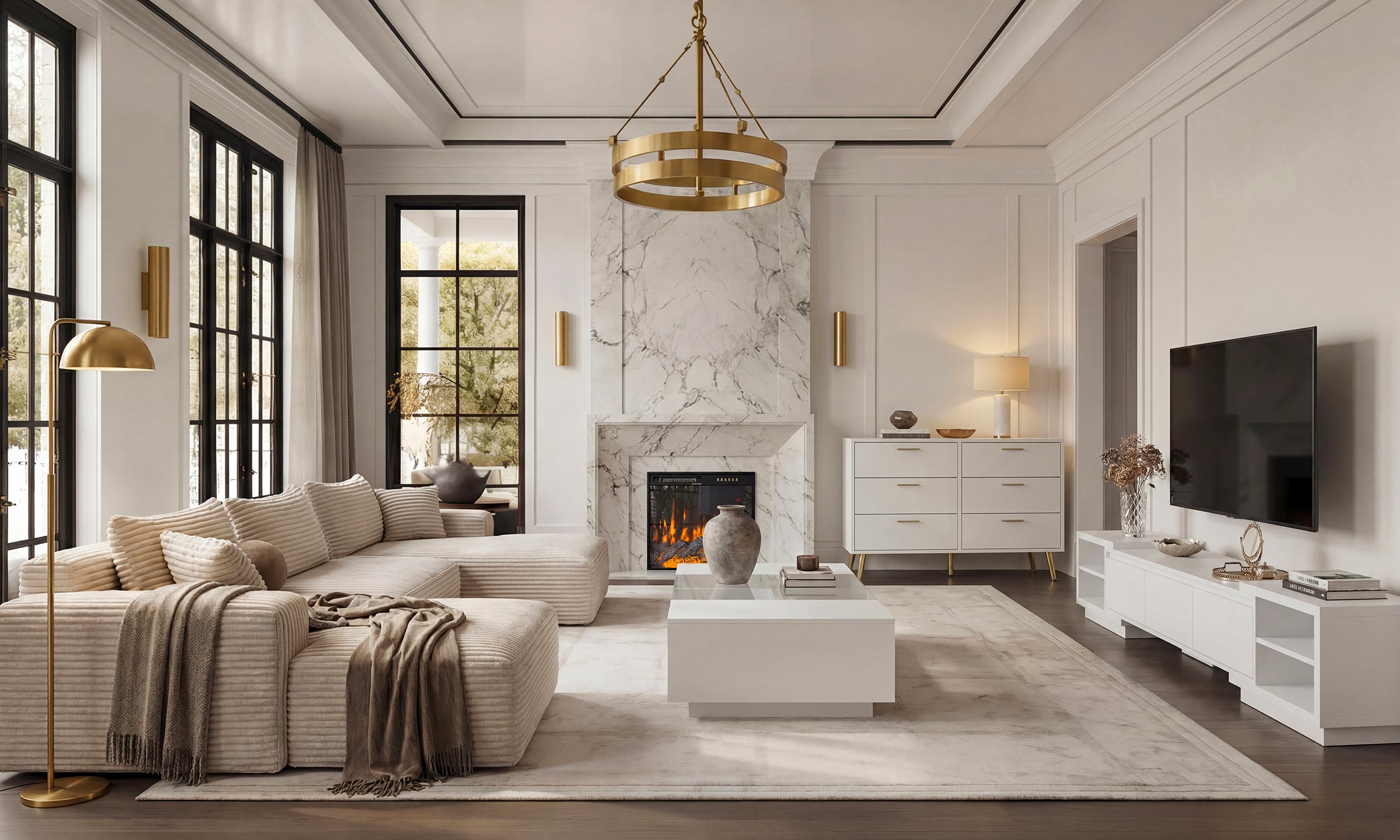
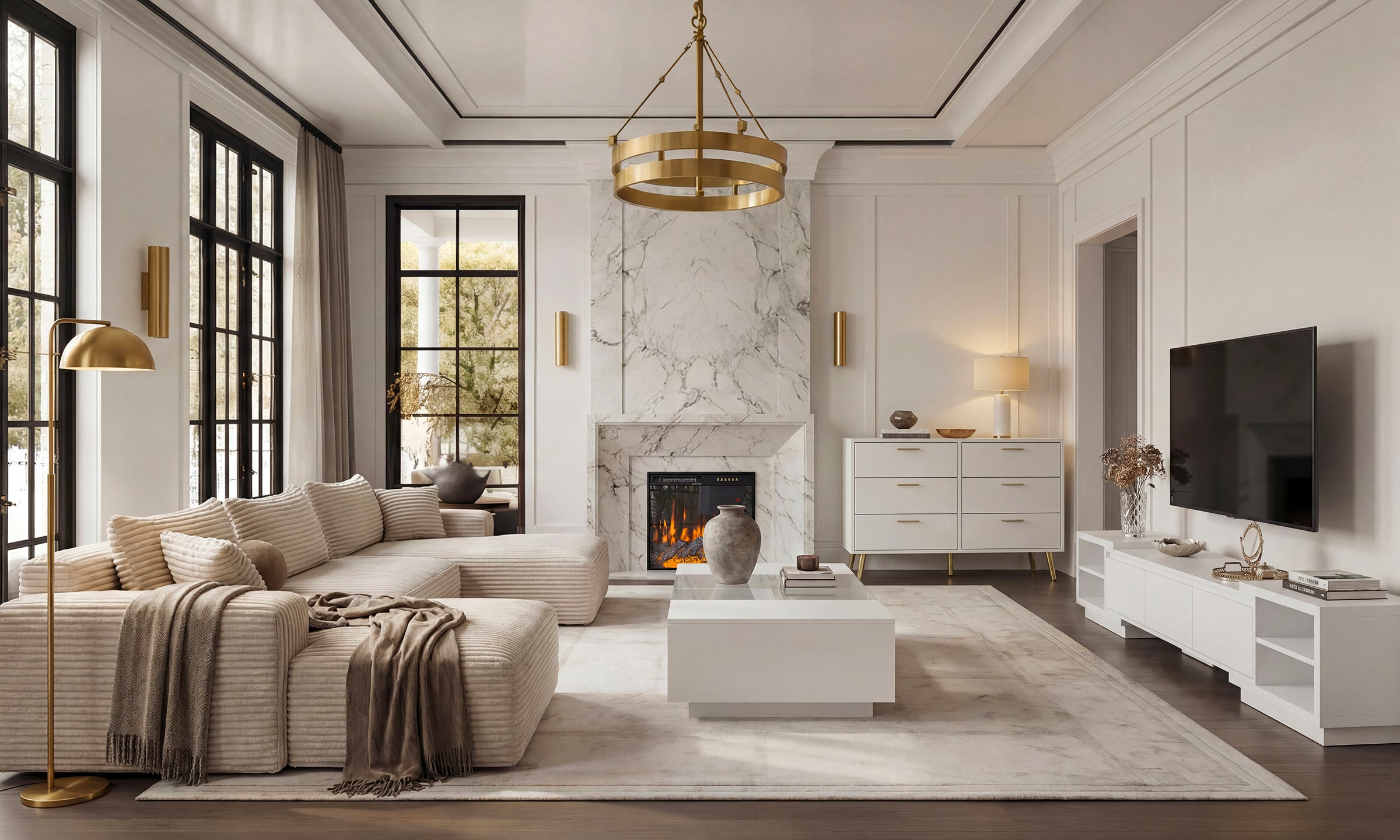
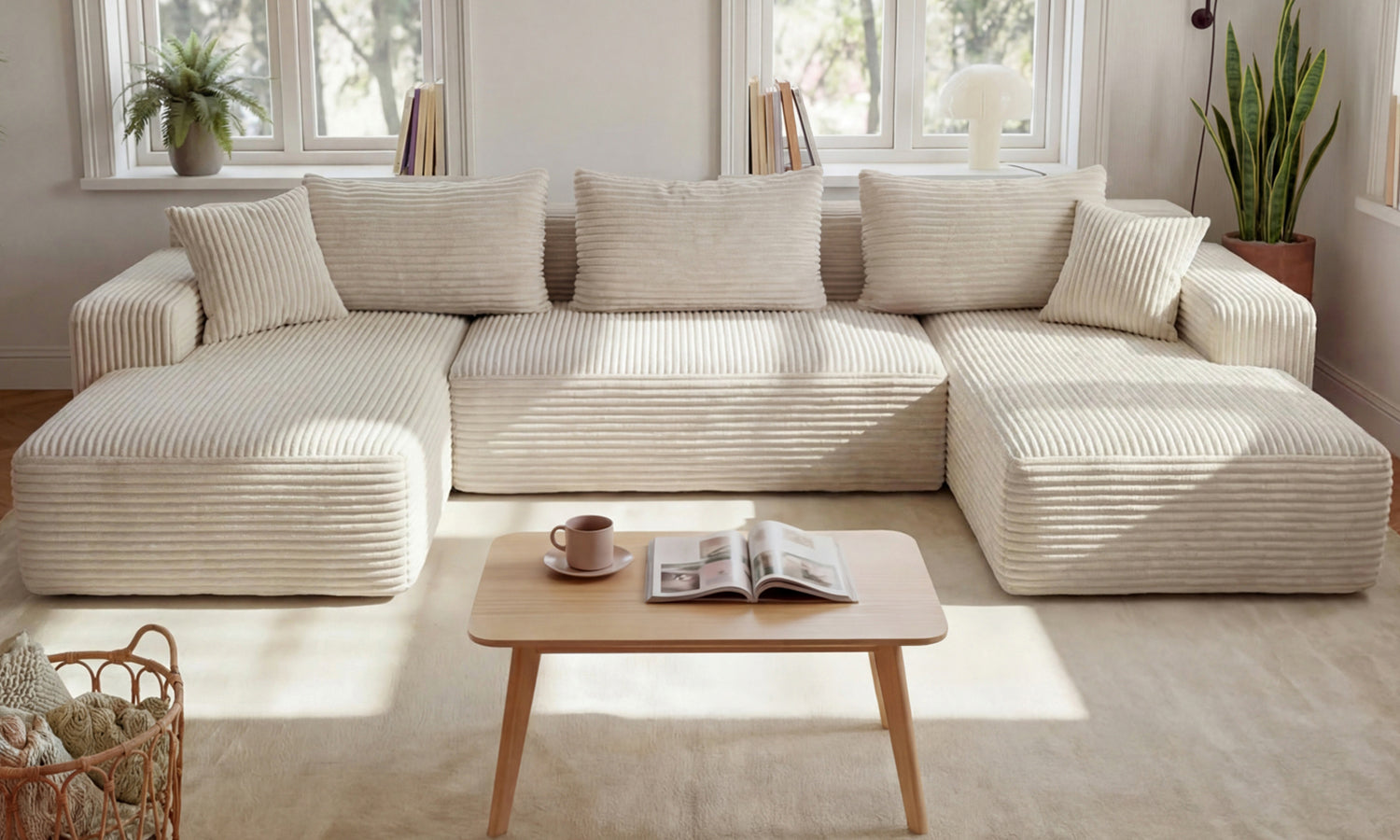
A tall piece of furniture carries significant visual weight. If you place it right next to a bulky sectional sofa, that side of the room will feel like it is sinking. Instead, use the cabinet to balance the room. If your heavy upholstered pieces are on the left, place the cabinet on the right or along an opposing wall.
Clearance and Flow
Never squeeze a display cabinet into a tight corner. You need a minimum of 36 inches of clearance in front of the piece, not just for walking, but so you can comfortably open the doors fully to clean the glass and rearrange your items. If your room is narrow, consider a cabinet with sliding glass doors rather than traditional swing doors to save space.
Style & Coordination
Curating Your Display
The biggest mistake people make with glass-front storage is treating it like a standard bookcase. Because everything is visible, you have to curate. Group items by color palette or texture. Pair smooth, reflective objects like glass vases with rougher textures like matte ceramics or raw wood bowls.
Use books to create varied heights. Stack a few oversized design books horizontally to act as a pedestal for a small sculpture, and lean others vertically. This prevents the shelves from looking like a flat, monotonous retail display.
Designer's Honest Take
I specified a stunning, arched white oak cabinet for a client's open-concept living room in Toronto a few years ago. It had beautiful clear glass doors and a minimalist silhouette. For the first two weeks, it looked like a magazine cover.
But here is the honest truth about clear glass cabinets: they demand constant vigilance. My client had a toddler and a golden retriever, and within a month, the bottom half of the glass was perpetually smudged, and the interior shelves collected an astonishing amount of visible dust. If you are not someone who enjoys tidying and dusting weekly, clear glass will drive you crazy. For my own home, I eventually opted for a cabinet with fluted or reeded glass. It still bounces light around the room and hints at the shapes inside, but it completely obscures dust and minor clutter.
Frequently Asked Questions
How do I clean the glass without damaging the white oak finish?
Never spray glass cleaner directly onto the doors. The overspray can eat away at the clear coat or oil finish on the wood over time. Instead, spray your microfiber cloth away from the cabinet, then wipe the glass.
Does white oak yellow over time?
Yes, all natural wood undergoes some color change when exposed to UV light. White oak tends to take on a slightly warmer, amber hue over the years. To minimize uneven fading, keep the cabinet out of direct, harsh sunlight or ensure your windows have UV-filtering treatments.
Is a display cabinet a good idea for a small apartment?
Absolutely, provided you choose a taller, narrower silhouette rather than a wide credenza. Drawing the eye upward emphasizes the height of your ceilings, making a compact room feel larger. Just ensure you utilize the lower, enclosed portion (if it has solid doors at the bottom) for hidden storage.


Leave a comment
This site is protected by hCaptcha and the hCaptcha Privacy Policy and Terms of Service apply.