

















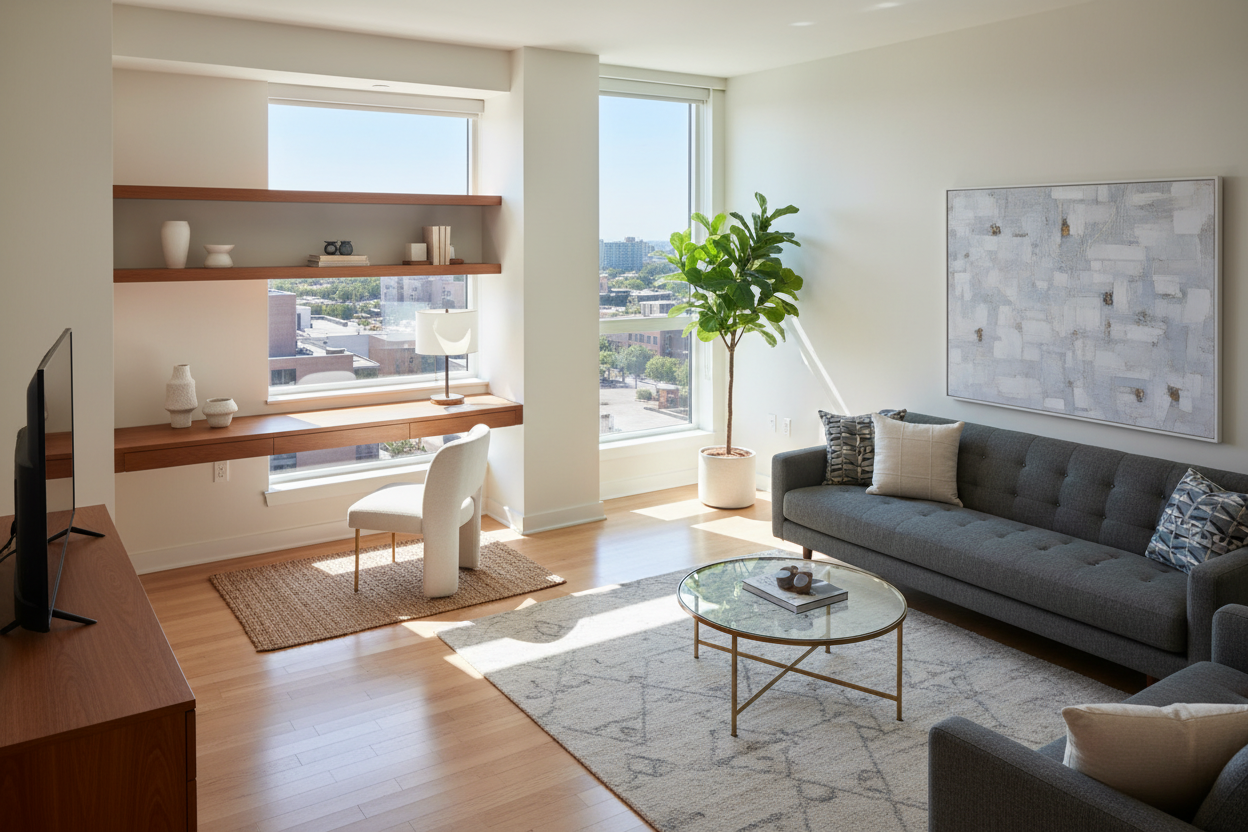
It happens to the best of us: you sign the lease, arrange your sofa and bed, and then realize you have absolutely no idea where to put desk in apartment layouts that barely fit a dining table. The result? Your kitchen island becomes a permanent filing cabinet, and your posture suffers from answering emails hunched over the coffee table.
Finding the right spot for your workstation isn't just about squeezing in another piece of furniture. It is about preserving your home's visual flow and maintaining a strict boundary between off-the-clock relaxing and deep-focus work. By the end of this guide, you will know exactly how to carve out a functional, stylish workspace—even if your square footage is working against you.
Quick Decision Guide
- Float it behind the sofa: Use a slim console-style desk to create a physical barrier between living and dining zones in open-concept spaces.
- Utilize architectural niches: Recessed walls, awkward corners, and wide hallways are prime real estate for a custom-fit floating desk.
- Face the room, not the wall: Position your desk in the command position whenever possible to make the room feel larger and reduce visual fatigue.
- Mind the glare: If setting up near a window, place the desk perpendicular to the glass to avoid harsh screen glare and eye strain.
Space Planning: Finding the Hidden Zones
The Living Room Divide
In most North American apartments, the living room offers the most flexible square footage. Instead of shoving a desk into a dark, unused corner, try treating it as a room divider. Placing a slim, finished-back desk directly behind a floating sofa anchors the workspace while keeping your line of sight open. This layout requires about 36 inches of clearance between the desk edge and any adjacent walls or furniture to ensure you can comfortably slide your chair in and out without scraping the paint.
Mastering the Cloffice
When clients ask me exactly where to put desk in small apartment floor plans, my first instinct is to check the closets. Converting a standard reach-in closet into a workspace is incredibly efficient. By removing the doors or swapping them for heavy linen curtains, you create a dedicated zone that doesn't eat into your room's footprint. Just be sure to install heavy-duty, wall-mounted shelving rather than relying on standard builder-grade wire racks, which will inevitably bow under the weight of monitors and books.
Style Integration: Managing Visual Weight
Choosing the Right Silhouette
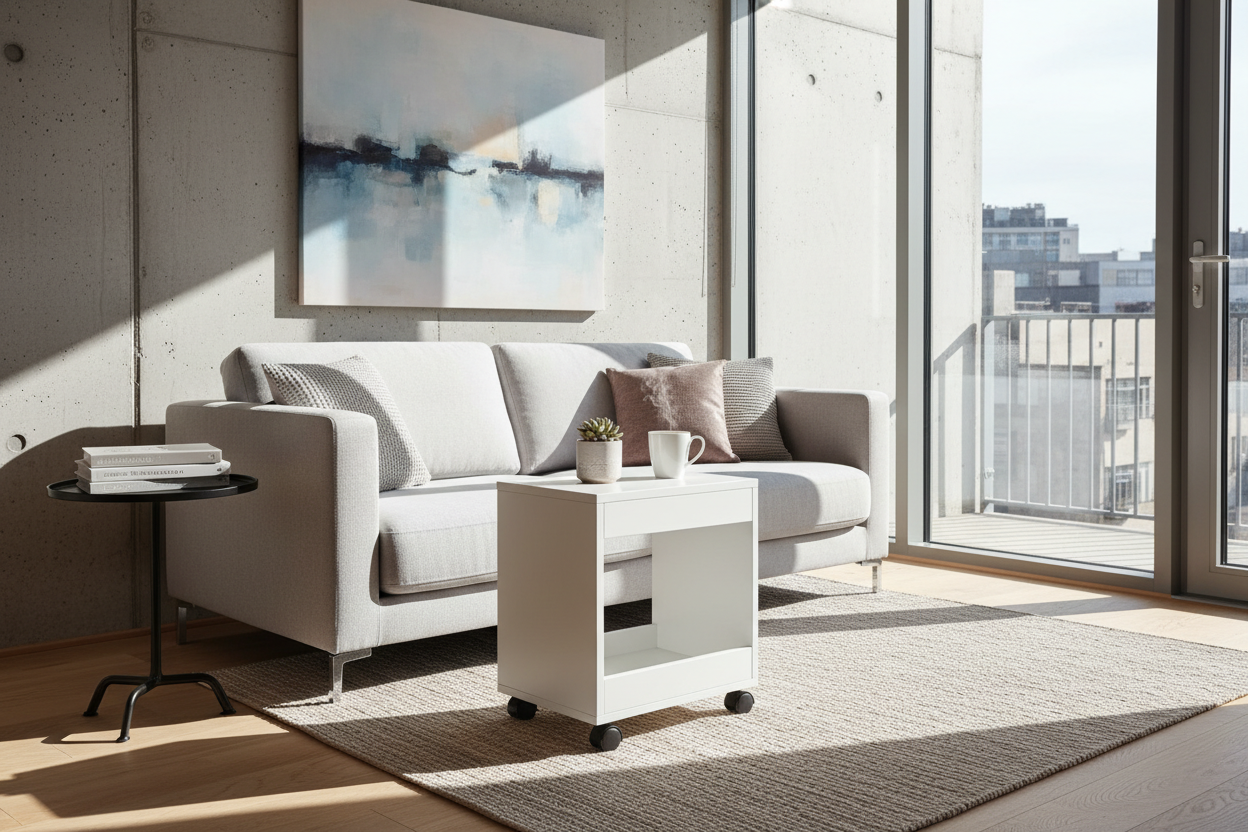
A massive, solid-oak executive desk will visually swallow a 600-square-foot apartment. To maintain a sense of airiness, prioritize desks with plenty of negative space. Think slender metal legs, tempered glass tops, or wall-mounted floating units. By allowing the flooring to remain visible underneath the desk, you trick the eye into perceiving more space. If you need storage, opt for a matching rolling file cabinet that can tuck completely underneath or double as an end table when guests come over.
Lessons from My Own Projects
Early in my career, I designed my own studio apartment and proudly placed a beautiful mid-century walnut writing desk right at the foot of my bed. I thought it looked incredibly chic. The reality? Staring at my laptop and piles of fabric swatches while trying to fall asleep completely ruined my rest. The psychological boundary between work and sleep was entirely gone, and I found myself stressed the moment I woke up.
I also learned the hard way about window placements. I once positioned a client's workstation directly facing a stunning floor-to-ceiling, south-facing window. The skyline view was incredible, but the afternoon glare made her monitor completely unreadable, and the heat buildup was miserable. We ended up moving the desk perpendicular to the window—she kept the natural light and the view, but lost the daily headache. Always test the light at different times of day before drilling any holes for cable management.
Frequently Asked Questions
Is it bad to put a desk in the bedroom?
Designers generally advise against it because it disrupts the room's primary function: rest. However, if it is your only option, use a physical divider like a folding screen, or invest in a secretary desk that closes up to physically hide your work at the end of the day.
How much clearance do I need behind a desk chair?
You need a minimum of 36 inches of clearance behind the desk to comfortably push your chair back and stand up. If the desk is situated in a high-traffic walkway, aim for 42 to 48 inches so someone can comfortably walk behind you while you are seated.
Should my desk face the wall or the room?
Facing the room is visually and psychologically preferable, as it makes the space feel expansive and keeps you engaged with your environment. Facing a blank wall can feel restrictive, though it is often necessary in tight apartment layouts. If you must face a wall, use textured wallpaper, a linen pinboard, or floating shelves to create an engaging focal point.


Leave a comment
This site is protected by hCaptcha and the hCaptcha Privacy Policy and Terms of Service apply.