

















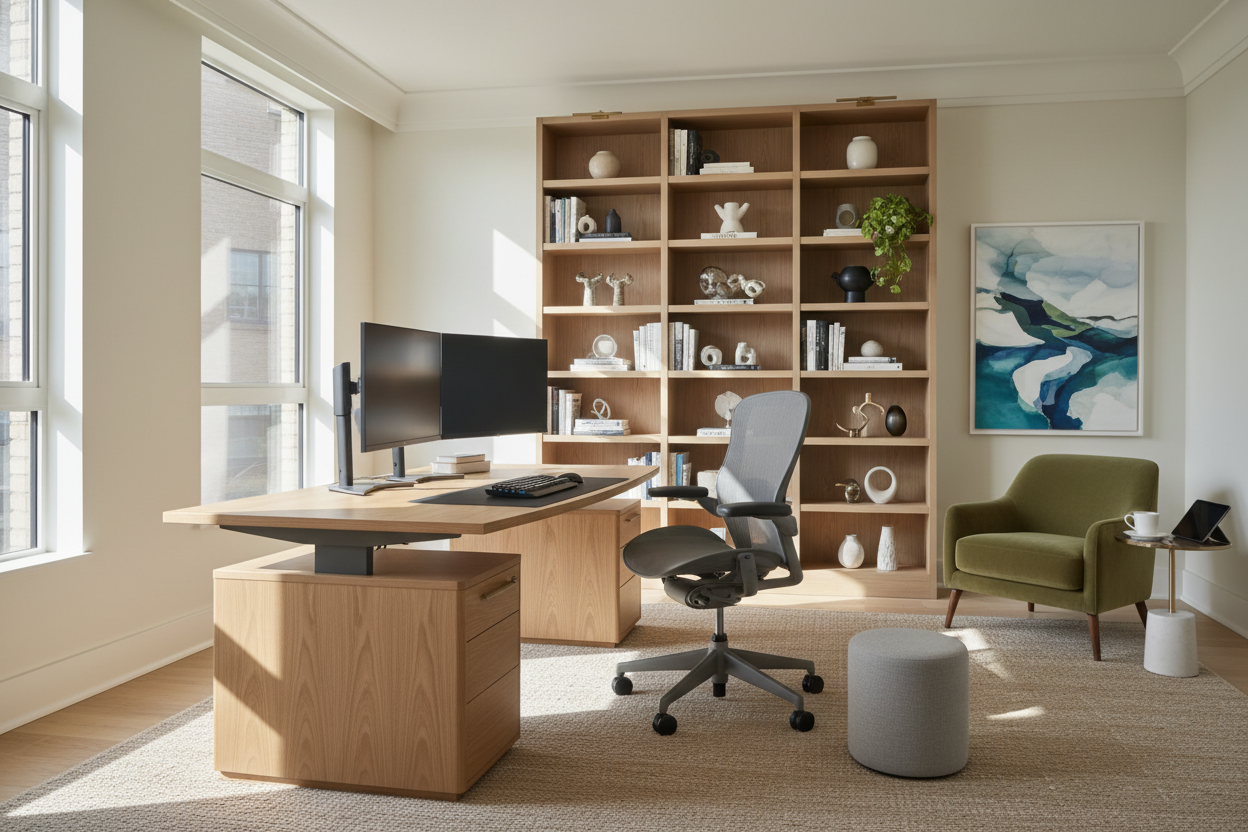
In the current landscape of professional flexibility, the most pressing question has shifted from "where can I find work?" to what jobs i can do from home while maintaining a sophisticated lifestyle. As an interior designer, I see this not merely as a career shift, but as a spatial challenge. Whether you are consulting, designing, or managing data, the success of your remote role is intrinsically linked to the environment in which you perform it. A poorly planned space kills productivity faster than a slow internet connection. This guide explores how to curate a professional sanctuary that accommodates your workflow.
Quick Decision Guide: The Remote Workspace Essentials
Before buying a single piece of furniture, consider these foundational elements that define a high-functioning home office.
- Ergonomics First: Prioritize a chair with lumbar support and a seat pan depth of at least 17 inches for long-term comfort.
- Surface Material: Choose solid wood or high-pressure laminate for durability; avoid cheap veneers that chip under the constant friction of laptop usage.
- Lighting Temperature: Aim for 4000K (cool white) bulbs for task lighting to maintain alertness, paired with warmer ambient light.
- Acoustic Control: Incorporate textiles (rugs, curtains) to dampen echo, essential for those asking "what can i do to work from home" involving frequent calls.
Defining Your Professional Zone
When clients approach me saying, "i need to work from home," my first step is spatial zoning. You do not need a dedicated room, but you do need a dedicated footprint. The psychological separation between 'living' and 'working' is created through visual cues. If you are integrating a workspace into a living room, consider a console desk with a slim silhouette. It functions as a workspace by day and a display surface by evening. The goal is to ensure the furniture speaks the same design language as the rest of your home—think walnut finishes or matte black metal accents—rather than screaming "corporate cubicle."
The Chair: The Anchor of Your Workday
Regardless of the work i can do from home, the chair is the non-negotiable investment. In the showroom, I often steer clients away from the trendiest velvet bucket chairs. While they offer a luxe aesthetic, they often lack the kinetic support required for an eight-hour shift. Instead, look for performance fabrics or high-grade leather that breathes. A mesh back is practical for temperature regulation, but a leather executive chair adds a level of gravitas and visual weight that anchors the room. Pay attention to the caster wheels; ensure they are soft-tread if you have hardwood floors to prevent scratching without a plastic mat.
Lighting and Layout for Video Clarity
If you are wondering what can i do working from home that requires a professional presence, you must master lighting. Overhead lighting creates unflattering shadows. The designer's secret is layering. Position your desk perpendicular to a window to harvest natural light without the glare hitting your screen. Supplement this with an architectural desk lamp with an adjustable arm. This isn't just about utility; a brass or copper task lamp serves as a piece of jewelry for the room, elevating the aesthetic even when the light is off.
My Personal Take on what jobs i can do from home
I learned a hard lesson early in my career when setting up my own drafting studio. I was obsessed with the aesthetic of a reclaimed barn-wood desk. It looked incredible in photos—full of texture and character. However, practically speaking, it was a disaster. When I tried to sketch or write, the uneven grain made my lines wobble, and the rough texture snagged my wool sweaters. I realized that for the jobs i can do from home—specifically those requiring precision—the substrate matters as much as the style. Now, I always test the "smoothness factor" of a finish with a single sheet of paper and a ballpoint pen. If the texture transfers through, it’s a dining table, not a desk. Also, never underestimate the frustration of a desk with a shallow apron; if you can't cross your legs underneath it comfortably, that beautiful piece of furniture will become your nemesis within a week.
Frequently Asked Questions
How much space do I actually need for a functional home office?
You need less than you think. A functional workspace can be achieved with a desk depth of 24 inches and a width of 48 inches. The critical dimension is the 36 inches of clearance behind the desk to allow your chair to roll back freely without hitting a wall or sofa.
Is a standing desk worth the aesthetic compromise?
Absolutely, but you don't have to compromise. Many modern standing desks now come with solid wood tops (walnut, oak) and motorized legs hidden within more substantial, furniture-grade columns. You can maintain a luxury look while prioritizing your health.
What is the best way to hide cables in an open floor plan?
Cable management is the difference between a messy corner and a designed space. Look for desks with integrated grommets or modesty panels. If you are retrofitting, use paintable cord covers that run along the baseboards, or use Velcro ties to secure cords to the back legs of the furniture so they become invisible from the front view.
Conclusion
Ultimately, determining what jobs i can do from home is only the first step. Creating an environment that fosters focus, comfort, and style is what ensures longevity in that role. By investing in quality materials, proper lighting, and ergonomic support, you transform a corner of your house into a powerhouse of productivity that looks as good as it functions.

Leave a comment
This site is protected by hCaptcha and the hCaptcha Privacy Policy and Terms of Service apply.