

















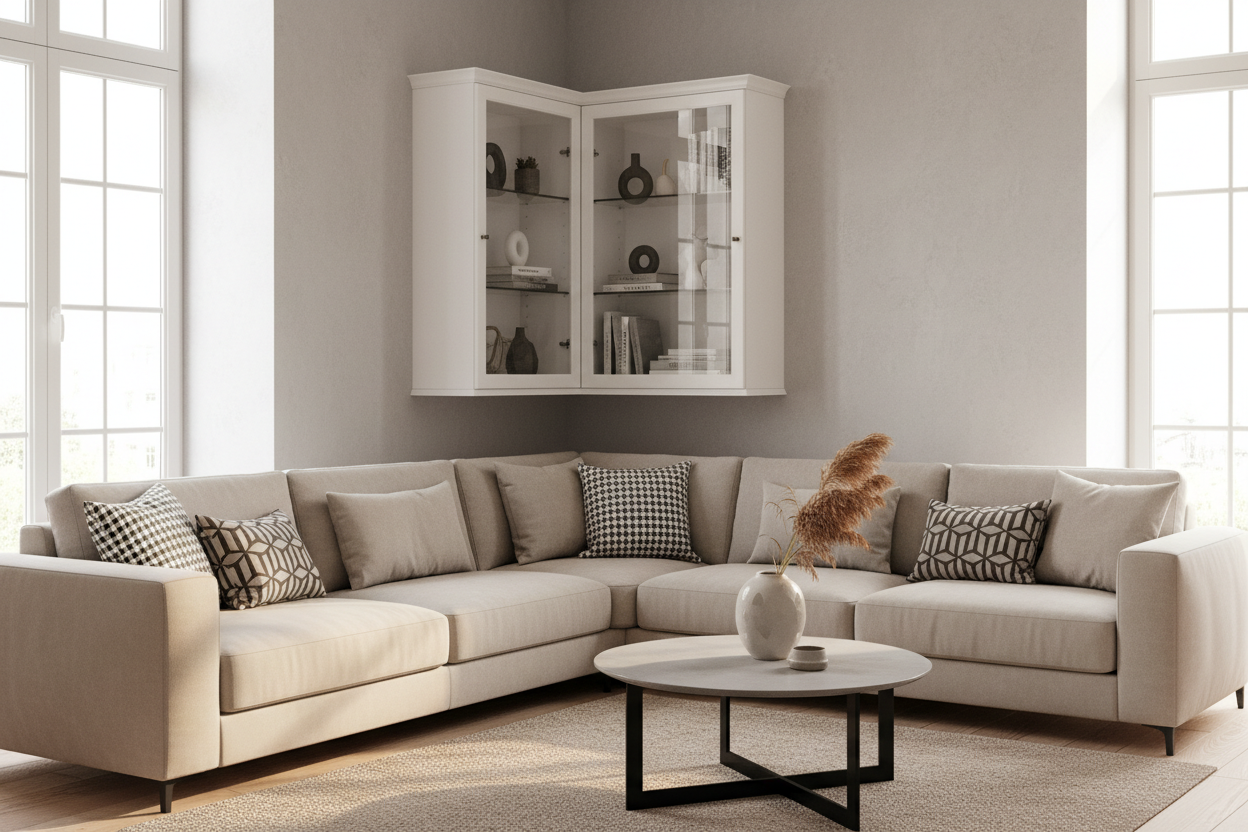
We all have that one awkward corner. It sits empty between the living room sofa and the window, gathering shadows and making the room feel unfinished. You might try shoving a tall plant there, or maybe a floor lamp, but it often looks like an afterthought. That is exactly where a well-chosen wall mounted corner display cabinet steps in to save the layout.
By utilizing vertical space and leaving the floor clear, this specific piece of furniture adds architectural interest and storage without adding physical bulk. Whether you need a spot for inherited glassware or a curated collection of travel finds, you will walk away from this guide knowing exactly how to choose, scale, and install the right cabinet for your space.
Quick Decision Guide
- Check your angles: Most North American homes have standard 90-degree corners, but older homes often have settling. Always measure your corner with a framing square before buying.
- Respect the weight limit: Wall-mounted cabinets rely entirely on your drywall and studs. Never exceed the manufacturer weight limit, and factor in the weight of the cabinet itself.
- Consider the visual weight: Glass-front or open-sided cabinets feel lighter in a small room. Solid wood doors can make a tight corner feel claustrophobic.
- Plan for lighting early: If you want to illuminate your display, look for cabinets with built-in battery-operated LEDs or plan a route for a discreet plug-in cord.
Mastering Space Planning and Layout
Hanging furniture requires a different approach to space planning than floor-standing pieces. The goal is to make the cabinet look intentional, not like it is floating aimlessly on the wall.
Nailing the Placement Height
A common mistake I see is hanging corner cabinets way too high. As a general rule, the center of the cabinet should sit at eye level, which is roughly 57 to 60 inches from the floor. If you are placing it above a piece of base furniture, like a small accent chair or a low credenza, leave a minimum of 15 to 18 inches of negative space between the top of the lower piece and the bottom of the cabinet.
Navigating Clearances
When specifying a corner display cabinet wall mounted in a dining area or hallway, pay close attention to the swing of the door. You need at least 24 inches of clearance in front of the cabinet to comfortably open the door and arrange your items. If your space is tighter than that, opt for an open-shelving corner unit instead of one with a glass door.
Material and Build Quality
Because these cabinets are suspended, the materials dictate both the aesthetic and the safety of the piece.
Wood Veneer vs. Solid Wood
Solid wood is beautiful, but it is incredibly heavy. For a wall-mounted piece, high-quality engineered wood with a real wood veneer is often the smarter choice. It provides the exact same high-end look as solid walnut or oak, but at a fraction of the weight, putting significantly less stress on your wall anchors.
The Hardware Reality Check
The hinges on a corner cabinet work harder than you think. Because the door is often angled, cheap hinges will sag over time, causing the door to scrape against the frame. Look for soft-close, adjustable European hinges. They allow you to tweak the alignment by a few millimeters if your walls are not perfectly plumb.
Designer's Honest Take
I specify these cabinets frequently, but I learned a hard lesson during a townhouse project in Chicago a few years ago. My client had a stunning collection of vintage ironstone pitchers. We found a beautiful matte black corner cabinet with glass shelves.
First, I trusted the drywall anchors that came in the box. Big mistake. Within a week, the cabinet started pulling away from the wall under the weight of the ceramics. We had to take it down, patch the drywall, and reinstall it using heavy-duty toggle bolts. Always throw away the cheap plastic anchors that come with the hardware packet.
Second, glass shelves in a corner are a magnet for dust, and cleaning them requires awkward reaching. If you hate dusting, skip the integrated lighting (which highlights every speck of dust) or choose solid wood shelves over glass. It is a fantastic storage solution, but you have to be realistic about the maintenance.
Frequently Asked Questions
How much weight can a wall-mounted corner cabinet hold?
It depends entirely on the installation method and the cabinet's build. A unit secured directly into wall studs can often hold 50 to 75 pounds. If you are using drywall toggle bolts, aim for a maximum of 30 to 40 pounds, including the items inside.
What is the best way to light the inside without hardwiring?
Rechargeable, motion-sensor LED puck lights are the easiest solution. You can attach them to the underside of each shelf using double-sided mounting tape. You take them down once a month to charge via USB, completely avoiding the need for an electrician.
Is this type of cabinet safe for renters?
Yes, but you must be comfortable patching drywall when you move out. Because of the weight, you cannot hang these with adhesive strips. You will need to drill holes for proper anchors, which requires a bit of spackle and paint to fix later.

Leave a comment
This site is protected by hCaptcha and the hCaptcha Privacy Policy and Terms of Service apply.