

















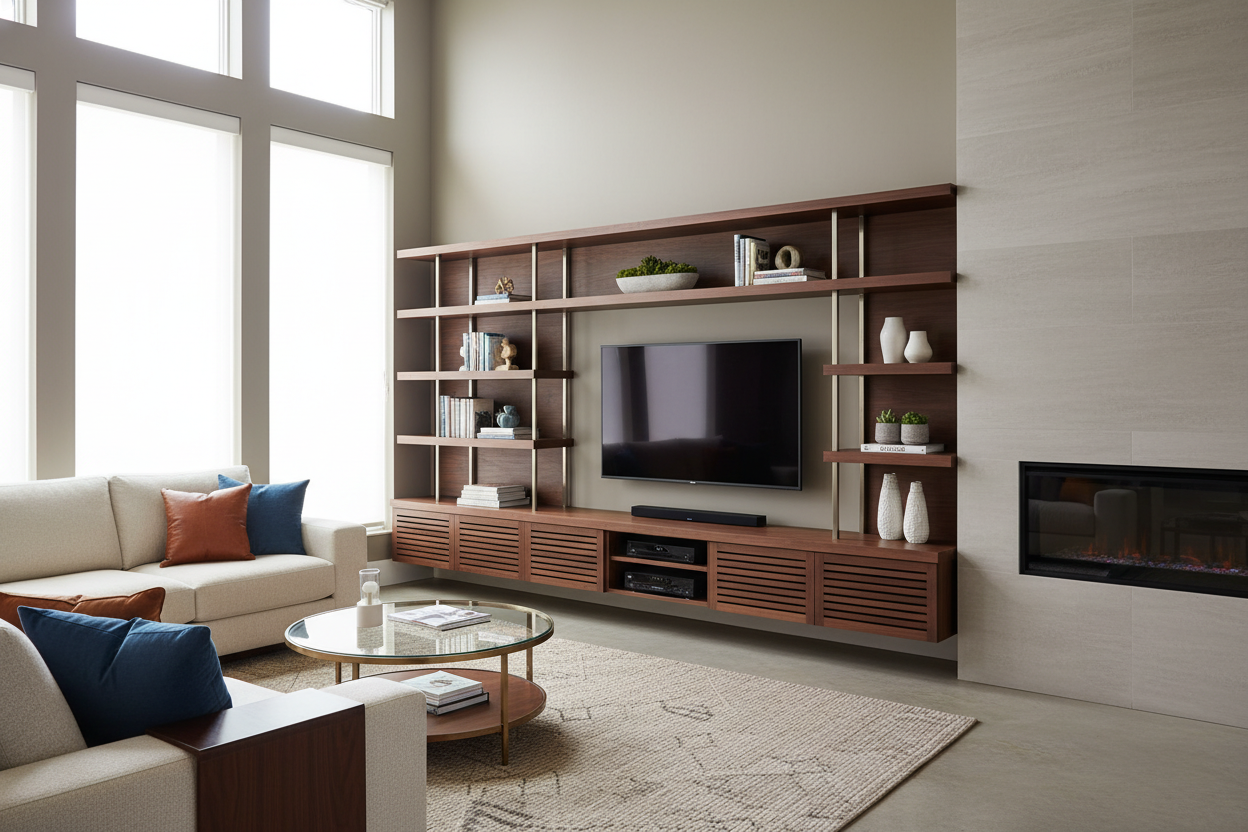
I spent three weeks staring at a tangle of HDMI cables and a PS5 that looked like a futuristic router sitting on my floor. I was paralyzed by the terminology. Is it a console? A credenza? Or am I really looking for what is entertainment center territory? It turns out, the definition has shifted massively since we were kids.
We have all been there—scrolling through endless listings, trying to figure out if a piece of furniture is too big for our living room or just right for our tech. If you are wondering what is a entertainment center in the age of paper-thin OLEDs, you are not alone. It is no longer about housing a 200-pound glass tube; it is about making your living room look like an adult lives there.
- The Scale: Modern units are wider and lower to keep the TV at eye level.
- The Storage: It is less about DVD racks and more about hiding mesh routers and controllers.
- The Aesthetic: It acts as a visual anchor so your TV does not look like a black hole on the wall.
- The Assembly: Look for solid wood or high-grade MDF; avoid the flimsy paper-thin backboards.
The Giant Oak Elephant in the Room (A Brief History)
If the phrase 'entertainment center' makes you flinch, you probably grew up with a honey-oak monolith. Those things were the SUVs of the furniture world—massive, overpriced, and impossible to move without a team of professionals. They were designed to hide the 'ugly' technology of the 90s behind glass doors that never quite stayed shut.
Those 400-pound armoires were structural hazards. I remember my parents trying to get rid of one in 2012; we ended up having to pay someone to take it away. They were built for depth, not width, because TVs used to be as deep as they were wide. Today, that layout is dead. We do not need a closet for our TV anymore.
So, What is an Entertainment Center Today?
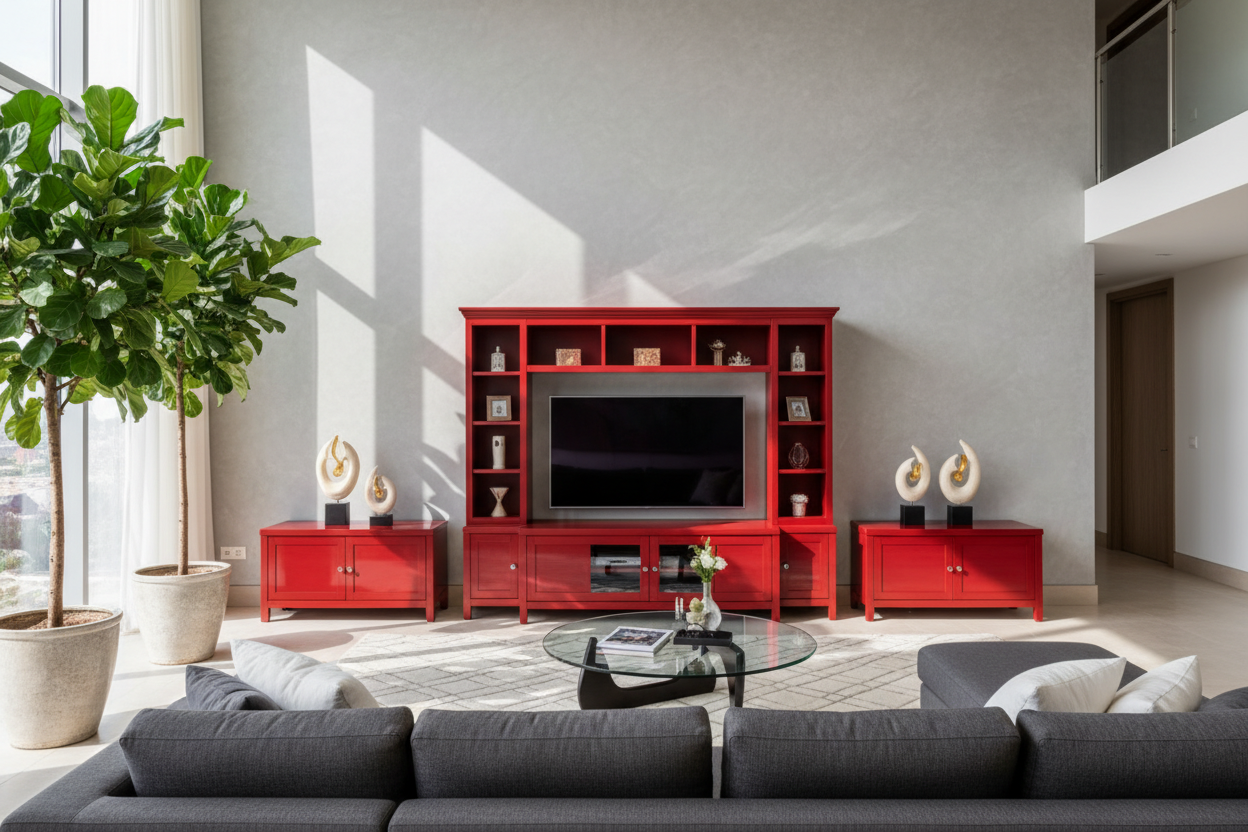
In the current design landscape, an entertainment center is any multi-functional furniture arrangement that frames your media setup. It is the evolution of the TV stand. While a stand is just a basic table, a full center usually includes additional shelving, towers, or a back panel that creates a 'destination' in the room.
I often get asked if upgrading from a basic console is worth the space in a small apartment. My take? If you have more than one gaming console or a collection of physical media, yes. A real center hides the 'cable spaghetti' that ruins the vibe of a clean room. It is the difference between a dorm room setup and a curated home.
The 3 Types of Entertainment Centers We Actually Use Now
The market is flooded with options, but most modern entertainment centers fall into three distinct camps. Choosing the right one depends entirely on whether you want your tech to be the star of the show or a supporting actor.
The Sleek Modular Systems
These are for the minimalists. Think low-profile benches that sit just 18 inches off the floor. They prioritize horizontal lines and often feature 'floating' elements. I personally love a sleek black modern unit because it disappears when the lights go down for a movie, making the screen the only focus. Plus, they usually have excellent ventilation for high-heat electronics like a Series X or PS5.
The Faux Built-Ins
If you want the library look without the $5,000 contractor bill, this is your lane. These are large-scale units that flank the TV with bookshelves. A massive wood grain entertainment center can make a 90-inch wall look intentional rather than empty. It provides a spot for your books, plants, and that vintage record player you bought but rarely use.
Do You Still Need One if Your TV is Wall-Mounted?
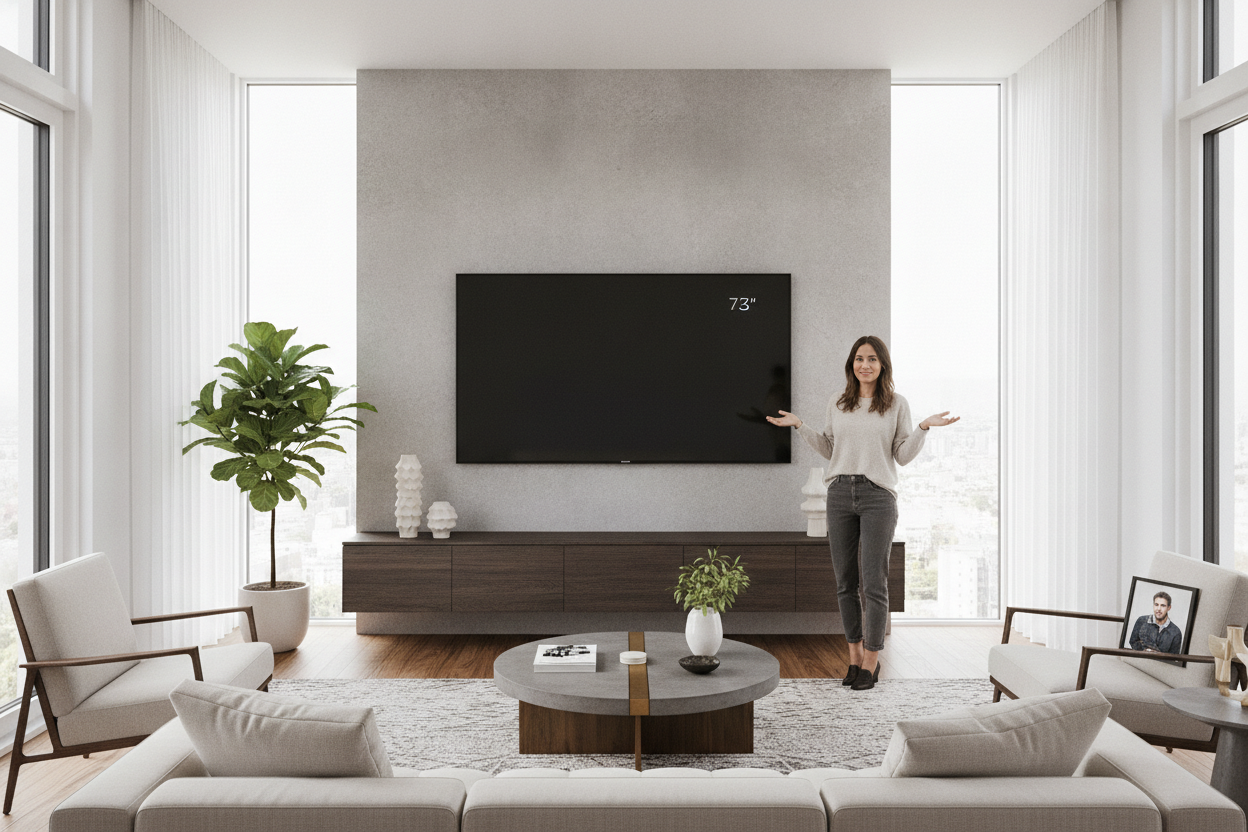
This is the hill I will die on: a wall-mounted TV without a piece of furniture beneath it looks unfinished. It looks like a waiting room in a dentist's office. You need a media unit to ground the screen. It provides a visual base that balances the heavy black rectangle on your wall.
Even if your TV is bolted to the studs, you still have a soundbar, a streaming box, or at the very least, a power cord. A proper center hides those eyesores. I once tried the 'clean' look with just a mounted TV and no console—it lasted a week before the dangling black wire drove me to the brink of insanity. Buy the furniture. Hide the wires. Your eyes will thank you.
FAQ
How much wider should the center be than the TV?
Aim for at least 3 to 6 inches of clearance on each side. A TV that overhangs the edges of the furniture looks top-heavy and cheap. If you have a 65-inch TV, look for a unit that is at least 70 inches wide.
Is open shelving better than closed cabinets?
Closed cabinets are better for hiding clutter, but make sure they have ventilated back panels. Electronics need to breathe. If you go with closed doors, I recommend mesh or slatted fronts to allow IR remotes to work through the wood.
What is the ideal height for a media unit?
Your eyes should be level with the middle of the screen when seated. Most modern consoles are 18 to 24 inches tall. If you go higher, you will be crane-necking like you are in the front row of a movie theater.

Leave a comment
This site is protected by hCaptcha and the hCaptcha Privacy Policy and Terms of Service apply.