

















Dry-Erase Surface Archetypes: Evaluating Desktop Finishes and Substrates
Integrating a writable workstation into a modern home office introduces a dynamic workflow where notes, diagrams, and reminders live directly on the tabletop. An uplift whiteboard desk serves as an active cognitive canvas, replacing scattered sticky notes with an expansive erasable platform. Understanding the construction of an uplift desk whiteboard surface is essential when planning a functional workspace. Most erasable desktops utilize specialized high-pressure dry-erase laminates or polyurethane-coated surfaces bonded to dense composite cores. These materials are engineered to resist dry-erase marker pigments while providing a smooth, non-porous glide for dry-erase pens.
When evaluating surface substrates, perimeter edge banding plays a critical role. Moisture-sealed edges prevent cleaning liquids from seeping beneath the laminate layer, preserving the flatness of the work surface over years of daily ideation. A balanced desktop offers sufficient structural density to dampen the pressure of energetic handwriting without transferring vibration across the frame, ensuring that nearby hardware remains completely undisturbed.
Spatial Geometry and Reach Envelopes: Zoning Digital Gear vs. Active Ideation
A frequent hurdle when deploying a writable sit-stand desk is balancing fixed digital hardware with open sketching zones. If monitors, laptop docks, keyboards, and mice cover the entire surface, the dry-erase capability becomes inaccessible. Effective spatial geometry relies on clear desk zoning divided into distinct ergonomic envelopes:
- Primary Reach Envelope: The immediate semi-circle directly in front of the seated or standing worker, ideally kept clear or reserved for low-profile peripherals to allow spontaneous calculations and rapid notes.
- Secondary Digital Zone: The rear desktop perimeter, best dedicated to monitor arms and cable grommets that elevate screens above the writable plane.
- Lateral Ideation Flanks: The left and right quadrants of the desk, providing dedicated space for long-form project mapping, task checklists, and concept sketching.
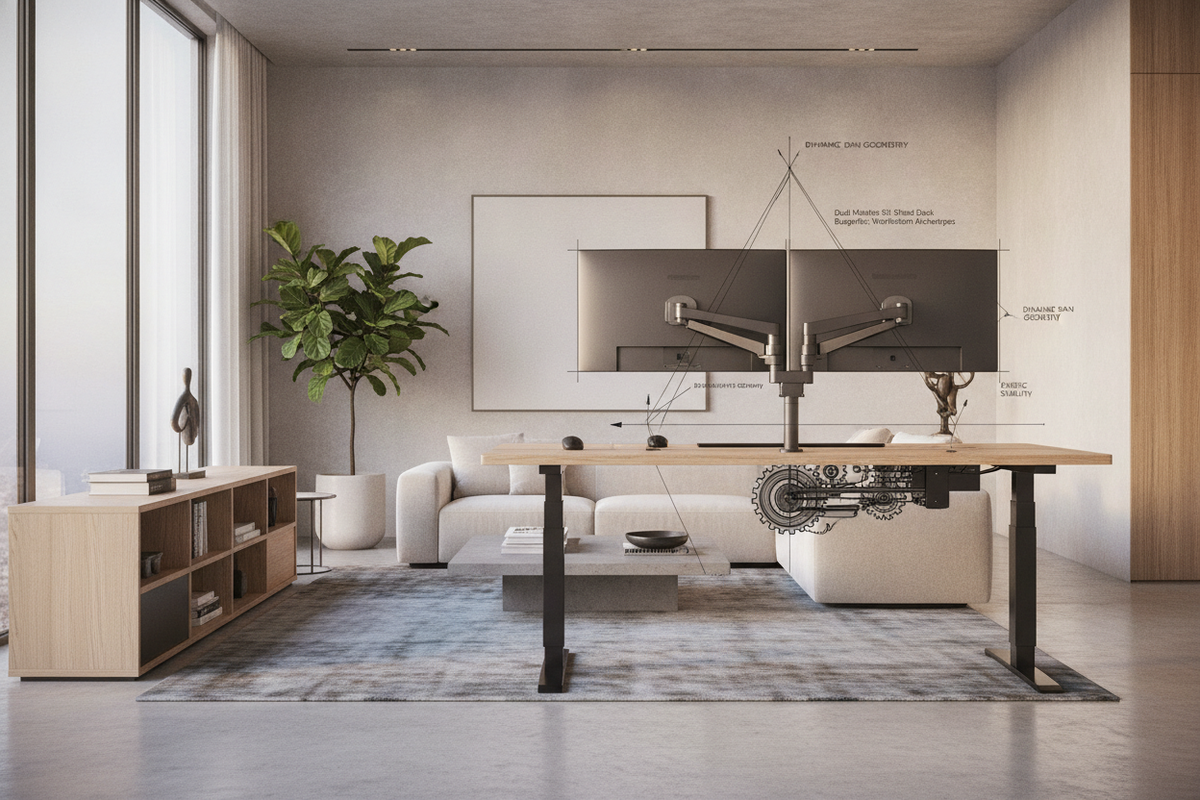
Employing articulating monitor mounts frees up significant square footage underneath the displays, maximizing the usable surface area of your uplift whiteboard desk for both daily administrative work and uninterrupted creative brainstorming.
Lighting Placement and Glare Mitigation for Writable Desktops
Because dry-erase laminates generally feature glossy or semi-gloss finishes to facilitate clean erasing, ambient lighting configuration requires intentional planning. Direct overhead lights or unshaded windows can create specular reflections on the desktop, producing harsh visual glare that interferes with reading handwritten notes and causes eye strain during extended work blocks.
To mitigate desktop glare, position the workstation perpendicular to natural window light rather than directly facing or backing against it. For artificial task lighting, select fixtures with broad diffusion panels or asymmetric light bars mounted to monitors. These deliver even illumination across the writing plane without bouncing high-intensity hotspots into your direct line of sight. For deeper insight into creating a cohesive, visually balanced workspace, explore our whiteboard guide to office styling.
Elevation Dynamics: Stability Under Writing Load at Standing Heights
Transitioning between sitting and standing postures changes the biomechanics of how you write on an uplift desk whiteboard. When seated, handwriting relies primarily on wrist articulation with forearm support. In a standing posture, active writing engages the shoulder and upper arm, exerting downward and lateral force across the desk surface.
A stable frame foundation prevents unwanted desk oscillation during rapid sketching sessions. Setting the standing height slightly below the resting elbow angle accommodates the natural downward angle of a dry-erase marker without forcing the shoulders to elevate. Furthermore, flexible vertical cable tracks ensure that peripheral power cords move freely through every height adjustment without dragging across freshly inked sections of the desktop.
Storage Synergy: Pairing Writable Desks with Mobile Pedestals and Vertical Boards
A writable desktop functions best when it remains an open canvas rather than a catch-all for office clutter. Integrating secondary storage furniture allows you to maintain clean desktop sightlines while keeping markers, microfiber cloths, cleaning sprays, and paperwork organized within arm's reach.
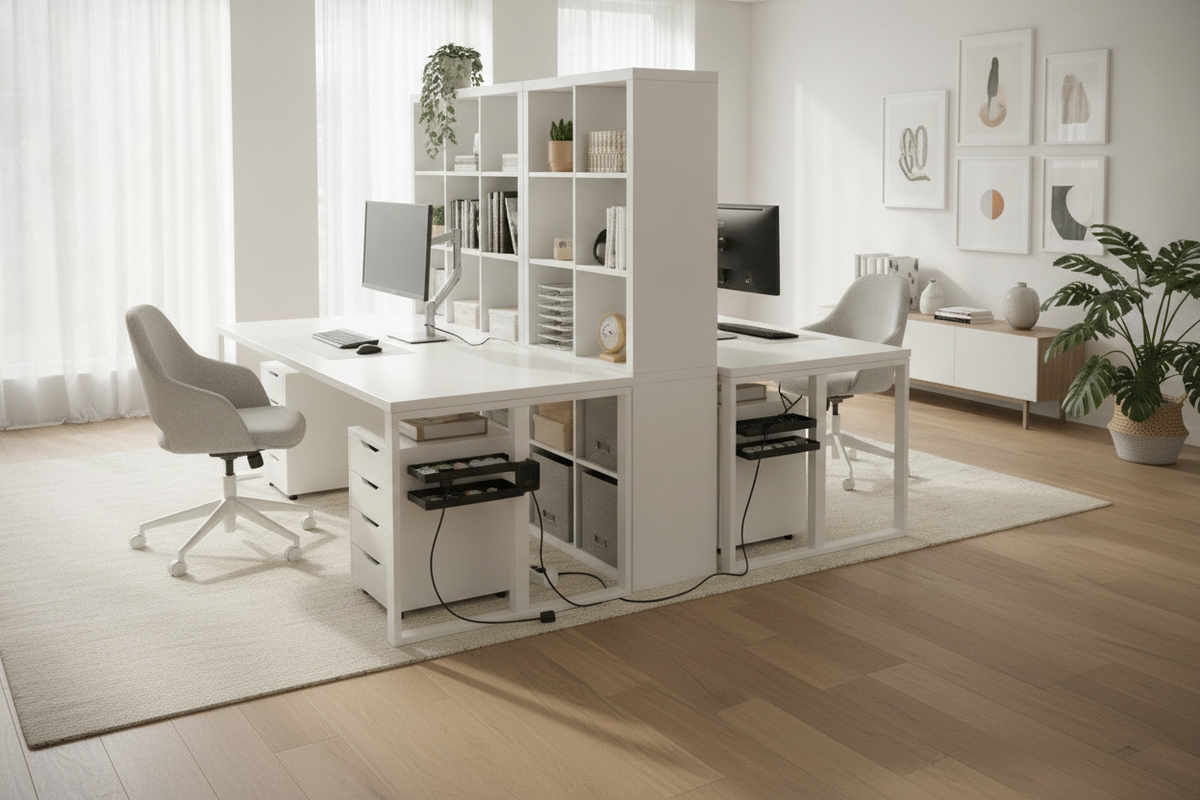
Under-desk mobile pedestals and low-profile credenzas provide designated homes for office supplies and project folders. In shared workspaces or multi-user rooms, offloading long-term reference notes to vertical storage elements prevents the main desk from becoming permanently cluttered. Pairing an adjustable desk with a multipurpose whiteboard storage unit creates a structured division between active daily task notes on the desk and larger reference schedules on adjacent cabinetry.
Maintenance Protocols: Ghosting Prevention and Daily Workflow Cleanliness
Maintaining a pristine surface across an uplift whiteboard desk requires consistent, non-abrasive care routines. Over time, pigment residue can settle into microscopic surface textures if notes are left uncleaned for extended periods, leading to visual ghosting. Establishing simple daily habits preserves surface clarity and ensures a smooth writing texture:
- Pigment Selection: Use high-quality low-odor dry-erase markers, avoiding permanent markers or wet-erase pens that leave stubborn residues.
- Gentle Wiping Tools: Clean the surface with soft microfiber towels rather than abrasive paper towels or rough felt erasers that can produce micro-scratches.
- Periodic Conditioning: Apply a mild whiteboard cleaning solution or a diluted isopropyl alcohol wipe periodically to dissolve built-up marker oils and restore surface gloss.
By pairing ergonomic zoning, glare-reducing lighting, supportive perimeter storage, and proactive surface care, a writable sit-stand desk becomes an empowering centerpiece for productive, creative work.

Leave a comment
This site is protected by hCaptcha and the hCaptcha Privacy Policy and Terms of Service apply.