

















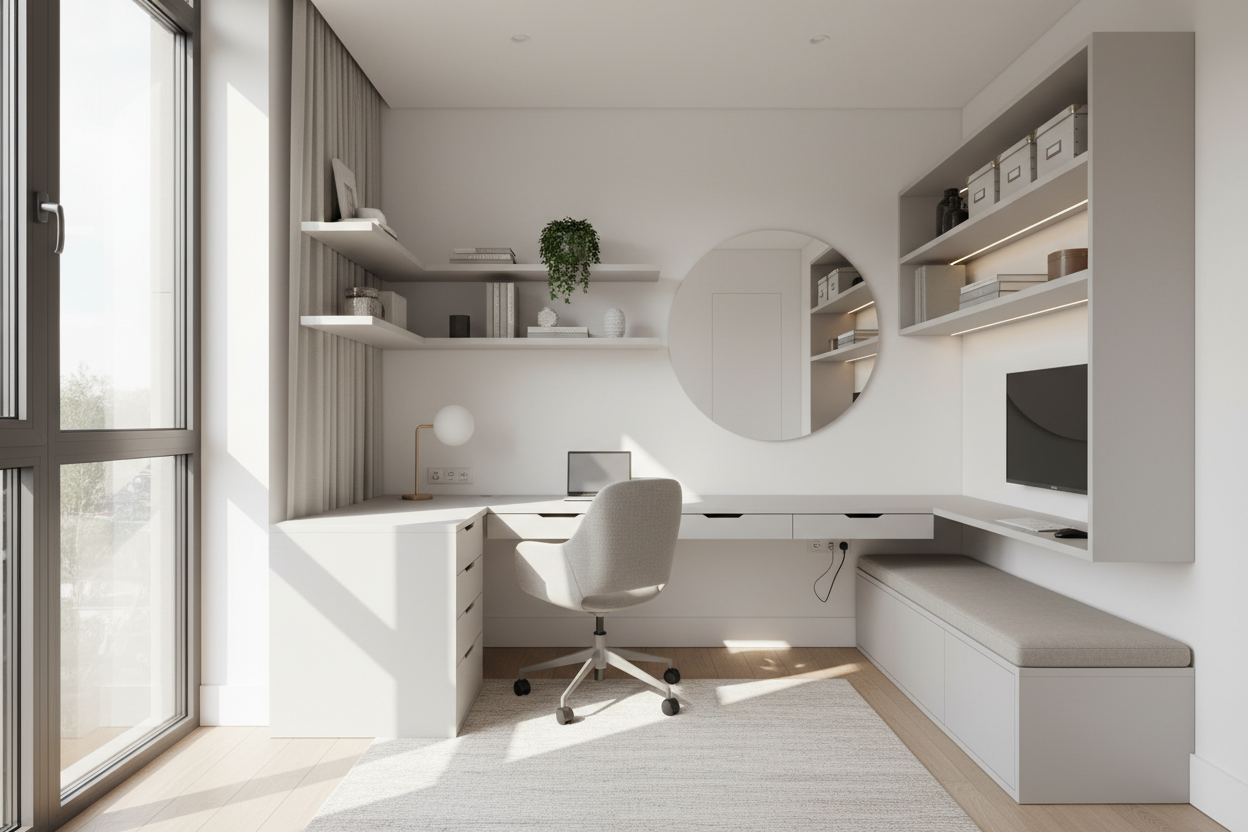
Nothing stifles creativity quite like a claustrophobic environment. When you look up from your monitor and feel the walls closing in, your productivity inevitably suffers. Many homeowners assume the solution is simply decluttering, but true spatial optimization requires a more architectural approach. When you strategically **maximize office space**, you are not just rearranging furniture; you are engineering a mindset of clarity and focus. Whether you are working with a sprawling executive suite or a converted closet, the principles of scale, light, and verticality remain your most powerful tools.
Key Features of a High-Efficiency Layout
Before moving a single piece of furniture, consider these core design pillars. Focusing on these elements ensures you create a room that feels physically larger and functionally superior.
- Visual Weight: Opt for furniture with exposed legs or glass elements rather than solid, boxy bases to maintain sightlines.
- Vertical Utilization: Prioritize floor-to-ceiling shelving units to draw the eye upward and clear floor space.
- Scale and Proportion: Ensure your desk size allows for at least 36 inches of clearance behind your chair for comfortable movement.
- Lighting Zones: Layer ambient, task, and accent lighting to eliminate dark corners that make a room feel smaller.
- Multifunctional Pieces: Select storage credenzas that can double as printer stations or secondary work surfaces.
Mastering Scale and Visual Weight
One of the most frequent errors I see in residential design is the selection of furniture that is simply too "heavy" for the footprint. To maximize office space effectively, you must understand visual weight. A solid mahogany desk with a modesty panel blocks light and sightlines, instantly shrinking the room.
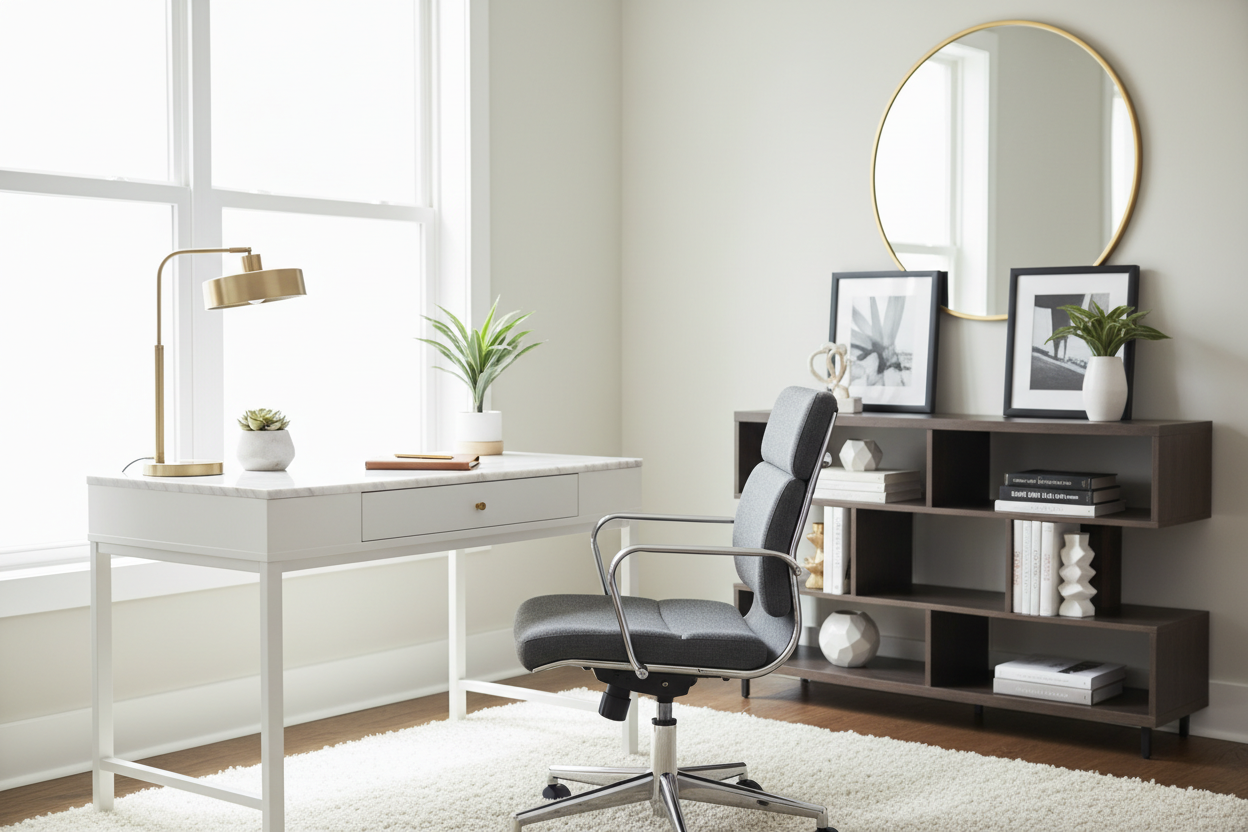
Instead, look for silhouettes that promote airflow. A writing desk with slender, mid-century modern tapered legs or a Parsons-style table allows you to see the floor underneath and the wall behind. This optical illusion tricks the brain into perceiving the room as expansive. When discussing maximizing small office space, I often recommend acrylic or "ghost" chairs for guest seating—they provide function without consuming any visual real estate.
Verticality: The Designer's Secret Weapon
When the floor plan is limited, the only way is up. However, avoid the temptation to install heavy, dark cabinetry that looms over the user. The goal is to lift the gaze.
Floating Shelving and Wall Units
Floating shelves are superior to bookcases in tight quarters because they lack a footprint. Position them high on the wall to store reference materials or decorative objects. If you require closed storage to hide paperwork, opt for wall-mounted cabinets that hover above the floor. This clearance creates a sense of openness that grounded cabinetry destroys.
Strategic Layout and Traffic Flow
How to maximize office space often comes down to the traffic pattern. Placing a desk directly in the center of a small room is a power move, but it is often impractical for spatial efficiency.
Consider the "command position" but adapt it. Placing the desk perpendicular to a window allows for views and natural light without the glare on your screen. If the room is narrow, a galley layout—with the desk on one wall and storage on the opposing wall—often yields the best ergonomic results. Ensure you have a clear turning radius; bumping your knees against a file cabinet every time you swivel is a design failure.
Materiality and Light Reflection
The materials you choose play a pivotal role in how large the space feels. Matte finishes absorb light, while satin or semi-gloss finishes bounce it around the room. In smaller offices, I lean toward lighter woods like white oak, ash, or maple. If you prefer a darker aesthetic, use it for accents rather than the primary furniture pieces. Mirrors are also underutilized in office design; a strategically placed mirror opposite a window can double the perceived natural light, effectively opening up the room.
Lessons from My Own Projects: The "Floating" Dilemma
I want to share a specific challenge from a recent home office renovation that taught me a valuable lesson about structural integrity versus aesthetics. To maximize office space in a 7x8 foot room, I specified a custom, deep floating desk that spanned the entire width of the wall.
Visually, it was stunning—clean lines, zero floor obstruction. However, after installation, I realized a critical functional flaw: vibration. Because the span was nearly eight feet without a center leg (to save knee space), the desk had a slight "bounce" when the client typed vigorously. It wasn't visible, but you could feel it in your wrists.
We had to go back and retrofit steel L-brackets into the studs and add a discreet, set-back stiffener bar underneath. The lesson? Never sacrifice rigidity for a floating look. If you are installing wall-mounted desks to save space, ensure the mounting hardware is rated for dynamic load (leaning/typing), not just static weight.
Conclusion
Transforming a workspace isn't about compromising on comfort; it is about making smarter choices with the square footage you have. By focusing on vertical storage, lighter visual profiles, and intelligent layouts, you can create an environment that fosters productivity rather than frustration. Evaluate your current setup, remove the bulk, and let your workspace breathe.
Frequently Asked Questions
What is the minimum depth for a functional office desk?
For a laptop setup, 20-24 inches is acceptable. However, if you use external monitors, aim for at least 28-30 inches of depth. This ensures proper focal distance to the screen and prevents eye strain, regardless of how small the room is.
Can I use dark paint colors in a small office?
Yes, but proceed with caution. While the old rule says "white makes it bigger," a dark, moody color (like charcoal or navy) can blur the corners of a room, making the boundaries of the space disappear. This creates an "infinite" cozy feeling, provided you have adequate task lighting.
How do I hide cables when using open-leg furniture?
This is the trade-off with open silhouettes. You must be disciplined with cable management. Use vertebrae cable spines that attach to the desk leg, or mount a power strip directly to the underside of the desktop so only one main cord runs to the wall outlet.

Leave a comment
This site is protected by hCaptcha and the hCaptcha Privacy Policy and Terms of Service apply.