

















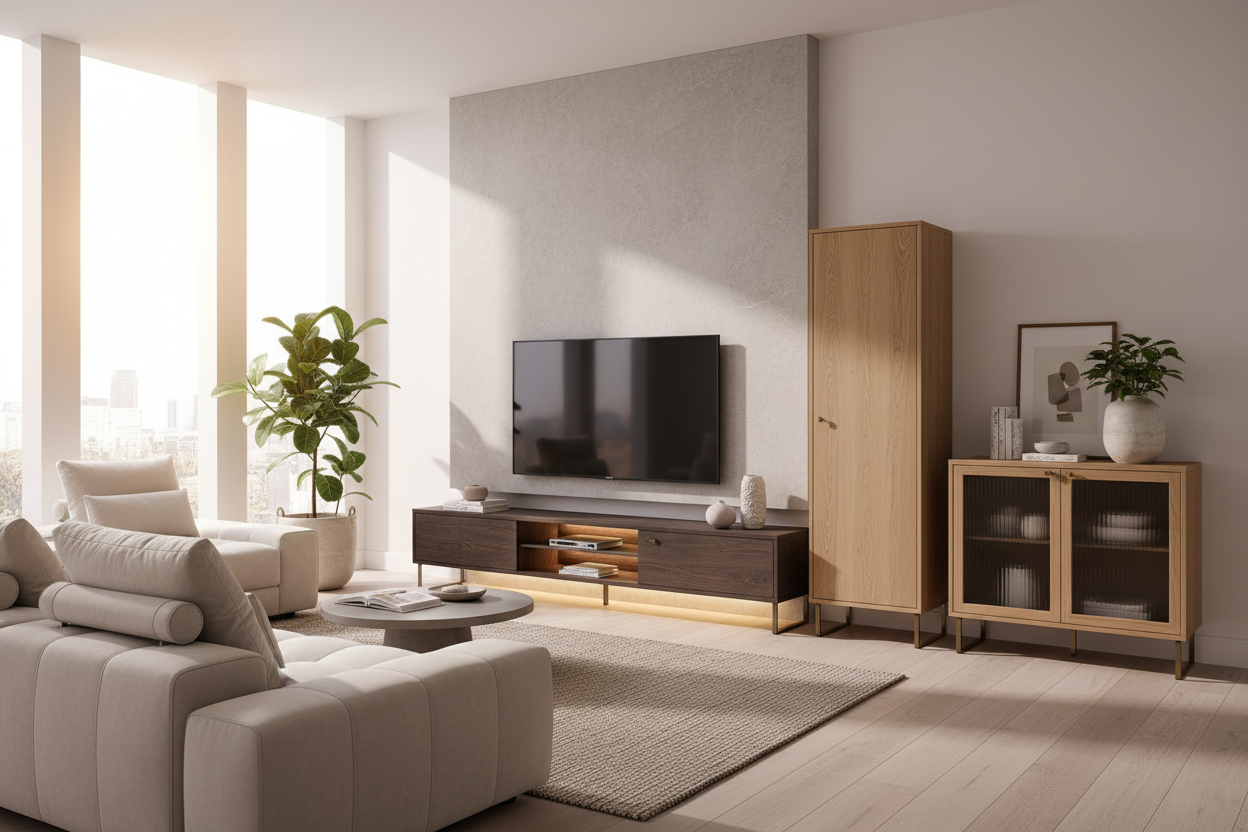
You finally mount the 65-inch screen, step back, and realize the living room feels... off. A floating black rectangle needs grounding, but the furniture below it often becomes a dumping ground for tangled cords and random remotes.
Choosing between tv cabinets or stands is one of the most common layout hurdles I see in North American homes. In this guide, we will break down the structural differences, storage capacities, and visual weights of these pieces so you can make a choice that actually serves your daily life.
Quick Decision Guide
- Cabinets offer maximum concealed storage, ideal for hiding gaming consoles and routers.
- Stands provide a lighter visual footprint, making small living rooms feel more spacious.
- Always buy a unit at least 4 to 6 inches wider than your television on either side to maintain visual balance.
- A tv stand with cupboards offers a middle-ground solution, blending open display shelves with closed doors.
- Ensure your chosen piece has adequate cord management holes and ventilation to prevent electronics from overheating.
Space Planning and Visual Weight
Matching the Piece to Your Room Size
Open-concept suburban homes can easily absorb the heavy footprint of a massive media credenza. However, if you are renting a compact urban apartment, a solid block of wood will instantly shrink the room. Here is where the distinction matters: open-shelved stands allow light to pass through, reducing visual weight. Conversely, a closed cabinet anchors a large wall and stops the TV from looking like it is floating aimlessly.
The Width Rule
A common mistake is buying a unit exactly the same width as the screen. This creates a top-heavy, precarious look. Aim for a margin. If your screen is 55 inches wide, your base should be at least 65 inches wide to give the eye a place to rest.
Storage Needs vs. Aesthetic Goals
Hiding the Clutter
Let us be honest—routers, soundbar wires, and gaming controllers are ugly. A cabinet tv rack is a lifesaver for households with heavy media usage. Solid doors hide the chaos, instantly making the room feel cleaner and more intentional.
The Hybrid Approach
If you want to display coffee table books or ceramics but still need to hide the PlayStation, look for a tv stand and cupboard combination. This hybrid gives you open center shelving for styling and closed flanking doors for the messy stuff.
Lessons from My Own Projects
Early in my career, I specified a gorgeous, minimalist metal-and-glass stand for a client with two toddlers. It looked stunning on installation day. Six months later, it was a disaster. Every single wire was visible, the glass was permanently smudged with sticky fingerprints, and the open shelves had become a chaotic toy storage zone.
I learned quickly that a tv stand with cupboards is almost always the safer bet for family rooms. The downside to heavily enclosed cabinets, however, is heat retention. I once had a client's receiver overheat because we pushed it into a beautiful vintage credenza with zero airflow. Now, I always insist on drilling ventilation holes in the back panel and leaving at least two inches of breathing room around heat-generating electronics.
Frequently Asked Questions
How tall should my TV unit be?
The ideal height depends on your seating. When sitting on your sofa, your eye level should hit the middle of the TV screen. For most standard sofas, a unit between 20 and 24 inches tall works perfectly.
Is solid wood necessary, or is engineered wood okay?
Solid wood offers unmatched longevity and can be refinished, but high-quality engineered wood with a real wood veneer is highly durable and less prone to warping from humidity changes. Avoid cheap particleboard if you plan to move frequently, as the joints loosen easily.
Can I use a regular sideboard instead of a dedicated media console?
Absolutely. Many designers prefer sideboards for their height and storage capacity. Just remember you will likely need to drill your own holes in the back for cord management and ventilation.

Leave a comment
This site is protected by hCaptcha and the hCaptcha Privacy Policy and Terms of Service apply.