

















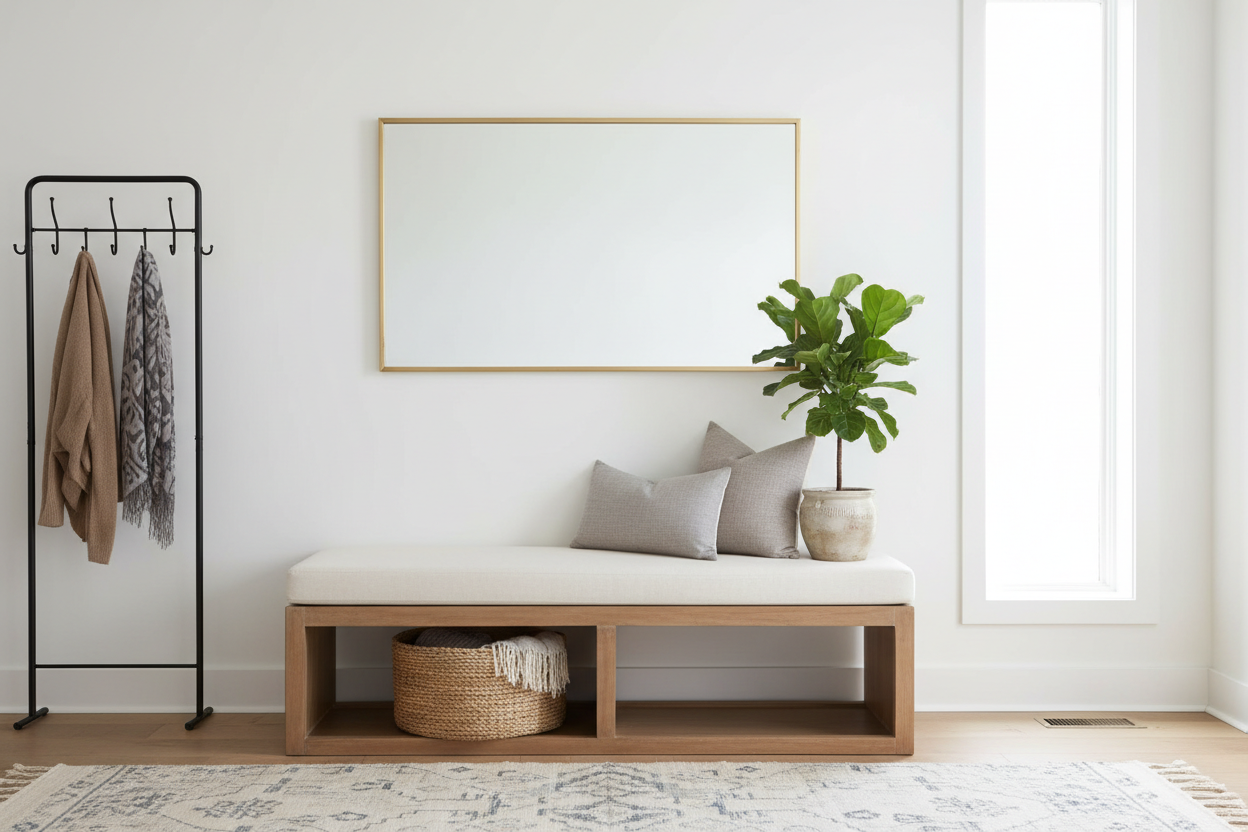
A spacious foyer is a luxury, but it often presents a unique design challenge: the dreaded empty echo. If you have a wide entrance or an extended corridor, standard furniture tends to look lost, like a postage stamp on a large envelope. The solution usually isn't more clutter; it is finding the right long entryway bench to anchor the space. This single piece of furniture serves as the visual foundation of your entrance, providing a practical spot to pause while bridging the gap between the outdoors and your living area.
Choosing the right bench is about balancing scale with function. You need a piece that commands attention without obstructing traffic flow, and it must be robust enough to handle the daily grind of dropped bags and heavy winter coats. Whether you are hunting for a sleek mid-century piece or a rustic farmhouse slab, the goal is to fill the horizontal plane effectively.
The "Bowling Alley" Effect: A Personal Lesson in Scale
A few years ago, I helped a friend tackle a hallway that was notoriously difficult to decorate. It was a beautiful, light-filled corridor stretching nearly twenty feet, connecting the front door to the kitchen. They had initially placed a standard 40-inch seat against the wall. It looked comical—tiny and apologetic in that vast expanse. The hallway felt like a bowling alley, and that small piece of furniture did nothing to slow down the eye.
We swapped it out for an extra long entryway bench that measured nearly seven feet. The difference was immediate. Suddenly, the hallway wasn't just a pass-through; it became a room of its own. We added a long runner rug and some artwork, but the bench was the hero. It taught me that when dealing with generous square footage, you have to be brave with your furniture sizing. Undersized furniture in a large hall makes the space feel uncomfortably cavernous.
Defining Dimensions: How Long is Long?
Standard benches usually top out at around 48 to 60 inches. When we talk about a long bench for entryway purposes, we are generally looking at pieces that start at 72 inches and can go up to 90 inches or more. If your wall is ten feet long, a five-foot bench will leave too much negative space on either side, making the arrangement feel disjointed.
A good rule of thumb is to aim for a bench that covers about two-thirds to three-quarters of the available wall space. This ratio feels grounded and intentional. However, depth is just as critical as length. A large entryway bench needs to be deep enough to sit on comfortably—usually 15 to 18 inches—but slim enough that it doesn't encroach on the walking path. In a narrow but long hall, look for "console depth" benches which might be slightly shallower but maintain that dramatic length.
Material Matters: The Quest for Durability
Entryways are high-traffic zones. This isn't the place for delicate velvet upholstery that stains if you look at it wrong. You need a sturdy entryway bench capable of withstanding wet umbrellas, muddy paws, and the weight of someone sitting down to yank off tight boots. Solid wood is a perennial favorite because it can take a beating and often looks better with a bit of wear. Oak, walnut, and reclaimed timber are excellent choices because their grain patterns hide minor scuffs.
Metal frames combined with wood tops offer a nice industrial edge and are incredibly rigid. If you prefer an upholstered look for comfort, opt for performance fabrics or leather. Leather is particularly forgiving; it wipes clean and ages beautifully. If you choose a long hall bench with legs rather than a solid box base, ensure the center is supported. Spans over six feet often require a fifth or sixth leg in the middle to prevent sagging over time.
Styling the Long Hallway Bench
Once you have the furniture in place, the fun part begins. A long hallway bench offers a significant surface area for styling, but you want to avoid it becoming a dumping ground for junk mail. The key is creating zones.
The Storage Zone
Use the space underneath. Because of the extended length, you can often fit three or four substantial baskets beneath the seat. This is perfect for hiding shoes, scarves, or dog leashes. Keeping the floor clear of loose shoes instantly makes the entry feel larger and cleaner.
The Comfort Zone
Soften the hard lines of a wooden or metal bench with textiles. On a particularly long bench, you can cluster pillows on one side rather than spreading them out evenly. This asymmetry looks more modern and curated. A throw blanket draped casually over the end adds texture and invites people to sit.
The Vertical Balance
A long horizontal line needs a vertical counterpoint. Don't hang a tiny mirror above a seven-foot bench. You need a large piece of art, a gallery wall, or an oversized round mirror to balance the visual weight. Alternatively, a row of coat hooks spanning the same length as the bench creates a cohesive "mudroom" look, even if you don't have a dedicated mudroom.
Functionality in Narrow Spaces
Not every long space is a wide foyer. Sometimes you are dealing with a corridor that connects wings of the house. A long hall bench here serves a different purpose. It acts as a resting spot and a visual break. In these tighter quarters, avoid benches with backs or high arms, as they add visual bulk that can make the hallway feel claustrophobic. A backless, sleek bench keeps sightlines open.
If the hallway is dark, choose a bench with an open base (legs rather than a solid chest) to let light pass through and show more floor, which tricks the brain into thinking the space is wider than it is.
Custom vs. Retail
Finding an off-the-shelf bench that exceeds 80 inches can be a struggle. Many retailers cap their inventory at standard sizes to make shipping easier. If your space demands an extra long entryway bench, you might need to look at specialty retailers or consider a semi-custom route. Church pews are a classic vintage option for extreme length, though they can be deep. Another option is placing two identical shorter benches side-by-side. If the style is simple and the edges are flush, this can look like one continuous custom piece for a fraction of the price.
Your entryway sets the tone for your entire home. By selecting a bench that properly fills the space, you create a warm, organized, and impressive welcome. It’s not just about having a place to sit; it’s about designing a space that feels complete.
Frequently Asked Questions
How much weight should a sturdy entryway bench support?
A quality bench should support at least 300 to 400 pounds to safely accommodate two adults sitting simultaneously or one person holding heavy items. If the bench is exceptionally long (over 6 feet), check for a center support leg, which is crucial for maintaining that weight capacity without bowing.
Can I put two shorter benches together to make a long one?
Yes, this is a great design hack. To make it look intentional, choose benches with flush sides (no flared legs) and identical upholstery or finish. You can unify them visually by placing a long runner rug in front or a single large piece of art centered above the seam where they meet.
What is the ideal height for a hallway bench?
Standard seat height is between 18 and 20 inches. This height is comfortable for the average adult to sit and tie shoes. If you plan to use the bench primarily as a decorative table or drop zone for bags, you can go slightly higher, up to 22 inches, but anything lower than 17 inches may feel too low for an entryway.

Leave a comment
This site is protected by hCaptcha and the hCaptcha Privacy Policy and Terms of Service apply.