

















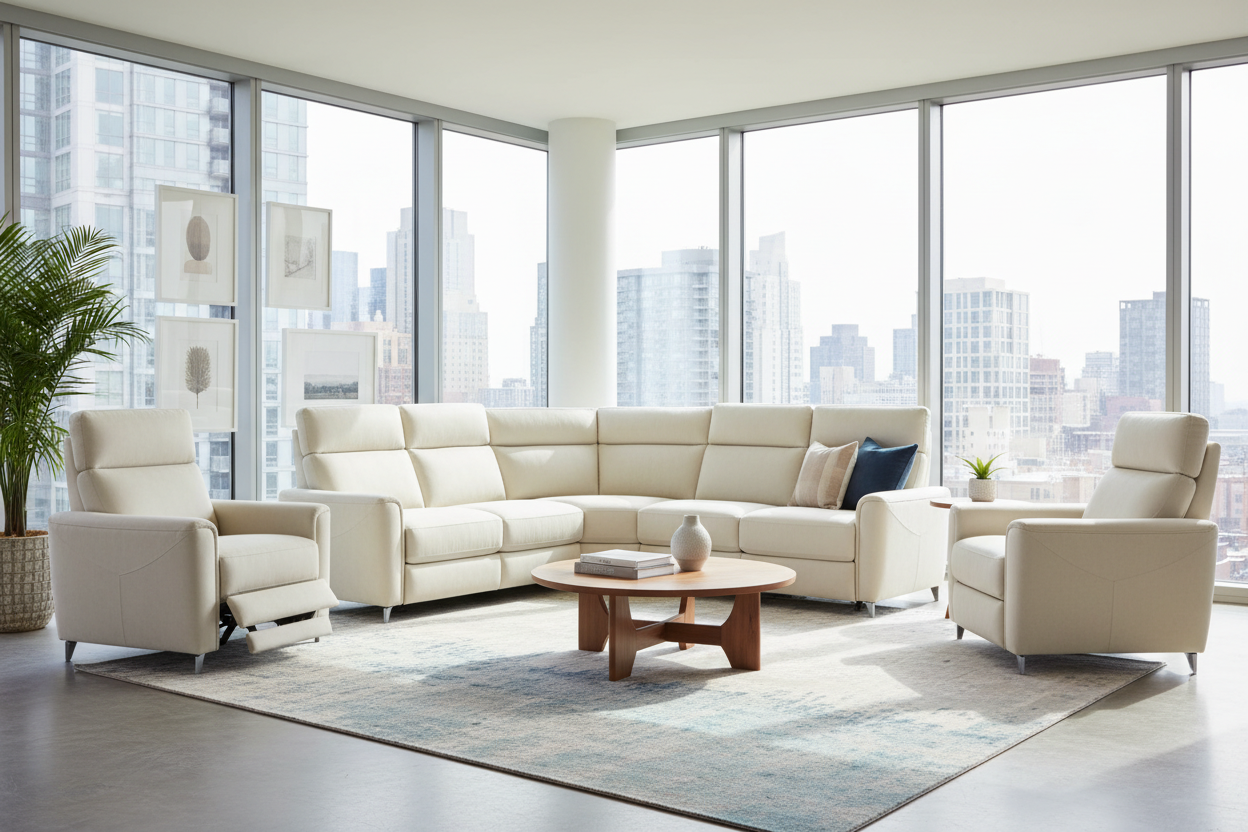
For decades, interior designers faced a persistent battle in the living room: the conflict between the homeowner who prioritizes aesthetic flow and the partner who demands the ultimate comfort of a recliner. Historically, this meant compromising on a bulky, overstuffed piece of furniture that dominated the room and disrupted the visual balance. Fortunately, engineering and design have finally converged.
Today, sourcing a recliner sofa that doesn't look like a recliner is not only possible but preferred for modern, transitional, and even mid-century modern spaces. We are moving away from the heavy "cinema" look toward sleek silhouettes that hide sophisticated motion mechanisms. This guide will walk you through selecting a piece that offers zero-gravity comfort without sacrificing your home's curated style.
Quick Decision Guide: Identifying Modern Motion
If you are scanning showroom floors or browsing online, look for these specific structural cues to ensure the piece won't overwhelm your space:
- High-Leg Profile: Look for sofas with visible legs (wood or metal) that sit off the floor. This "negative space" creates an illusion of lightness, unlike traditional recliners that sit heavy on the ground.
- Hidden Controls: Avoid manual levers on the outside arm. Premium reclining sofas that don't look like recliners use touch sensors tucked between seat cushions or discreet metallic buttons on the inner arm.
- Tailored Upholstery: Seek out tight-back or semi-attached cushion designs. Avoid "puffy" headrests; instead, look for articulating headrests that fold down when not in use.
- Wall-Hugger Mechanism: Ensure the mechanism tracks forward as it reclines, allowing you to place the sofa within inches of a wall, saving valuable floor space.
Evaluating the Silhouette and Structure
The biggest giveaway of a traditional motion sofa is its bulk. When searching for a reclining sofa that doesn't look like it, pay close attention to the arms and the back height. A track arm (square and narrow) or a slope arm significantly reduces visual weight compared to the rolled, pillow-top arms of the past.
The "Stationary" Illusion
The goal is to find a piece that mimics a stationary sofa. Manufacturers are now integrating "incliner" mechanisms where the seat slides forward and the back tilts slightly, rather than the entire back falling backward. This is crucial for open-concept layouts where the back of the sofa is visible from the kitchen or dining area. A recliner couch that doesn't look like a recliner should look just as tailored from the back as it does from the front.
Material Selection: Moving Beyond Leather
While leather is durable, it often contributes to that heavy, shiny "man cave" aesthetic. If you want a softer, more residential feel, look for a recliner sofa not leather. High-performance fabrics are the industry standard for these pieces now.
Crypton fabrics, heavy-weight linens, and performance velvets allow the sofa to blend with your drapery and rugs. A textured weave or a matte velvet absorbs light rather than reflecting it, helping the sofa recede into the design scheme rather than shouting for attention. If you must have leather, opt for a matte aniline dye in cognac or charcoal rather than a glossy protected finish.
Navigating Reclining Sectional Options
The challenge compounds when scaling up to a sectional. A reclining sectional that doesn't look like one relies heavily on modularity. Look for brands that allow you to mix motion pieces with stationary pieces. For example, you might have a power recliner on one end, a stationary corner, and a chaise on the other.
When vetting reclining sofa brands, prioritize those that offer "power headrest" features. This allows the back of the sofa to remain low profile (preserving your sightlines across the room) while offering neck support only when you are actively watching a movie.
Lessons from My Own Projects: The Cord Dilemma
I recently specified a gorgeous, Italian-made motion sofa for a client in a downtown loft. It checked every box: sleek metal legs, low profile, and beautiful bouclé fabric. It was the perfect recliner sofa that doesn't look like a recliner. However, once we installed it, we hit a snag that specifications don't tell you about: the battery packs.
Because the sofa was floating in the center of the room (not against a wall), we couldn't plug it into a wall outlet without a tripping hazard. We opted for rechargeable battery packs hidden under the frame. Here is the reality check: if you have children or frequent guests who love playing with the buttons, those batteries drain faster than advertised. We found ourselves charging them every four days rather than the promised two weeks.
Furthermore, on this specific "high leg" model, the battery pack was slightly visible if you stood at a certain angle in the dining room. My advice? If you are floating the sofa, plan for a floor outlet underneath it during your renovation phase, or ensure the sofa frame is low enough to truly conceal the battery pack. Also, be aware that the seat with the motor will always feel slightly firmer than the non-motion seats initially—it takes about three months of regular use for the densities to even out.
Conclusion
You no longer have to choose between a beautiful home and a comfortable one. By focusing on tailored lines, hidden controls, and performance textiles, you can secure a recliner sofa that seamlessly integrates into your living space. It is an investment in your downtime that respects your design intent.
Frequently Asked Questions
How much wall clearance do I need for a modern reclining sofa?
Most modern "wall-hugger" designs require very little clearance, often between 2 to 4 inches. The mechanism pushes the seat forward as the back reclines. However, always check the specific "fully reclined depth" spec sheet before purchasing to ensure it doesn't hit your coffee table.
Can I put a coffee table in front of a reclining sofa?
Yes, but spacing is critical. You typically need more distance than with a stationary couch. I recommend a minimum of 18 to 24 inches between the edge of the sofa and the table to allow the footrest to extend fully without collision. Oval or round tables often work better for flow.
Are reclining sofas that don't look like recliners less durable?
Not necessarily, but there are more moving parts to consider. The frame construction is vital. Look for kiln-dried hardwood frames and metal-to-metal connections for the mechanism. The motor is usually the first thing to require maintenance, so verify the warranty on the electrical components, not just the fabric.

Leave a comment
This site is protected by hCaptcha and the hCaptcha Privacy Policy and Terms of Service apply.