

















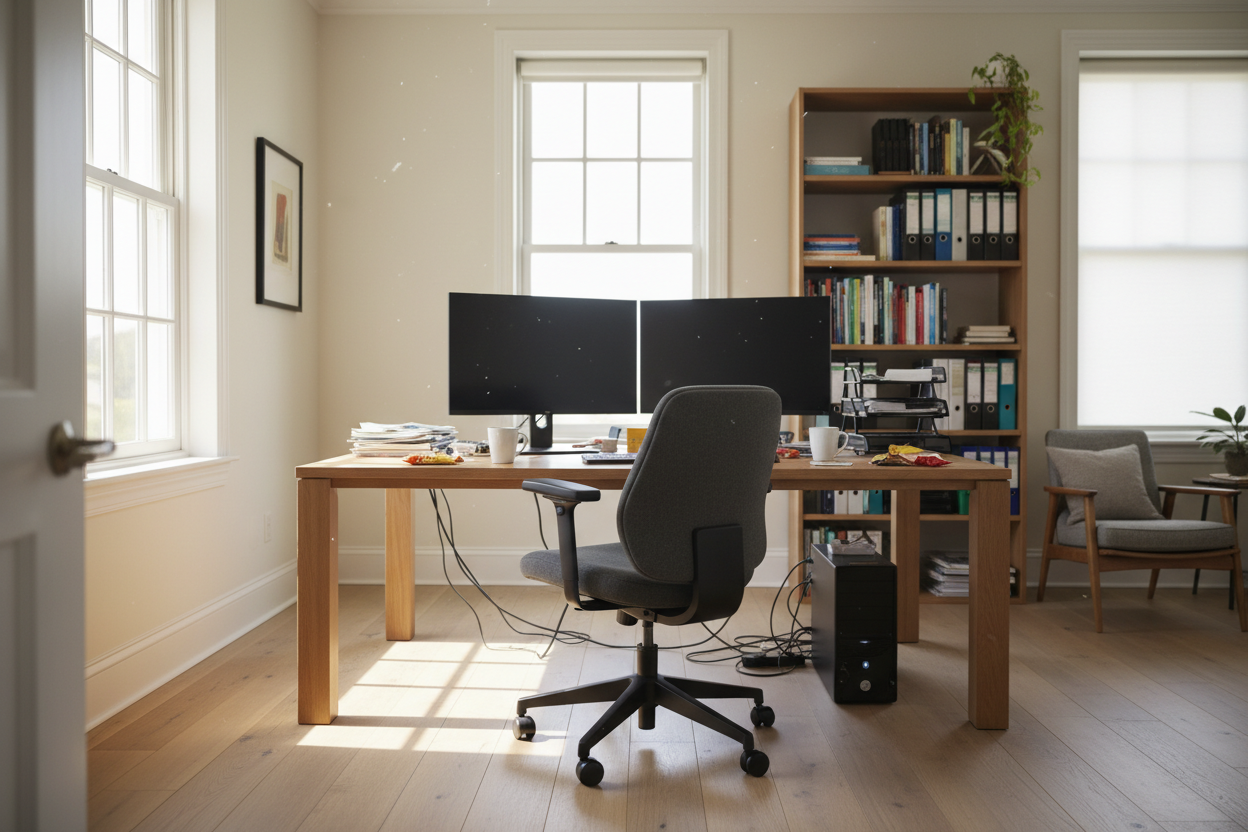
There is a distinct psychology to where you sit. When you walk into a workspace, the layout dictates not just the visual flow, but your cognitive clarity and authority within the room. Many homeowners treat their study as an afterthought, pushing a desk against a wall to maximize floor space, only to find themselves feeling cramped and uninspired. A strategic office furniture arrangement does more than look good; it engineers productivity.
Key Layout Principles for Success
Before dragging heavy desks across the floor, consider these fundamental design pillars. This checklist ensures your configuration balances function with high-end aesthetics:
- The Command Position: Orient your desk so you can see the door without being directly in line with it. This reduces subconscious anxiety.
- Lighting Orientation: Place computer screens perpendicular to windows to prevent glare, rather than directly facing or backing them.
- Traffic Flow Clearance: Maintain at least 30-36 inches of walkway space behind your chair and between major furniture pieces.
- Visual Weight Balance: Offset heavy pieces (like solid wood bookcases) with lighter items (like glass tables or open shelving) to avoid a lopsided room feel.
Mastering Space Planning and Placement
When I advise clients on office furniture placement, we start with the "ergonomic envelope"—the immediate reach zone around the user. Your primary work surface should be the anchor. From there, we determine the flow. If you host clients, the layout must facilitate eye contact without a monitor blocking the connection.
Optimizing for Small Footprints
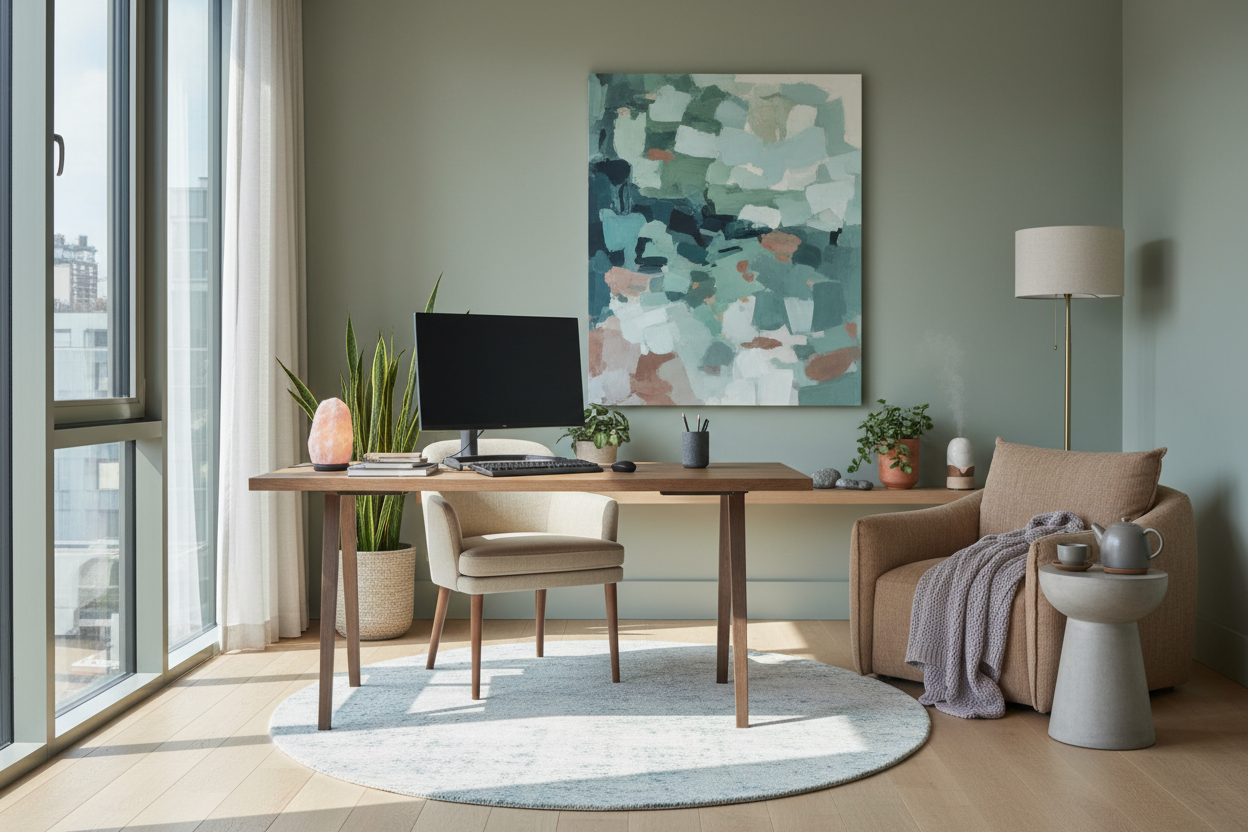
Learning how to arrange furniture in a small office requires a shift in perspective. In compact rooms, floor space is a luxury, so we must utilize verticality. Avoid heavy, dark executive desks that swallow the room. Instead, opt for writing desks with exposed legs (parson style) which increase visible floor area, making the room feel larger. Wall-mounted shelving units or floating credenzas keep the footprint clear while providing essential storage.
Strategic Office Furniture Configurations
The shape of your furniture dictates the room's energy. An L-shaped configuration tucked into a corner can maximize surface area but often leaves the user staring at a wall. If space permits, I prefer floating the L-shape into the center of the room. For larger executive suites, a U-shaped setup creates a distinct "cockpit" feel, offering distinct zones for computer work, paper review, and meetings.
Materiality and Visual Balance
The texture and finish of your furniture play a massive role in how the arrangement feels. A high-gloss lacquer desk reflects light and feels modern, but it demands impeccable cable management because nothing hides behind it. Conversely, a matte walnut or oak finish absorbs light, grounding the space and adding warmth. When arranging these pieces, ensure that wood tones are distributed evenly throughout the room so one corner doesn't feel visually heavier than the others.
My Personal Take on Office Furniture Arrangement
I learned a hard lesson early in my career regarding the "view" versus the "work." I once designed a stunning home office where I positioned a client’s mahogany desk directly facing a floor-to-ceiling south-facing window. It looked incredible in photos—a true CEO moment.
Two weeks later, the client called me. He couldn't work. The contrast between the bright window and his screen was causing severe eye strain, and by 2:00 PM, the heat gain made the spot unbearable. We had to completely reconfigure the room, angling the desk 90 degrees to the window. Furthermore, I realized that floating a desk in the center of the room looks majestic, but unless you have floor outlets installed, you end up with a snake of extension cords tripping everyone up. Now, I always check for floor outlets or plan for a rug to conceal cords before I even suggest a floating layout.
Designing for Intentionality
Your workspace should be a physical manifestation of how you want to work. Whether you are dealing with a cozy nook or a sprawling library, the right layout creates a rhythm that supports your daily tasks. Move beyond simply filling space and start curating an environment that invites focus.
Frequently Asked Questions
What is the best way to handle lighting in an office layout?
Layer your lighting. Do not rely solely on overhead cans, which cast shadows on your work. Position a task lamp on the opposite side of your dominant hand to reduce writing shadows, and ensure your ambient light (windows) is to the side of your screens to mitigate glare.
How do I arrange furniture if my office doubles as a guest room?
Zoning is critical here. Use a sleeper sofa or a Murphy bed on the wall opposite the desk. Visually separate the "work" zone from the "rest" zone using an area rug. Ensure the desk chair can tuck fully under the desk to clear the floor space when the bed is in use.
Should the desk always face the door?
Ideally, yes. This is known as the "command position." Facing a wall can make a room feel smaller and subconsciously limits your feeling of control. If you must face a wall due to outlet constraints, hang a mirror above the desk so you can see the entrance behind you.

Leave a comment
This site is protected by hCaptcha and the hCaptcha Privacy Policy and Terms of Service apply.