

















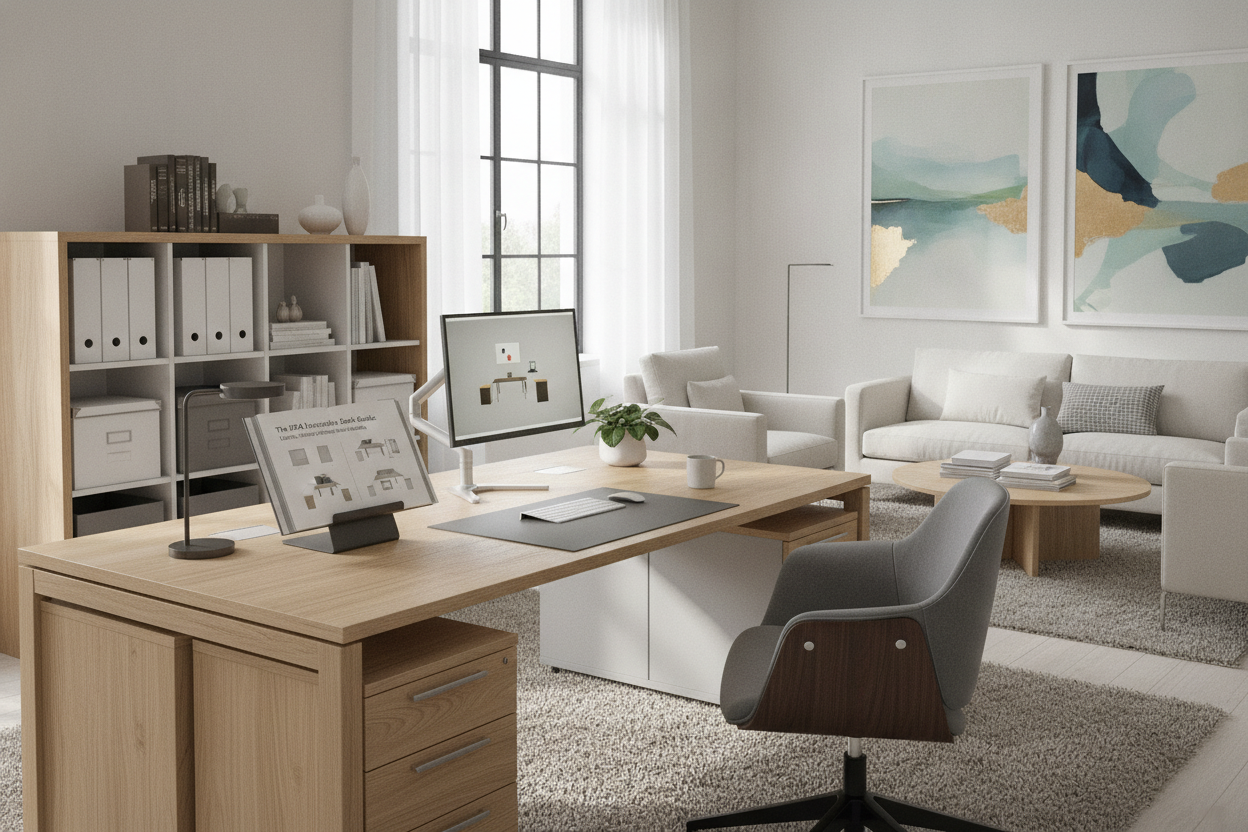
Creating an authoritative, organized, and spacious home office begins with selecting the right central work surface. While many people associate modular flat-pack collections with compact study tables, assembling an ikea executive desk setup using modular desk components allows you to achieve the generous surface area, robust storage, and commanding presence typical of traditional executive suites without rigid architectural constraints.
Defining the Executive Desk Layout for Modern Home Workstations
A true executive desk differs significantly from a standard compact writing table. In commercial and home environments alike, an executive workstation prioritizes expansive primary desktop spans, generous depth to accommodate multi-screen setups, integrated or flanking file storage, and a polished visual presentation suitable for facing into the room rather than being hidden against a perimeter wall.
When configuring an ikea home workstation with an executive profile, the design hinges on combining modular table tops, sturdy supportive bases, and organized cabinetry. Incorporating commercial-grade modular elements or expansive executive desk counter solutions into a dedicated study creates a distinct focal point that clearly separates primary administrative duties from auxiliary workspace tasks.
Surface Dimensions and Spatial Clearance Planning
Proper spatial planning ensures that a large desk anchors the room comfortably without disrupting standard walkways and daily movement. When organizing room desks ikea configurations into executive layouts, balance tabletop proportions with essential clearance zones:
- Primary Surface Depth: Opt for deeper tabletops whenever possible. Generous depth ensures that computer monitors, desk pads, document organizers, and desktop task lighting can coexist without crowding your primary keyboard and writing zone.
- User Seating Clearance: Maintain ample clearance between the rear edge of the desk and the back wall or credenza. This allows ergonomic task chairs to recline, rotate, and roll back smoothly without striking baseboards or storage doors.
- Front and Side Passageways: For desks oriented toward the center of the room, leave open perimeter pathways so visitors or family members can move freely past the front edge without squeezing through tight bottlenecks.
For custom room dimensions, reviewing a detailed custom modular desk planning guide helps align desktop spans with surrounding millwork, bookcases, and wall offsets.
Storage Architecture: Dual Pedestals vs. Streamlined Open Frames
One of the key architectural choices in planning an executive workstation is balancing built-in storage against open leg room. The foundation beneath the worktop directly dictates both daily efficiency and overall visual weight.
Dual-Pedestal Modular Foundations
The traditional executive look is built around symmetry. Setting a wide desktop across two matching multi-drawer units creates dedicated zones for hanging files, reference materials, hardware peripherals, and stationary. This configuration keeps clutter off the upper surface while grounding the desk visually within large rooms.
Minimalist and Open-Frame Setups
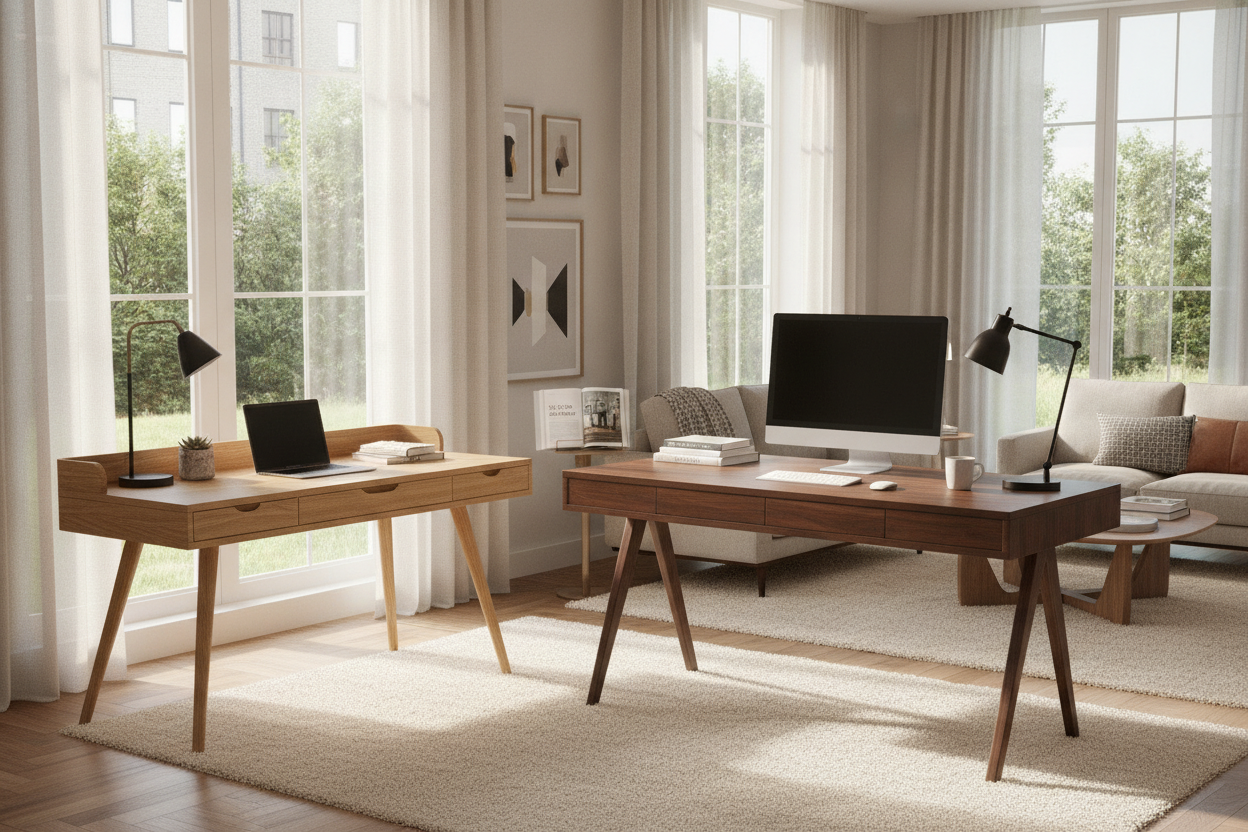
Conversely, selecting an ikea desk no drawers design relies on an open steel or timber leg framework. This minimalist aesthetic keeps open sightlines intact, making it well-suited for smaller executive offices where heavy pedestal units might feel visually overwhelming. In these setups, storage is typically offloaded to a matching lateral credenza, mobile filing cart, or an adjacent workstation desk with built-in drawers located along the perimeter wall.
Configuring Executive L-Shaped and Freestanding Room Placements
How an ikea business desk is positioned within the room establishes the workflow and sets the professional tone for video conferences, client meetings, and focused daily tasks.
The Central Command Position
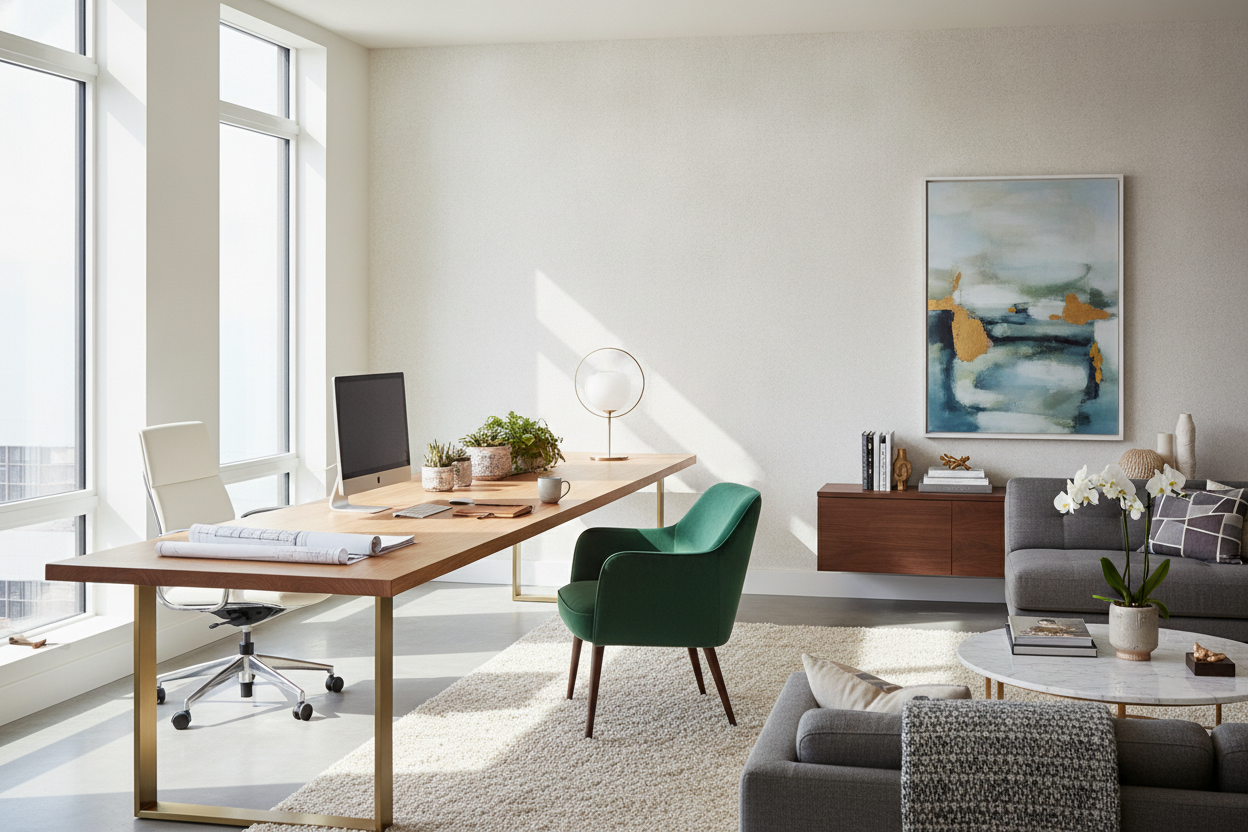
In a traditional executive arrangement, the desk is positioned centrally or slightly forward of the back wall, facing the room entrance. This orientation offers a commanding view of the space while framing a tidy backdrop behind the user—such as built-in bookcases or architectural artwork—during virtual presentations. When floating a desk away from walls, selecting furniture with fully finished back panels or adding a modesty screen is essential to conceal under-desk hardware and cabling.
The L-Shaped Executive Suite
When workflow demands simultaneous computer operation, physical paperwork review, and equipment staging, an L-shaped setup provides seamless multi-zone separation. Utilizing a dedicated corner desk with integrated storage allows you to maintain an active primary screen setup on one run while keeping secondary projects, printers, and document trays organized along the return wing.
Cable Routing, Structural Reinforcement, and Surface Customization
A polished executive environment requires clean wire management and dependable structural support, especially when configuring long desktop spans using modular ikea desk furniture components.
- Under-Desk Wire Trays and Channels: Mount wire cages, cable spines, and multi-outlet power strips directly beneath the underside of the desktop. Routing power bricks, monitor cables, and charging leads through under-table channels prevents unsightly dangling cords when the desk is viewed from the front or sides.
- Center Support Legs for Wide Spans: Extra-wide table spans supported only at the outer edges can experience deflection or sagging over time when loaded with multi-monitor arms and heavy desktop hardware. Installing an adjustable center support leg or a rigid under-desk stiffener bar preserves structural rigidity across the entire span.
- Material Accents and Surface Care: Elevate the aesthetic finish of modular surfaces by layering executive desk pads, leather blotters, and matte cable pass-through grommets. Applying luxury styling techniques for home desks transforms practical modular elements into a refined, bespoke executive suite tailored to your workday routine.

Leave a comment
This site is protected by hCaptcha and the hCaptcha Privacy Policy and Terms of Service apply.