

















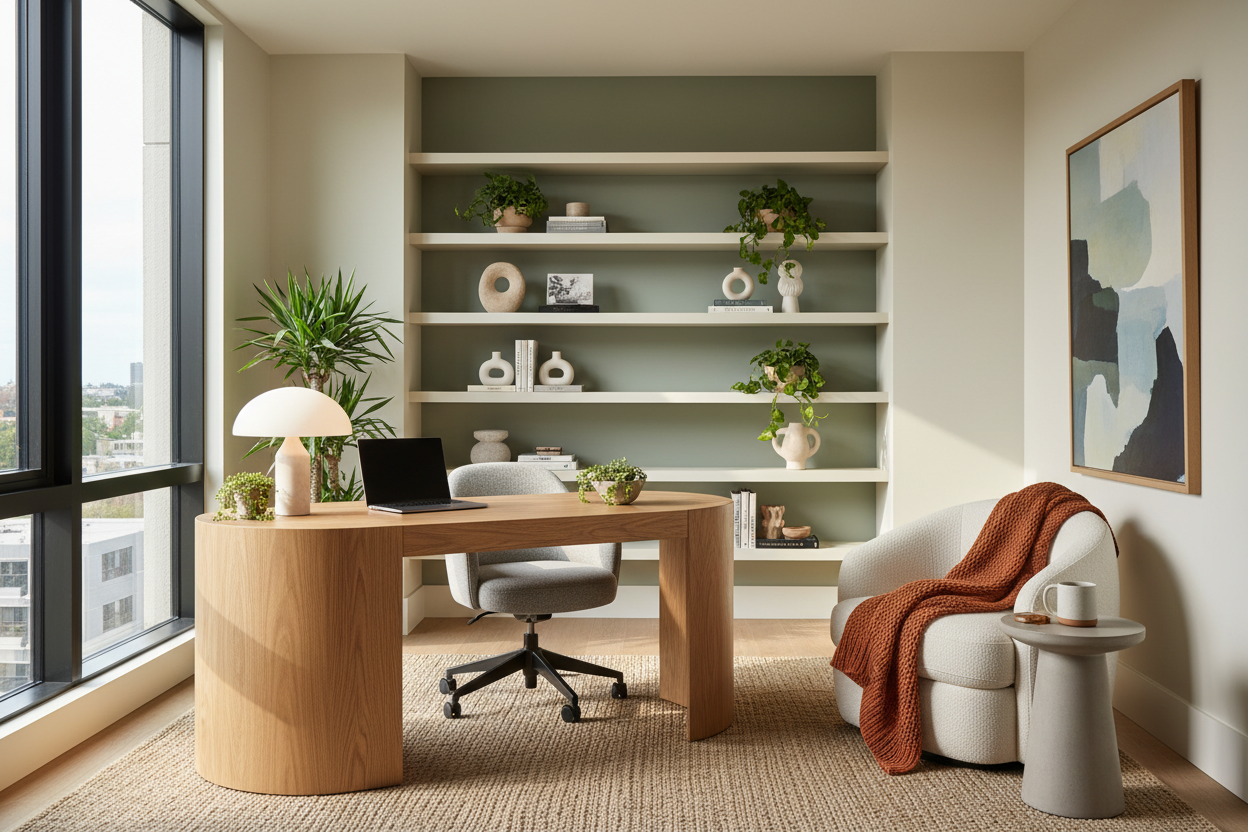
There is a distinct, often sterile coldness associated with traditional workspaces—the harsh hum of fluorescent lights, the flat laminate surfaces, and the monotonous color palettes. As a designer, I frequently meet clients who feel uninspired by their surroundings, not realizing that the stark commercial aesthetic is draining their creativity. The solution isn't to stop working; it is to shift the design paradigm toward "resimercial" design—blending residential comfort with commercial functionality. Learning how to make your office feel like home is about more than just adding a potted plant; it requires a thoughtful curation of lighting, textures, and layout that prioritizes psychological well-being alongside productivity.
Core Elements of a Residential-Style Office
- Lighting Temperature: Switch from cool, blue-tinted overheads (4000K+) to warm, layered lighting (2700K-3000K) using floor and table lamps.
- Textural Depth: Introduce soft materials like wool rugs, velvet drapery, or linen throw pillows to absorb sound and soften hard edges.
- Material Authenticity: Opt for solid woods, natural stones, or leather over synthetic veneers and plastics for a grounded, high-end feel.
- Personal Curation: distinct from clutter, this involves displaying art, books, or artifacts that have personal meaning rather than generic office decor.
Mastering the Lighting Architecture
The quickest way to kill the ambiance of a room is with a single, high-output overhead light source. In residential design, we rely on "layered lighting" to create depth and warmth. To achieve this in an office, banish the cool daylight bulbs. Instead, treat your desk like a side table in a living room.
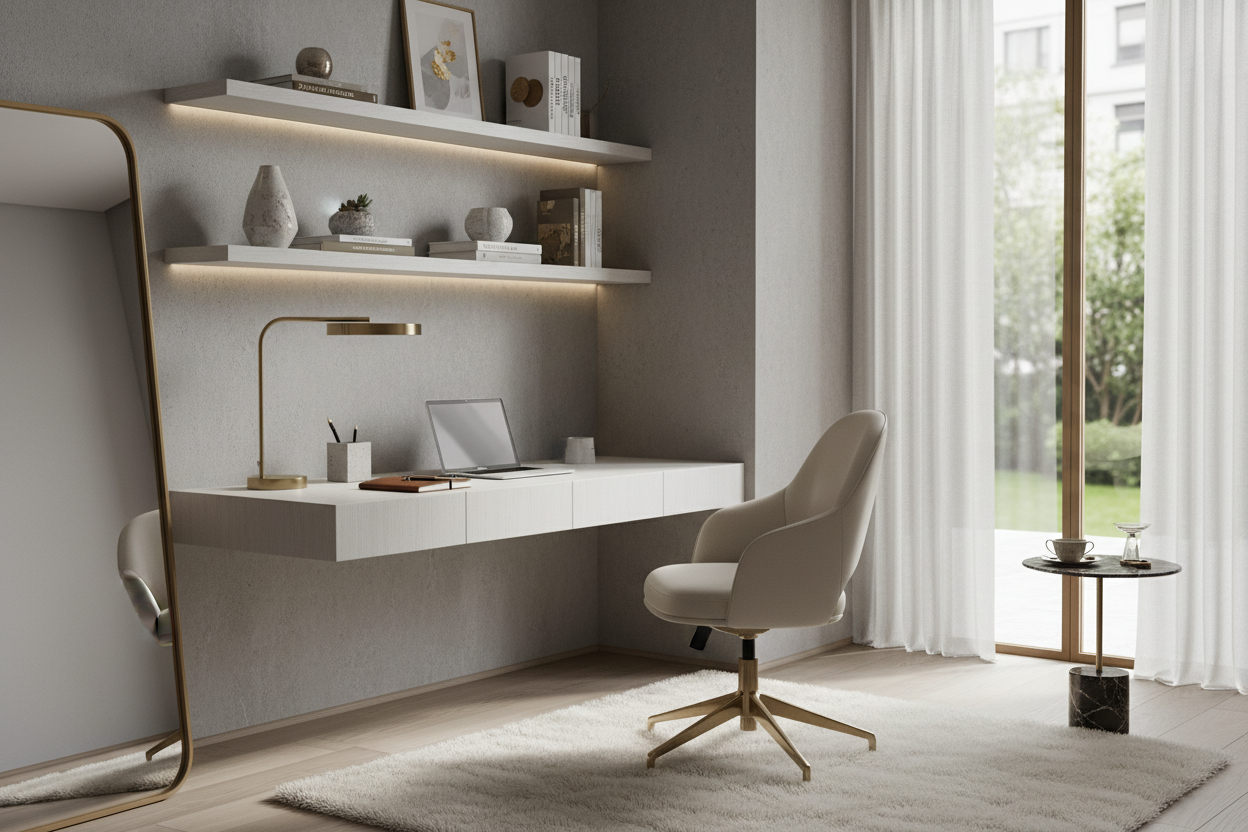
Incorporate a statement table lamp with a linen or fabric shade. The fabric diffuses the light, casting a soft glow that reduces eye strain compared to the directed beam of a plastic task lamp. Additionally, consider a floor lamp in the corner to wash the walls with light, expanding the visual space and eliminating harsh shadows.
Softening Acoustics with Textiles
Commercial offices are full of hard, reflective surfaces—glass, metal, and drywall—that amplify noise and create a "hollow" feeling. To make your office feel like home, you must dampen the acoustics. This is where area rugs become essential.
Choosing the Right Rug
Don't settle for a small mat under your chair. Anchor the room with a large, vintage-style or natural fiber rug that extends beyond the desk. This visually zones the workspace while providing underfoot comfort that mimics a living area. Furthermore, consider replacing standard blinds with fabric drapery. Even if sheer, the fabric adds a vertical element of softness that breaks up the rigidity of window frames.
The "Resimercial" Furniture Balance
The challenge lies in selecting furniture that looks residential but performs commercially. A dining chair looks beautiful, but sitting in one for eight hours is a recipe for back pain. Conversely, a massive, mesh-backed ergonomic throne ruins the aesthetic.
Look for "hidden ergonomics." Many high-end manufacturers now produce task chairs wrapped in premium boucle, leather, or velvet that hide the mechanical levers and lumbar support within a sleek silhouette. For the desk, prioritize solid wood or high-quality wood veneers. The tactile experience of resting your arms on real walnut or oak is vastly superior to cold laminate and instantly elevates the perceived quality of the room.
My Personal Take on How to Make Your Office Feel Like Home
I learned a hard lesson about blending styles during a renovation for a writer in Chicago. We placed a stunning, antique hand-knotted wool rug under her desk to anchor the room. It looked incredible—for about three weeks.
The issue wasn't the aesthetic; it was the mechanics. Standard plastic caster wheels on office chairs are brutal on residential textiles. They chewed up the delicate fibers of the rug, leaving a matted, distressed track that ruined the investment. I realized then that you cannot just drop home decor into a workspace without modification.
Now, whenever I advise clients on using rugs in offices, I insist on swapping standard casters for "rollerblade-style" silicone wheels. They glide over thick piles without snagging and protect hardwood floors. It’s a small, unpolished detail that manufacturers rarely mention, but it’s the difference between a functional home office and a ruined heirloom.
Conclusion
Transforming your workspace isn't about sacrificing function for form; it is about recognizing that you work best when you are at ease. By layering warm lighting, introducing rich textures, and selecting furniture that bridges the gap between comfort and utility, you create a space that invites you in rather than pushing you away.
Frequently Asked Questions
1. Can I use a regular sofa in my home office?
Absolutely. A loveseat or armchair creates a secondary "breakout zone" for reading or taking calls away from your screen. Just ensure the fabric is durable (performance velvet or leather) if you plan to eat or drink near it.
2. How do I hide the computer cables to maintain the aesthetic?
Nothing ruins a homey vibe faster than a nest of black wires. Use cable management sleeves that match your wall color, or route cables down the legs of the desk using velcro ties. For a cleaner look, mount a power strip to the underside of the desktop.
3. What is the best plant life for an office with low light?
Biophilic design is key to warmth. If your office lacks natural light, opt for a ZZ plant or a Snake plant. Both have sculptural, architectural silhouettes that look sophisticated and require very little maintenance.

Leave a comment
This site is protected by hCaptcha and the hCaptcha Privacy Policy and Terms of Service apply.