

Understanding Convertible Desk Standing Form Factors: Full Desks vs. Top-Surface Converters
Creating an adaptable office environment begins with choosing the core architecture of your work surface. When exploring a convertible desk standing setup, homeowners and professionals generally weigh two primary form factors: full height-adjustable desks and on-surface conversion units. Each approaches spatial integration, dynamic loading, and aesthetic cohesion from distinct mechanical angles.
Full Height-Adjustable Convertible Desks
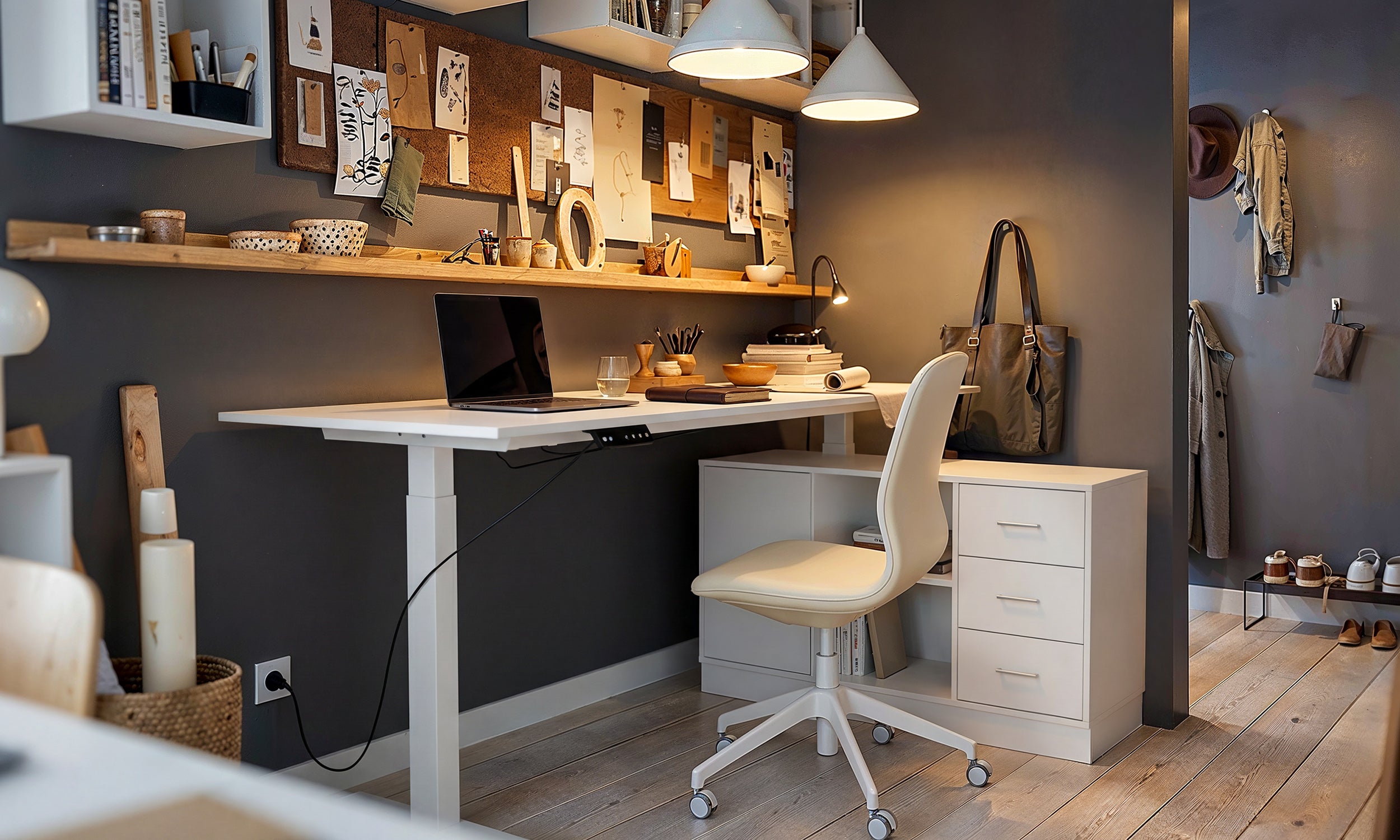
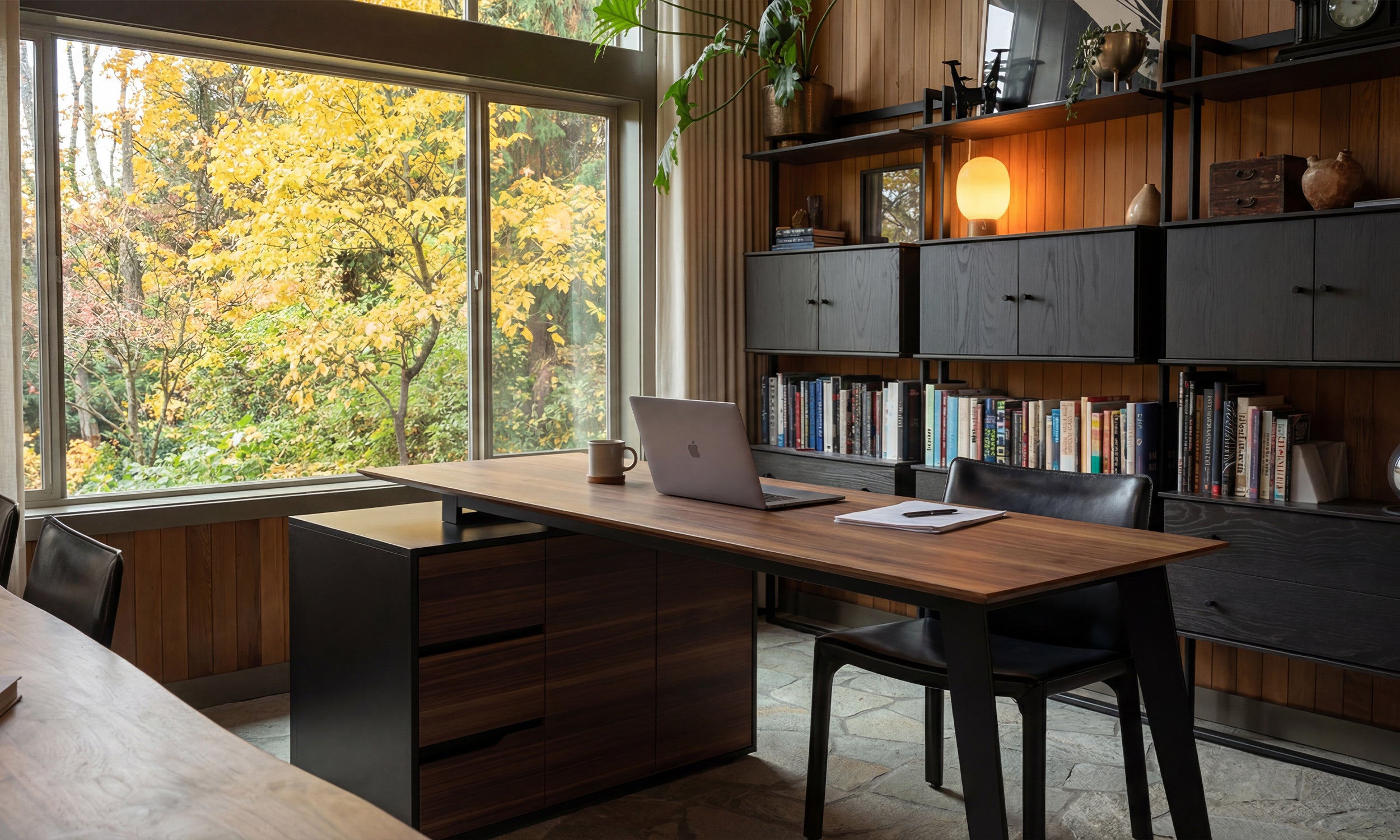
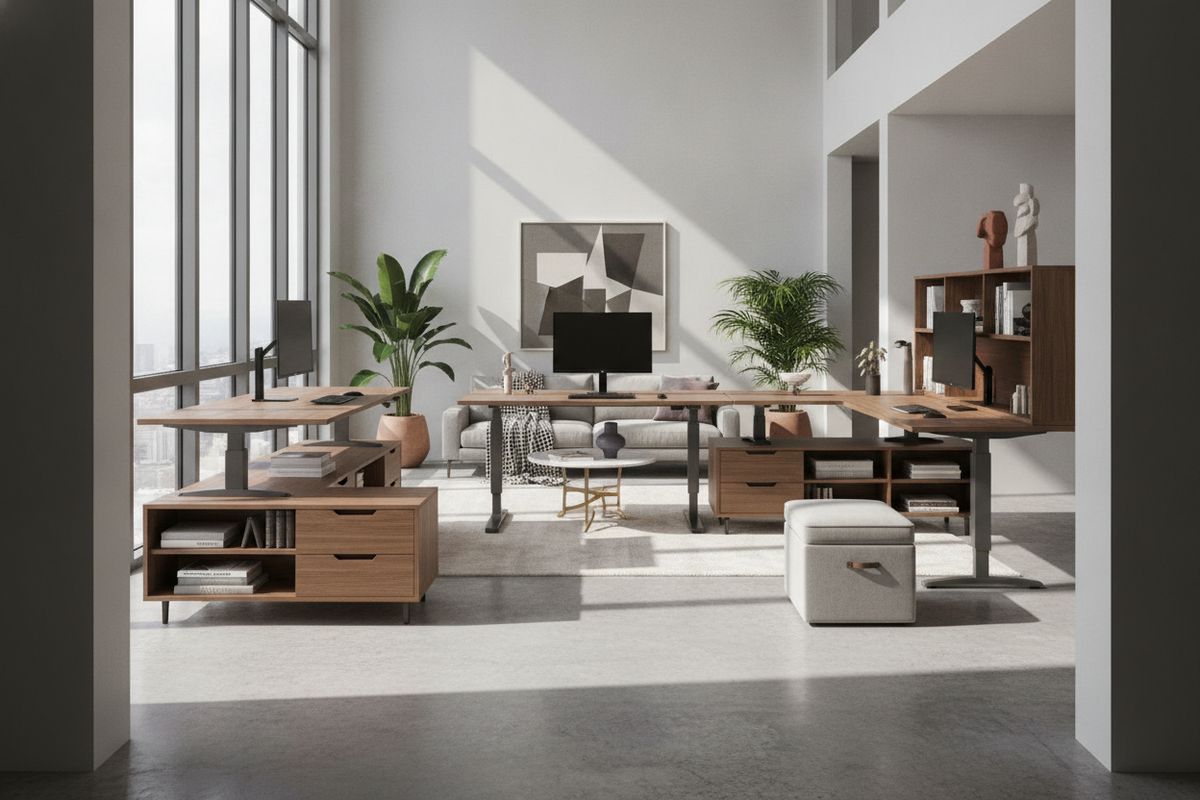
A full height-adjustable convertible desk integrates the lifting columns directly into the primary underframe. Because the entire tabletop elevates as a unified plane, your primary work area, writing materials, lighting, and peripherals move together without altering the proportional relationship between your keyboard and surrounding desktop accessories. For comprehensive spatial installations, models such as a super sized standing desk with electric lift offer continuous expanse, eliminating multi-tiered surface fragmentation while maintaining clean floor lines.
On-Desk Standing Conversion Units
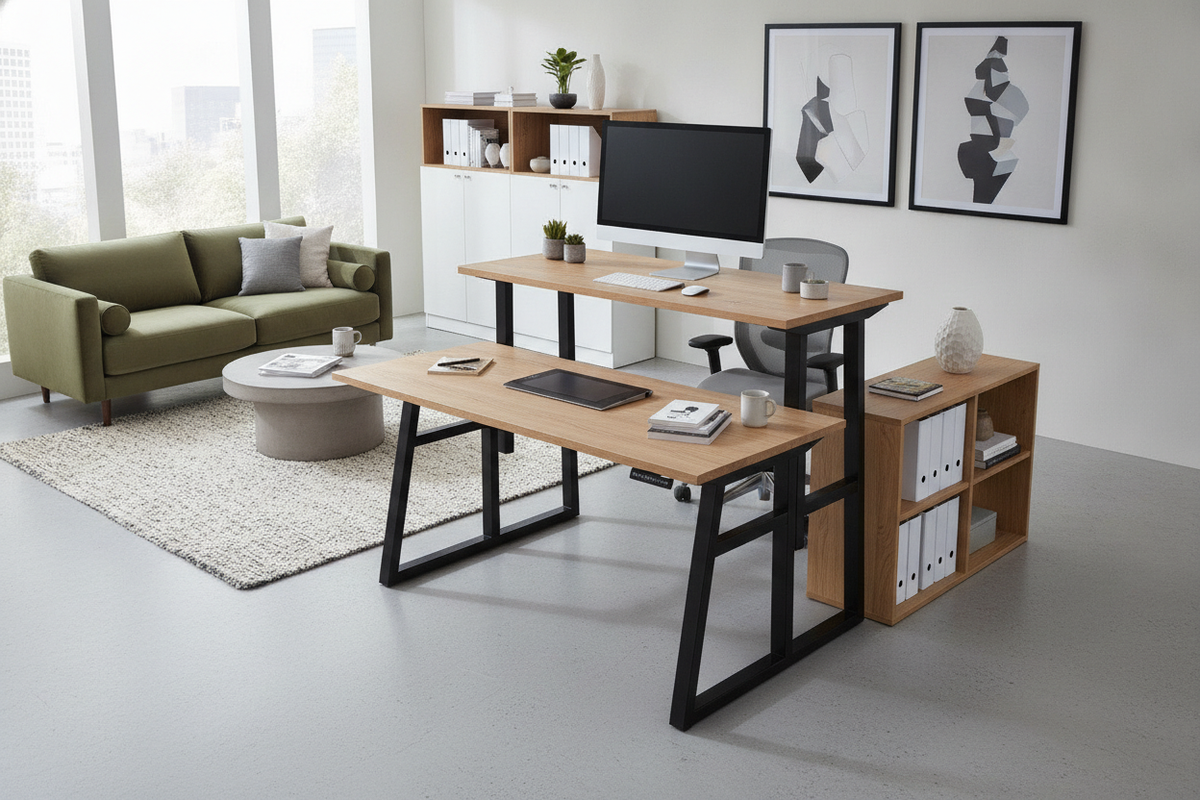
On-desk standing converters, or desk risers, are independent mechanical units placed directly on top of an existing traditional desk. These units typically feature a tiered platform architecture that separates the display surface from a dropped keyboard tray. While converters allow you to retain an existing antique or built-in credenza, they introduce a concentrated footprint on the primary surface and shift the resting height of peripherals slightly upward even when lowered.
Dimensional Tiers and Spatial Envelopes for Convertible Workstations
Planning for a convertible desk standing configuration requires assessing not only static footprint measurements, but dynamic clearance envelopes—the physical volume required when moving between seated and standing positions. Exploring structured standing desk layout ideas helps clarify how vertical transit interacts with surrounding walls, artwork, and window trim.
Compact Workstations for Nooks and Multipurpose Spaces
Compact workstations focus on maximizing vertical efficiency while preserving floor space in mixed-use areas, guest rooms, or alcoves. These units prioritize streamlined base profiles and modest surface depths, making them ideal for single-laptop workflows or slim monitor arm mounts without protruding awkwardly into walkways.
Mid-Size Workstations for Dedicated Home Offices
Mid-size surfaces represent a versatile baseline for dedicated home offices. Providing sufficient width for dual monitors, desk pads, and balanced task lighting, these workstations balance functional surface area with manageable spatial demands. Selecting an option such as an adjustable height standing desk with electric lift system establishes a dedicated productivity zone that integrates comfortably against standard room walls.
Wide-Format Executive Setups for Multi-Display Hardware
Wide-format configurations accommodate expansive peripheral arrangements, reference literature, and desktop storage trays. When deploying multiple large displays alongside external audio monitors or creative tablets, an extended surface like a 71 w height adjustable standing desk provides the necessary structural span and underframe stability to distribute hardware weight across heavy-duty lifting columns.
Mechanical Lift Systems and Structural Stability Considerations
The mechanical foundation of a convertible desk standing platform determines its everyday operational ease and structural rigidity at higher elevations.
Gas-Spring Counterbalance vs. Electric Motor Drives
Manual desktop risers and select basic desks utilize pneumatic gas springs to assist manual elevation. These mechanisms rely on user counterbalancing, where lifting and pressing down engages internal pressurized cylinders. In contrast, electric motor drives utilize motorized lead screws housed within telescoping legs. Motorized designs deliver smooth vertical transit at the push of a button, allowing users to transition without manual physical effort or the risk of jostling delicate peripheral setups.
Base Geometry, Center of Gravity, and Cantilever Stability
As a convertible surface rises, its center of gravity shifts upward, which can amplify mechanical deflection or minor wobbles during typing. Full-frame standing desks mitigate this through extended steel base feet and centered or slightly offset lifting columns. For desktop converters, stability depends on base plate mass and scissor-lift geometry to prevent forward tipping when heavy typing force is applied to extended keyboard trays.
Storage Architecture and Workstation Cable Management
Because moving surfaces cannot accommodate conventional fixed drawers without interfering with knee clearance, storage planning requires a decoupled architectural approach.
Decoupled Storage: Mobile Pedestals, Credenzas, and Side Cabinets
Integrating standalone organizational furniture—such as rolling mobile pedestals, low-profile filing units, and lateral credenzas—allows for generous file and tool organization without adding dynamic payload to the lifting columns. Coordinating these units alongside your desk keeps the visual landscape refined, as detailed in comprehensive advice on designing a standing desk setup that looks good.
Dynamic Cable Spines and Articulation Clearance
Cable management around a convertible workstation must account for dynamic vertical motion. Power strips and peripheral hubs should ideally be mounted beneath the moving surface, leaving only a single heavy-duty power lead and network cable to travel between the desk and the wall outlet. Using an articulated cable spine or flexible mesh sleeve ensures cords glide smoothly during vertical adjustment without snagging against nearby cabinet corners or wall baseboards.
Decision Matrix: Selecting Your Ideal Convertible Standing Configuration
When selecting your setup, evaluate the following structural criteria:
- Existing Furniture Continuity: Choose a desktop converter if you must preserve an integrated architectural counter, built-in cabinetry, or heirloom desk.
- Surface Utility and Aesthetics: Choose a full-frame convertible desk if you require a flush, continuous workspace, clean aesthetic sightlines, and generous knee room across all height settings.
- Hardware Load: Multi-display arrays, heavy studio equipment, and desktop clamp accessories benefit from the unified load distribution and structural rigidity of dedicated motorized frames.
- Spatial Clearance: Ensure overhead shelving, wall art, and window sills provide adequate vertical clearance throughout the full elevation range of your chosen configuration.


Leave a comment
This site is protected by hCaptcha and the hCaptcha Privacy Policy and Terms of Service apply.