

















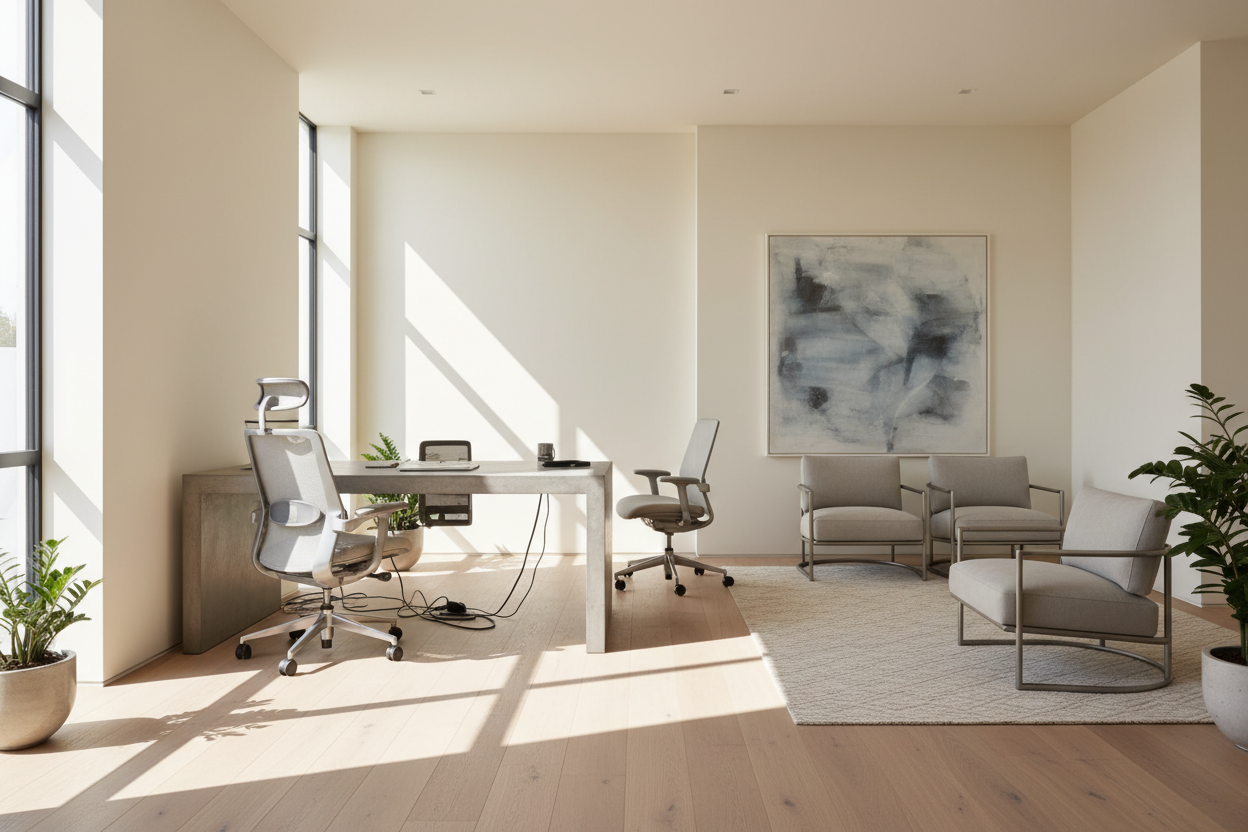
We have all walked into a home office that feels less like a sanctuary of productivity and more like a cluttered storage unit. The dilemma usually isn't the budget; it's the lack of a cohesive plan regarding scale and flow. When selecting office furniture and chairs, the goal is to merge the rigorous demands of ergonomics with the refined aesthetics of residential design. It is not enough for a chair to roll or a desk to have drawers; these pieces must converse with the architecture of your room while supporting your body for eight-plus hours a day.
Key Features to Look For
- Ergonomic Adjustability: Look for seat depth adjustment and synchro-tilt mechanisms, not just height control.
- Material Integrity: Prioritize kiln-dried hardwoods or high-pressure laminates (HPL) over standard particle board for longevity.
- Visual Weight: Ensure the mass of the furniture balances with the room size (e.g., open-leg desks for smaller rooms).
- Abrasion Rating: For upholstery, seek a double rub count of at least 30,000 for daily durability.
Defining the Workspace: Function Meets Form
When curating a workspace, we must look beyond the catalog image. The relationship between your desk and your seating determines your physical health and your mental clarity. This is where office furniture and seating must be viewed as a singular system rather than isolated purchases.
The Desk: Anchor of the Room
The desk acts as the focal point. In luxury interiors, we often move away from heavy, blocky pedestal desks unless the room has the square footage to support that visual mass. Instead, consider a writing table with a "floating" top or a desk with slender metal legs to maintain an airy atmosphere. If you require storage, separate the bulk from the desk by using a credenza placed behind you. This creates a classic "executive triangle" workflow without cluttering your primary surface.
The Chair: Engineering Disguised as Design
Aesthetically, a high-back leather executive chair projects authority, but does it support lumbar curvature? Often, the most sculptural chairs offer the least support. Look for a silhouette that mimics the human spine. High-quality mesh offers breathability and suspension that foam cannot replicate, though top-grain leather provides a tactile warmth that ages beautifully with a natural patina. The key is ensuring the mechanism allows for dynamic sitting—movement is essential for circulation.
Materiality and Texture
Office environments can easily become sterile. To counter this, introduce texture. If your desk is glass or lacquer, pair it with a fabric chair to soften the acoustics and the visual glare. Conversely, if you have a heavy walnut desk, a sleek, polished aluminum chair frame provides necessary contrast. Avoid matching sets; they tend to look commercial. Instead, curate finishes that harmonize—such as pairing matte black hardware on a desk with charcoal upholstery on seating.
Lessons from My Own Projects
I learned a hard lesson early in my career regarding armrest clearance. I once specified a stunning, custom walnut desk with a thick apron (the vertical piece of wood just under the top) for a client. We paired it with a high-end ergonomic chair that had fixed, loop-style arms.
When we installed it, the chair arms hit the desk apron, preventing the client from scooting in close enough to type comfortably. It forced him to lean forward, ruining the ergonomic benefit of the chair. Now, I personally measure the "clearance height" of every chair arm at its lowest setting and compare it against the "knee space height" of the desk. It’s a gritty, unglamorous detail, but if you ignore it, you will ruin the functionality of even the most expensive setup.
Conclusion
Your workspace is an investment in your output and your well-being. By selecting pieces that offer structural integrity and ergonomic support, you elevate the daily ritual of work. Don't settle for the temporary fix; curate a space that commands respect and invites creativity.
Frequently Asked Questions
What is the ideal distance between the desk and the wall behind it?
For a comfortable workflow, you need at least 42 to 48 inches of clearance between the edge of your desk and the wall or credenza behind you. This allows you to slide your chair back and rotate freely without banging into furniture.
Is a mesh or leather chair better for a home office?
This depends on thermal comfort. Mesh is superior for airflow and keeping you cool during long sessions. Leather offers a more luxurious, substantial aesthetic and is easier to wipe clean, but it can retain heat. Choose mesh for function, leather for presence.
How do I mix wood tones in an office?
Identify the undertone of your dominant wood (warm/red or cool/ash). Keep the undertones consistent, but vary the grain tightness or shade. For example, a dark walnut desk pairs beautifully with lighter oak flooring if both share a warm undertone, creating depth without clashing.

Leave a comment
This site is protected by hCaptcha and the hCaptcha Privacy Policy and Terms of Service apply.