





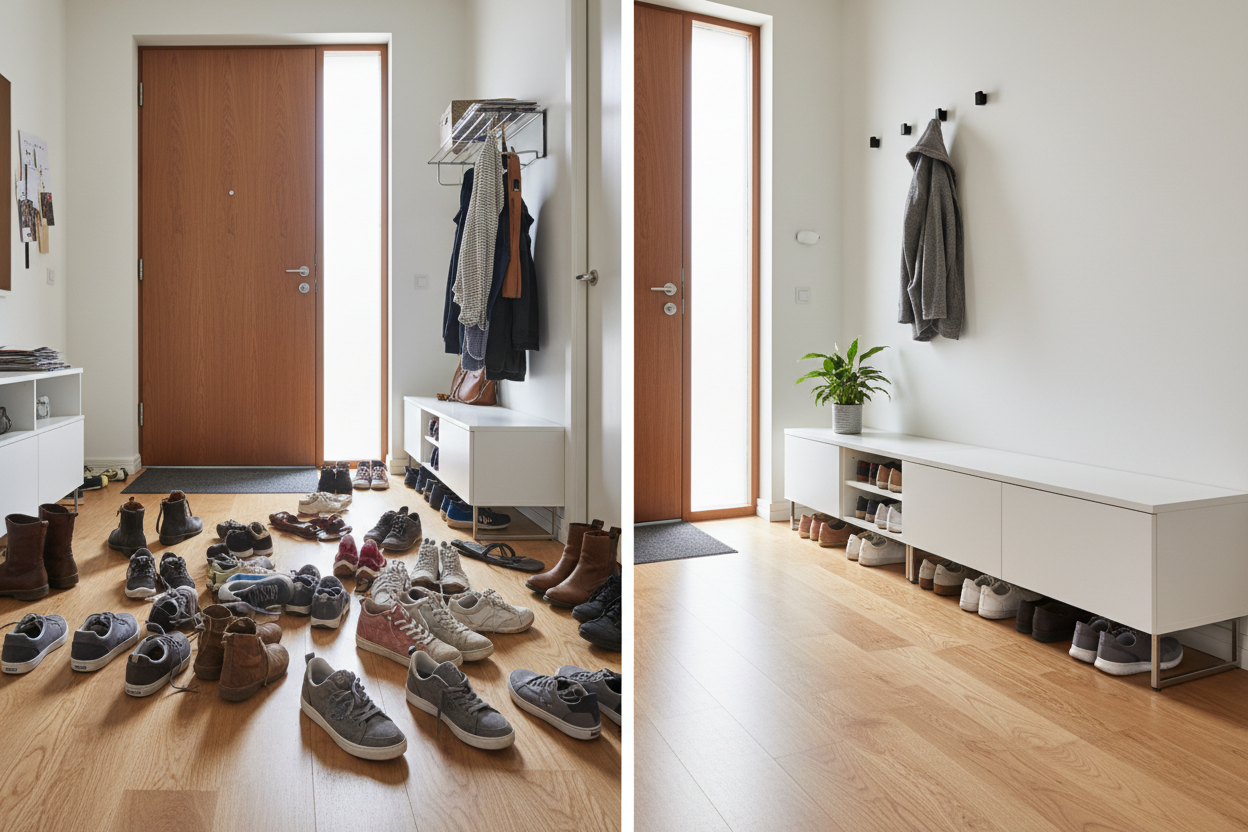
There is arguably no area in the home more prone to instant entropy than the foyer. As a designer, I walk into countless beautiful homes where the architectural impact is immediately undercut by a pile of footwear. The challenge isn't just finding a place to put things; it is selecting entryway shoe storage that respects the flow of traffic while acting as an anchor for your home's first impression.
We often treat the front door as a drop zone rather than a transitional space. The goal is to move away from chaotic piles and toward a curated system that blends ergonomics with high-end joinery principles. Whether you are working with a sprawling foyer or a tight apartment corridor, the solution lies in balancing concealment with accessibility.
Key Features to Look For
Before committing to a piece of furniture, consider these non-negotiable elements to ensure longevity and functionality:
- Ventilation: Closed cabinets must have rear cutouts or slatted fronts to prevent odor buildup and protect leather.
- Adjustable Shelving: Fixed shelves rarely accommodate the height variance between running shoes and tall boots.
- Depth Profile: For narrow spaces, look for tilt-out mechanisms (7-10 inches deep) versus standard swing doors (14-16 inches deep).
- Surface Durability: The top surface should be scratch-resistant (stone or hardwood) to handle keys and mail.
- Ergonomics: The unit should not impede the door swing or reduce the walkway width below 36 inches.
The Architecture of Storage: Form vs. Function
When curating shoe storage furniture for entryway layouts, we must first analyze the volume of the room. A common error is selecting a piece that is visually too heavy for the space. If you have a compact area, a bulky vintage armoire will make the entry feel claustrophobic.
Modern Solutions for Compact Footprints
For urban dwellers, small entryway shoe storage ideas often require vertical thinking. I frequently recommend wall-mounted floating cabinets. By keeping the floor visible underneath the unit, you trick the eye into perceiving more square footage. A sleek, modern entryway shoe storage cabinet with a high-gloss or matte lacquer finish reflects light and disappears into the wall, rather than protruding as an obstacle.
If you are looking for shoe rack ideas for small entryway spaces that don't involve custom millwork, consider the slim, tilt-out shoe cabinet. These are excellent storage solutions for shoes in entryway corridors because they hug the wall. However, ensure they are anchored securely to the studs; the leverage exerted when opening a fully loaded bin can tip a freestanding unit.
The Art of Concealment: How to Hide Shoes
The question I hear most often is: how to hide shoes in entryway areas without making them hard to access? If the storage is difficult to use, the family will revert to kicking shoes off on the mat.
For a seamless look, built-in shoe storage entryway designs are the gold standard. We can integrate these into a larger coat closet system or a bench setup. Speaking of which, entryway bench with shoe storage ideas are fantastic for establishing a designated "donning and doffing" station. Look for benches with a lift-top mechanism or deep drawers rather than open cubbies. Open cubbies tend to look messy visually unless perfectly styled, which is rarely the reality of daily life.
Styling the "Drop Zone"
Your foyer shoe storage should double as a console table. Place a mirror above the unit to bounce light and check your appearance before leaving. Use the surface for a structural lamp or a catch-all tray. This elevates the piece from a mere shoe organizer for entryway utility to a deliberate design statement.
Materiality and Durability
Avoid particle board with cheap paper veneers if you can. The entryway sees high traffic, moisture, and grit. Solid wood, high-quality plywood with hardwood veneers, or metal are superior choices. For front door shoe storage ideas, metal lockers can offer an industrial, rugged aesthetic that withstands abuse, while walnut or white oak cabinets offer warmth and sophistication.
Lessons from My Own Projects
I once designed a custom entryway organizer with shoe storage for a client in a historic brownstone. The hallway was notoriously narrow. We built a beautiful, floor-to-ceiling unit with flush-inset doors to match the wall molding. It looked seamless.
However, I made a critical oversight regarding hardware. We used push-to-open latches to maintain a minimalist look. Within three months, the client called me back. The mechanism was annoying to use when their hands were full of groceries, and they were scuffing the bottom of the pristine white doors with their boots trying to pop them open. We swapped them for discreet, edge-pull handles in unlacquered brass.
The lesson? When planning how to organise shoes at the front door, never sacrifice the ease of opening for pure aesthetics. If it takes two hands to open your shoe cabinet, you won't use it. Also, always account for the "boot height." We ended up having to remove two shelves because the client's winter riding boots didn't fit upright. Now, I always measure the client's tallest pair of boots before finalizing the joinery specs.
Conclusion
Transforming your front door area isn't just about buying a rack; it's about reclaiming the serenity of your home's entrance. Whether you opt for a hidden shoe cabinet entryway or a dual-purpose bench, prioritize materials that last and layouts that breathe. A well-organized entry sets the tone for the rest of the home.
Frequently Asked Questions
How do I stop my shoe cabinet from smelling?
Odor management is vital for any closed shoe storage entryway solution. Ensure your cabinet has ventilation slots in the back panel. I also recommend placing cedar blocks or small charcoal bags inside the drawers, which naturally absorb moisture and odors without the artificial scent of air fresheners.
What is the best depth for a narrow hallway shoe cabinet?
For tight spaces, look for shoe storage solutions entryway units that are between 10 to 13 inches deep. Tilt-out cabinets are specifically designed for this, often protruding only 7 to 9 inches from the wall while still accommodating standard shoe sizes vertically.
How can I organize shoes if I don't have an entryway closet?
If you lack a closet, you need furniture for entryway that acts as one. A tall, armoire-style cabinet or a combination of a wall-mounted coat rack with a sturdy shoe bin for entryway bench underneath can create a functional "mudroom" vibe on a blank wall.

Leave a comment
This site is protected by hCaptcha and the hCaptcha Privacy Policy and Terms of Service apply.