

















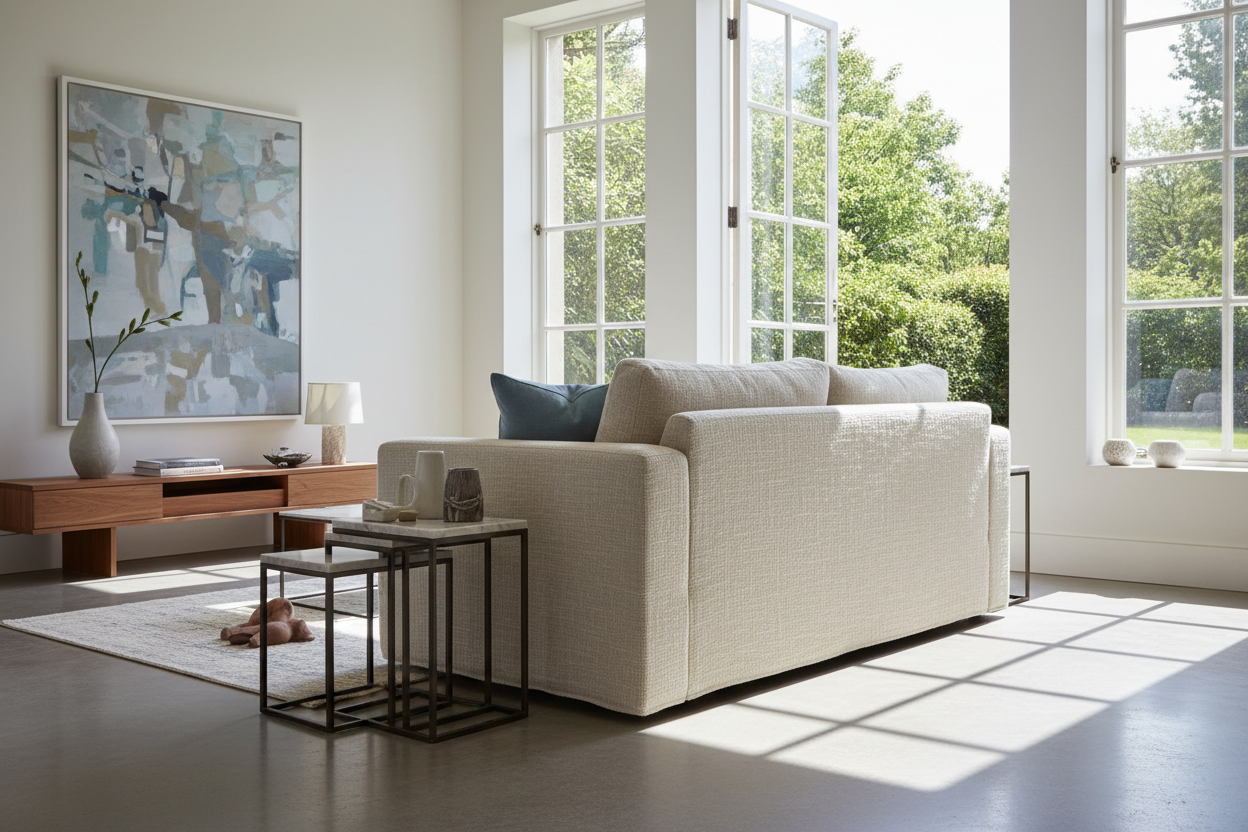
There is a specific frustration that occurs when furnishing a living room: the gap between the scale of a full-sized sofa and the solitude of an armchair. This is where the cloth loveseat thrives. However, many homeowners view this piece merely as a space-filler rather than a standalone design element. Whether you are navigating a tight urban apartment or creating an intimate conversation zone in an open-plan home, selecting the right textile and silhouette is paramount to avoiding a disjointed aesthetic.
Quick Decision Guide: Key Features to Look For
- Rub Count (Durability): For a frequently used fabric loveseat, look for a double-rub count of at least 15,000 (residential) or 30,000 (heavy duty/pets).
- Suspension System: Eight-way hand-tied springs offer the gold standard for longevity, while sinuous springs provide a firmer, more modern sit.
- Cushion Fill: A high-density foam core wrapped in down provides the visual softness of a relaxed aesthetic without the constant need for fluffing.
- Frame Construction: Kiln-dried hardwood is non-negotiable for preventing warping over time.
Selecting the Right Textile: Beyond Color
When clients ask me to source a fabric loveseat sofa, the conversation immediately turns to the tactile experience. Unlike leather, which offers a slick, cool surface, cloth provides warmth and acoustic absorption. However, not all weaves are created equal.
Performance vs. Natural Fibers
If this piece is destined for a high-traffic family room, a fabric loveseat upholstered in Crypton or a high-performance velvet is essential. These materials resist staining and maintain their pile despite heavy use. Conversely, for a formal sitting room, a loveseat fabric sofa in Belgian linen or a cotton-blend bouclé adds an element of sophisticated luxury, though it requires more attentive maintenance.
The "Matching Set" Debate
One of the most common questions I receive on the showroom floor is whether to buy a matching cloth couch and loveseat. In contemporary interior design, the "suite" look often feels dated and heavy.
Instead of purchasing a perfectly matched fabric sofa and loveseat, I recommend coordinating through texture and palette. If your main sofa is a neutral chenille, consider a fabric loveseat for sale in a complementary tone with a distinct weave, such as a herringbone or tweed. This creates a curated, collected-over-time appearance rather than a "catalog" look.
Visual Weight and Silhouette
When pairing fabric sofas and loveseats, pay attention to the leg style and arm height. If your main sofa is a heavy, skirted piece, a fabric couch and loveseat combination works best if the loveseat has exposed legs to allow light to pass underneath. This balances the visual weight of the room and prevents the space from feeling overcrowded.
Space Planning & Ergonomics
Fabric love seats are deceptively difficult to place. A common error is pushing them against a wall in a large room, which leaves them looking like an afterthought. In open concepts, float the loveseat perpendicular to the main sofa to define the living area. Ensure there is at least 18 inches of clearance between the coffee table and the seat edge for comfortable legroom.
Lessons from My Own Projects: The "Loose Weave" Regret
I want to share a candid lesson from a project I worked on three years ago. I specified a stunning, chunky-weave fabric loveseat sofa for a client’s reading nook. It was visually incredible—highly textural and organic.
However, I failed to account for the client’s lifestyle details—specifically, that they often wore denim with metal rivets and had a small terrier. Within six months, the loose weave had snagged in multiple places, creating unsightly loops that ruined the clean lines of the piece.
The lesson? Always test the "snag factor." Now, when I inspect a cloth sofa and loveseat, I run a key or a ring over the sample swatch. If it catches even slightly, I relegate that fabric to pillows or drapes, never the seat itself. Durability isn't just about stain resistance; it's about structural integrity against friction.
Conclusion
Integrating a cloth loveseat into your home is an exercise in balancing function with textile artistry. By prioritizing frame quality and stepping away from the matching set mentality, you can secure a piece that offers both comfort and enduring style.
Frequently Asked Questions
How do I clean a cloth loveseat?
Check the cleaning code on the tag found under the cushions. "W" means water-based cleaners are safe, "S" requires solvents (dry clean only), and "WS" allows for both. Never apply water to an "S" code fabric, as it will leave permanent water rings.
What is the standard size of a fabric loveseat?
Most loveseats range between 52 and 72 inches in length. If you are looking at a fabric couch and loveseat combo, ensure the loveseat is significantly smaller than the sofa to maintain visual hierarchy.
Can I mix a leather sofa with a fabric loveseat?
Absolutely. In fact, this is a preferred designer strategy. The contrast between the sleekness of leather and the softness of a fabric loveseat adds depth and interest to the room.

Leave a comment
This site is protected by hCaptcha and the hCaptcha Privacy Policy and Terms of Service apply.