


Finding an attractive discount during a promotional furniture event is satisfying, but navigating a cheap desk sale requires an objective eye for structural integrity and functional utility. A low price tag should never mean settling for a wobbly work surface, peeling edge banding, or cramped legroom. When evaluating budget-friendly office furniture, looking closely at core material composition, frame geometry, and integrated organizational utility ensures you acquire a workstation that supports daily productivity comfortably over the long haul.
Deconstructing Value in a Cheap Desk Sale: Quality Indicators vs. Marketing Markdowns
Retail promotional events often showcase steep markdowns, yet dramatic price drops can sometimes mask lightweight builds or fragile joinery. Discerning shoppers look beyond promotional tags to examine the physical markers of durability before making a purchasing decision. A truly cost-effective desk balances accessible pricing with solid structural design, providing reliable support for computer monitors, writing materials, desktop peripherals, and daily workflow demands.
To differentiate genuine value from short-lived bargains, inspect how individual structural components connect. Desks engineered with reinforced under-table stretchers, wide mounting plates, and sturdy hardware fittings hold up far better against dynamic daily pressure than models relying solely on basic unreinforced butt joints. Reviewing foundational ergonomic workstation setup truths helps anchor your search in practical everyday comfort, posture support, and long-term usability rather than promotional marketing hype.
In addition, consider the thickness and density of the main desktop panel. A thin surface board supported by inadequate span brackets will eventually sag under the constant weight of dual monitors or heavy storage accessories. Evaluating the underside framework gives you clear insight into whether the furniture can handle day-to-day pressure without bowing over time.
Spatial Dimension Tiers: Matching Desk Footprints to Room Layouts
A primary factor in choosing an affordable desk is matching its physical footprint to your available room dimensions and circulation paths. Budget furniture options generally span three distinct spatial tiers, each tailored to specific floor plans and personal workflows:
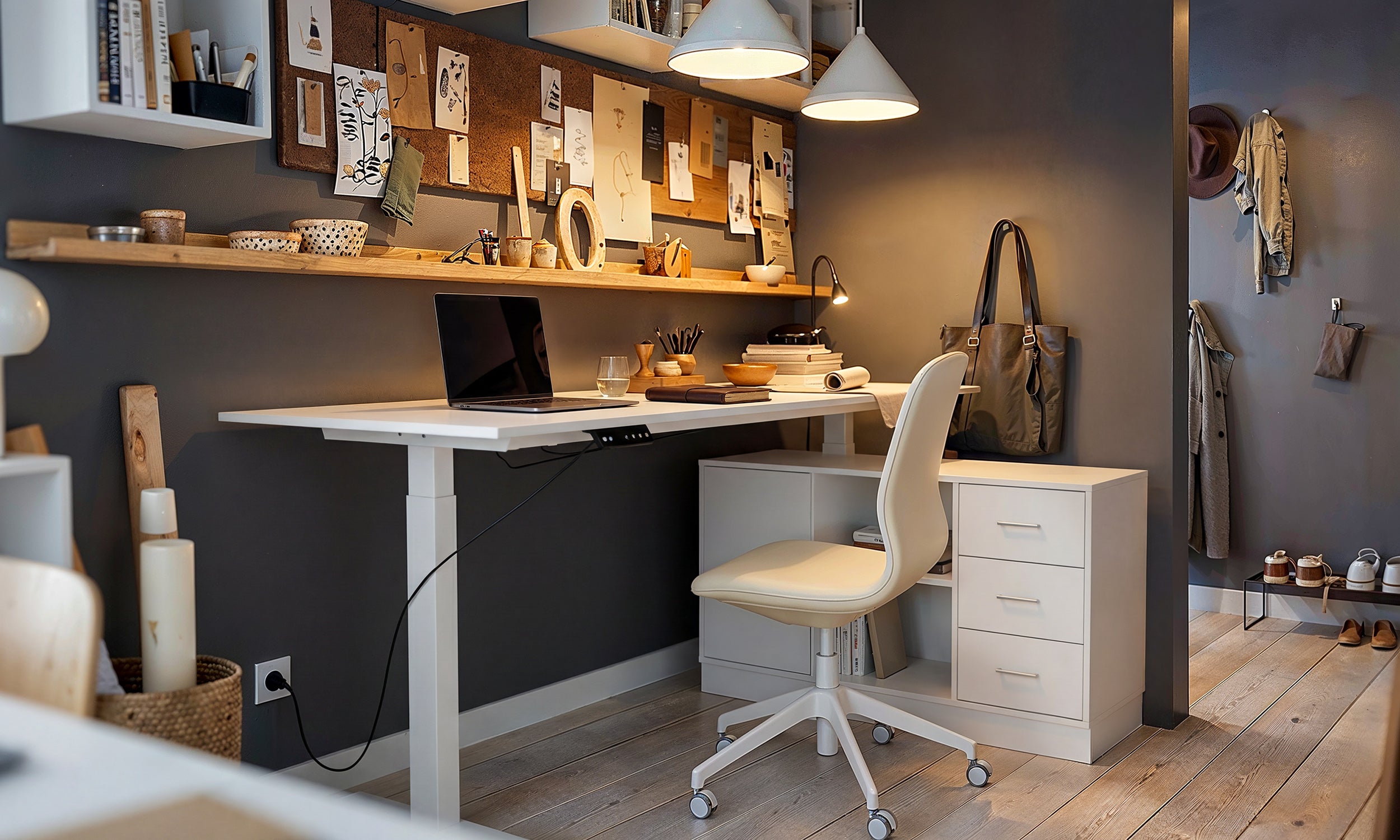
- Compact Writing Desks: Tailored for narrow alcoves, bedroom nooks, or secondary study zones. These minimalist profiles keep visual and floor clutter minimal while providing sufficient tabletop depth for a single laptop, mousepad, and notebook.
- Mid-Size Linear Workstations: Suited for dedicated home offices or multi-use study areas. These desks offer wider leg clearance beneath the tabletop, comfortably accommodating desktop monitor risers alongside essential office accessories and stationery organizers.
- Corner and L-Shaped Configurations: Engineered to capitalize on underutilized corner real estate. Selecting a corner desk with large storage enables a clear division between computer screens and open writing surfaces without encroaching on central room traffic lanes.
Before purchasing, measure your room's entryway, door swing arcs, and nearby power outlet locations. Ensuring adequate clearance behind your office chair is just as vital as confirming the outer dimensions of the desk itself, preventing cramped seating postures and restricted movement throughout the day.
Frame Geometry and Material Selection for Budget Workstations
The materials and engineering specified for budget workstations dictate both their everyday resilience and visual longevity. High-density engineered wood boards finished with heat-sealed melamine or high-pressure laminate protective veneers offer dependable resistance against moisture rings, accidental scuffs, and daily friction. Compared to basic paper-wrapped surfaces, robust laminates retain their clean appearance over extended daily use.
Equally critical is the supporting frame architecture. Powder-coated tubular steel leg systems provide substantial load-bearing capacity without introducing excessive bulk to a room. When evaluating metal-framed tables, look for diagonal cross-braces or triangular corner gussets situated beneath the desktop surface, as these geometric additions effectively counter side-to-side wobble and joint stress. Once you have selected a structurally sound foundation, personalizing the workspace through thoughtful decorating an office desk strategies transforms a budget-conscious table into an inviting, polished, and professional environment.
Edge banding quality is another subtle detail that reveals overall manufacturing standards. Look for thick PVC or ABS edge banding that is cleanly adhered to the panel edges. High-grade edging protects the inner composite core from humidity absorption and prevents peeling along contact points where your forearms rest.
Storage-Integrated Desks: Maximizing Utility on a Budget
Purchasing standalone filing cabinets, drawer units, and organizer bins can quickly inflate the total cost of outfitting a home workspace. Investing in desks with integrated storage configurations offers an economical solution that consolidates multiple pieces of functional furniture into a single cohesive purchase.
Integrated storage designs come in several practical configurations:
- Pedestal and Box Drawers: Keep stationery, charging cables, external drives, and personal documents neatly organized out of view while keeping the desktop clear for focused tasks.
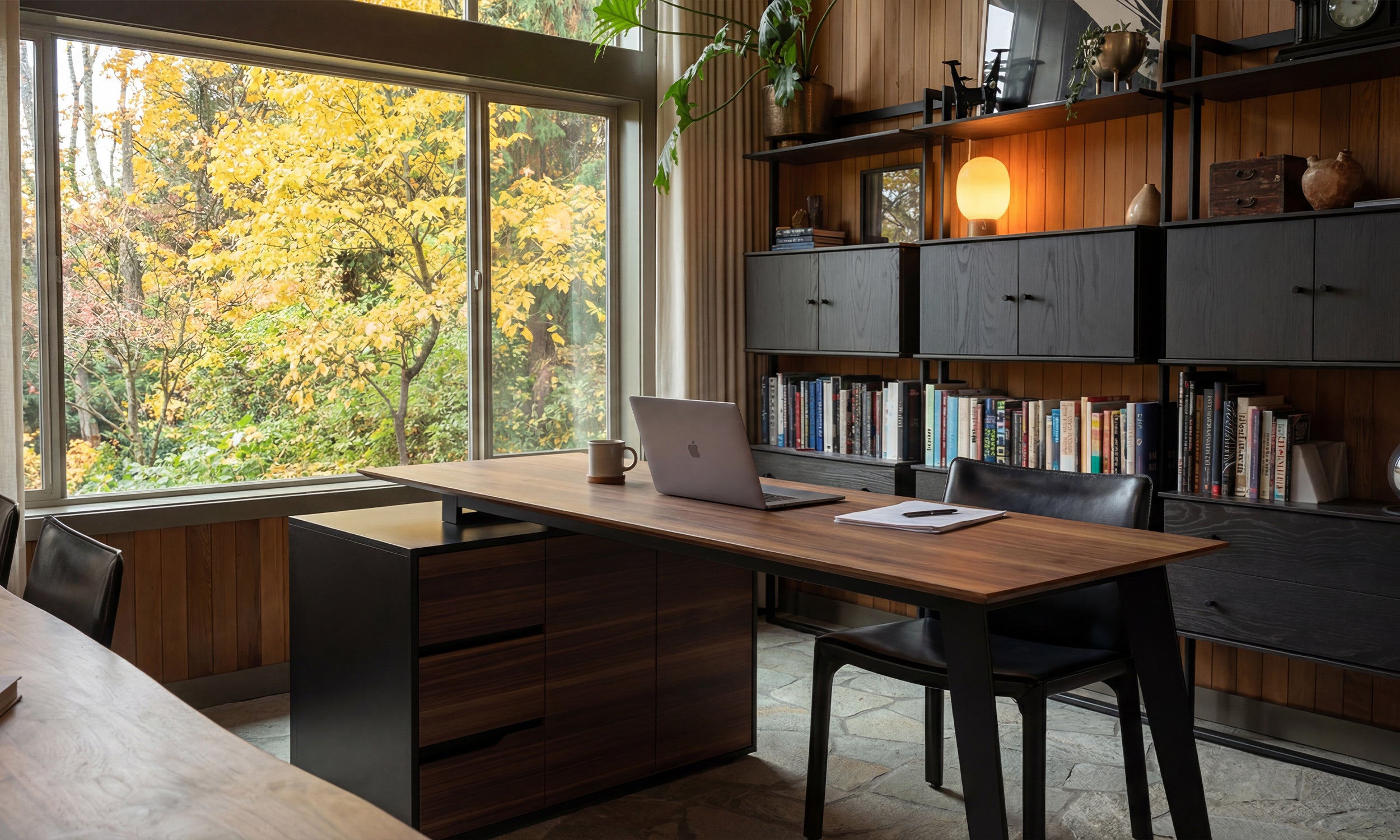
- Integrated Credenza Desks: Combining a full-length work surface with enclosed lower storage, an office storage cabinet with desk creates a unified workstation capable of concealing peripheral equipment, paperwork archives, and reference materials behind flush cabinet doors.
- Vertical Hutches and Overhead Shelves: Capture vertical wall space directly above the work surface, expanding storage capacity for books, plants, and task lighting without occupying valuable floor space.
When selecting a storage-integrated desk, verify drawer slide mechanics and shelf weight distribution. Smooth-glide drawer tracks and adjustable internal shelving give you the flexibility to reconfigure compartments as your office hardware and storage requirements evolve.
Assembly Mechanics, Hardware Integrity, and Maintenance Strategies
Because most promotional budget furniture arrives flat-packed, overall stability depends heavily on proper assembly mechanics and quality hardware components. Metal-to-metal cam locks, wooden alignment dowels, and pre-drilled threaded inserts ensure tight, rigid seams between adjoining panels, preventing connection points from loosening under routine shifting.
During the assembly process, keep connecting bolts hand-tight until the entire frame has been squared, and then systematically tighten each fastener in a balanced sequence to ensure uniform weight distribution across all joints. Ensure the desk includes adjustable leveling glide feet, which compensate for uneven floorboards, eliminate annoying rocking, and protect delicate flooring from scratches. Once your setup is complete, simple practices like wiping surfaces with non-abrasive cloths, managing cable loads, and periodically checking hardware tightness will keep your workstation sturdy for years, making styling a compact workstation both rewarding and enduring.


Leave a comment
This site is protected by hCaptcha and the hCaptcha Privacy Policy and Terms of Service apply.