

















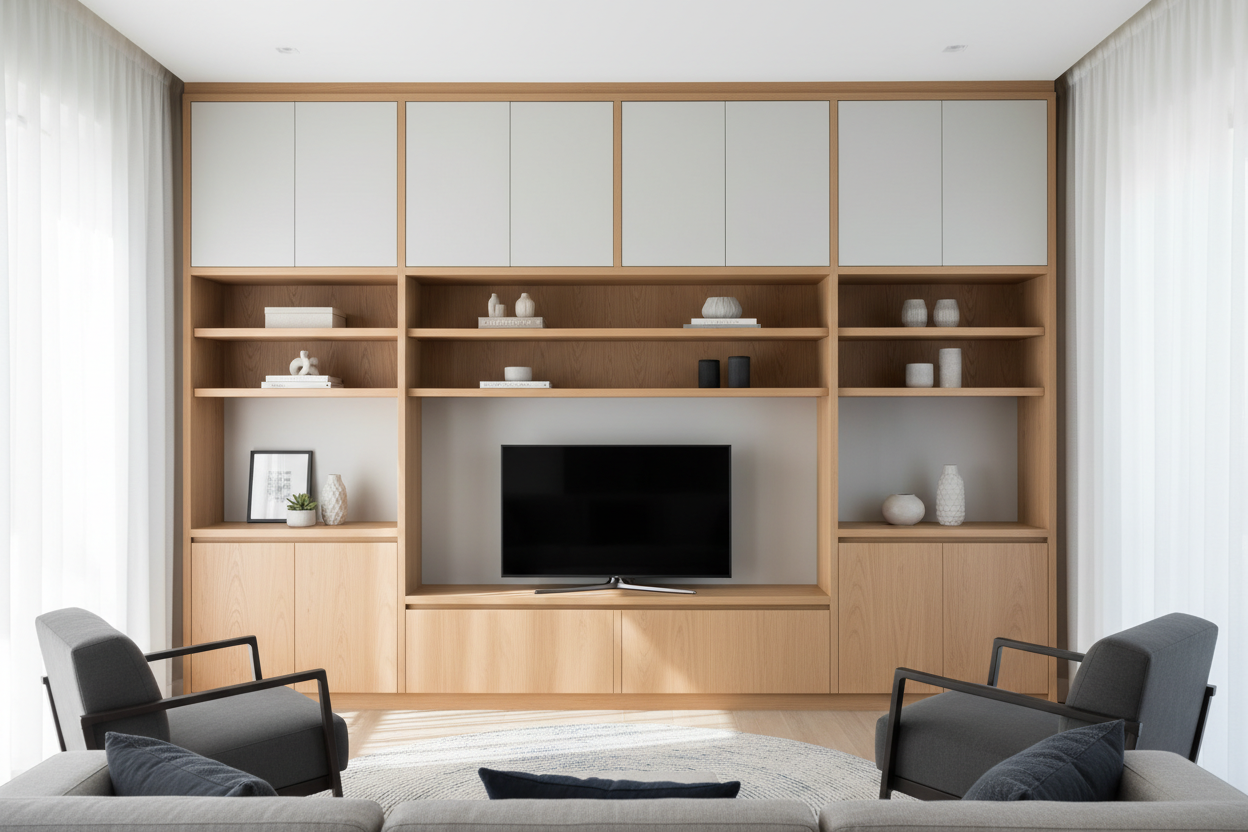
We have all stared at a blank living room wall, knowing it needs something, but dreading the visual clutter that usually follows. You buy a beautiful open bookcase, fill it with your favorite things, and suddenly the room feels chaotic. The secret to balancing display and concealment is mastering the cabinet and shelf combination. It gives you the visual breathing room of open display with the hardworking utility of closed doors. Here is how to plan, scale, and style these units so your home looks curated, not crowded.
Quick Decision Guide
- Aim for a 70/30 ratio: Keep 70 percent of your items behind closed doors and 30 percent on open display to prevent visual fatigue.
- Watch your depth: Lower bases should be 18 to 24 inches deep, while upper tiers should sit between 12 and 15 inches to avoid feeling top-heavy.
- Anchor the base: Darker or heavier materials should sit at the floor level, drawing the eye up to lighter open shelving.
- Leave negative space: Resist the urge to pack every inch. A well-styled unit needs empty space to let your objects breathe.
Space Planning for North American Homes
In standard suburban family rooms or open-concept apartments, furniture needs to work overtime. You need a place to hide the Wi-Fi router, board games, and extra throw blankets, but you also want to display your ceramics and travel books.
Nailing the Proportions
When pairing cabinets and shelves, the transition between the two is critical. A standard ceiling height of eight to nine feet handles a tall unit beautifully, provided the lower section is deeper than the top. This stepped-back silhouette prevents the furniture from looming over the room. If you are working with a narrow hallway or a small den, opt for a streamlined cabinet with shelving built directly into a metal or slender wood frame to minimize visual bulk.
Style & Coordination
Storage should never look like an afterthought. Whether you are leaning into a warm mid-century modern aesthetic or a crisp transitional vibe, the materials you choose dictate the room's mood and visual weight.
Blending Storage Shelving and Cabinets
If you want a high-end, built-in look without the custom carpentry price tag, match your storage shelving and cabinets to your existing baseboards or wall color. Painting a freestanding unit the exact same shade as your walls tricks the eye, making the piece feel like architecture rather than bulky furniture. Conversely, mixing materials—like a solid walnut base paired with matte black metal upper shelves—adds texture and breaks up a long, monotonous wall.
Designer's Honest Take
Early in my career, I designed a massive, wall-to-wall open bookcase for a client's main family room. It looked incredible on installation day. Six months later? It was a nightmare. Every single shelf was covered in dust, stray mail, and kids' toys. The client hated it, and I learned a hard lesson about how people actually live.
Since then, I rarely specify purely open units for high-traffic areas. A hybrid approach is always better. However, I will be honest: finding a pre-made unit with high-quality hinges on the lower doors can be tough. Many big-box stores use cheap European hinges that sag after a year. Always check the door alignment in the showroom, and if you are buying online, read the reviews specifically looking for complaints about the doors. If the doors do not sit flush, the whole piece looks cheap, no matter how beautifully you style the top.
Frequently Asked Questions
How deep should a cabinet and shelf unit be?
For maximum utility, the lower portion should be 18 to 20 inches deep to accommodate larger items like record players or storage bins. The upper shelves should be shallower, ideally 12 to 14 inches deep, to keep the piece from feeling imposing.
How do I style shelves cabinets without looking messy?
When styling shelves cabinets, group items in odd numbers (threes and fives) and vary the heights. Use books both vertically and horizontally to create platforms for smaller objects. Most importantly, leave at least 30 percent of the shelf empty.
Is engineered wood okay for storage units?
Yes, high-quality engineered wood with a real wood veneer is incredibly stable and resists warping better than solid wood in climate-controlled homes. Just avoid cheap particleboard, which will bow under the weight of heavy books.

Leave a comment
This site is protected by hCaptcha and the hCaptcha Privacy Policy and Terms of Service apply.