

















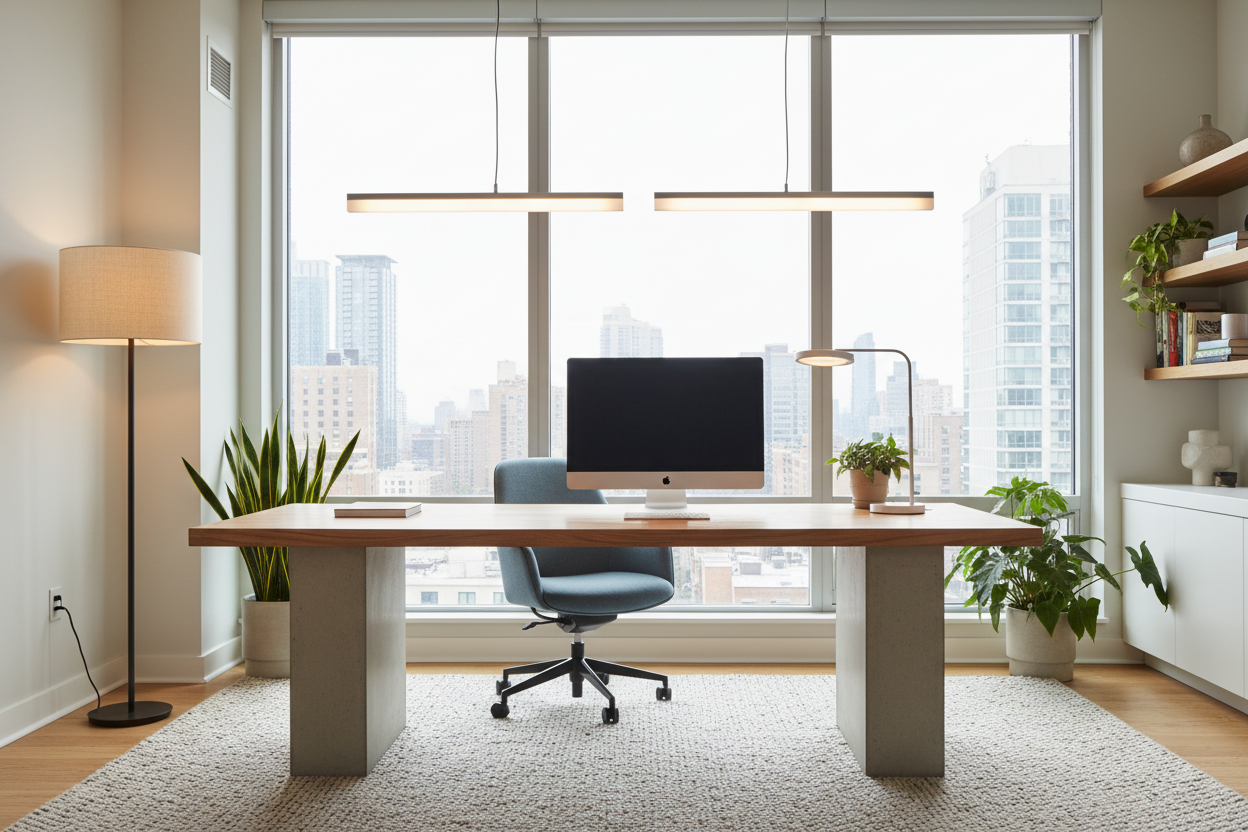
We often obsess over the ergonomics of our chair or the height of our desk, yet we frequently neglect the one element that dictates how we perceive the entire room: illumination. As an interior designer, I see clients working in spaces that are either cave-like or clinically harsh. The result is almost always the same—headaches, fatigue, and a drop in productivity. Curating the best home office lighting for eyes is not merely about buying a lamp; it is about sculpting light to reduce visual fatigue while maintaining a sophisticated aesthetic.
Quick Decision Guide: Key Features for Visual Comfort
- Color Temperature (Kelvin): Aim for 4000K to 5000K for task areas to mimic daylight and improve focus, switching to warmer tones (2700K) for ambient evening light.
- Color Rendering Index (CRI): Look for a CRI of 90+ to ensure colors look true and to reduce the subtle strain of your brain compensating for dull spectrums.
- Adjustability: Prioritize fixtures with articulating arms or dimming capabilities to control glare and intensity based on the time of day.
- Glare Control: Select fixtures with diffusers, matte finishes, or deep shades that hide the bare bulb from direct lines of sight.
The Art of Layering Light
In high-end residential design, we never rely on a single light source. A single overhead fixture creates harsh shadows and flattens the room's depth. To create the best lighting for eyes in office environments, you must employ a three-tier approach: ambient, task, and accent lighting.
Ambient Lighting: The Foundation
This is your general illumination. Avoid the dreaded "grid" of recessed can lights directly over your chair, which causes shadows on your work surface. Instead, aim for indirect lighting that bounces off the ceiling or walls. Soft, diffused pendants or wall sconces help wash the room in light without creating hot spots.
Task Lighting: Precision and Function
This is where the best office lights for eyes truly shine. A dedicated task lamp is non-negotiable. However, the position is critical. If you are right-handed, place the lamp on your left side to prevent your hand from casting shadows across your notepad or sketch. The fixture should have a focused beam spread that illuminates the work surface without spilling glare onto your monitor screen.
Technical Specifications: CRI and Kelvin
Design is in the details. When specifying office lighting to reduce eye strain, I look closely at the Color Rendering Index (CRI). A low CRI (below 80) makes wood grains look muddy and navy blues look black. For a home office, especially if you work with physical samples or finishes, you need a high CRI (90-95).
Furthermore, consider tunable white light. Our circadian rhythms rely on light cues. A fixture that allows you to shift from cool, blue-enriched light in the morning to warm, amber light in the late afternoon helps maintain your sleep cycle and reduces the harsh contrast as the sun goes down.
Bias Lighting: The Screen Savior
One of the most overlooked aspects of visual ergonomics is the contrast ratio between your bright monitor and the dark wall behind it. This contrast forces your iris to constantly open and close, leading to rapid fatigue. Bias lighting—placing a soft LED strip behind your monitor—balances this contrast. It creates a soft halo that acts as a visual anchor, significantly reducing strain during long sessions.
Lessons from My Own Projects
I want to share a specific realization I had while designing my own home studio last year. I had purchased a stunning, high-gloss brass task lamp. It was sculptural and beautiful—a true statement piece. However, after three days of drafting, I realized I had a splitting headache.
The issue wasn't the bulb; it was the finish. The glossy brass base was reflecting the bulb's glare directly into my peripheral vision every time I leaned forward. It was a subtle, piercing reflection I hadn't accounted for. I swapped it for a matte black architectural lamp with a deep cowl that completely hid the light source. The relief was instant. It taught me that when it comes to the best home office lighting for eyes, the material of the fixture is just as important as the quality of the bulb. Matte finishes absorb stray light; glossy finishes amplify it.
Conclusion
Transforming your workspace isn't just about aesthetics; it's about longevity. investing in high-quality, layered lighting allows you to work longer and more comfortably. By balancing technical specifications with thoughtful placement, you can create a sanctuary that supports both your focus and your wellbeing.
Frequently Asked Questions
What is the best color temperature for office work?
For most administrative and computer work, a cool white light between 4000K and 5000K is ideal as it promotes alertness. However, having the ability to dim to a warmer 3000K in the evening is crucial for winding down.
Can LED lights damage my eyes?
High-quality LEDs are safe, but cheap LEDs often have an invisible "flicker" that causes eye strain and migraines. Always choose LEDs labeled as "flicker-free" with a high CRI to ensure visual comfort.
Where should I position my desk lamp to avoid glare?
Position the lamp below eye level and to the side of your monitor, not directed at the screen. The goal is to illuminate your documents, not the glass of your display.

Leave a comment
This site is protected by hCaptcha and the hCaptcha Privacy Policy and Terms of Service apply.