

















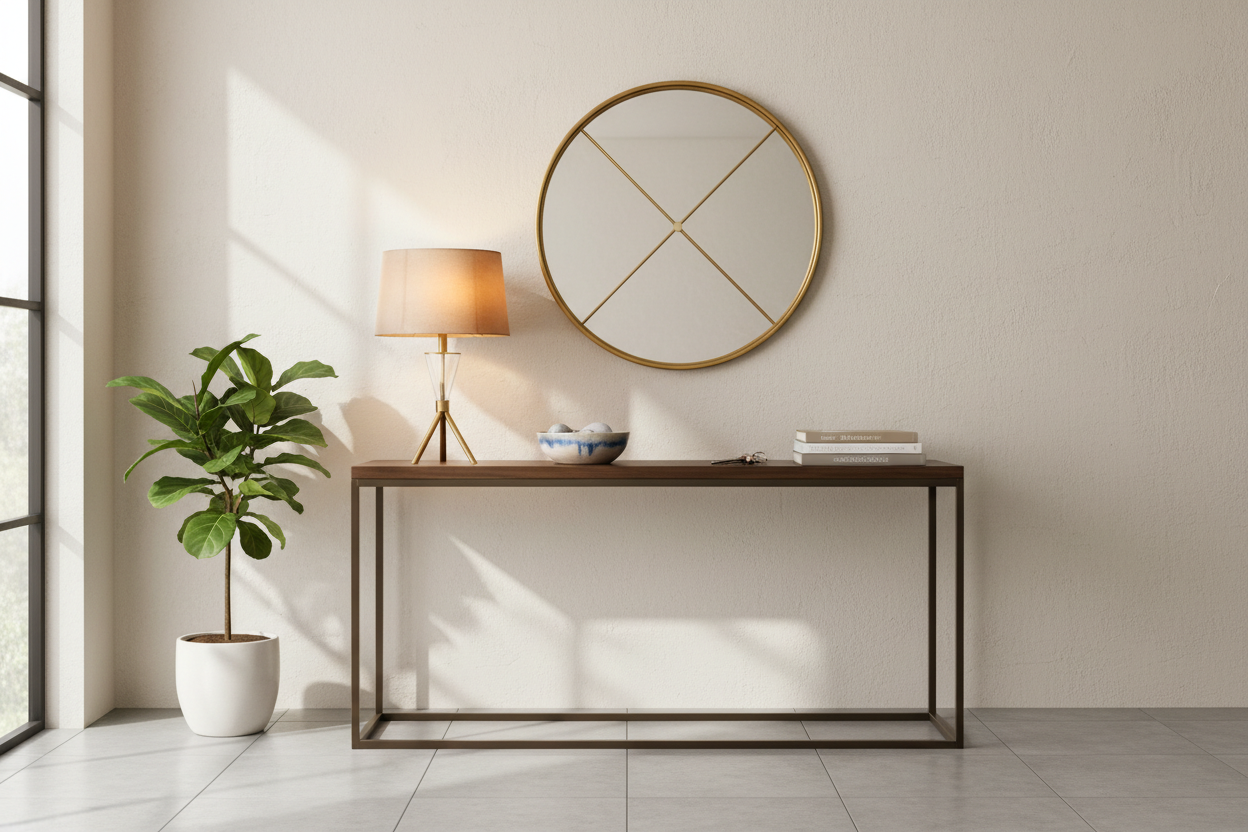
Your home’s entrance is the psychological transition point between the outside world and your personal sanctuary. It sets the tone for the rest of the house, yet it often becomes a chaotic dumping ground for mail, shoes, and miscellaneous clutter. The solution usually isn't a full renovation, but rather the strategic placement of a door entry table. This piece of furniture serves a dual purpose: it anchors the space visually and acts as the designated command center for your daily departures and arrivals.
Finding the right balance between aesthetics and utility is the real challenge. You want something that screams style when guests walk in, but you also need a functional drop zone. I remember spending years tossing my keys onto a kitchen counter that was twenty feet away from the door. It wasn't until I installed a dedicated surface right at the threshold that my morning panic over lost keys finally subsided. That simple addition changed the flow of my entire morning routine.
Assessing Your Space and Layout
Before you fall in love with a vintage piece online, you have to understand the spatial constraints of your foyer. Front door entry tables come in every conceivable shape, but your specific hallway width dictates what is actually possible. If you have a grand foyer, a round center table might work, but most of us are working with narrow corridors or tight corners.
For standard hallways, a console table front entrance setup is the go-to standard. These tables are typically long and shallow—usually between 10 to 14 inches deep—allowing for traffic flow without hip-checking the furniture every time you walk by. The height is equally important; standard console height is around 30 to 33 inches, which aligns comfortably with the hand’s natural reach for dropping off items.
Solving the Tight Squeeze
Space planning gets tricky in smaller homes or apartments. If your door opens directly into a wall or a very narrow passage, you might think you don't have room for furniture. This is where the entryway table behind door concept comes into play. These are ultra-slim tables, sometimes only 6 to 8 inches deep, designed to sit in the dead space behind the door swing. While you can't place tall lamps here (the door handle would hit them), it provides just enough surface area for a mail sorter and a key dish.
Another option for cramped quarters is a small table next to front door. This doesn't have to be a console. A demi-lune (half-moon) table or even a tall plant stand with a flat top can suffice. The goal is to have a surface within arm's reach of the lock so you can set down groceries or a coffee cup while you manage the door mechanism.
Functionality: The Drop Zone Essentials
A table is just a flat surface until you give it a job. The primary function of any front entry table is to catch the things we carry in our pockets. Without a designated vessel, these items migrate all over the house. A table for keys by door is non-negotiable for an organized home. You don't need a massive bowl; a small ceramic dish, a leather tray, or a decorative box works perfectly. This contains the clutter visually and creates a habit loop: walk in, keys in the bowl.
Lighting plays a massive role here as well. A console table entrance hall setup often benefits from a table lamp or a pair of sconces above it. Entryways are notoriously dark, and having a soft light source creates that warm "at home" feeling immediately upon entry. If you lack an outlet nearby, consider a battery-operated lamp or installing a mirror above the table to reflect ambient light from other rooms.
Styling Your Entryway to Feel Like Home
Once the functional aspects are handled, the fun part begins. An at home entry table should reflect your personality. It is the first thing you see, so it should be something you enjoy looking at. The "Rule of Three" is a reliable design principle here: group three items of varying heights to create visual interest. For example, a tall lamp, a medium-sized framed photo, and a low stack of books with a small succulent on top.
Don't ignore the space underneath the table. If you select a leggy console table, the empty space below can look unfinished. Baskets are the best friends of front entry tables. A pair of woven baskets tucked underneath can hide umbrellas, dog leashes, or shoes, keeping the floor clear while adding texture to the vignette.
Alternative Entrances
We often focus heavily on the main front door, but many families enter through a garage, mudroom, or side door. These spaces deserve attention too. A side entry table is often more utilitarian than the formal front one. Durability matters here. You might opt for a metal or distressed wood table that can handle a damp grocery bag or a muddy backpack.
For these secondary entrances, vertical storage often trumps horizontal display space. A table with drawers is superior here, allowing you to hide batteries, flashlights, and garage door openers. Even in these casual spaces, maintaining a clear surface for the immediate "drop" is essential for keeping the rest of the house organized.
Material Matters
High-traffic areas take a beating. When selecting your table, consider what will happen when it gets bumped by a vacuum cleaner or splashed with rain from a wet coat. Glass tops are elegant and make small spaces feel larger, but they show every fingerprint and dust mote. Solid wood or metal offer better longevity for a busy family home. If you have a radiator near the door, be wary of solid wood that might warp; stone or metal might be a safer choice for those specific micro-climates.
Ultimately, the perfect entry table bridges the gap between the chaos of the outdoors and the calm of your interior. Whether it's a slender shelf behind a door or a grand console in a foyer, it serves as the faithful butler of the home, holding your keys and welcoming you back every single day.
Frequently Asked Questions
How tall should an entryway table be?
Most standard console tables range from 30 to 36 inches in height. Ideally, the table surface should be about level with your hip, making it easy to drop keys or pick up mail without bending over awkwardly.
What if my entryway is too narrow for a standard table?
Look for "skinny" console tables that are 8 to 10 inches deep, or consider a floating shelf mounted to the wall. This provides the necessary surface area for keys and mail without encroaching on the walking path or floor space.
How do I style a console table without it looking cluttered?
Use trays or bowls to corral small loose items like coins and keys so they don't spread across the surface. Balance the visual weight by placing a large item (like a lamp or vase) on one side and balancing it with a grouping of smaller items on the other, leaving some negative space in between.

Leave a comment
This site is protected by hCaptcha and the hCaptcha Privacy Policy and Terms of Service apply.