






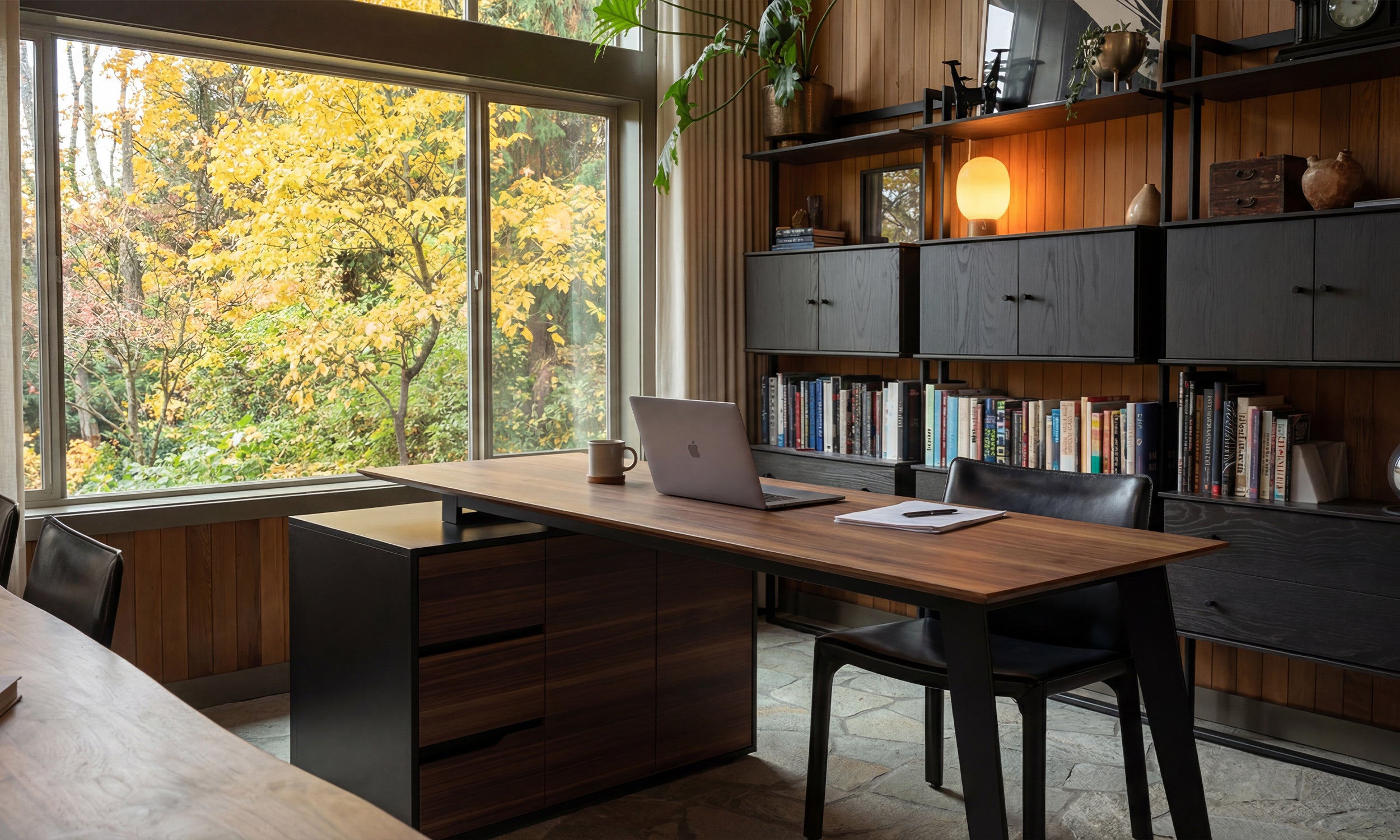







Selecting the right mid-size workspace requires balancing functional surface area, lifting stability, and floor plan flexibility. A 55" standing desk occupies a versatile middle ground in office design, offering ample clearance for multiple peripherals without overcrowding standard bedrooms or dedicated home offices. By evaluating frame architecture, lifting mechanisms, and desktop fabrication, you can establish an adaptable work environment tailored to daily productivity.
The 55-Inch Footprint: Evaluating the Mid-Size Workstation Balance
The medium-format desk category appeals to remote professionals and hybrid workers who need more surface width than compact utility tables offer, but cannot accommodate oversized executive stations. Understanding how this dimensional profile interacts with your hardware layout and room perimeter is the foundation of an effective setup.
Spatial Clearance and Dual-Monitor Geometry
At approximately fifty-five inches of width, a desktop accommodates a standard dual-display arrangement or a single ultrawide monitor alongside supplemental items like desktop audio monitors or laptop risers. When organizing this layout, consider peripheral spacing to maintain unobstructed viewing angles and forearm rest zones. For further inspiration on arranging room flow, exploring designer standing desk layouts can help clarify pathway clearances and task lighting angles.
Balancing Surface Real Estate with Room Flow
Unlike larger commercial workstations that demand extensive open floor area, an electric standing desk 55 inch profile preserves accessible walkway clearance along adjacent walls or storage units. This makes it an ideal fit for multi-functional spaces, guest rooms, or shared home libraries where furniture depth and perimeter access must remain balanced.
Structural Anatomy of an Affordable 55 Inch Electric Standing Desk
The mechanical longevity and operational rigidity of an adjustable desk depend on frame fabrication and lifting column design. High-grade steel framing provides the necessary structural resistance against lateral deflection during height transitions.
Lifting Column Profiles and Telescopic Leg Stages
Adjustable workstations rely on telescoping legs composed of inverted or standard multi-stage steel tubing. Two-stage columns provide practical elevation ranges for standard seated and standing heights, while three-stage configurations offer broader vertical ranges suitable for diverse user heights. When considering an adjustable height standing desk with electric lift system, examine the column overlap and foot bracket depth to ensure stability across the entire travel path.
Crossbar Geometry and Under-Frame Support Beams
The central beam spanning the two lifting columns serves as the structural spine of the frame. Telescoping or fixed dual-beam designs distribute the downward load evenly across both legs. Proper crossbar alignment prevents frame twisting, reduces tabletop sag over extended periods, and keeps the motorized drive components properly seated.
Motorized Elevation Systems: Single vs. Dual Motor Configurations
Motorized elevation introduces convenience through consistent, push-button transition between sitting and standing postures. Understanding the internal drive mechanism helps align your purchasing choice with your equipment requirements.
Drive Rod Mechanics and Load Distribution
A 55 inch electric standing desk often utilizes either a single motor connected via a central hex drive rod or dual synchronized motors housed directly inside the leg columns. Single-motor systems offer an efficient, cost-effective solution for modest setups with standard computer hardware, utilizing a central gearbox to drive both legs in tandem. Dual-motor systems distribute lifting force independently to each column, providing smoother transitions when managing unevenly distributed desktop weight.
Digital Control Panels and Height Memory Presets
Modern electronic handsets range from basic two-button up-and-down switches to multi-preset digital controllers. Memory presets allow users to store preferred seated and standing elevations, streamlining transitions throughout the workday. In my view, programmable buttons significantly encourage regular posture shifts simply by eliminating manual guesswork during readjustment.
Tabletop Materials and Surface Durability for an Electric Standing Desk 55 Inch
The desktop surface must resist daily wear, moisture, and mechanical pressure while maintaining structural rigidity across its span.
Single-Piece vs. Split-Board Desktop Engineering
Desktops in this dimension typically come in either continuous single-slab or joined multi-board constructions. Split-board designs allow for compact packaging and reduced shipping footprints, making them practical for apartment living and tight stairwells. For users who prefer expansive or modular surfaces, reviewing large multi-panel electric workstations highlights how segmented boards use internal dowels and steel connection plates to maintain a flat, uniform surface plane.
Melamine, Engineered Wood, and Edge Banding Resilience
Most value-engineered desktops utilize dense engineered wood cores wrapped in durable melamine or laminate veneers. These surfaces provide reliable resistance to accidental spills, pen pressure, and everyday surface friction. Quality edge banding around the perimeter protects the interior core from ambient humidity and prevents premature chipping along frequently used armrest edges.
Storage Synergy and Cable Management for Clean Standing Setups
A dynamic standing desk moves continuously throughout the day, requiring deliberate planning for electrical cords and peripheral storage.
Under-Desk Power Trays and Cord Articulation
As the desk moves between height settings, power cables must travel smoothly without snagging on adjacent furniture. Under-desk wire management trays, flexible cable spines, and adhesive routing clips keep power strips and adapter bricks suspended securely beneath the frame. For a broader perspective on coordinating accessories and finishes, read our guide on designing a standing desk setup.
Pairing Compact Filing Cabinets and Mobile Storage Units
Because standing desks maintain open under-frame clearance, pairing an electric standing desk 55-inch with a rolling pedestal or stationary filing unit provides essential organizational capacity without cluttering the primary work surface. Ensure low-profile mobile cabinets clear the underside of the support beam when the desk is lowered to your minimum seated height.
Assembly Precision, Leveling, and Anti-Wobble Optimization
Proper assembly technique directly impacts the long-term stability and silent operation of an adjustable desk.
Torque Calibration and Fastener Alignment
During initial assembly, hand-tighten all structural bolts loosely before securing them fully in an alternating pattern. This technique ensures that the frame components, motor housing, and tabletop mounting brackets align square without pre-stressing mechanical joints. Periodic fastener checks help maintain silent motor operation and joint rigidity.
Adjustable Leveling Glides for Multi-Surface Floor Stability
Uneven floorboards or thick carpeting can introduce subtle wobbles that amplify at full standing height. Threaded leveling glides beneath the steel base feet allow micro-adjustments to compensate for irregular flooring, keeping the desk level and reducing frame sway during vigorous typing or writing tasks.


Leave a comment
This site is protected by hCaptcha and the hCaptcha Privacy Policy and Terms of Service apply.