

















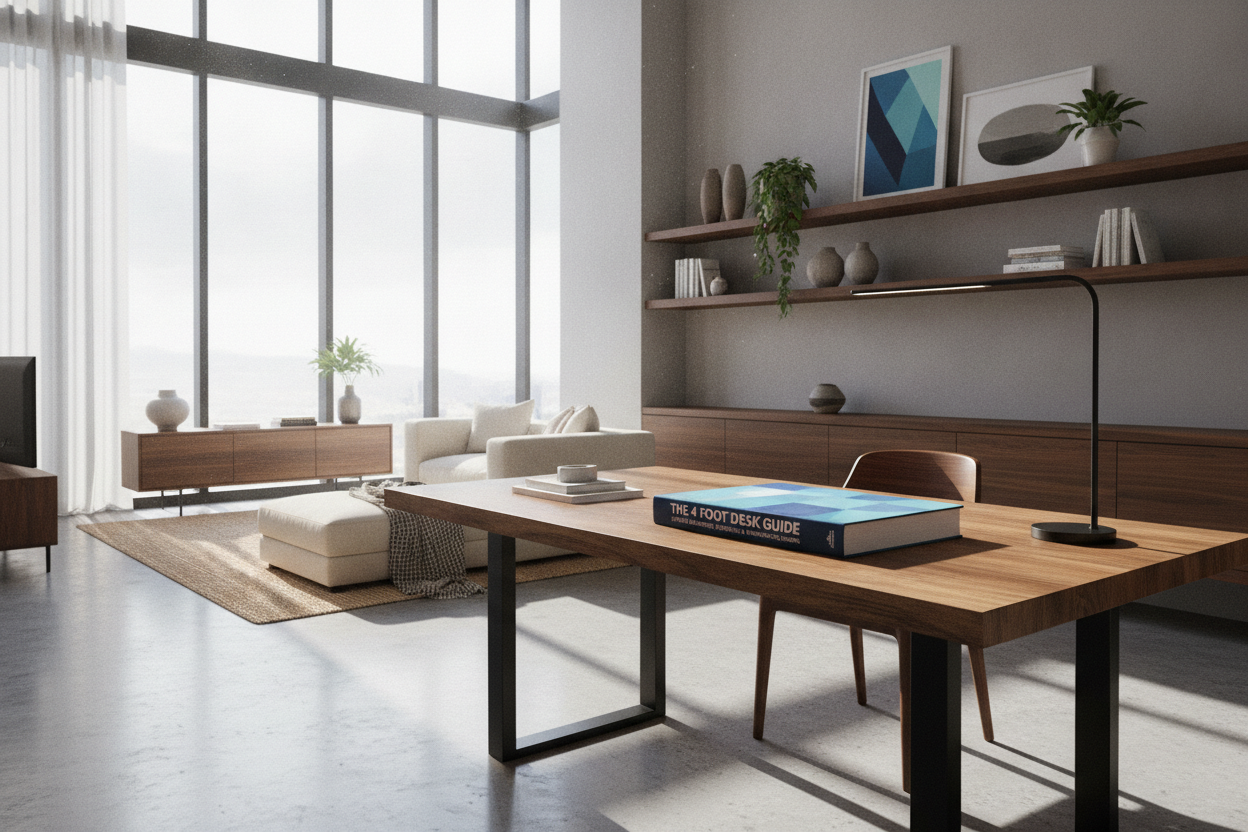
Finding the right table surface for a home office requires balancing the room footprint against daily productivity needs. A 4 foot desk, spanning forty-eight inches across, represents one of the most practical standard dimensions in modern furniture design. It offers adequate surface area for hardware setups while fitting smoothly into modest floor plans.
Why the 4 Foot Desk Is the Home Office Sweet Spot
The four-foot profile bridges the gap between compact writing desks and bulky executive furniture. In many modern residences, bedrooms, guest spaces, and shared living areas must serve multiple functions. A four-foot span provides sufficient width to center a computer display and input accessories without dominating the room perimeter.
When planning your layout, exploring a versatile computer desk collection helps you compare open-leg frames with pedestal storage designs. A 4 foot long desk creates a dedicated productivity boundary in a room, ensuring you have enough space to transition smoothly between typing, sketching, and reviewing printed documents.
Desktop Surface Zoning: Maximizing a 48-Inch Workstation
Arranging equipment on a 4ft computer desk requires deliberate desktop zoning to maintain an uncluttered workflow:
- Primary Reach Zone: Keep your keyboard, mouse, and immediate writing tools directly centered in front of your seating position to avoid excessive reach during daily tasks.
- Secondary Focal Zone: Position your primary monitor or laptop screen slightly back from the edge. A four-foot width easily accommodates a wide monitor display or a compact dual-screen configuration mounted on a sturdy arm.
- Peripheral Staging: Utilize the outer left and right desktop margins for task lighting, desk pads, and reference notebooks, keeping the central area open for active projects.
By defining specific zones across the surface, a 4 ft wide desk feels spacious and structured rather than crowded by daily accessories.
Storage Architecture: Open Legs vs. 4ft Desk with Drawers
Selecting between an open-frame table and a 4ft desk with drawers depends largely on your storage requirements and legroom preferences. While built-in storage helps keep documents off the desktop, it influences the available knee space underneath.
- Single Pedestal Layouts: Desks with a drawer column on one side provide structured organization for office supplies and notebooks, though they restrict your chair to the remaining open side.
- Floating Center Drawers: A shallow pencil drawer beneath the main top preserves broad knee clearance while offering quick access to small daily essentials.
- Open-Leg Minimalist Frames: Tables without integrated drawers maximize horizontal legroom and accommodate external rolling file carts or storage towers.
If you choose a model with integrated compartments, applying structured desk drawer organization strategies ensures that supplies remain sorted without overflowing into your main workspace.
Room Fit and Placement Blueprints
A 4 foot office desk adapts well across various architectural layouts, including alcoves, window walls, and open-plan rooms.
Window Wall and Perimeter Alignments
Placing a desk perpendicular or parallel to a window provides natural daylighting. When placing the desk along a straight wall, ensure enough clearance behind the chair to allow easy entry and exit without bumping into adjacent furniture.
Alcove and Closet Conversions
Standard architectural alcoves frequently match the four-foot envelope, making a 4 ft long desk an excellent option for recessed work nooks. For shared spaces where you prefer to pack away work equipment completely at the end of the day, compare traditional open layouts against concealed armoire computer desk setups.
Considering Corner Options
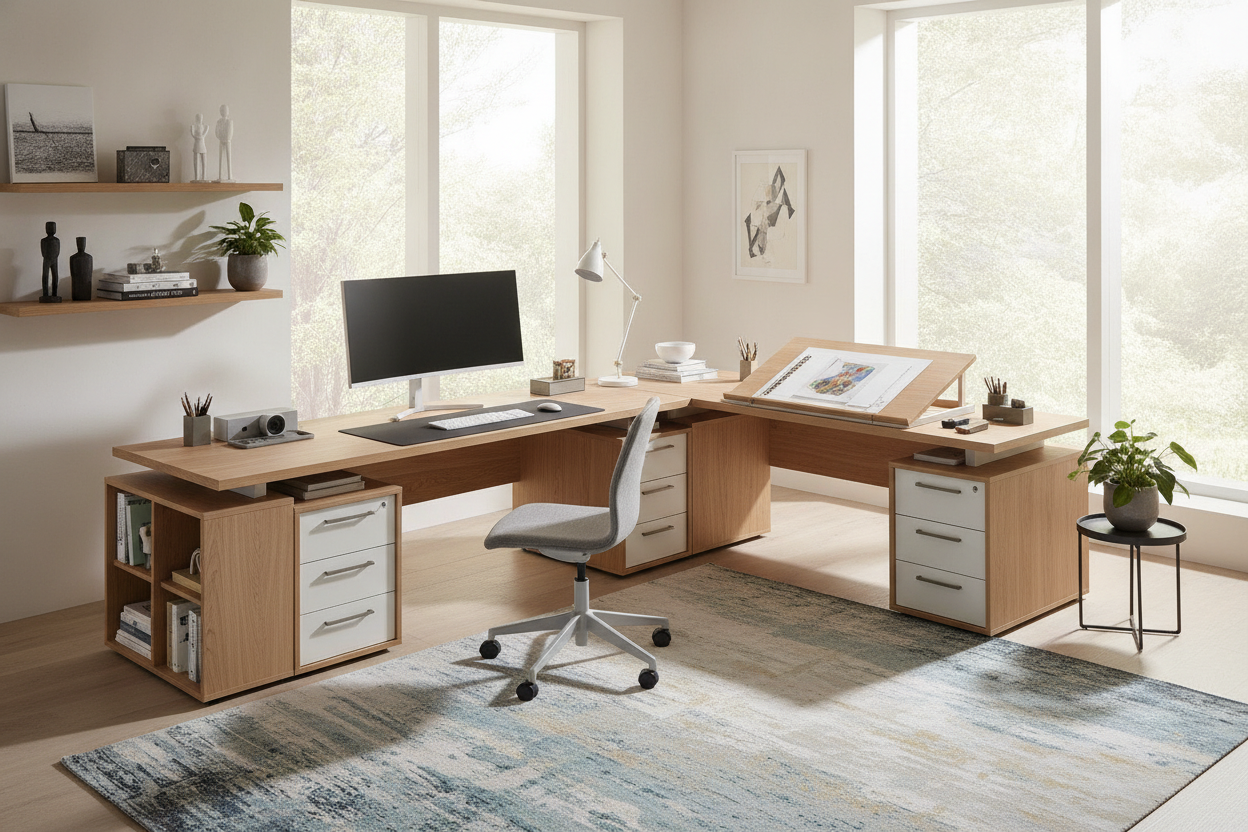
If your room layout has awkward corner dimensions or requires extra surface area for secondary devices, choosing a specialized corner office computer desk may help you utilize corner angles more efficiently than a standard rectangular desk.
Material Selection, Frame Stability, and Assembly Factors
A stable workstation contributes directly to comfortable everyday typing and writing. Look for durable tabletop finishes such as scratch-resistant engineered surfaces or natural wood grains paired with reinforced steel or panel frames.
Crossbar supports beneath the main desktop prevent sagging over time, while adjustable leveling feet ensure that the desk remains stable on uneven flooring or area rugs. Integrated grommet holes and underside cable management channels also help direct power cords cleanly away from your feet.
Decision Checklist: Is a 4 Foot Desk Right for You?
Before finalizing your furniture selection, review these practical checkpoints to confirm that a 48-inch desk meets your needs:
- Confirm that your room layout accommodates the desk depth alongside chair roll-out space.
- Measure your primary screen setup to ensure adequate peripheral clearance on the top.
- Decide whether an open-leg profile or an integrated drawer pedestal best suits your storage habits.
- Verify that power outlets and wall switches remain accessible once the desk is positioned.
By measuring your space thoughtfully and planning your desktop zones, a four-foot workstation provides an ergonomic, well-balanced foundation for long-term daily productivity.

Leave a comment
This site is protected by hCaptcha and the hCaptcha Privacy Policy and Terms of Service apply.